Your mind has glitches. Catch them.
Better calls under pressure. Fewer dollar-bleeds you didn't see. Arguments that end before they spiral. Knowing the names is step one — catching them in the moment is what this trains.
$39.53 launch price · lifetime access · instant unlock
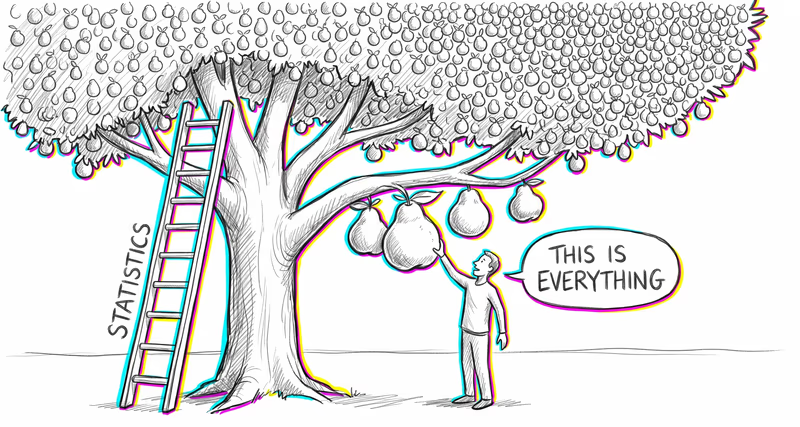
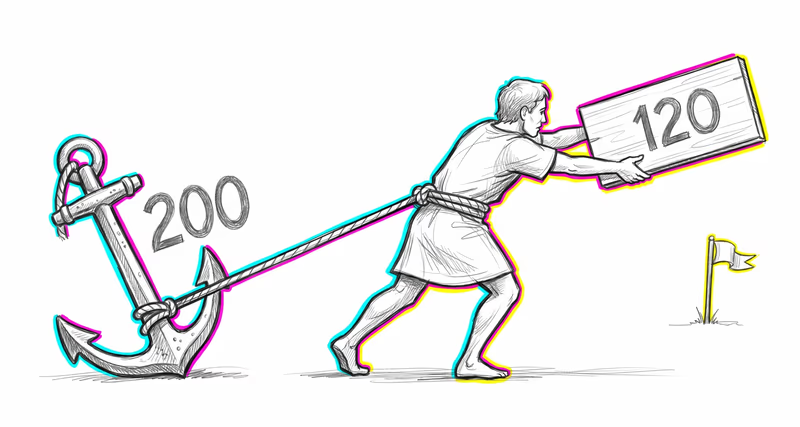
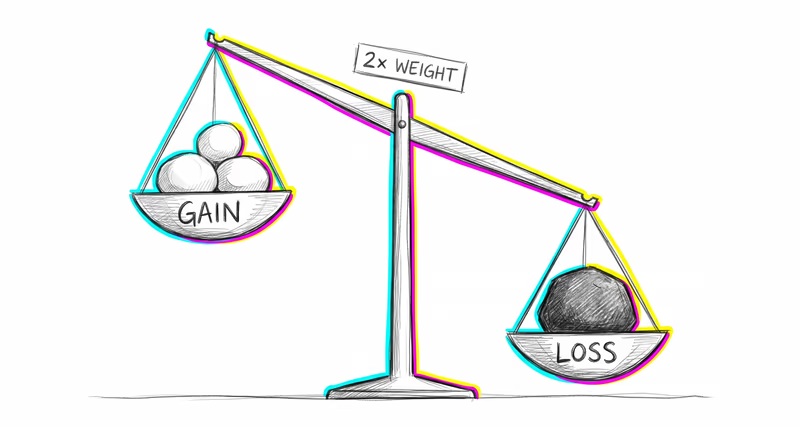
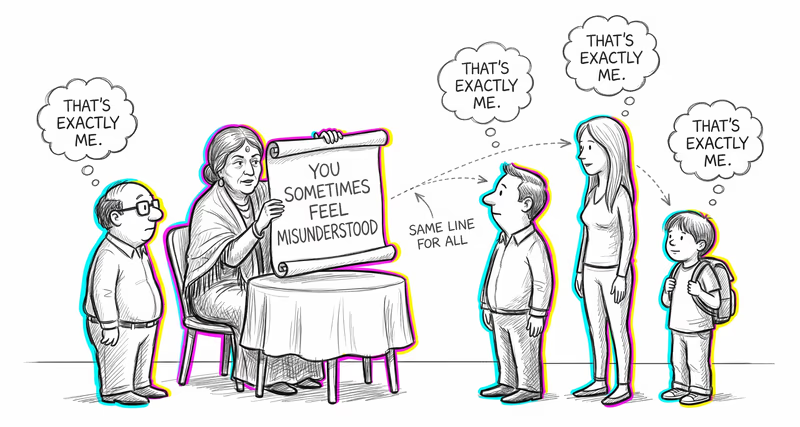

Your brain is lying to you.
What to watch. Who to trust. How you remember last year. None of it is straight reasoning — every decision runs through filters tuned for a much older world, still firing on this one. They have names. Most of them you've never heard.
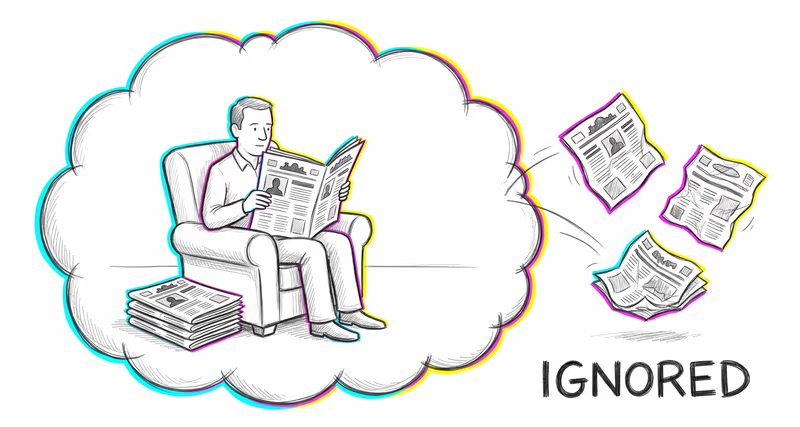

People with low competence in a domain significantly overestimating their own ability, because they lack the skill to see the gap.
A new driver who just got their license weaving aggressively through traffic, convinced they have excellent reflexes, while experienced drivers drive more cautiously because they understand how quickly things can go wrong.
Someone reading two articles about nutrition and beginning to confidently correct their doctor's dietary advice, unaware of the complexity of metabolic science.
A person taking one coding tutorial and volunteering to build their company's entire website, genuinely believing the task is straightforward.
Am I feeling certain about this despite having only recently learned about it or having limited experience?
Catch a glitch before it catches you.
You just read seven. Now name three. Read the scenario, tap the bias driving it. Three rounds, no sign-up — a taste of the 231-bias Spot-the-Bias quiz inside.
A jury is deliberating over an embezzlement case. Several jurors feel the defendant, who is well-groomed and soft-spoken, is less likely to have committed the crime. They keep saying 'he just doesn't seem like the type,' despite strong forensic accounting evidence against him.
It's not just you.
I started noticing these glitches in my own thinking. Small ones first — sunk-cost on a side project, confirmation bias while Googling. Then bigger ones in the people I love. Smart, kind people making decisions their future self would regret, running on filters forged for a very different world.
Then at scale. Politics, marketing, manipulation. Whole industries tuned to exploit Loss Aversion and Authority Bias. Entire ad categories designed around Hyperbolic Discounting. A craftsman who understands their tools can't be played by cheap tricks. Everyone else can.
Awareness is the easy part. Naming the glitch in the moment is harder. Catching yourself, mid-rationalization, before the cost actually lands — that's the part this deck trains. What you do with that skill, in your relationships and your money and how you read the news, is the rest of the work.
What changes after 30 days with the deck.
Make better decisions
Catch Sunk Cost, Anchoring, and Overconfidence before you commit. Decision Pre-Flight walks you through a 5-step worksheet, then hands you a paste-ready bias-audit prompt for the LLM you already use.
Bulletproof your wallet
Every money trap has a name — Decoy Effect on pricing, Mental Accounting on budgets, Gambler's Fallacy on investments. Spot them in real time, not in the post-mortem.
Resist manipulation
Authority, Reciprocity, Scarcity, Social Proof — the four levers every ad, political campaign, and scammer pulls. Once you can name the move, it stops working on you.
Argue less, understand more
Most conversational dead-ends are Fundamental Attribution Error vs. Self-Serving Bias bouncing back and forth. Name the glitch out loud and the fight loses its fuel.
See the people you love more clearly
Negativity Bias remembers the one fight. Rosy Retrospection forgets the reasons you left. Confirmation Bias picks the evidence. Name the glitches and you start seeing the person, not the story your brain wrote about them.
Catch your own rationalizations
Every card lists the exact self-lies you'll tell yourself when this glitch is active. Catch yourself mid-sentence — not six months into the mistake.
Same situations. Two different outcomes.
The honest fit check.
- Operators making decisions under uncertainty — founders, investors, PMs.
- Builders shaping how humans choose — UX, marketing, writing, research.
- Leaders mentoring other humans — team leads, teachers, coaches, therapists.
- Partners in relationships where the same three fights keep repeating.
- Citizens who feel the pull of the news and want to see the strings.
- The curious — you've noticed your own brain misfiring and you want a map.
- You want a quick hack. The work is noticing, naming, and drilling — weeks, not minutes.
- You want therapy or life coaching. This is a cognitive tool, not emotional support.
- You only want to read — you don't want to put reps in.
- You prefer anecdotes over research. Every entry cites its origin.
- You want someone to tell you what to think. The deck gives you vocabulary; the conclusions stay yours.
If any of those are dealbreakers, skip the buy — the 50 free cards stay open to you. No hard feelings.
Three steps. Five minutes a day.
Catch your own brain in the act.
- 01
Read
Every glitch named, illustrated, and explained in plain English — with real examples, a detection cue, and a defense move. Browse the deck. Pin a Cheat Sheet. Read the field guide on the couch.
- 02
Drill
Five minutes a day on the glitches catching you. Quiz for recall. Swipe deck for reps. Pre-Flight, Templates, and Diagnostic when a real call is on the table. Your Blindspots dashboard targets what you actually miss — not generic ones.
- 03
Catch
Spot a glitch running in the wild — a conversation, a purchase, a 2 a.m. decision — and name it before it lands. A few weeks of reps and the names start arriving on their own.
There is nothing else like this. The only cognitive-bias resource that's fully illustrated, drilled into reflex, and yours forever — for one payment. Books taught you the names. This is where you train them into reflex.
Every glitch, mapped.
Biases, heuristics, memory distortions, perceptual quirks, and social glitches. Each with a one-line definition, everyday examples, a detection question, and a defense tip.
Consistent editorial illustration across the whole deck. No stock photos. No AI-generated filler. A single visual language you can flip through without friction.
Grounded in peer-reviewed cognitive psychology — Kahneman, Tversky, Ariely, Nisbett, and thousands of others. Every entry cites its academic origin and key studies.
The most-looked-up glitches.
Ranked by Wikipedia pageviews. The biases you've half-heard of — and the ones that ran on you this week.
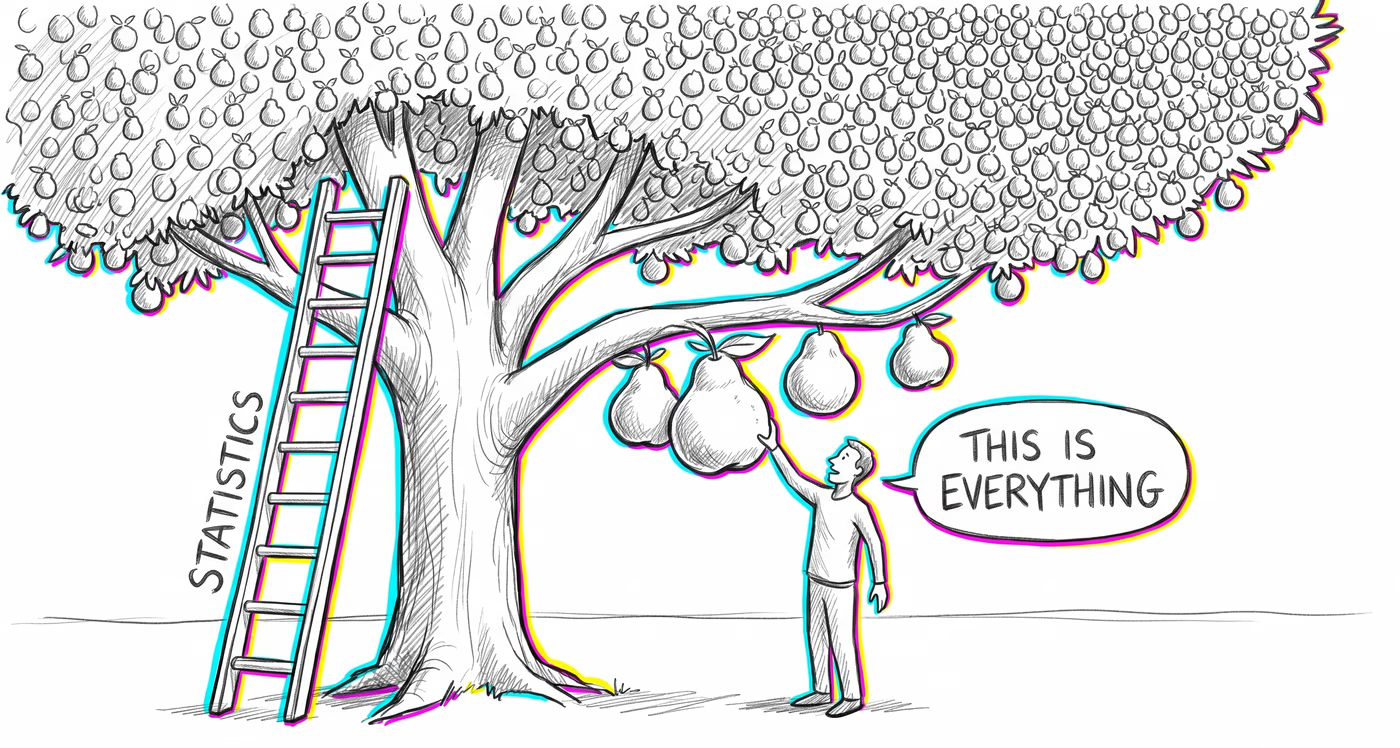
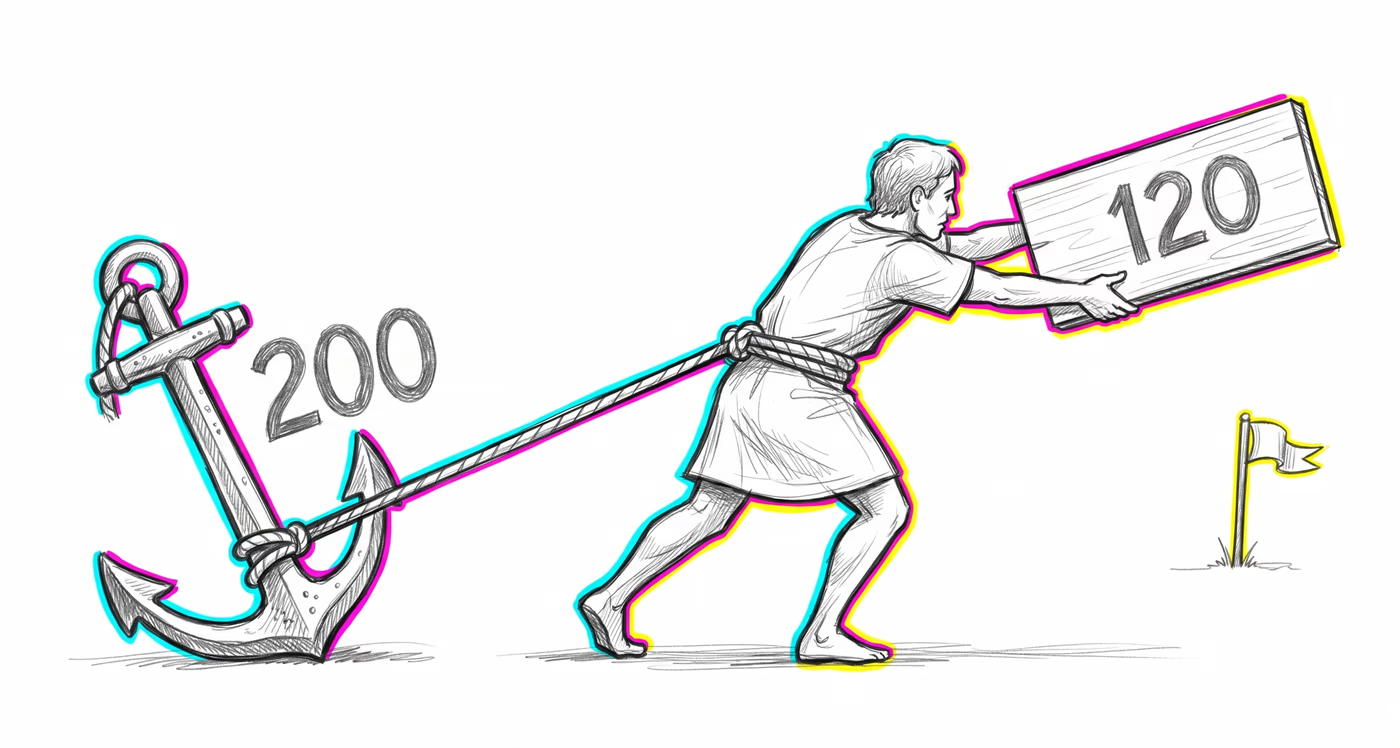
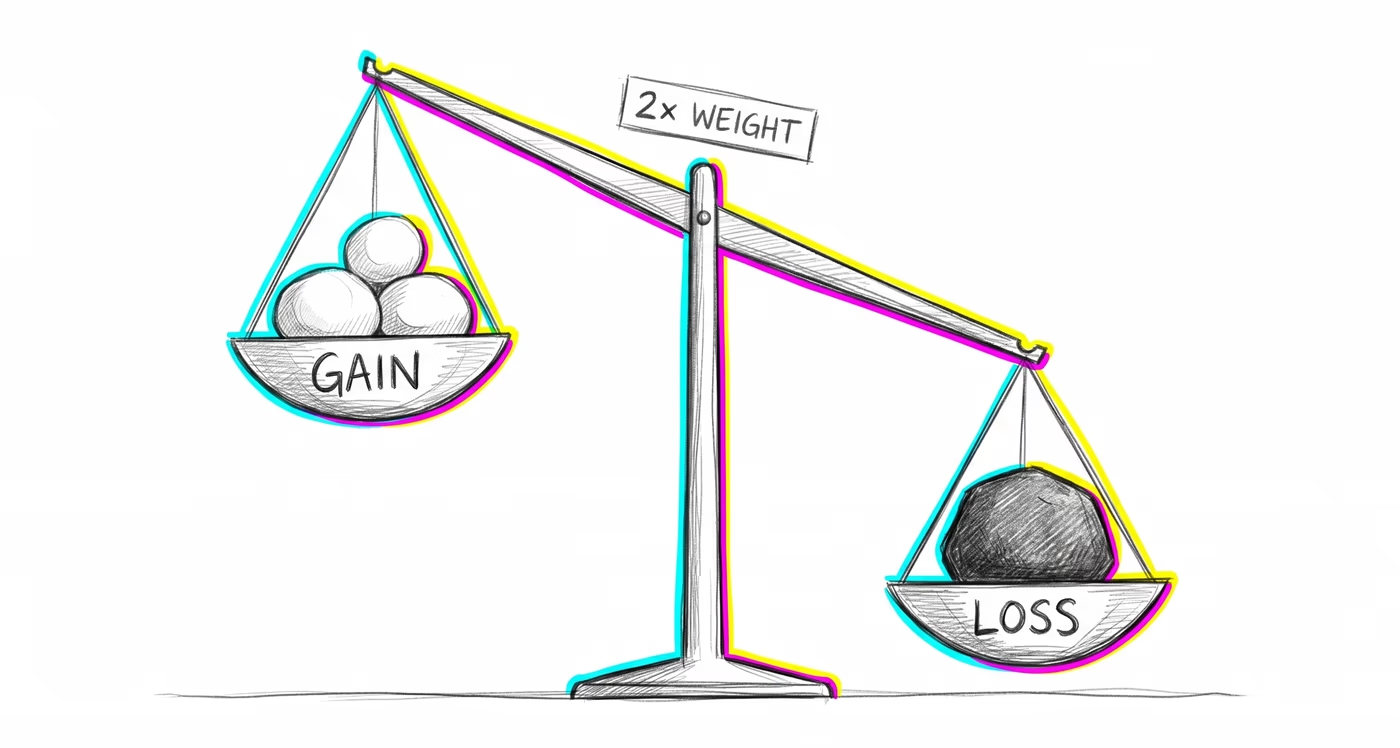
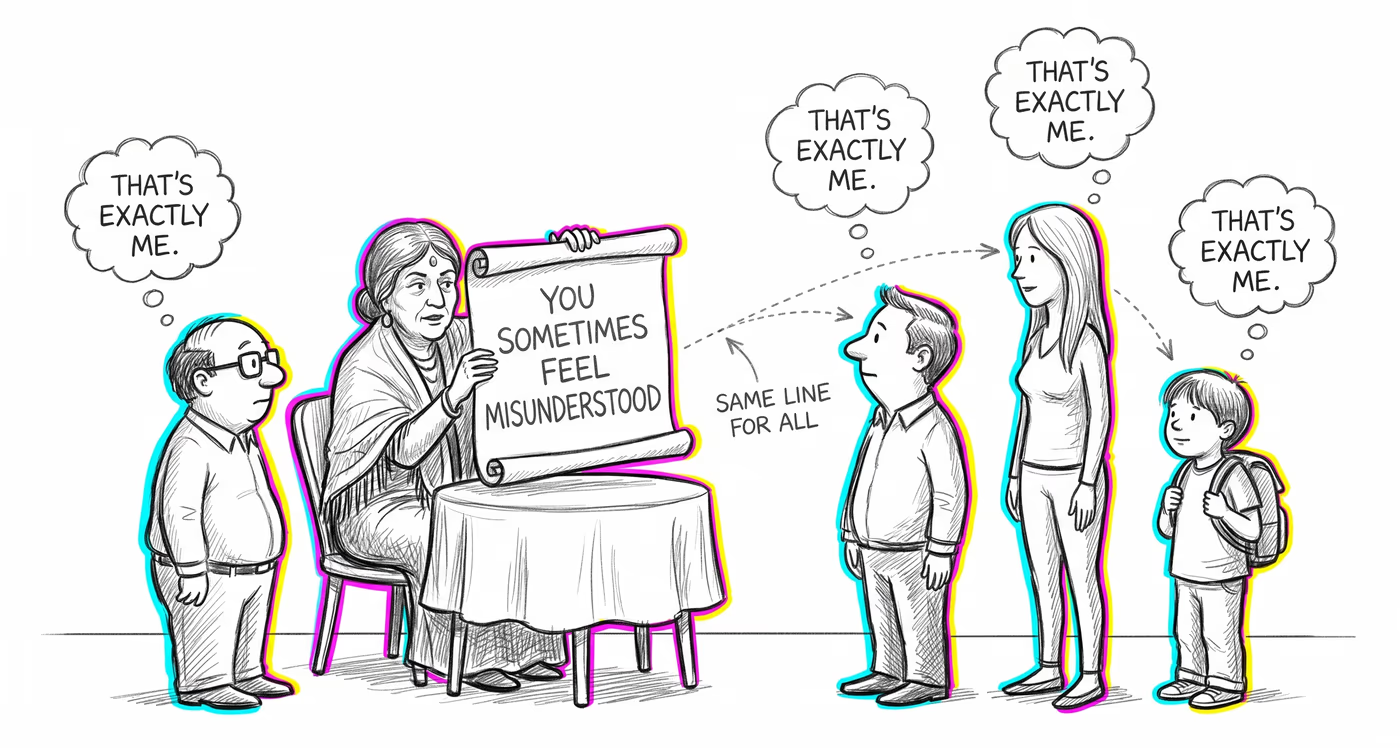

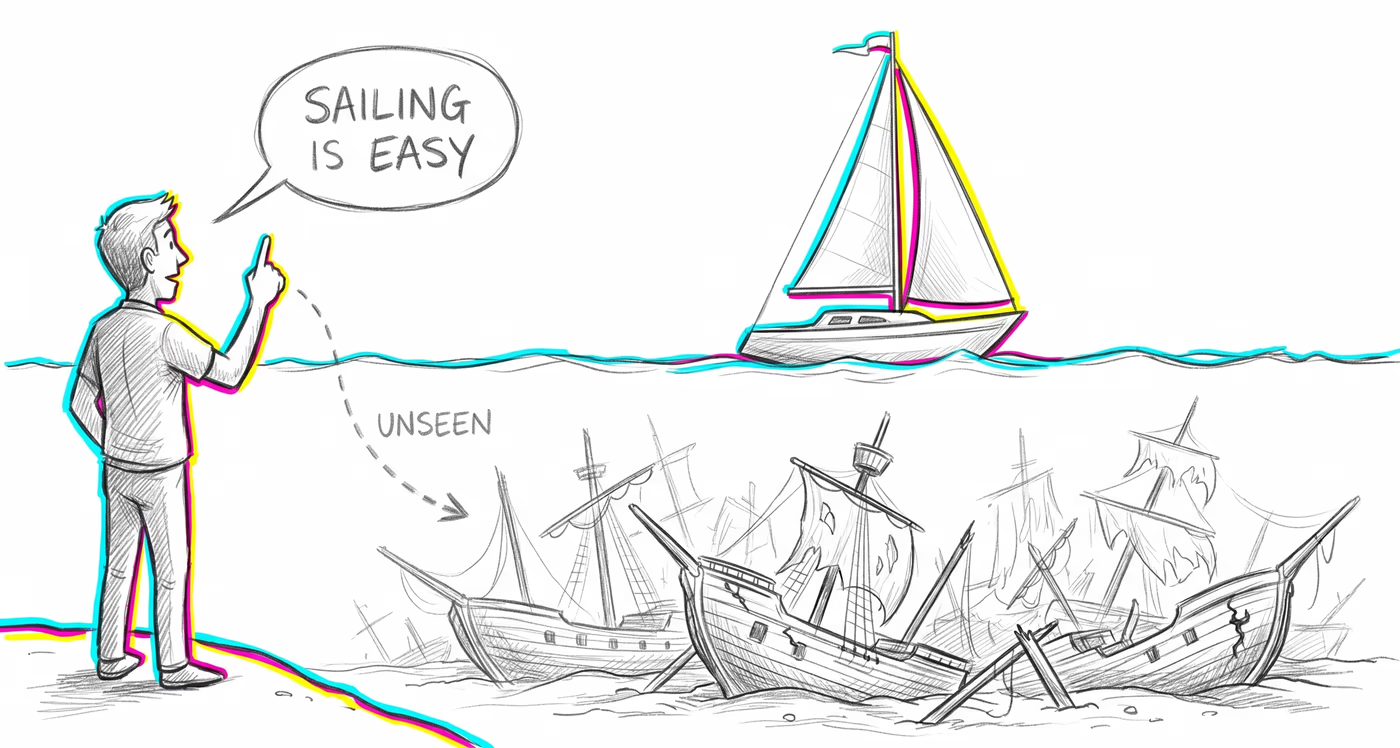
You'll recognize some. You won't recognize most.
The most-looked-up 32, first. Anchoring, Dunning-Kruger, Sunk Cost — the famous ones. Then the 199 most references don't cover: Cheerleader Effect, Cross-Race Effect, End-of-History Illusion, Moral Credentialing, Zeigarnik.
Why not just read a book, use Wikipedia,
or grab a free deck?
All of those exist. Here's what they do and don't give you.
Read the books. Bookmark the Wikipedia page. Then get the deck — it's the only one that closes the loop between reading about biases and catching them in real time.
They taught you the vocabulary. This drills the reflex.
Those resources teach you the names. They don't make you faster at catching them. This drills the catching. Same biases, but as scenarios you swipe, defenses you drill, decisions you audit before committing. The reading taught you the vocabulary. The reps turn it into reflex.
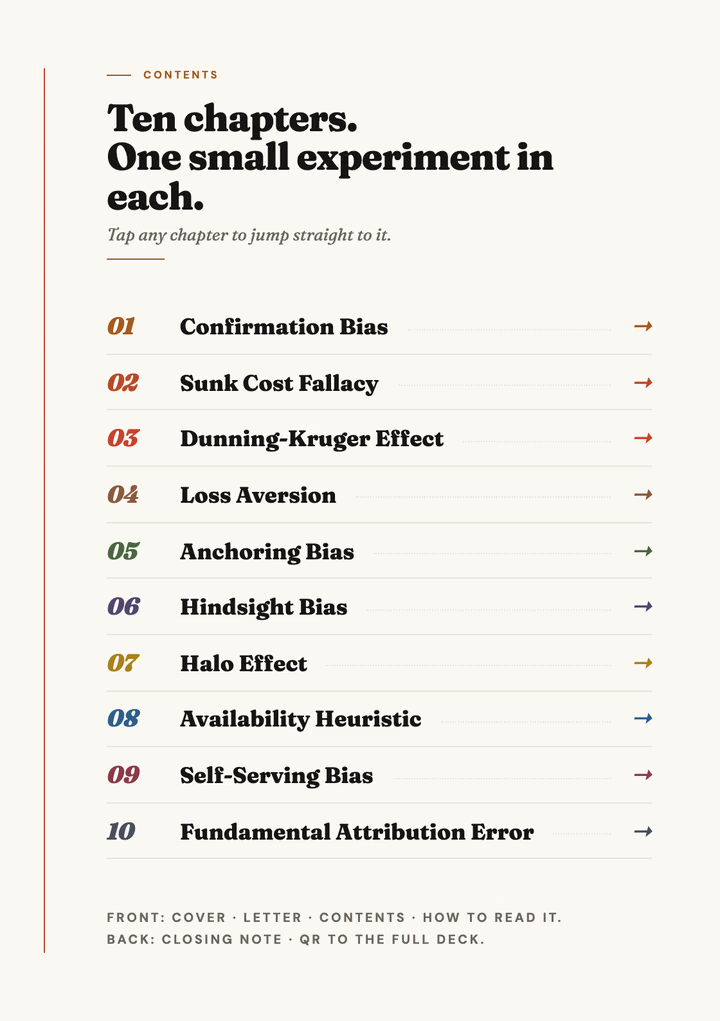
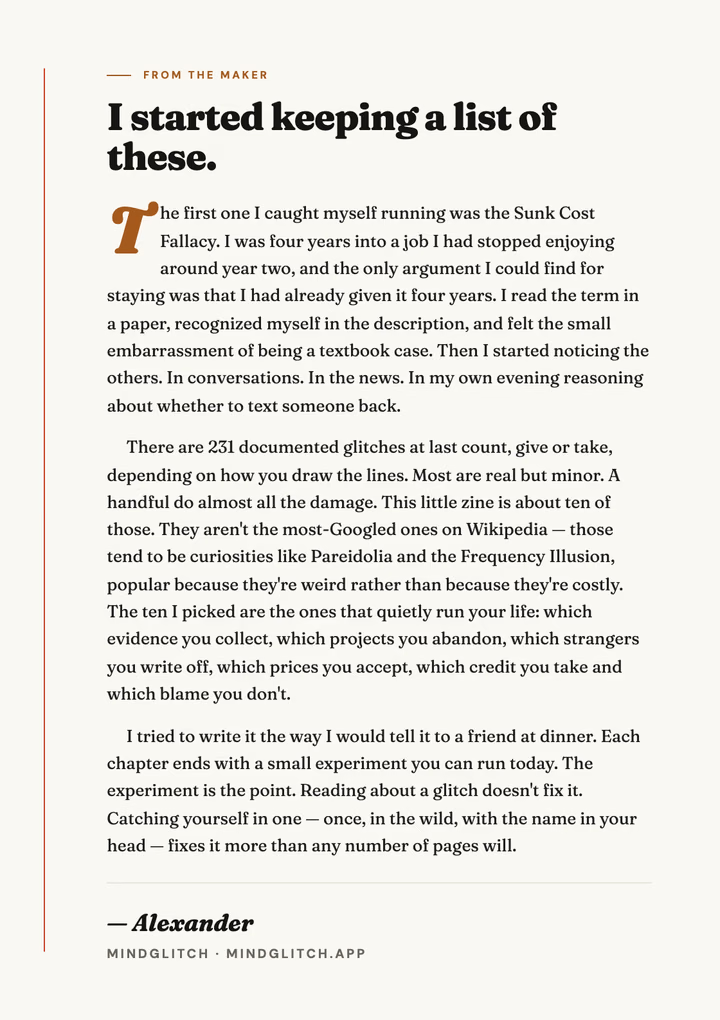
10 glitches quietly running your life.
The cognitive glitches that cost the most money, wreck the most relationships, and tilt the most arguments. Named, illustrated, with a defense move for each. Instant delivery. No spam — unsubscribe with one click.
Catch your brain
in the act.
One payment. Lifetime access. Everything included.
Piece-by-piece, this would be $500+. Today, all of it: $39.53.
| Full interactive digital deck — all 231 cards unlocked, with grid · list · table views, search, filter, sort, shuffle, flip-all, progress tracking | $40 |
| Printable Deck — three ready-to-print PDFs (poker, tarot, full-page) with crop marks + bleed | $45 |
| Spot-the-Bias Quiz — unlimited | $25 |
| Swipe Deck — spaced-repetition flashcards | $30 |
| Decision Pre-Flight — bias-audit worksheet (paste into any LLM) | $50 |
| Behavior Diagnostic — describe a behavior, surface the biases driving it | $25 |
| My Blindspots — personalized pattern dashboard | $25 |
| Curated Lenses — 15 hand-picked decks (Working with AI · Negotiator · Manager · Founder · Investor · Product Manager · Engineer · Designer · Marketer · Online Arguer · Student · Parent · Dater · News Reader · Writer) with editor's letters + per-lens practice deck | $45 |
| Decision Templates — 6 fillable worksheets (Pre-Mortem · 10 / 10 / 10 · Inversion · Bias Audit · Reversibility · Second-Order Thinking); auto-save, copy as plain text, print-ready | $50 |
| Defense Playbook — searchable detection + defense reference across all 231 biases (rationalizations, triggers, related biases per entry) | $40 |
| Field Guide e-book — all 231 entries (PDF + EPUB) | $25 |
| Cheat Sheets — one page per bias | $40 |
| Anki Deck Export — one-click import file | $25 |
| Every future improvement + new entries, forever | $60 |
| Comparable if bought piece-by-piece | $500+ |
|---|---|
| Today, all of it, one payment | $39.53 |
Works in any modern browser. No app install.
- Full interactive digital deck — all 231 illustrated cards unlocked with grid · list · table views, search, filter, sort, shuffle, flip-all, and progress trackingPERKFull interactive digital deck
All 231 illustrated cards, three ways to browse.
- Grid · list · table views
- Search, filter by category or type, sort by popularity
- Tap to flip; flip state remembered per card
- Phone, tablet, or laptop — no app install — runs in any modern browser. One purchase covers all your personal devices; not a license to share.
- Printable Deck — ready-to-print PDFs in multiple formats: poker, tarot, full-page, and more. Crop marks + bleed where you'd expect. Print at home or send to a print shop.PERKPrintable Deck
Ready-to-print PDFs of the full deck.
- Multiple formats — poker, tarot, full-page, and more
- Crop marks and bleed already set up for every card
- Print at home or send to a print shop
- Field Guide e-book — the editorial 231-entry field guide as a PDF + EPUBPERKField Guide e-book
The full 231-entry field guide as a PDF + EPUB.
- Same editorial voice as the cards
- Reads on Kindle, iBooks, and any major e-reader
- Cover, foreword, and a full table of contents
- Cheat Sheets — one page per bias, ready to pin upPERKCheat Sheets
One page per bias. 231 pages, ready to pin up.
- Definition, examples, detection cue, and defense
- Single PDF stack — print the ones you need
- Designed to live next to a desk, not a screen
- Spot-the-Bias Quiz — unlimited; a scenario, four choices, the revealPERKSpot-the-Bias Quiz
A scenario, four choices, the reveal.
- The biases you miss show up 3–5× more often
- Tracks your streak, accuracy, and miss-tally
- Keyboard or tap — your call
- Swipe Deck — scenario on the front, bias on the back; spaced repetition schedules each card for the moment you're about to forget itPERKSwipe Deck
Spaced-repetition flashcards: scenario → bias.
- 5 face modes — flip the front/back relationship to drill different angles
- 8 study scopes — focus where you need it
- Each card re-surfaces just before you would forget it
- Decision Pre-Flight — describe a real choice; get the biases most likely to be pulling the strings, with the defense for eachPERKDecision Pre-Flight
A 5-step worksheet you run before a real choice.
- 8 context types — hiring, financial, risk, and more
- Pre-mortem, inversion, 10/10/10, reversibility
- Surfaces the biases pulling at the decision (works with the LLM you already use)
- Behavior Diagnostic — describe an observed behavior (yours, someone else's, your team's); surface the biases at play, with reasoning and a defense for each (works with the LLM you already use)PERKBehavior Diagnostic
Describe a behavior — surface the biases driving it.
- 5 frames — yourself, someone else, your team, public, general
- Returns 3–5 ranked biases with reasoning and a defense for each
- Works with the LLM you already use
- My Blindspots — a live map of the biases you miss mostPERKMy Blindspots
A live map of the biases you miss most.
- Top-3 hero cards plus a full ranked table
- Mastery ladder — Struggling to Mastered, at a glance
- One-click "Practice my worst" jumps into the swipe deck
- Curated Lenses — 15 hand-picked lens decks with editor's letters, for the role you're wearing. One tap into a per-lens practice session.PERKCurated Lenses
15 hand-picked decks for the role you’re wearing.
- Working with AI · Negotiator · Manager · Founder · Investor — and 10 more
- An editor’s letter on each lens
- One tap into a per-lens swipe session
- Decision Templates — 6 fillable worksheets rooted in real protocols: Pre-Mortem (Klein) · 10/10/10 (Welch) · Inversion (Munger) · Bias-Audit · Reversibility (Bezos) · Second-Order (Marks). Auto-saves as you type; copy or print as a 1-pager.PERKDecision Templates
6 fillable worksheets rooted in real protocols.
- Pre-Mortem (Klein), 10/10/10 (Welch), Inversion (Munger)
- Bias-Audit, Reversibility (Bezos), Second-Order (Marks)
- Auto-saves as you type, copy or print as a 1-pager
- Defense Playbook — searchable bias-by-bias defense reference across all 231. Detection signals, defense steps, the rationalizations the bias whispers, the conditions that fire it. Filterable by type, sortable by hardest-to-debias.PERKDefense Playbook
Bias → defense in one searchable lookup.
- 231 entries with detection cues, defense steps, and trigger conditions
- Filter by audit type, sort hardest-to-debias first
- Share any view with a single link
- Anki Deck Export — one click into the spaced-repetition app you already usePERKAnki Deck Export
One click into the spaced-repetition app you already use.
- Ready-to-import file — no plugin, no fuss
- Front: scenario. Back: name, definition, detection, defense
- Drop into Anki via File → Import
- All future improvements — new entries, new modes, new formats, no extra cost
30-day refund · phone, tablet, or laptop
10 glitches quietly running your life.
A free field zine. The cognitive glitches that cost the most money, wreck the most relationships, and tilt the most arguments. Long-form, illustrated, with stories and defense moves you can use this week.
Why I made this.

I've poked at the canon — bits of Kahneman, Munger, Ariely, the Farnam Street archive. Not a scholar; an operator who kept getting caught. By the time I'd sourced and illustrated 231 entries for this deck, I knew the vocabulary cold. I still couldn't catch the biases on myself in the moment, which is the only place catching matters. The vocabulary was there. The reflex wasn't.
The ones catching me were the classic indie-maker set. Planning Fallacy: every estimate I've set on this project has been wrong by two or three times. Sunk Cost: I've kept features and code I should have deleted weeks ago. And the polish loop, where one-more-pass becomes ten. There's no single name for that last one — it's mostly Loss Aversion and Planning Fallacy keeping each other company. All three are in the deck.
Everything I tried was scattered. Wikipedia has them all, alphabetized and easy to forget. Books are great in week one, archived in week two. Mental-models sites pick the famous twenty. Anki decks have ten. Browser extensions have five. I wanted one comprehensive, organized, illustrated place — and tools that would turn reading into noticing.
So I started keeping a list. I built tools to drill what I was learning — a quiz that picks at the ones I miss, a swipe deck with spaced repetition, a worksheet I run on any decision I'm twitchy about, a personal blindspots dashboard that surfaces the ones I keep falling for. The list grew past anything I could find anywhere else: 231 entries, every one named, illustrated, sourced. I work on this from a desk piled with bias books and too much coffee, with a real suspicion that the people quietest about their blind spots are the ones bleeding the most money to them.
MindGlitch is what I wanted to find and couldn't — every mind glitch I could pin down, organized and illustrated in one place, plus the training to turn reading into reflex. Maybe it'll click for you the way it clicked for me, maybe not. What I can say is nothing I tried before did both — and I've been building this on myself for over a year.
— Alexander
FAQ
What does this actually do for me, in plain terms?
Three things, honestly. (1) Fewer expensive decisions you regret — the sunk-cost project you finally kill, the contract you don't sign, the impulse purchase you walk past. (2) Less reactivity in arguments — once you can name the glitch ("that's Self-Serving Bias, here's mine"), the fight loses its fuel. (3) A pattern that compounds — your Blindspots dashboard surfaces the specific biases that keep catching you, so the reps target your weak spots, not generic ones. What it doesn't do: make you happier, calmer, or smarter overnight. It makes you faster at catching the same brain that's been catching you for 30 years. Most life outcomes are unforced-error driven — this reduces unforced errors. That's it.Will knowing this actually change how I think?
Yes, if you put the reps in. Knowing about Confirmation Bias does almost nothing on its own — most readers of Kahneman still get caught by it pretty regularly. What works is having the name in your head at the exact moment the bias is running, which is what daily reps through the quiz, the swipe deck, and the morning card are for. The vocabulary gets turned into reflex. That part takes a few weeks.How soon will I see a difference?
Within a week, you'll have named seven or eight biases that run on you daily and you'll start noticing them a beat faster. By the end of month one, the names start showing up unbidden in the middle of an argument or thirty seconds before you click "buy" on something — and you can sometimes pull back before the damage is done. The stubborn ones (Bias Blind Spot, Illusion of Control, Negativity Bias) take months of reps. That's what the quiz and swipe deck are for.What if I already know about cognitive biases?
You probably know 20–40 of the famous ones by name — and you probably still get caught by them. Knowing isn't catching. The 231 covers the ones most references skip: Cross-Race Effect, Moral Credentialing, End-of-History Illusion, Cheerleader Effect, Zeigarnik Effect. If you know ten Wikipedia pages worth, this is the other 221, plus the training that turns recognition into real-time capture.Why is the content free if the product is paid?
50 cards are free to preview; the other 181 unlock with the deck. What you actually pay for is the training around the reference, not the reference itself: unlimited Spot-the-Bias quiz, spaced-repetition Swipe Deck, Decision Pre-Flight (a bias-audit worksheet that generates a paste-ready prompt for any LLM you already use), Behavior Diagnostic (describe an observed behavior; get a paste-ready prompt that any LLM can answer with the biases at play), Curated Lenses, fillable Decision Templates, the searchable Defense Playbook, your personal Blindspots dashboard, plus the printable deck, field-guide e-book, cheat sheets, and Anki export. Definitions are cheap and getting cheaper every month. Putting them into your reflexes is the part nobody else is selling.Why 231? Is that really all of them?
It's the most comprehensive set anywhere — every other deck sells 52 or fewer. The 231 covers formal cognitive biases, heuristic errors, memory distortions, perceptual quirks, and social glitches. (It skips pure logical fallacies like ad hominem — those are argument moves, not brain glitches.) When new entries are worth shipping, buyers get them at no extra cost.Is the science solid?
Yes. Every entry cites its academic origin, names the key studies, and links to Wikipedia where available — 1,000+ studies cited across the deck, 600+ historical cases. The research spans Kahneman and Tversky in the 1970s through today's behavioural economics. Where a finding has replication issues — and cognitive psychology has been honest about that since the 2010s — the card says so.Can I use this on my phone?
Yes. The site is mobile-first — deck, quiz, swipe, and the full reference all work in any modern mobile browser. "Add to Home Screen" turns it into a one-tap shortcut on iOS and Android. Every feature is fully supported on the web.Is $59 really worth it?
Priced piece-by-piece the same bundle runs past $500. Spot-the-Bias Quiz unlimited. Swipe Deck with 1,100+ swipeable scenarios across 231 cards (spaced repetition + 5 face modes + 8 study scopes). Decision Pre-Flight — a worksheet that generates a paste-ready bias-audit prompt for any LLM you already use. Behavior Diagnostic — describe a behavior, surface the biases driving it (works with the LLM you already use). 15 Curated Lenses (Working with AI, Negotiator, Manager, Founder, Investor, Product Manager, Engineer, Designer, Marketer, Online Arguer, Student, Parent, Dater, News Reader, Writer). 6 fillable Decision Templates (Pre-Mortem, 10 / 10 / 10, Inversion, Bias Audit, Reversibility, Second-Order Thinking). The searchable Defense Playbook with 1,100+ defenses across all 231. My Blindspots dashboard. The Field Guide e-book. Printable Deck PDFs. Cheat Sheets. Anki Deck Export. Every future improvement, forever. $59 once — no subscription, no tiers, risk-free. Catch yourself in one bad Sunk-Cost decision, one hiring mistake, or one impulse purchase, and $59 looks like a rounding error.Is this a physical card deck?
No — it's a digital product. Web-based training plus a Printable Deck of ready-to-print PDFs (poker, tarot, full-page) so you can run a physical deck off at home or send it to a print shop.What do I get the moment I buy?
Instant: full interactive deck unlocked, Spot-the-Bias Quiz unlimited, Swipe Deck (5 face modes, 8 study scopes), Decision Pre-Flight, Behavior Diagnostic, 15 Curated Lenses, 6 Decision Templates, the searchable Defense Playbook, My Blindspots, the Field Guide e-book, the Cheat Sheets, the Printable Deck PDFs, and Anki Deck Export. Plus all future improvements — new entries, new modes, new formats — at no extra cost. No subscription. No upsells. No "Pro" tier to chase.How much time do I need to put in?
Five minutes a day on the Swipe Deck is the floor — that's where the spaced reps live. The Spot-the-Bias Quiz is whenever you want a sharper round. Decision Pre-Flight, Decision Templates, and the Defense Playbook only come out when you have a real call to make. Most buyers use the deck most when something's actually on the line.Do I need an account? Does my progress sync across devices?
No account needed to use the deck, the quiz, or the swipe deck — your progress saves on whichever device you're using. Cross-device sync isn't live yet, so for now your dashboard is per-device. You can save a backup of your progress and restore it on another device any time.Will I get email spam?
No. Free zine instantly, a few short follow-ups, then a weekly Friday-morning read. One-click unsubscribe in every email.What if it doesn't work for me?
Refund within 30 days, no questions. Email contact@mindglitch.app with the address you bought with; I handle every one personally. No forms, no interrogation, no dark patterns.
This won't do the thinking for you.
It won't tell you what to buy, who to date, or how to vote. It won't "fix your brain" in a weekend. What it gives you is the vocabulary to name what's happening when your brain misfires — and the reps to make the catching automatic. The work is noticing, naming, and drilling. The deck is the tool. What you do with it is the point.
Smart people still make dumb decisions.
Your brain made a few of them today — you just didn't catch them. 231 names for why, illustrated and drilled into reflex.