Barnum Effect

aka Forer Effect · Barnum-Forer Effect · Fallacy of Personal Validation

Accepting vague, generic personality descriptions as uniquely accurate, even though they could apply to almost anyone.
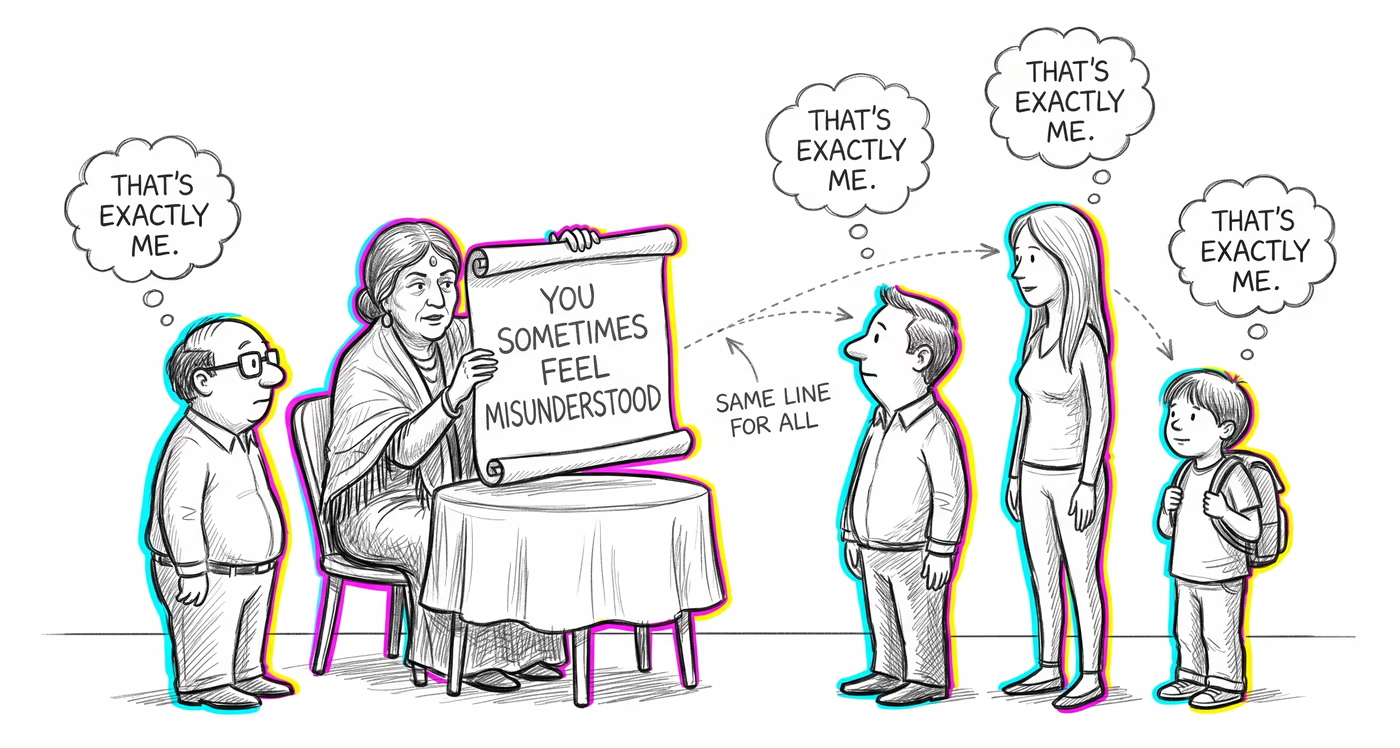
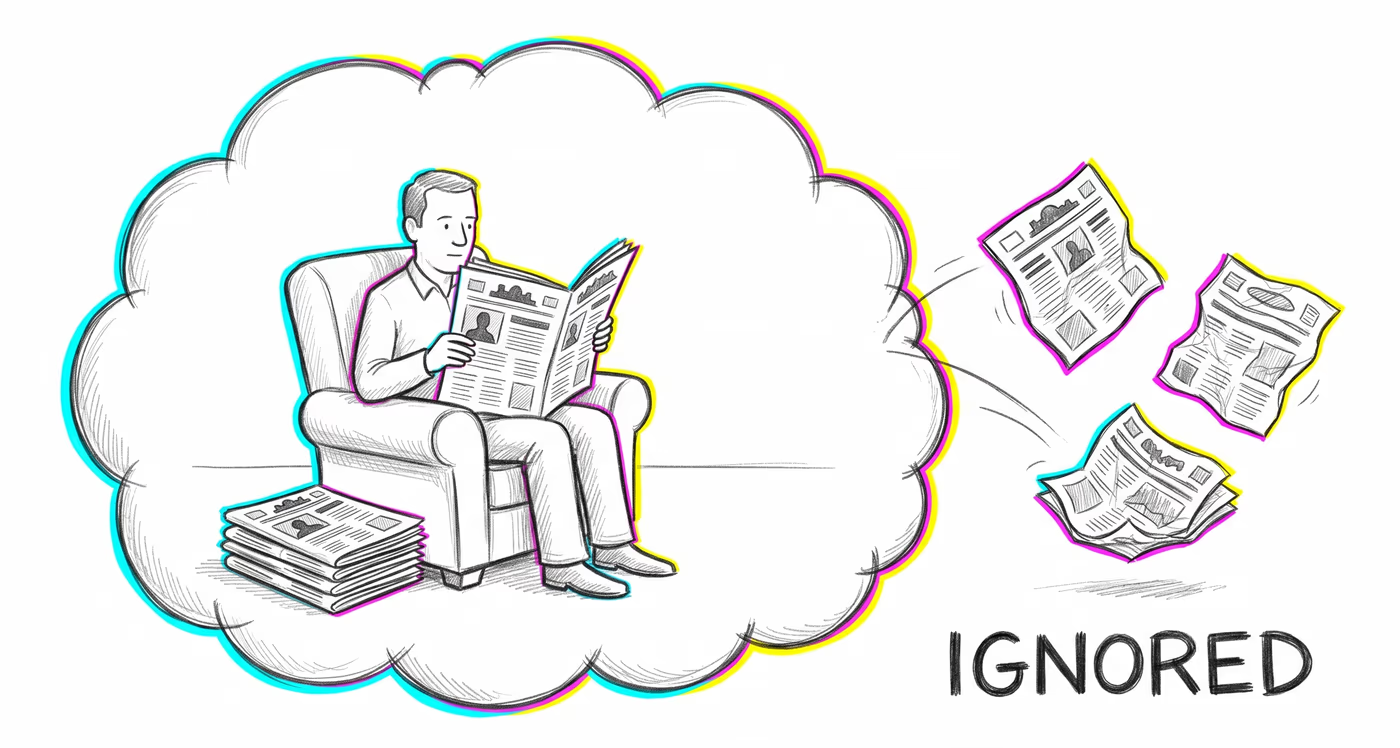
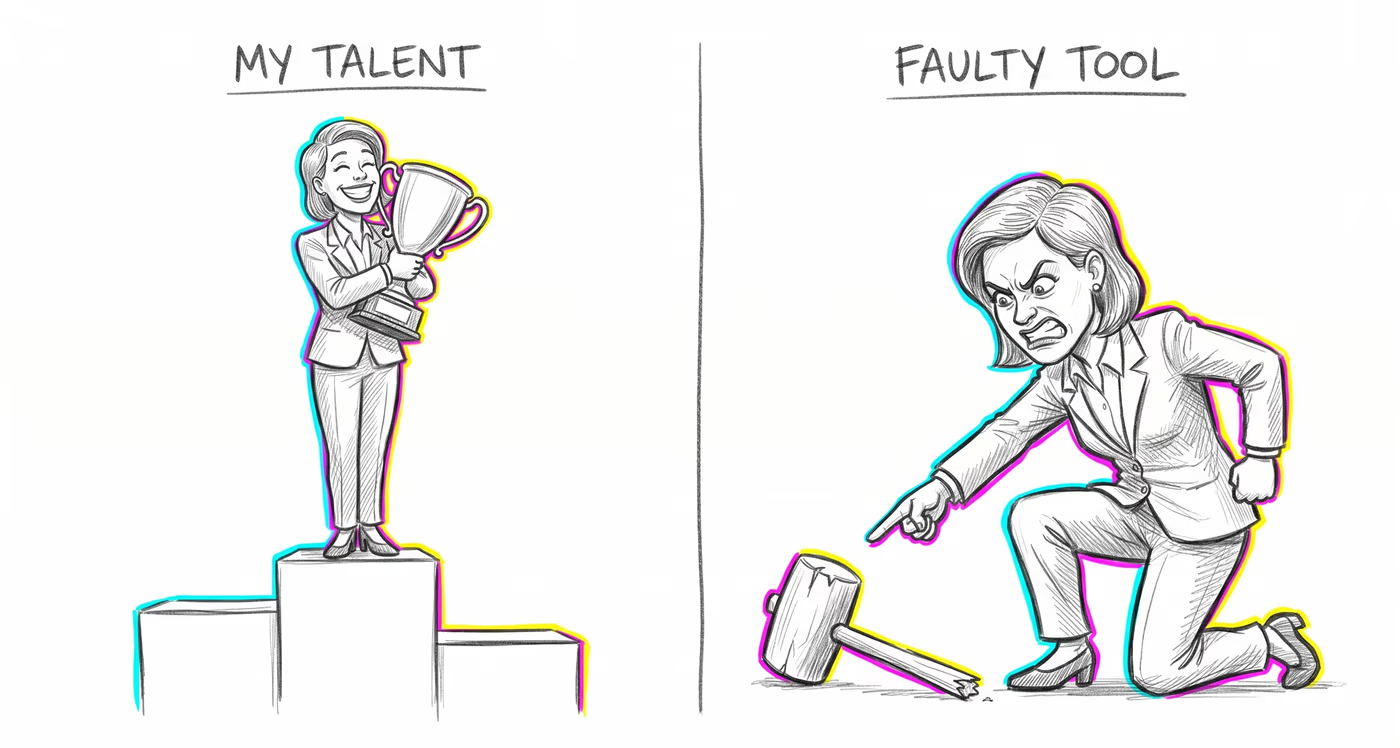
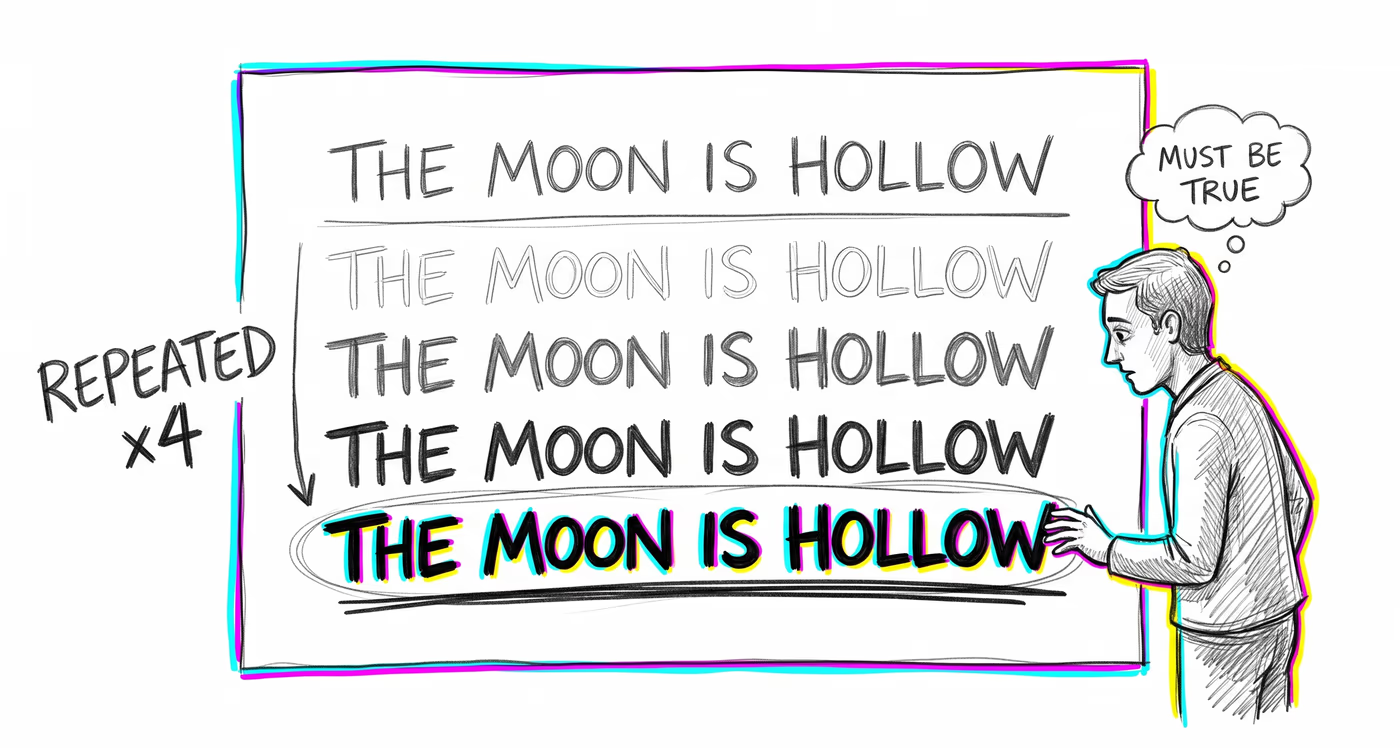
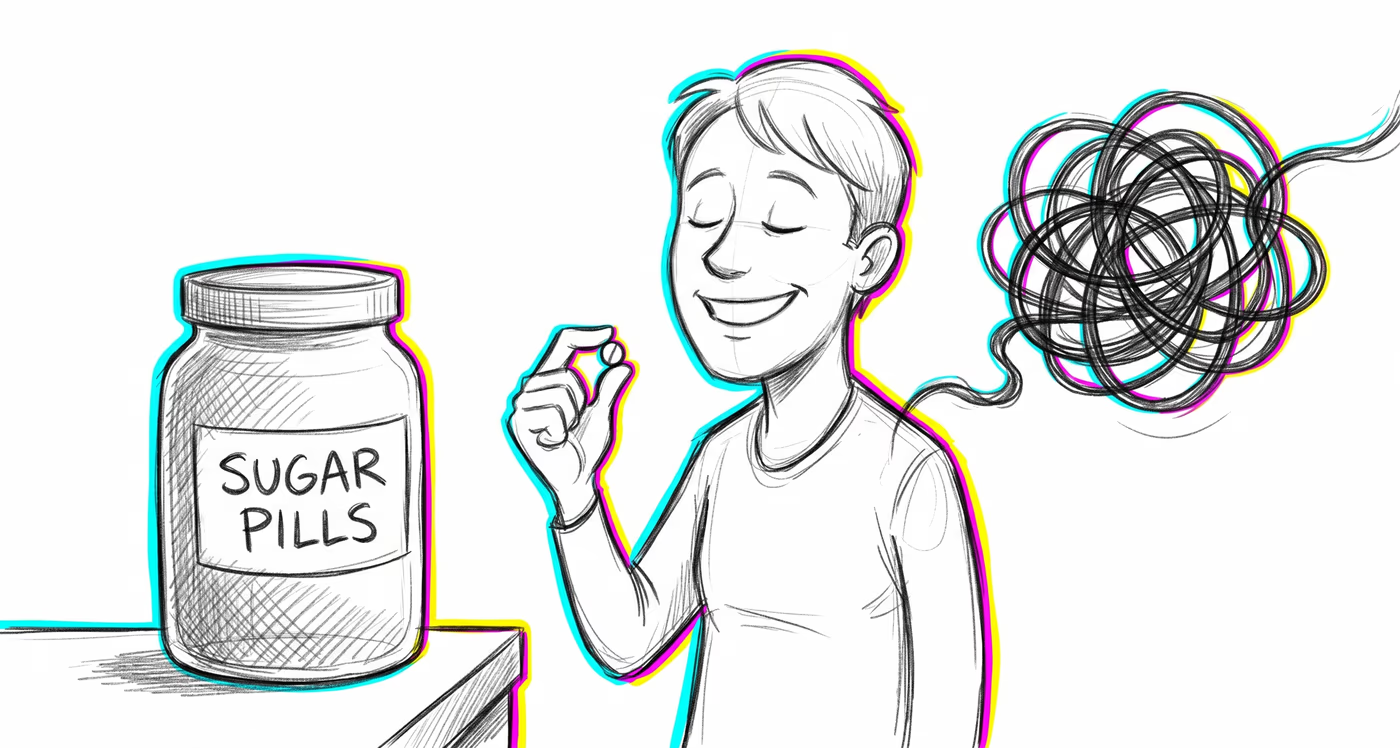
Illustration: Barnum Effect
WHAT IT IS

The glitch, explained plainly.

Imagine someone writes one fortune cookie message and gives the same message to everyone in a room. Each person reads it and says, 'Wow, this is so ME!' That's the Barnum Effect — you think a description was written just for you, but it's actually so general it fits almost anybody.

The Barnum Effect describes how people readily endorse generic personality feedback as a highly accurate portrait of their individual character, particularly when they believe the feedback was generated specifically for them by an authority figure, and when the statements are predominantly positive or flattering. The effect is amplified by several converging factors: the perceiver's desire to feel understood, the perceived credibility of the source, and the use of double-headed statements that cover opposing traits (e.g., 'sometimes outgoing, sometimes reserved'). This bias underpins the persuasive power of horoscopes, psychic cold readings, many pop-psychology personality quizzes, and targeted marketing copy that feels personal but is mass-produced. It reveals a fundamental human vulnerability: we are motivated interpreters who actively mine our own memories for confirmatory evidence whenever presented with self-relevant information.

SOUND FAMILIAR?

Where it shows up.

  1. 01 Reading a daily horoscope and feeling amazed at how accurately it describes the current situation, even though the same text applies to one-twelfth of the world's population.
  2. 02 Taking an online personality quiz that says 'You are creative but sometimes doubt yourself,' and sharing it on social media because it feels so personally insightful.
  3. 03 A fortune cookie reading 'A great opportunity is coming your way soon,' and immediately connecting it to a specific upcoming event.
  4. 04 Receiving a generic motivational email from a brand that says 'We know you value quality and authenticity' and feeling a stronger connection to the company.
  5. 05 A palm reader saying 'You've experienced a significant loss or disappointment,' and being stunned by their apparent insight — not realizing this applies to virtually every adult.
IN DIFFERENT DOMAINS

Where it shows up at work.

The same glitch looks different depending on the terrain. Finance, medicine, a relationship, a team — same mechanism, different costume.

Finance & investing

A financial advisor tells a new client, 'You want growth but you also value security,' and the client feels deeply understood and trusts the advisor's recommendations, even though this describes nearly every investor.

Medicine & diagnosis

A patient reads a symptom description online that says 'You may feel occasional fatigue and worry about your health,' interprets it as a precise diagnosis, and becomes convinced they have the described condition.

Education & grading

A teacher writes generic report card comments like 'This student has untapped potential and sometimes struggles with focus,' and each parent reads it as a uniquely perceptive assessment of their individual child.

Relationships

A couples' compatibility quiz tells both partners 'You crave deep connection but sometimes need space,' and they interpret it as profound proof that the quiz understands their unique relationship dynamic.

Tech & product

A music streaming service displays 'Made for You' playlists that are algorithmically generated for broad demographic segments, but users perceive them as intimately curated to their personal taste.

HOW TO SPOT IT

Ask yourself…

  • Would this description still feel accurate if I imagined a stranger reading it about themselves?
  • Am I accepting this feedback because it genuinely describes something specific about me, or because it's flattering and vague enough to fit anyone?
  • Do I trust this assessment more because of who or what delivered it rather than because of its actual specificity?
HOW TO DEFEND AGAINST IT

The playbook.

  • Apply the 'universality test': Read the statement and ask whether 80% of people you know would also agree it describes them. If yes, it's a Barnum statement.
  • Demand specificity: Genuinely accurate personality feedback should include concrete, falsifiable details — not hedged statements like 'sometimes you are outgoing, sometimes reserved.'
  • Check for double-barreled statements that cover both ends of a spectrum, making them unfalsifiable (e.g., 'You value independence but also enjoy close relationships').
  • Consider the source's incentive structure: Is the person or platform rewarded for making you feel understood (e.g., return visits, purchases, continued engagement)?
  • Seek disconfirming evidence: Actively think of ways the description does NOT fit you before accepting it.
FAMOUS CASES

In history.

  • Bertram Forer's 1948 classroom experiment, where 39 psychology students rated identical generic personality profiles as highly accurate (mean 4.26 out of 5), becoming a landmark demonstration of personal validation fallacy.
  • Ross Stagner's 1958 study on personnel managers, who accepted fabricated generalized personality feedback from a bogus test as accurate descriptions of themselves, demonstrating the effect in professional settings.
  • The widespread cultural acceptance of newspaper horoscope columns throughout the 20th century, which relied entirely on Barnum statements to maintain readership and perceived credibility.
WHERE IT COMES FROM
Academic origin

Bertram R. Forer, 1948 (original experiment and concept as 'fallacy of personal validation'); Paul E. Meehl, 1956 (coined the term 'Barnum Effect' in his essay 'Wanted — A Good Cookbook' in American Psychologist).

Evolutionary origin

Humans evolved as intensely social creatures who benefit from understanding themselves and predicting others' perceptions of them. A bias toward accepting personality feedback from perceived authorities likely served adaptive functions: it promoted social cohesion, facilitated learning from elders and leaders, and supported the development of self-concept needed for navigating complex group dynamics. Being receptive to social feedback — even when imprecise — helped maintain group belonging and cooperative relationships.

IN AI SYSTEMS

How the machines inherit it.

LLMs and chatbots can produce Barnum-like responses — generating vague, agreeable personality observations that users interpret as deep understanding. Recommendation algorithms exploit the effect by labeling generic, segment-level suggestions as 'personalized for you,' increasing user engagement and trust. AI-generated horoscope and personality content can scale Barnum statements to millions of users simultaneously, each believing the output is uniquely tailored. Users may also overestimate an AI's comprehension of their individual needs because its responses are crafted to be broadly agreeable.

Read more on Wikipedia
FREE FIELD ZINE

10 glitches quietly running your life.

A free field-zine PDF — ten cognitive glitches named, illustrated, with a defense move for each. Plus the weekly Glitch Report on Fridays — one bias named, two spotted in the wild, one defense move. Unsubscribe any time.

EXPLORE MORE

Related glitches.

LAUNCH PRICE

Train against your blindspots.

50 cards are free to preview. Buyers unlock the rest of the deck plus the interactive training — Spot-the-Bias Quiz unlimited, Swipe Deck with spaced repetition, My Blindspots, Decision Pre-Flight, the Printable Deck + Cheat Sheets, and the Field Guide e-book. $29.50$59.

Unlock the full deck

Everything below — yours forever. Pay once, use across every device.

Half-off launch — limited to the first 100 readers. Auto-applied at checkout.
$59 $29.50
one-time payment · lifetime access
  • All interactive digital cards — search, filter, flip, shuffle on any device
  • Five training modes — Spot-the-Bias Quiz, Swipe Deck, Pre-Flight, Blindspots, Journal
  • Curated Lenses + Decision Templates + Defense Playbook
  • Printable Deck PDFs + Field Guide e-book + Cheat Sheets + Anki Export
  • Every future improvement, included
Unlock  $29.50

30-day refund · no questions asked

Unlock the full deck

Everything below — yours forever. Pay once, use across every device.

Half-off launch — limited to the first 100 readers. Auto-applied at checkout.
$59 $29.50
one-time payment · lifetime access
  • All interactive digital cards — search, filter, flip, shuffle on any device
  • Five training modes — Spot-the-Bias Quiz, Swipe Deck, Pre-Flight, Blindspots, Journal
  • Curated Lenses + Decision Templates + Defense Playbook
  • Printable Deck PDFs + Field Guide e-book + Cheat Sheets + Anki Export
  • Every future improvement, included
Unlock  $29.50

30-day refund · no questions asked