The same glitch looks different depending on the terrain. Finance, medicine, a
relationship, a team — same mechanism, different costume.
Finance & investing
Investors pile into assets experiencing rapid price appreciation not because of changed fundamentals but because rising prices signal that others are buying, creating speculative bubbles. This pattern fueled events from the Dutch Tulip Mania to the 2017 cryptocurrency boom, where volume of participation was mistaken for validation of value.
Medicine & diagnosis
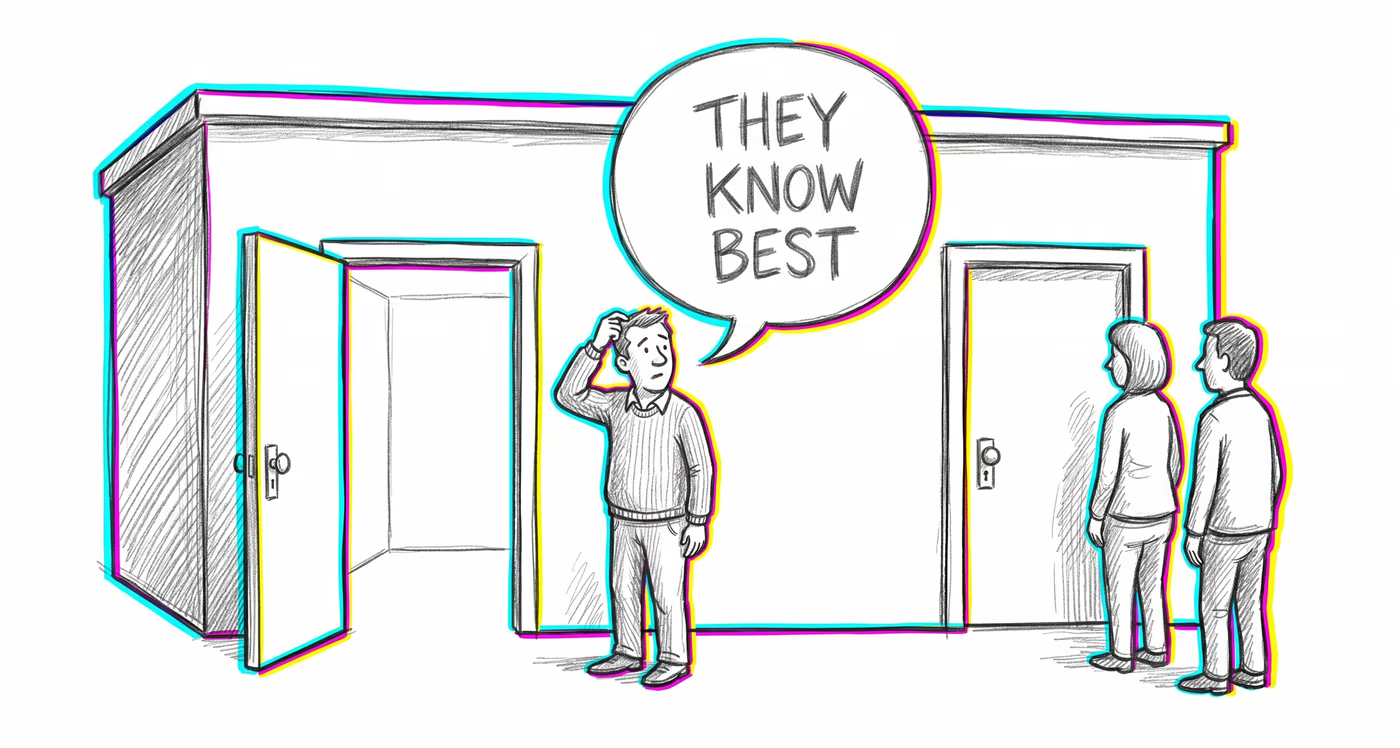
When a new treatment gains momentum through media attention and early adopter enthusiasm, both patients and practitioners can adopt it before rigorous evidence supports its efficacy. Clinicians may prescribe trending treatments because peer adoption signals effectiveness, bypassing their own critical appraisal of the evidence base.
Education & grading
Students are more likely to choose popular electives, majors, or study strategies endorsed by peers rather than those aligned with their own aptitudes. Teachers may also adopt trending pedagogical methods based on widespread adoption in their network rather than evidence of effectiveness for their specific student population.
Relationships
People in social groups often adopt the collective opinion about a friend's new partner — if the group approves, individual doubts are suppressed, and if the group disapproves, a person may distance themselves from someone they personally like. Relationship milestones (marriage timing, having children) are also influenced by perceived norms within one's peer circle.
Tech & product
Designers leverage the bandwagon effect through social proof elements: displaying user counts ('Join 10 million users'), showing real-time purchase activity, and highlighting trending items. Products with higher download counts attract disproportionately more downloads, creating winner-take-all dynamics in app marketplaces.
Workplace & hiring
Teams often rally around a dominant idea in meetings not because it's the strongest but because early vocal support creates a perception of consensus. Hiring managers may favor candidates from well-known companies, treating the brand's popularity as a proxy for individual competence.
Politics Media
Pre-election polls can shift voter behavior toward the leading candidate, as voters wish to support the anticipated winner. Media coverage that frames one candidate as having momentum can create self-fulfilling prophecies where the perception of widespread support generates actual support.