Groupthink

aka Concurrence-Seeking Tendency

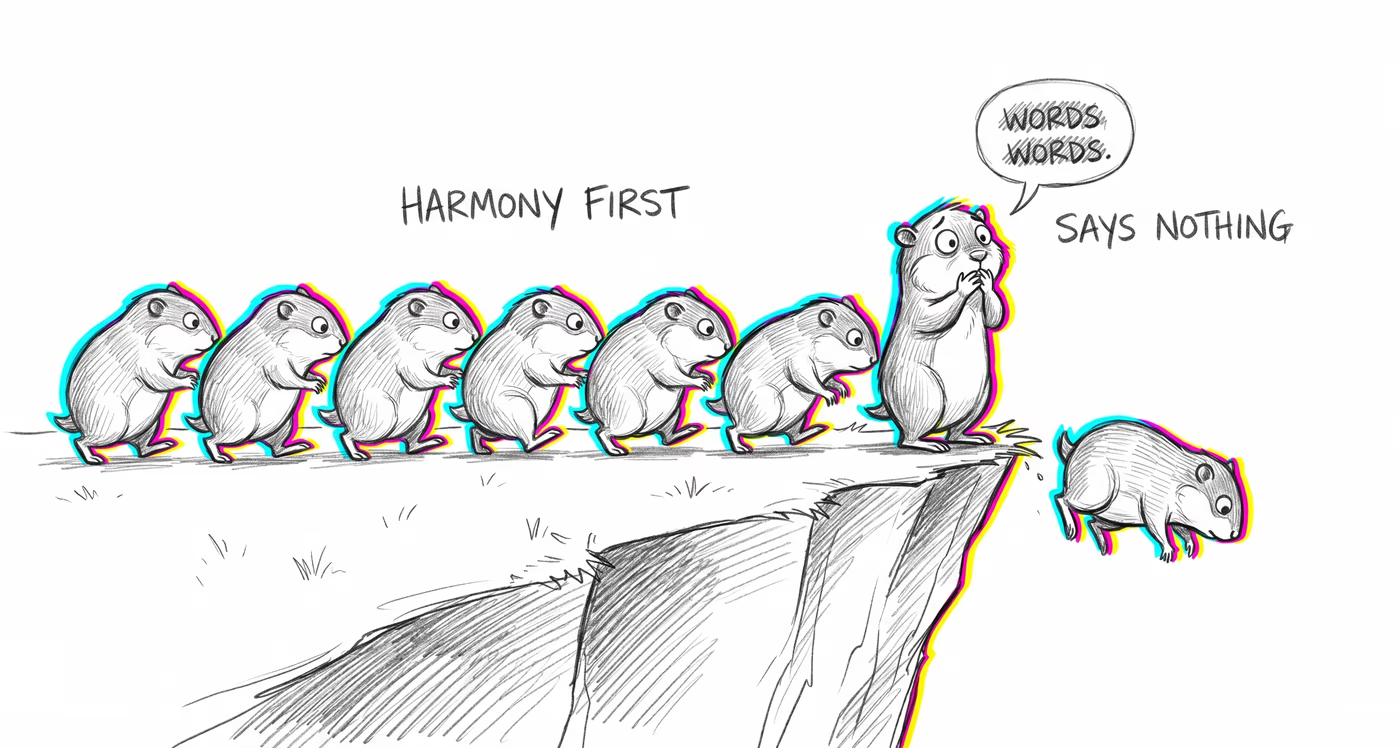
A group's desire for harmony overriding realistic evaluation of alternatives, leading to poor collective decisions.

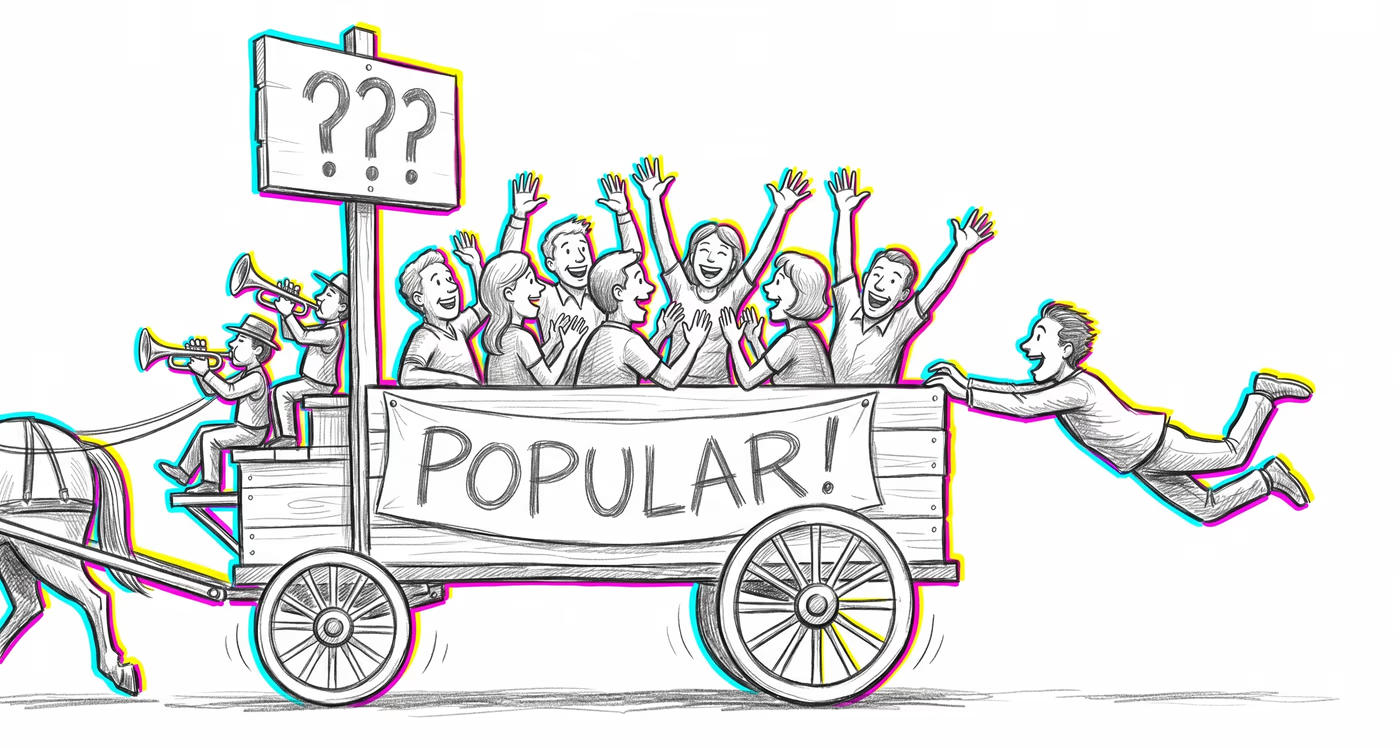
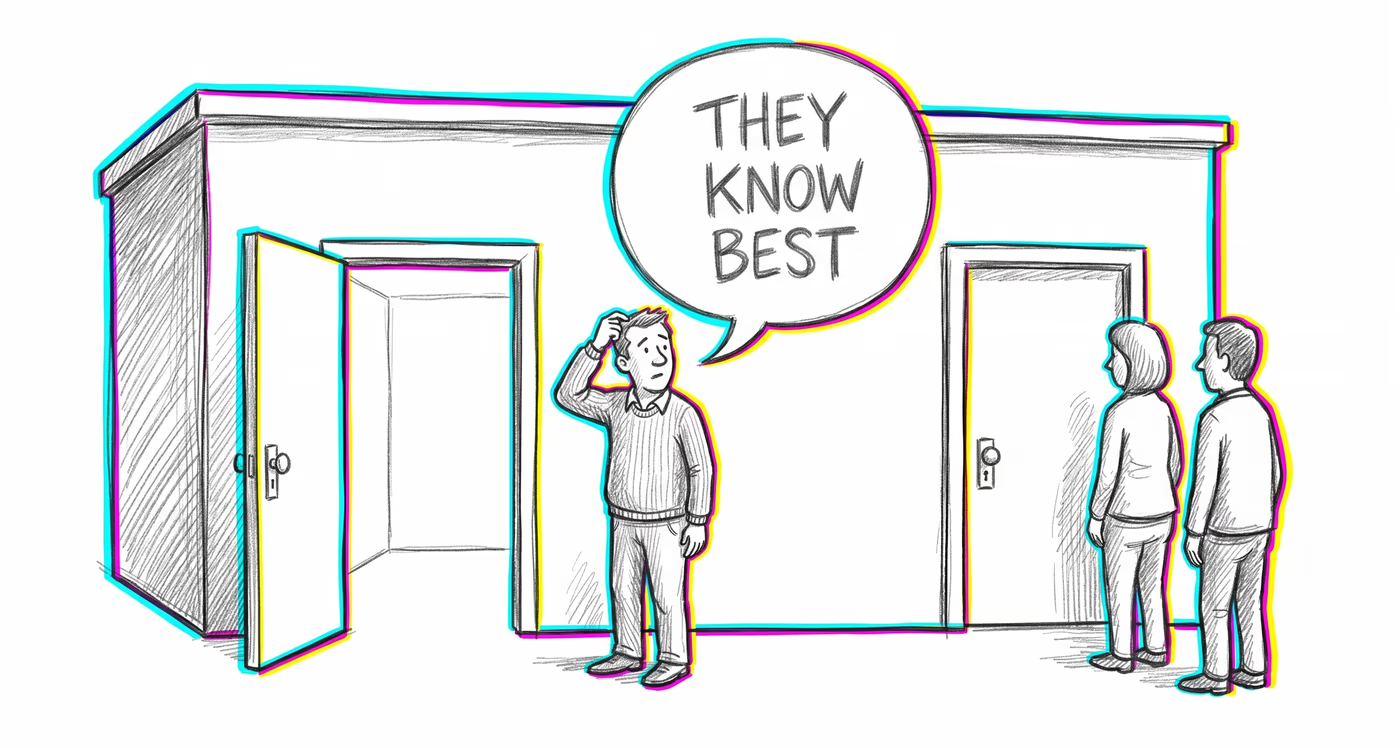
Illustration: Groupthink
WHAT IT IS

The glitch, explained plainly.

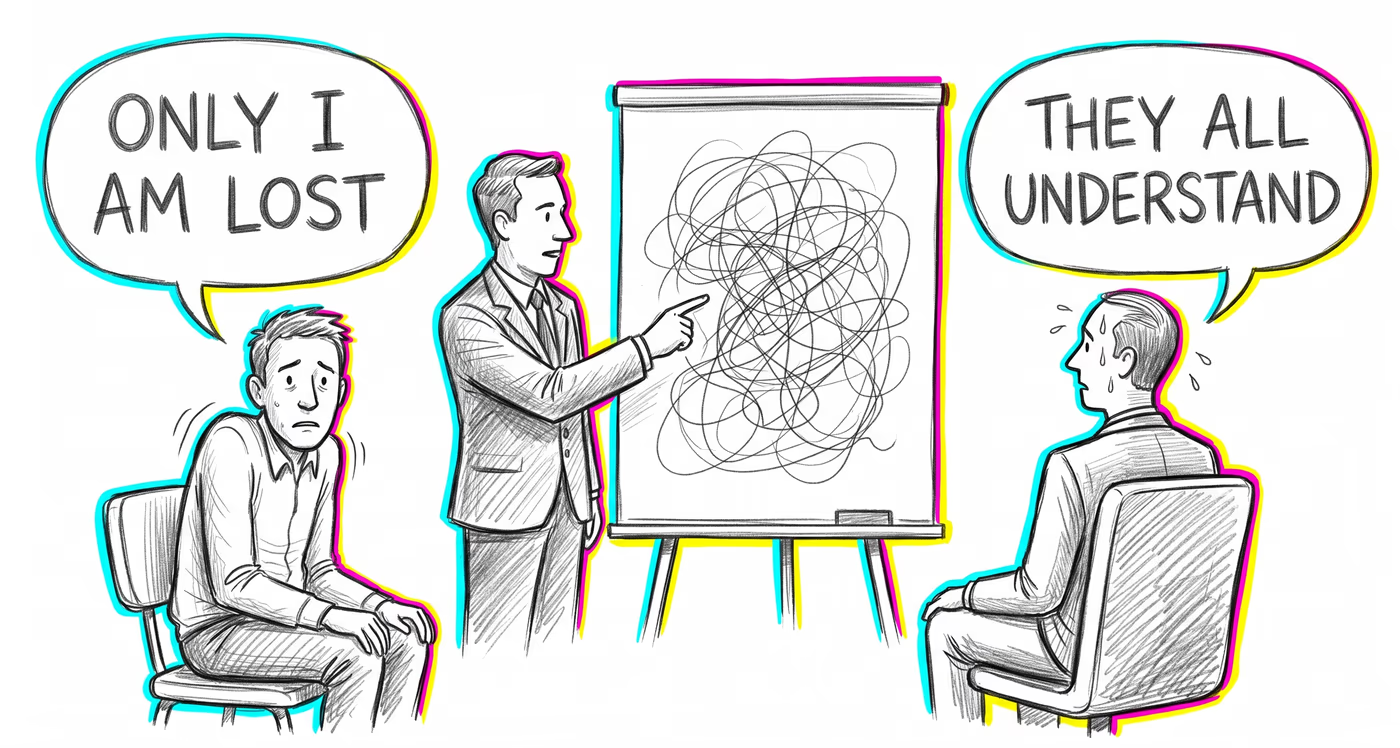
Imagine you're in a car with all your friends, and the driver takes a wrong turn. You notice, but everyone else seems fine with it, so you stay quiet. Then someone else notices too, but they also stay quiet because nobody else is speaking up. Pretty soon, everyone is privately worried but publicly silent, and you all end up lost — because nobody wanted to be the one to say 'Hey, I think we're going the wrong way.'

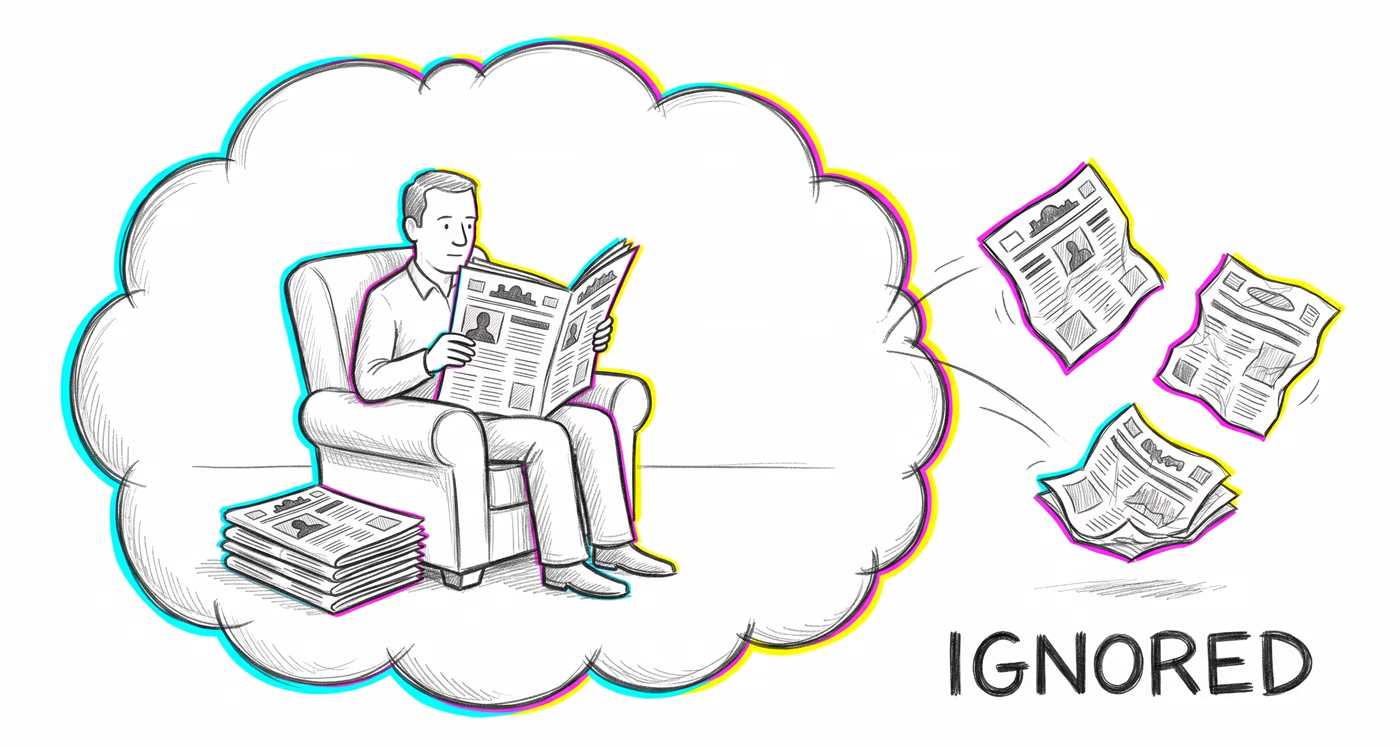
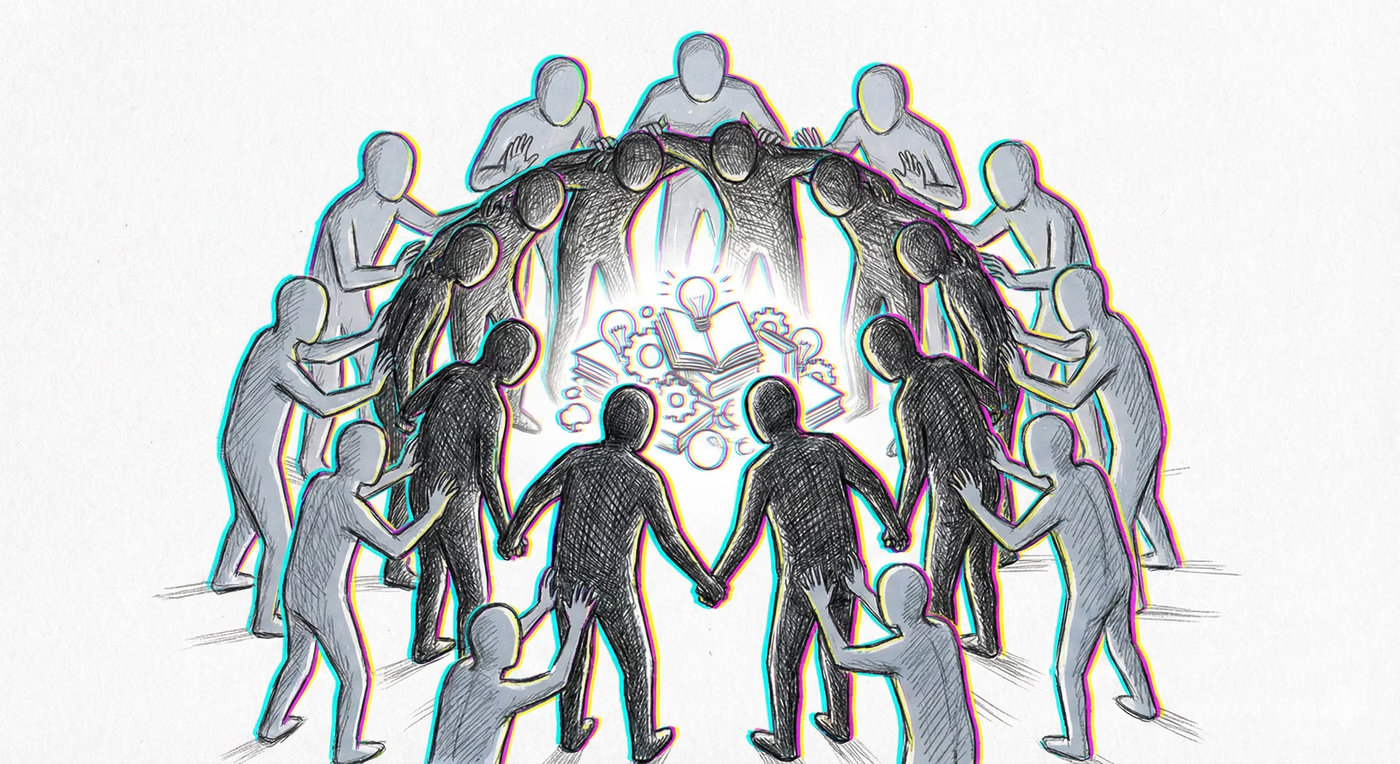
Groupthink emerges when members of a tightly bonded group prioritize social cohesion and consensus above rigorous evaluation of evidence and alternatives. Under these conditions, individuals self-censor doubts, suppress dissent, and rationalize warnings that challenge the group's preferred course of action. Self-appointed 'mindguards' may actively shield the group from contradictory information, while an illusion of unanimity makes silence appear to be agreement. The result is a decision-making process that fails to consider risks, ignores outside expertise, neglects contingency plans, and produces outcomes far worse than any individual member would have reached alone.

SOUND FAMILIAR?

Where it shows up.

  1. 01 A startup's founding team is deciding whether to pivot their product. The CEO passionately argues for staying the course, and one by one, each co-founder voices agreement. The CTO has data showing declining user engagement but decides not to bring it up, reasoning that 'everyone else seems confident, so maybe I'm missing something.' The team moves forward without examining the data.
  2. 02 A hospital's ethics committee is reviewing a controversial treatment protocol. The department chair endorses it strongly. Two junior physicians have reservations based on recent literature, but when they see senior colleagues nodding in agreement, they choose not to raise objections. The committee member who privately compiled counter-evidence decides it would be 'disruptive' to share it. The protocol is approved unanimously.
  3. 03 A city council votes to approve a large infrastructure project. During deliberation, a council member who did independent research finding significant environmental risks notices that every other member has expressed support. She decides to vote yes as well, telling herself the environmental review was probably adequate and she doesn't want to delay a popular project. She later tells a colleague she had doubts but felt the group had already made up its mind.
  4. 04 An investment committee at a hedge fund is evaluating a large position. The lead analyst presents a bullish thesis and the managing partner agrees enthusiastically. A junior analyst notices the model relies on unusually optimistic assumptions but, rather than challenge them, rationalizes that the senior team must have access to information she doesn't. Another analyst who shares her concern stays silent after glancing around the room and seeing no resistance. The position is approved with no dissenting vote.
  5. 05 A product design team at a tech company is finalizing a new interface. During usability testing, two team members independently noticed users struggling with navigation, but neither raised it in the review meeting because the project lead had declared the design 'our best work yet' and the team had bonded deeply over months of collaboration. When one designer later mentions the issue privately, the other says, 'I saw it too, but I figured if it were really a problem, someone would have said something.'
IN DIFFERENT DOMAINS

Where it shows up at work.

The same glitch looks different depending on the terrain. Finance, medicine, a relationship, a team — same mechanism, different costume.

Finance & investing

Investment committees in funds or banks tend to converge on a single thesis championed by the most senior or most vocal member, with analysts self-censoring contradictory findings to preserve team harmony, leading to concentrated, poorly hedged positions.
Medicine & diagnosis

Surgical teams or diagnostic committees may defer to the attending physician's initial assessment, with nurses and junior doctors withholding observations that contradict the senior diagnosis, increasing the risk of misdiagnosis or procedural errors.

Education & grading

Faculty committees evaluating curricula or tenure cases may suppress individual reservations to maintain departmental unity, resulting in the approval of weak candidates or programs that no single member would have endorsed alone.

Relationships

Friend groups or families may collectively avoid addressing a member's harmful behavior — such as substance abuse or a toxic relationship — because no individual wants to be the one to disrupt the group's harmony.

Tech & product

Engineering teams may rally around a technical architecture championed by a respected lead, with individual developers suppressing concerns about scalability or security to avoid being seen as obstructing progress, resulting in fragile systems.

Workplace & hiring

Hiring panels often converge on the candidate who receives the first enthusiastic endorsement, with panel members who had concerns about the candidate declining to voice them after sensing the group's positive momentum.

Politics Media

Political advisory groups or editorial boards may develop shared narratives that go unchallenged internally, leading to policy decisions or coverage angles that ignore critical counterevidence because no member wants to break consensus.

HOW TO SPOT IT

Ask yourself…

  • Am I staying silent about a concern because I assume everyone else has already considered and dismissed it?
  • Is this group reaching consensus suspiciously fast, without anyone raising objections or alternatives?
  • Would I make the same decision if I were deciding alone, without knowing what the group thinks?
HOW TO DEFEND AGAINST IT

The playbook.

  • Assign a rotating 'devil's advocate' whose explicit job is to argue against the emerging consensus in every meeting.
  • Use anonymous input methods (written votes, surveys, or digital polling) before group discussion to surface private doubts.
  • Invite outside experts with no loyalty to the group to critique proposals before final decisions.
  • The leader should withhold their opinion until after all other members have spoken, to avoid anchoring the group.
  • Establish a norm of conducting a 'pre-mortem': before committing, ask 'Imagine this decision failed — what went wrong?'
FAMOUS CASES

In history.

  • The Bay of Pigs invasion (1961): Kennedy's advisory group failed to challenge a deeply flawed CIA plan due to conformity pressure and self-censorship.
  • The Space Shuttle Challenger disaster (1986): NASA managers overrode engineers' warnings about O-ring failure in cold temperatures, driven by schedule pressure and an illusion of invulnerability from prior successful launches.
  • The failure to anticipate the attack on Pearl Harbor (1941): Military planners dismissed warning intelligence in favor of the prevailing group consensus that an attack was unlikely.
  • The escalation of the Vietnam War (1964–67): President Johnson's advisory group maintained consensus on escalation despite growing evidence of futility, with dissenters marginalized.
  • The Swissair collapse (2002): A homogeneous, reduced-size board failed to challenge risky expansion strategies, exhibiting multiple symptoms of groupthink.
WHERE IT COMES FROM
Academic origin

The term was coined by William H. Whyte Jr. in 1952 in Fortune magazine. Irving Janis, a research psychologist at Yale University, developed the formal theory in his 1972 book 'Victims of Groupthink' and revised it in 1982.

Evolutionary origin

In ancestral environments, group cohesion was literally a matter of survival. Being expelled from a tribal group meant near-certain death from predation, starvation, or rival groups. Brains that prioritized harmony over individual dissent helped maintain the cooperative bonds necessary for collective defense, hunting, and child-rearing. The cost of occasionally making a suboptimal group decision was vastly outweighed by the benefit of keeping the group intact and functioning.

IN AI SYSTEMS

How the machines inherit it.

AI systems can both amplify and simulate groupthink. When training data reflects consensus-driven outputs — such as articles, reports, or decisions produced under groupthink conditions — models inherit those biased conclusions as ground truth. In human-AI interaction, LLMs' tendency toward agreeableness and accommodation can create a two-person groupthink dynamic, where the AI reinforces the user's existing views rather than challenging them, mimicking the role of a conforming group member.

Read more on Wikipedia
FREE FIELD ZINE

10 glitches quietly running your life.

A free field-zine PDF — ten cognitive glitches named, illustrated, with a defense move for each. Plus the weekly Glitch Report on Fridays — one bias named, two spotted in the wild, one defense move. Unsubscribe any time.

EXPLORE MORE

Related glitches.

LAUNCH PRICE

Train against your blindspots.

50 cards are free to preview. Buyers unlock the rest of the deck plus the interactive training — Spot-the-Bias Quiz unlimited, Swipe Deck with spaced repetition, My Blindspots, Decision Pre-Flight, the Printable Deck + Cheat Sheets, and the Field Guide e-book. $29.50$59.

Unlock the full deck

Everything below — yours forever. Pay once, use across every device.

Half-off launch — limited to the first 100 readers. Auto-applied at checkout.
$59 $29.50
one-time payment · lifetime access
  • All interactive digital cards — search, filter, flip, shuffle on any device
  • Five training modes — Spot-the-Bias Quiz, Swipe Deck, Pre-Flight, Blindspots, Journal
  • Curated Lenses + Decision Templates + Defense Playbook
  • Printable Deck PDFs + Field Guide e-book + Cheat Sheets + Anki Export
  • Every future improvement, included
Unlock  $29.50

30-day refund · no questions asked

Unlock the full deck

Everything below — yours forever. Pay once, use across every device.

Half-off launch — limited to the first 100 readers. Auto-applied at checkout.
$59 $29.50
one-time payment · lifetime access
  • All interactive digital cards — search, filter, flip, shuffle on any device
  • Five training modes — Spot-the-Bias Quiz, Swipe Deck, Pre-Flight, Blindspots, Journal
  • Curated Lenses + Decision Templates + Defense Playbook
  • Printable Deck PDFs + Field Guide e-book + Cheat Sheets + Anki Export
  • Every future improvement, included
Unlock  $29.50

30-day refund · no questions asked