Pluralistic Ignorance

aka Collective Illusion · Collective Delusion · No One Believes, but Everyone Believes That Everyone Else Believes

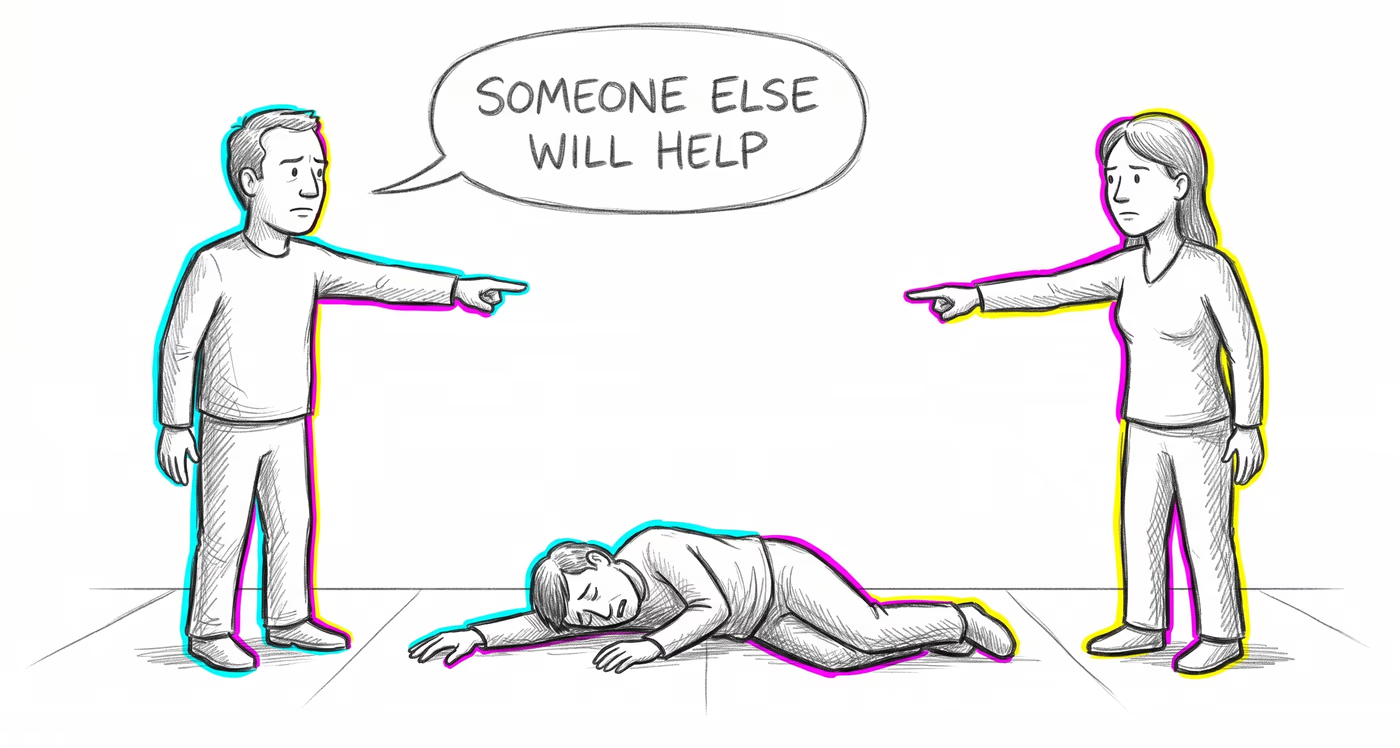
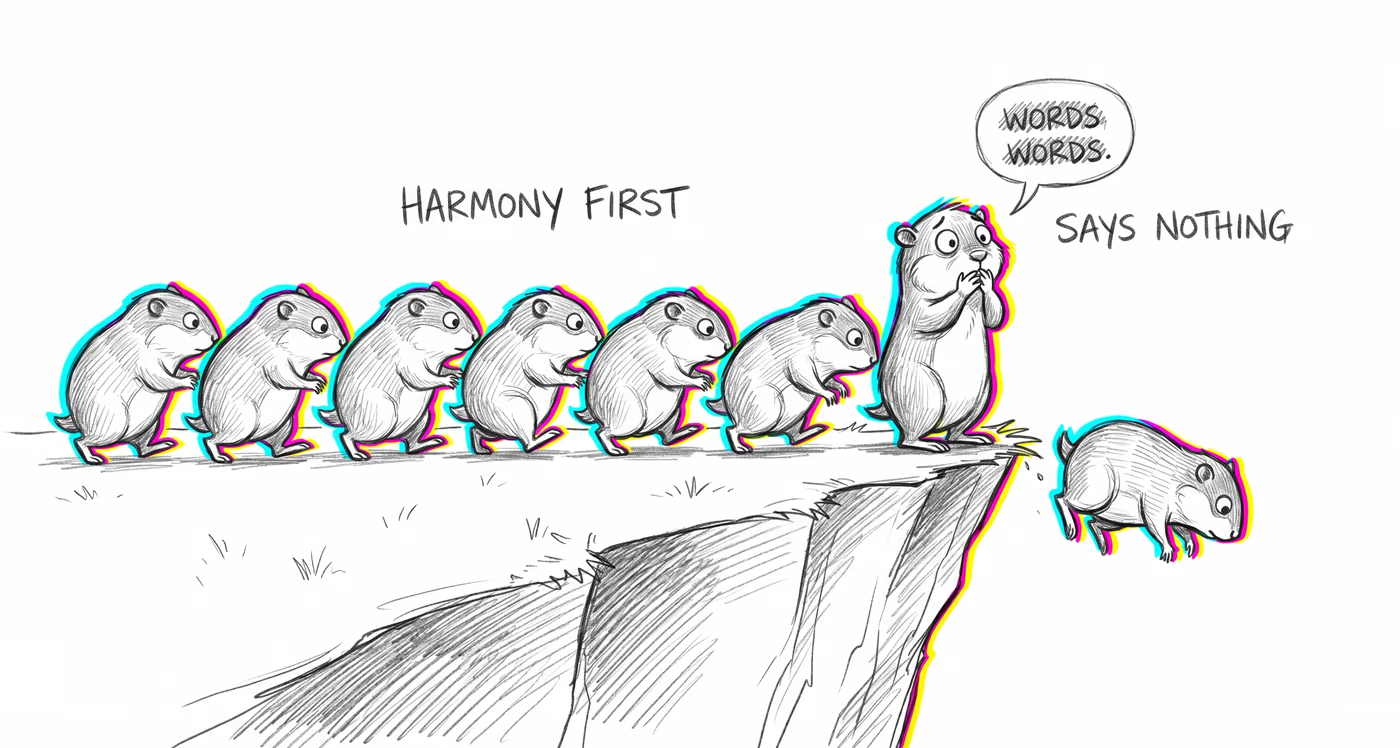
Most people privately disagreeing with a norm but assuming everyone else accepts it, so nobody speaks up.

WHAT IT IS

The glitch, explained plainly.

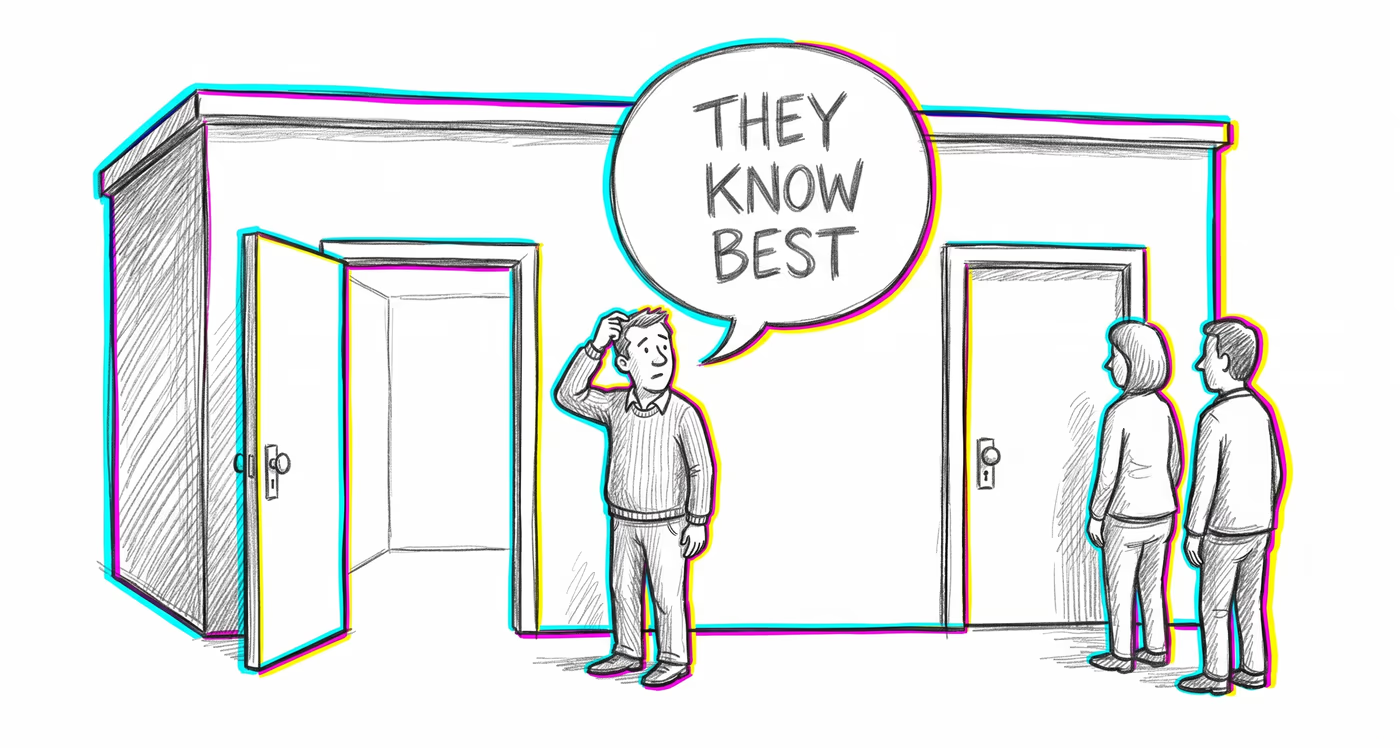
Imagine you and all your friends are eating a food that none of you actually like, but each of you keeps eating it because you look around and see everyone else eating it too, so you think you're the only one who doesn't like it. The funny part is — nobody likes it, but nobody says so because they all think they're the weird one.

Pluralistic ignorance occurs when individuals in a group systematically misjudge the private attitudes of their peers by interpreting others' public conformity as genuine endorsement, while attributing their own identical public conformity to external pressures. This creates a self-reinforcing feedback loop: each person suppresses their true opinion because they believe they are a lone dissenter, which in turn provides the very social evidence that convinces others to suppress theirs. The phenomenon can sustain unpopular norms, harmful behaviors, and unjust systems for extended periods, because the false consensus appears unshakable from the inside. Unlike simple conformity, pluralistic ignorance involves a genuine cognitive error about the distribution of beliefs, not merely yielding to known group pressure.

SOUND FAMILIAR?

Where it shows up.

  1. 01 During a company all-hands meeting, the CEO announces a new open-office floor plan. Every employee privately hates the idea, but when the CEO asks for reactions, each person looks around, sees no one objecting, and assumes they're uniquely opposed. One by one, employees voice tepid support, and the plan is adopted unanimously despite nearly universal private opposition.
  2. 02 A group of college freshmen go out drinking every weekend. Privately, most of them would prefer a quieter social life, but each student observes the others partying enthusiastically and concludes that heavy drinking is what everyone genuinely enjoys. Over the semester, several students increase their alcohol consumption to match what they perceive as the authentic group norm.
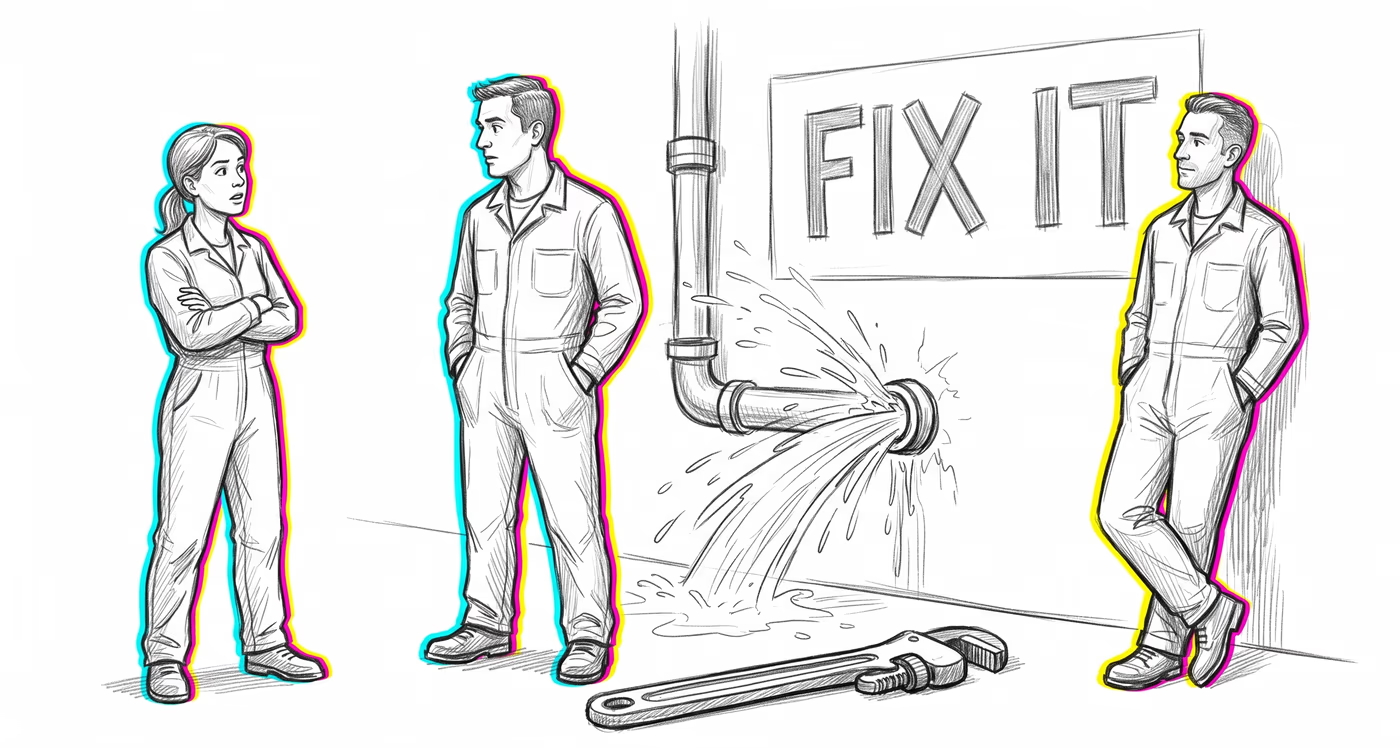
  3. 03 A software team continues using a legacy framework that everyone privately considers outdated and inefficient. Each developer assumes the others have strong technical reasons for preferring it, since no one has proposed a switch. In reality, every team member has been waiting for someone else to speak up first, and the framework persists purely because of mutual silence.
  4. 04 In a country with an authoritarian leader, a journalist discovers through anonymous surveys that 70% of citizens privately oppose the regime. Yet public demonstrations of loyalty are widespread, because each citizen observes their neighbors' outward support and concludes that genuine regime support is the majority position. The regime's apparent popularity is sustained entirely by mutual misperception.
  5. 05 A hospital department maintains an unwritten norm of surgeons never questioning senior attendings during procedures. A resident notices a potential dosage error but stays silent after seeing that no other resident or nurse has raised a concern. The resident assumes the others must have confirmed the dosage is correct, when in fact three other team members independently noticed the same error but made the same assumption about the others' silence indicating confidence.
IN DIFFERENT DOMAINS

Where it shows up at work.

The same glitch looks different depending on the terrain. Finance, medicine, a relationship, a team — same mechanism, different costume.

Finance & investing

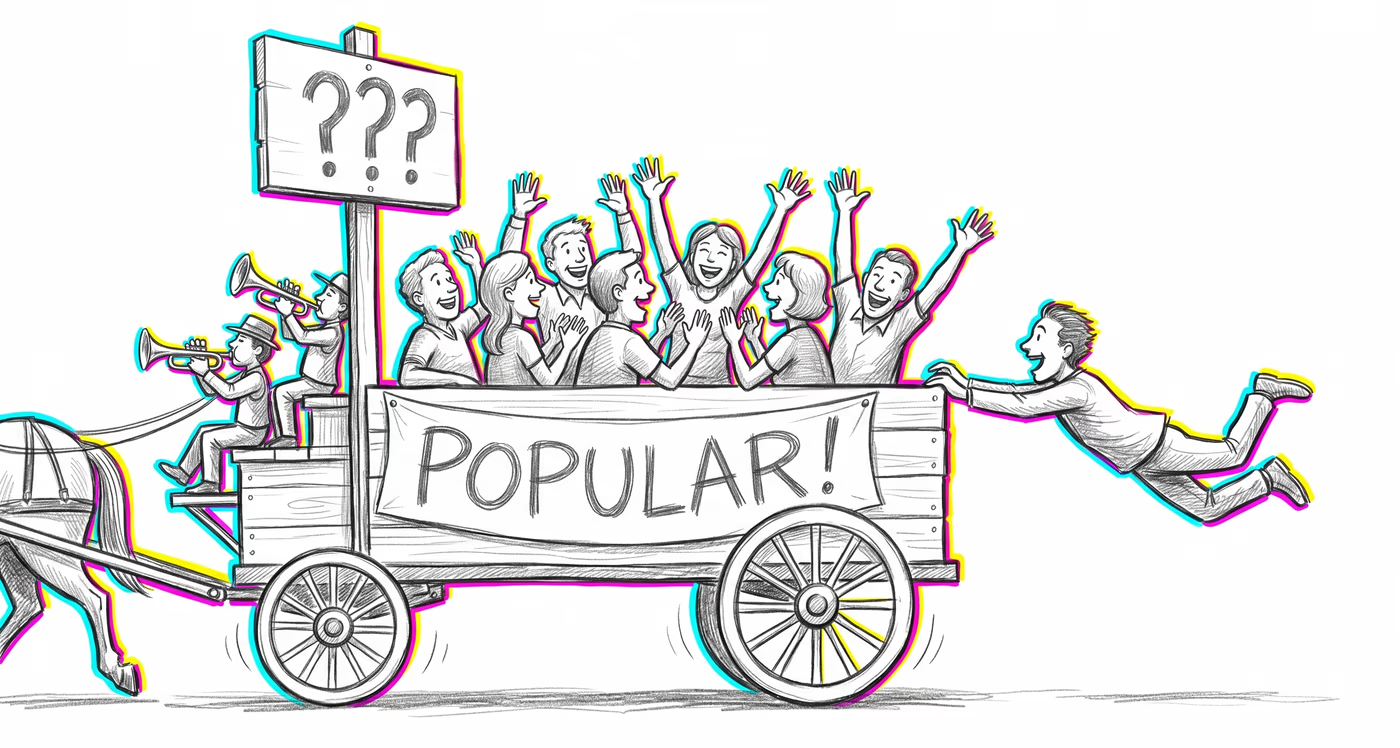
Investors may continue holding positions in overvalued assets or participating in speculative bubbles because they observe widespread market enthusiasm and assume other participants genuinely believe in the asset's value, when many are privately skeptical but afraid to be the first to exit.
Medicine & diagnosis

Healthcare workers may not report unsafe practices or near-miss incidents because they assume their colleagues are comfortable with current protocols. This pluralistic ignorance around patient safety norms can delay systemic reforms until a serious adverse event forces the issue.

Education & grading

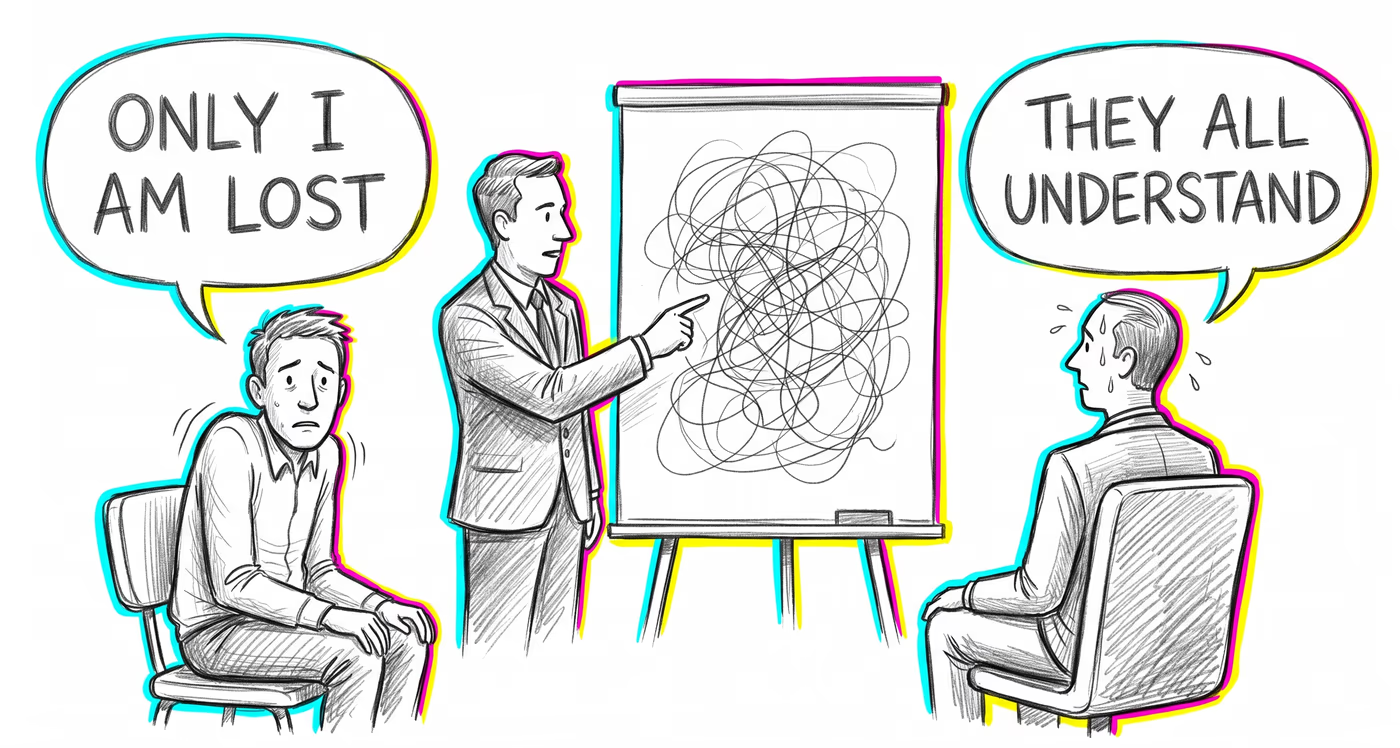
Students systematically overestimate their peers' understanding of course material. Because no one asks questions or admits confusion, a false norm of comprehension develops, discouraging help-seeking and leading to poorer learning outcomes across the class.

Relationships

Partners may maintain relationship practices neither genuinely enjoys — such as spending holidays with extended family or maintaining certain social obligations — because each partner assumes the other values the tradition, when both would prefer to do something different.

Tech & product

Product teams may continue shipping features or design patterns that internal stakeholders privately doubt, because no individual wants to be the lone voice of dissent against what appears to be team consensus. Anonymous feedback mechanisms can reveal widespread skepticism that was invisible in meetings.

Workplace & hiring

Employees may tolerate toxic workplace norms — excessive overtime, performative busyness, or aggressive meeting cultures — because they observe their colleagues complying and infer genuine buy-in, when most privately wish someone would challenge the status quo.

Politics Media

Public support for controversial policies can appear stronger than it actually is when media amplifies vocal minorities and citizens self-censor their opposition, each assuming they belong to a small dissenting fringe. This was documented in the persistence of racial segregation norms in the American South and in the apparent stability of authoritarian regimes like the Soviet Union.

HOW TO SPOT IT

Ask yourself…

  • Am I assuming that everyone else genuinely agrees with this, or could they be going along with it for the same reasons I am?
  • If I could see an anonymous poll of this group's real opinions right now, would I be surprised by the results?
  • Am I staying silent because I believe I'm the only one who feels this way — and what evidence do I actually have for that belief?
HOW TO DEFEND AGAINST IT

The playbook.

  • Use anonymous polling or surveys before group discussions to surface genuine opinions without social pressure.
  • Practice being the 'first voice' — studies show that a single dissenter dramatically reduces pluralistic ignorance in groups by giving others permission to speak.
  • Implement a 'pre-mortem' technique: before finalizing decisions, ask each person to independently write down concerns or objections.
  • Explicitly name the phenomenon in group settings: 'Could we be experiencing pluralistic ignorance here? Let's check what people actually think.'
  • Create structured 'devil's advocate' roles in meetings so dissent is expected and normalized rather than stigmatized.
FAMOUS CASES

In history.

  • The persistence of racial segregation in the American South despite growing private opposition among White Americans, documented by researchers who found that many privately supported integration but believed they were in the minority.
  • The apparent stability of the Communist Party of the Soviet Union, where widespread private opposition to the regime was masked by universal public conformity, each citizen assuming others genuinely supported the system.
  • The Hans Christian Andersen fable 'The Emperor's New Clothes' is widely cited as a literary archetype of pluralistic ignorance, where everyone pretends to see garments that don't exist because they assume everyone else can see them.
WHERE IT COMES FROM
Academic origin

Daniel Katz and Floyd H. Allport, 1931 (first coined in 'Students' Attitudes: A Report of the Syracuse University Reaction Study'). Allport initially discussed the underlying phenomenon as 'the illusion of universality of opinions' in his 1924 textbook 'Social Psychology'. Later key contributors include Dale T. Miller and Deborah Prentice (1990s–present).

Evolutionary origin

In ancestral social groups, accurately reading group consensus and conforming to it was critical for survival — being expelled from the group meant death. The brain therefore evolved a strong bias toward assuming observed behavior reflects genuine group sentiment, and toward suppressing deviant opinions to maintain social standing. Overestimating group agreement was far less costly than underestimating it and being ostracized.

IN AI SYSTEMS

How the machines inherit it.

AI systems trained on public-facing text data may absorb and amplify pluralistically ignorant norms — learning that certain opinions are 'mainstream' based on their frequency in public discourse, even when those opinions are performative rather than genuinely held. Recommendation algorithms and social media feeds can exacerbate the phenomenon by surfacing the most vocal and extreme positions, creating an artificial sense of consensus that suppresses moderate or dissenting views from appearing in training data or user feeds.

Read more on Wikipedia
FREE FIELD ZINE

10 glitches quietly running your life.

A free field-zine PDF — ten cognitive glitches named, illustrated, with a defense move for each. Plus the weekly Glitch Report on Fridays — one bias named, two spotted in the wild, one defense move. Unsubscribe any time.

EXPLORE MORE

Related glitches.

LAUNCH PRICE

Train against your blindspots.

50 cards are free to preview. Buyers unlock the rest of the deck plus the interactive training — Spot-the-Bias Quiz unlimited, Swipe Deck with spaced repetition, My Blindspots, Decision Pre-Flight, the Printable Deck + Cheat Sheets, and the Field Guide e-book. $29.50$59.

Unlock the full deck

Everything below — yours forever. Pay once, use across every device.

Half-off launch — limited to the first 100 readers. Auto-applied at checkout.
$59 $29.50
one-time payment · lifetime access
  • All interactive digital cards — search, filter, flip, shuffle on any device
  • Five training modes — Spot-the-Bias Quiz, Swipe Deck, Pre-Flight, Blindspots, Journal
  • Curated Lenses + Decision Templates + Defense Playbook
  • Printable Deck PDFs + Field Guide e-book + Cheat Sheets + Anki Export
  • Every future improvement, included
Unlock  $29.50

30-day refund · no questions asked

Unlock the full deck

Everything below — yours forever. Pay once, use across every device.

Half-off launch — limited to the first 100 readers. Auto-applied at checkout.
$59 $29.50
one-time payment · lifetime access
  • All interactive digital cards — search, filter, flip, shuffle on any device
  • Five training modes — Spot-the-Bias Quiz, Swipe Deck, Pre-Flight, Blindspots, Journal
  • Curated Lenses + Decision Templates + Defense Playbook
  • Printable Deck PDFs + Field Guide e-book + Cheat Sheets + Anki Export
  • Every future improvement, included
Unlock  $29.50

30-day refund · no questions asked