Horn Effect

aka Devil Effect · Reverse Halo Effect · Negative Halo Effect

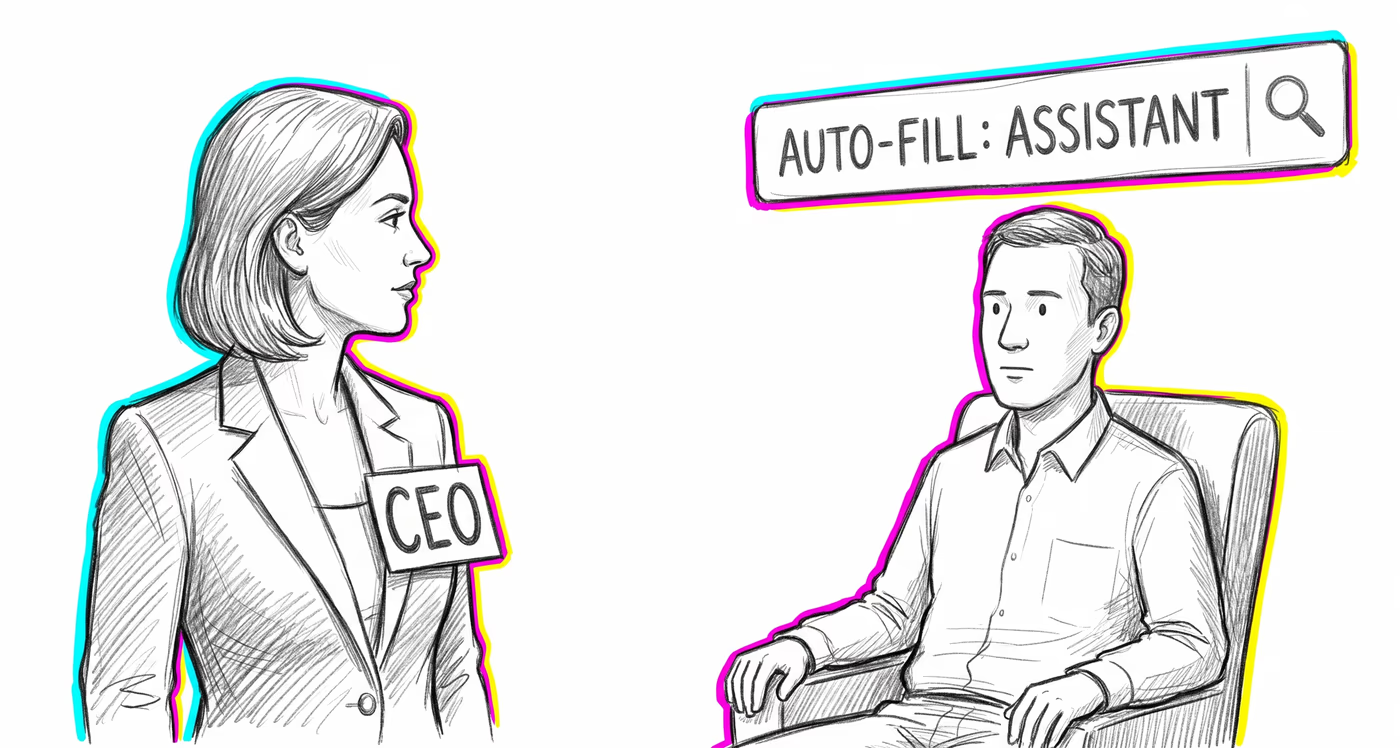
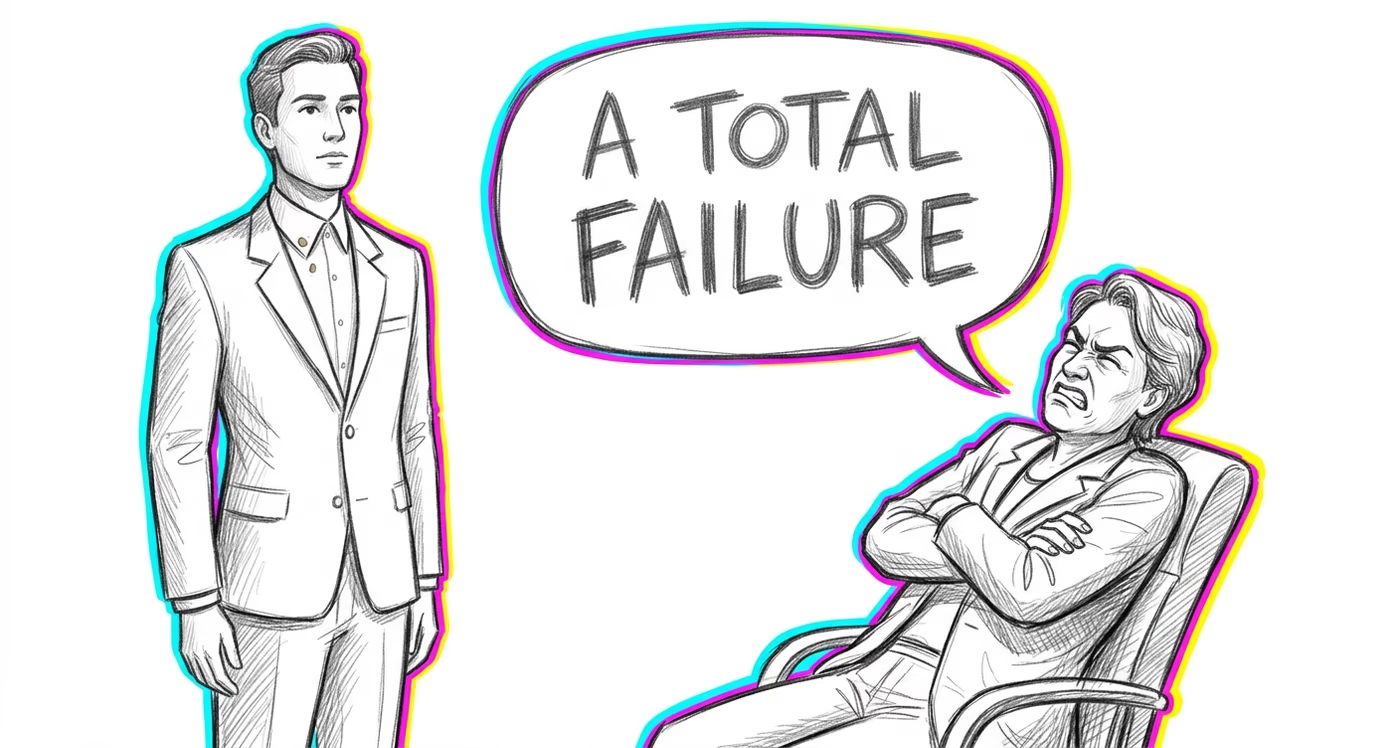
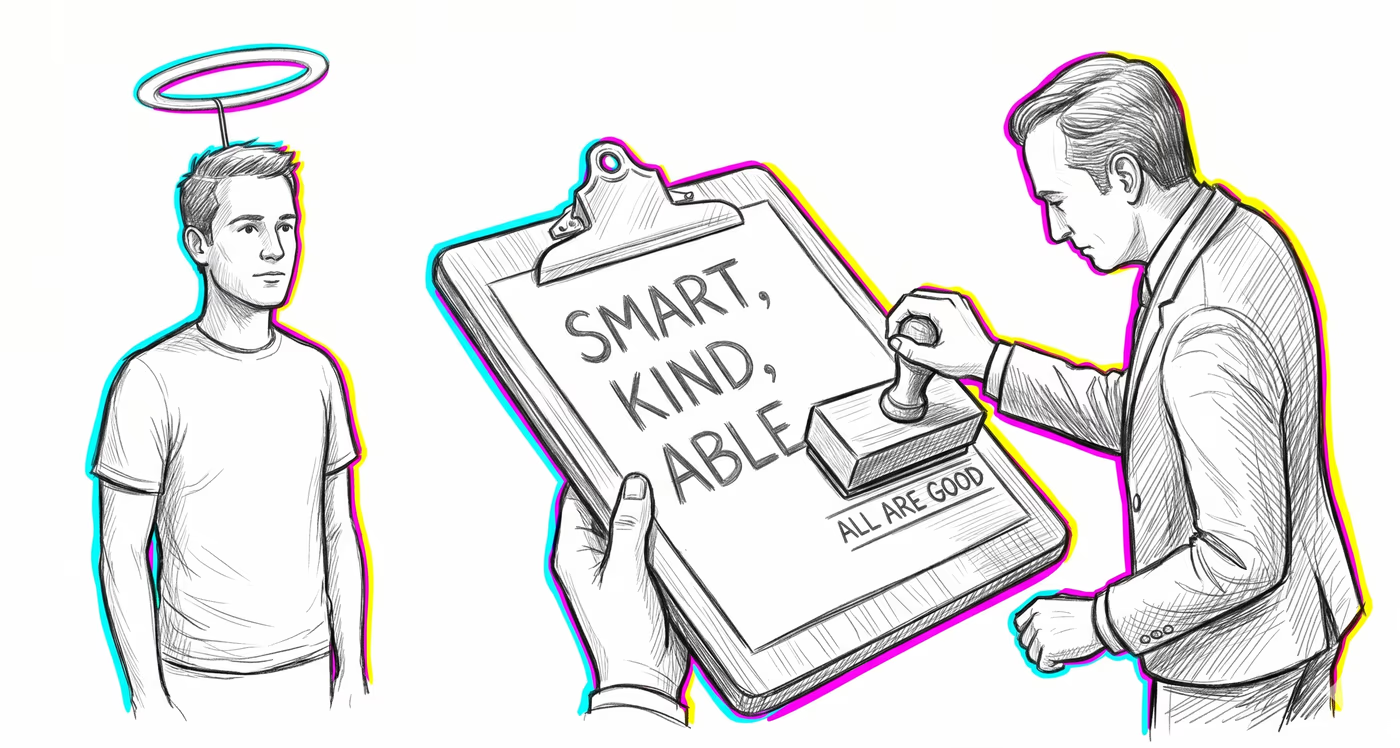
A single negative trait or bad first impression unfairly darkening the judgment of all a person's other qualities.

WHAT IT IS

The glitch, explained plainly.

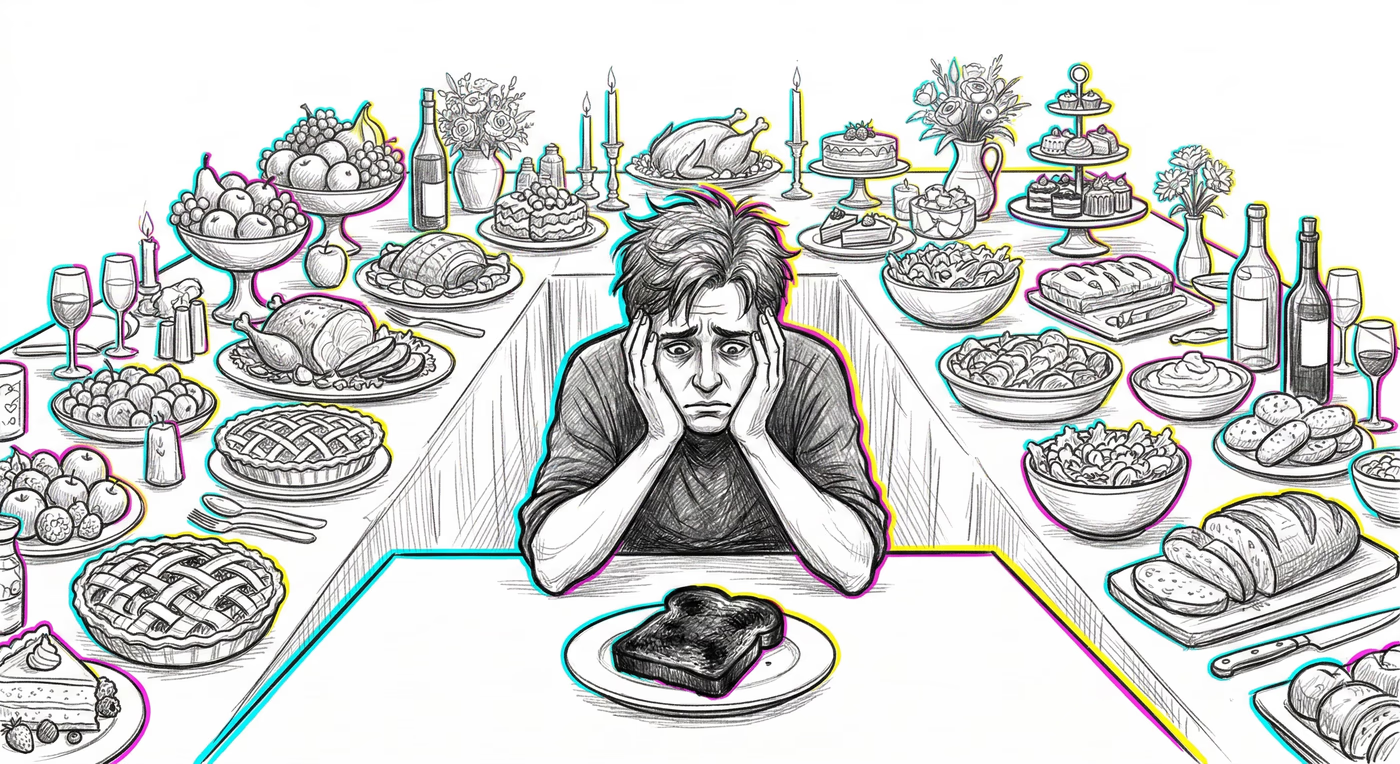
Imagine you meet someone new and they have spinach in their teeth. Even though that has nothing to do with how smart or kind they are, your brain goes: 'Ew, spinach teeth — they're probably messy about everything.' It's like your brain paints the whole person with one ugly brushstroke just because of one little thing it didn't like.

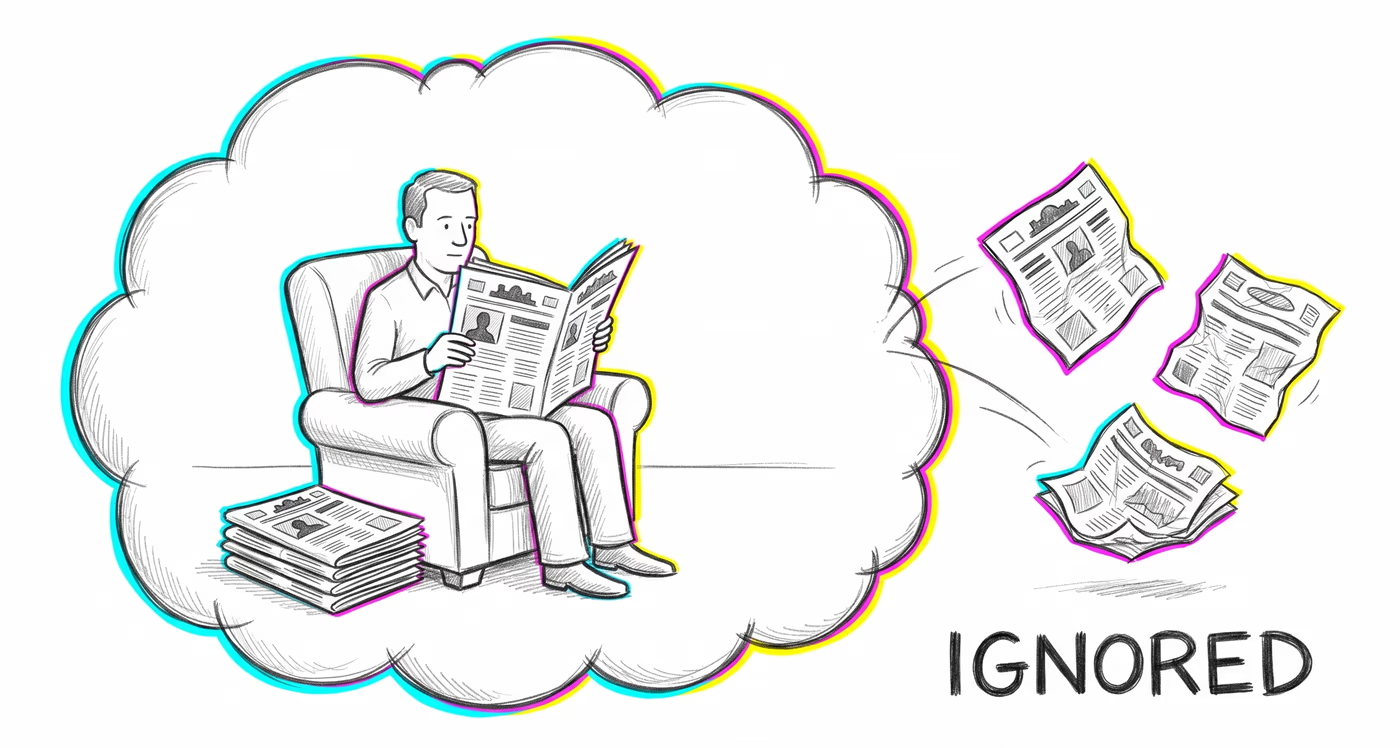
The Horn Effect describes how encountering a single negative attribute in another person — whether physical appearance, a social blunder, a communication style, or a poor performance in one area — contaminates the perceiver's judgment of that person across entirely unrelated dimensions such as intelligence, trustworthiness, and competence. Unlike a general dislike, the Horn Effect is specifically triggered by one salient negative cue that then spreads like an ink stain across the perceiver's entire mental portrait. This bias is remarkably resistant to correction because once the negative frame is set, subsequent information is filtered through it: positive evidence is discounted, ambiguous evidence is interpreted negatively, and the perceiver actively seeks confirmatory information. The effect is especially damaging in high-stakes evaluative contexts such as job interviews, performance reviews, courtrooms, and first dates, where a single flaw can eclipse a lifetime of competence.

SOUND FAMILIAR?

Where it shows up.

  1. 01 During a job interview, the candidate nervously spills coffee on the conference table. Despite her impressive resume and articulate answers to every subsequent question, the hiring manager later tells his team he has 'serious doubts about her professionalism and attention to detail' and recommends passing on her.
  2. 02 A teacher notices that a new student has multiple visible tattoos and piercings. Over the semester, the teacher consistently grades this student's essays more critically than comparable work from other students, and when asked, describes the student as 'not very serious about academics.'
  3. 03 After a product manager delivers one quarterly presentation with a few data errors, his director begins excluding him from strategy meetings, assigning his projects to others, and citing 'reliability concerns' — even though his track record over three years has been excellent with that single exception.
  4. 04 A venture capitalist listens to a pitch from a founder who speaks with a heavy accent. Although the business model is sound and the financials are strong, the VC later tells her partners she found the founder 'hard to follow' and 'not quite polished enough for investor-facing roles,' recommending they pass on the deal.
  5. 05 A doctor reads in a patient's chart that the patient was previously non-compliant with a medication regimen. When the patient presents with new symptoms and offers a detailed account of recent lifestyle changes, the doctor is skeptical and orders extra tests 'just to verify,' privately telling a colleague that patients like this 'tend to be unreliable historians.'
IN DIFFERENT DOMAINS

Where it shows up at work.

The same glitch looks different depending on the terrain. Finance, medicine, a relationship, a team — same mechanism, different costume.

Finance & investing

Investors who learn of a single earnings miss or executive scandal at a company tend to generalize the negative signal across the entire organization, discounting strong fundamentals, robust pipelines, and sound governance as if the single flaw represents the company's true character.

Medicine & diagnosis

Clinicians who note one negative attribute in a patient — such as obesity, substance use history, or non-compliance — may unconsciously generalize it, rating the patient as less intelligent, less motivated, or less trustworthy in their self-reporting of symptoms, leading to under-investigation of legitimate complaints.
Education & grading

Teachers who form a negative impression of a student from one attribute — messy handwriting, tardiness, or an early poor grade — tend to evaluate that student's subsequent work more harshly across unrelated subjects and assign lower ratings for effort, intelligence, and classroom behavior.

Relationships

A single negative revelation early in dating — such as an unflattering photo, an awkward comment, or a mention of a past failure — can cause the other person to reinterpret all subsequent interactions through a negative lens, preventing genuine connection from developing.

Tech & product

Users who encounter one frustrating bug or poorly designed feature in an app tend to rate the entire product negatively in reviews and perceive unrelated features as less reliable, even when those features work flawlessly.

Workplace & hiring

Managers who observe one negative behavior from an employee — missing a deadline, being late to a meeting, or a single interpersonal conflict — often allow that impression to contaminate the entire annual performance review, rating the employee low across all dimensions regardless of otherwise strong results.

Politics Media

A politician caught in one gaffe or scandal becomes globally characterized as incompetent or corrupt, with media coverage and public perception filtering all subsequent policy positions and achievements through that single negative event.

HOW TO SPOT IT

Ask yourself…

  • Am I forming a broad negative opinion of this person based on just one thing I noticed or disliked?
  • If I set aside the one negative trait, what objective evidence do I have about their other qualities?
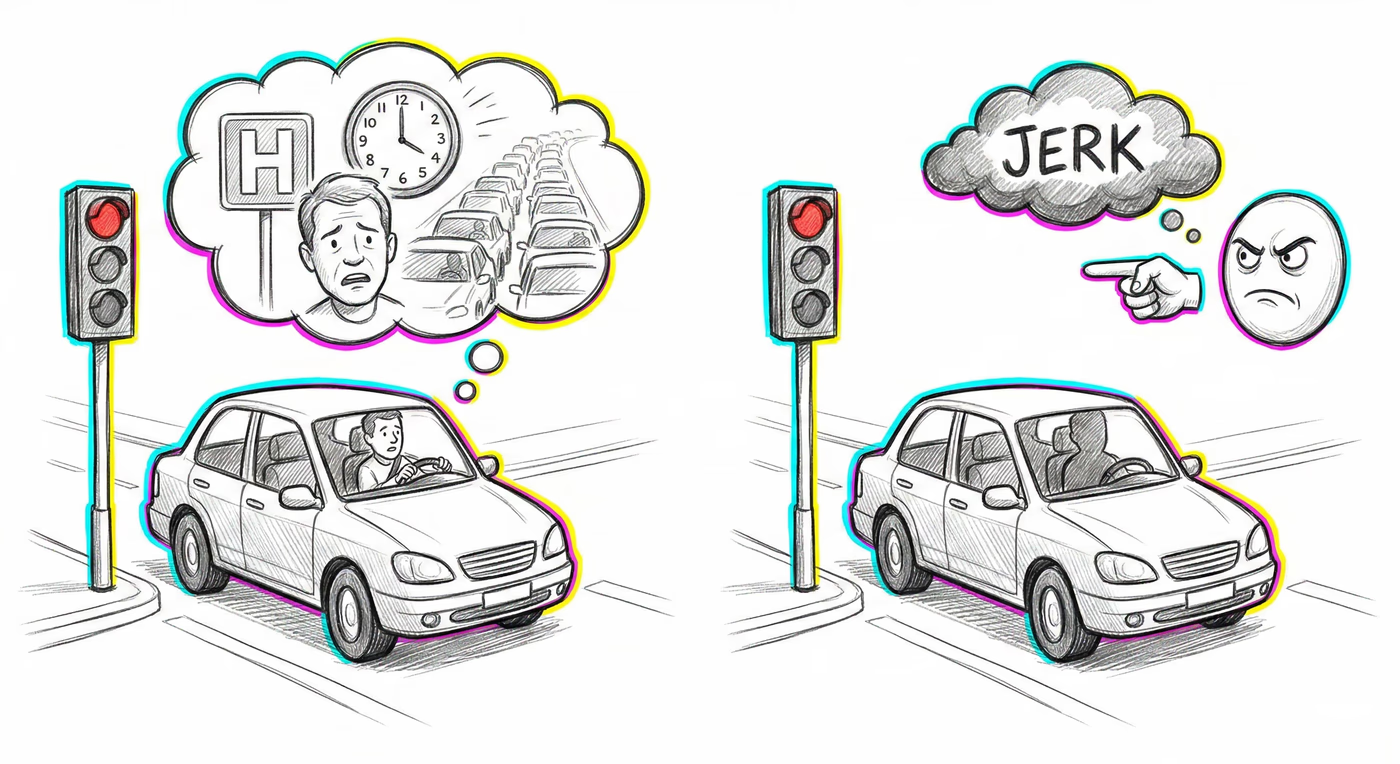
  • Would I judge this person the same way if someone I already liked exhibited this exact same flaw?
HOW TO DEFEND AGAINST IT

The playbook.

  • Implement structured evaluations with predefined criteria that force assessment of multiple independent dimensions rather than a single global rating.
  • Practice the 'trait isolation' exercise: explicitly list the one negative observation, then separately list all other evidence you have about the person, and ask whether the negative trait logically predicts the others.
  • Introduce a deliberate delay between noticing a negative trait and forming an overall judgment — even 10 minutes of reflection reduces the generalization effect.
  • Use the 'friend test': ask yourself whether you would draw the same sweeping conclusion about someone you already know and like if they exhibited the same flaw.
  • Seek disconfirming evidence actively: after noticing something negative, make a conscious effort to identify at least three positive or neutral qualities about the person.
FAMOUS CASES

In history.

  • Richard Nixon's sweaty, unshaven appearance during the 1960 televised presidential debate against John F. Kennedy led many TV viewers to rate his overall competence and trustworthiness lower, while radio listeners who could not see him rated the debate differently.
  • Studies of real courtroom proceedings have found that physically unattractive defendants receive harsher sentences for identical crimes compared to attractive defendants, demonstrating the horn effect in judicial decision-making.
WHERE IT COMES FROM
Academic origin

Edward L. Thorndike, 1920 — identified as the negative counterpart of the halo effect in his paper 'A Constant Error in Psychological Ratings' (Journal of Applied Psychology). Solomon Asch's 1946 impression formation research further demonstrated how early negative trait information dominates global person perception.

Evolutionary origin

In ancestral environments, quickly identifying and avoiding potentially dangerous individuals was critical for survival. A single threatening signal — an aggressive posture, an untrustworthy expression, a sign of disease — needed to trigger a fast, whole-person avoidance response rather than a careful trait-by-trait analysis. Erring on the side of caution by generalizing one negative signal to the whole person was less costly than the alternative of trusting a dangerous individual based on their other qualities.

IN AI SYSTEMS

How the machines inherit it.

Machine learning models trained on biased human evaluation data can inherit the horn effect: if training labels reflect human raters who penalized entire profiles based on a single negative feature (e.g., a gap in employment, a low rating in one category), the model learns to propagate that single negative signal into globally negative predictions. Recommender systems can similarly 'punish' content creators or products that receive one early negative review by suppressing their visibility across unrelated metrics.

Read more on Wikipedia
FREE FIELD ZINE

10 glitches quietly running your life.

A free field-zine PDF — ten cognitive glitches named, illustrated, with a defense move for each. Plus the weekly Glitch Report on Fridays — one bias named, two spotted in the wild, one defense move. Unsubscribe any time.

EXPLORE MORE

Related glitches.

LAUNCH PRICE

Train against your blindspots.

50 cards are free to preview. Buyers unlock the rest of the deck plus the interactive training — Spot-the-Bias Quiz unlimited, Swipe Deck with spaced repetition, My Blindspots, Decision Pre-Flight, the Printable Deck + Cheat Sheets, and the Field Guide e-book. $29.50$59.

Unlock the full deck

Everything below — yours forever. Pay once, use across every device.

Half-off launch — limited to the first 100 readers. Auto-applied at checkout.
$59 $29.50
one-time payment · lifetime access
  • All interactive digital cards — search, filter, flip, shuffle on any device
  • Five training modes — Spot-the-Bias Quiz, Swipe Deck, Pre-Flight, Blindspots, Journal
  • Curated Lenses + Decision Templates + Defense Playbook
  • Printable Deck PDFs + Field Guide e-book + Cheat Sheets + Anki Export
  • Every future improvement, included
Unlock  $29.50

30-day refund · no questions asked

Unlock the full deck

Everything below — yours forever. Pay once, use across every device.

Half-off launch — limited to the first 100 readers. Auto-applied at checkout.
$59 $29.50
one-time payment · lifetime access
  • All interactive digital cards — search, filter, flip, shuffle on any device
  • Five training modes — Spot-the-Bias Quiz, Swipe Deck, Pre-Flight, Blindspots, Journal
  • Curated Lenses + Decision Templates + Defense Playbook
  • Printable Deck PDFs + Field Guide e-book + Cheat Sheets + Anki Export
  • Every future improvement, included
Unlock  $29.50

30-day refund · no questions asked