Illusion of Moral Superiority

aka Moral Superiority Bias · Moral Self-Enhancement

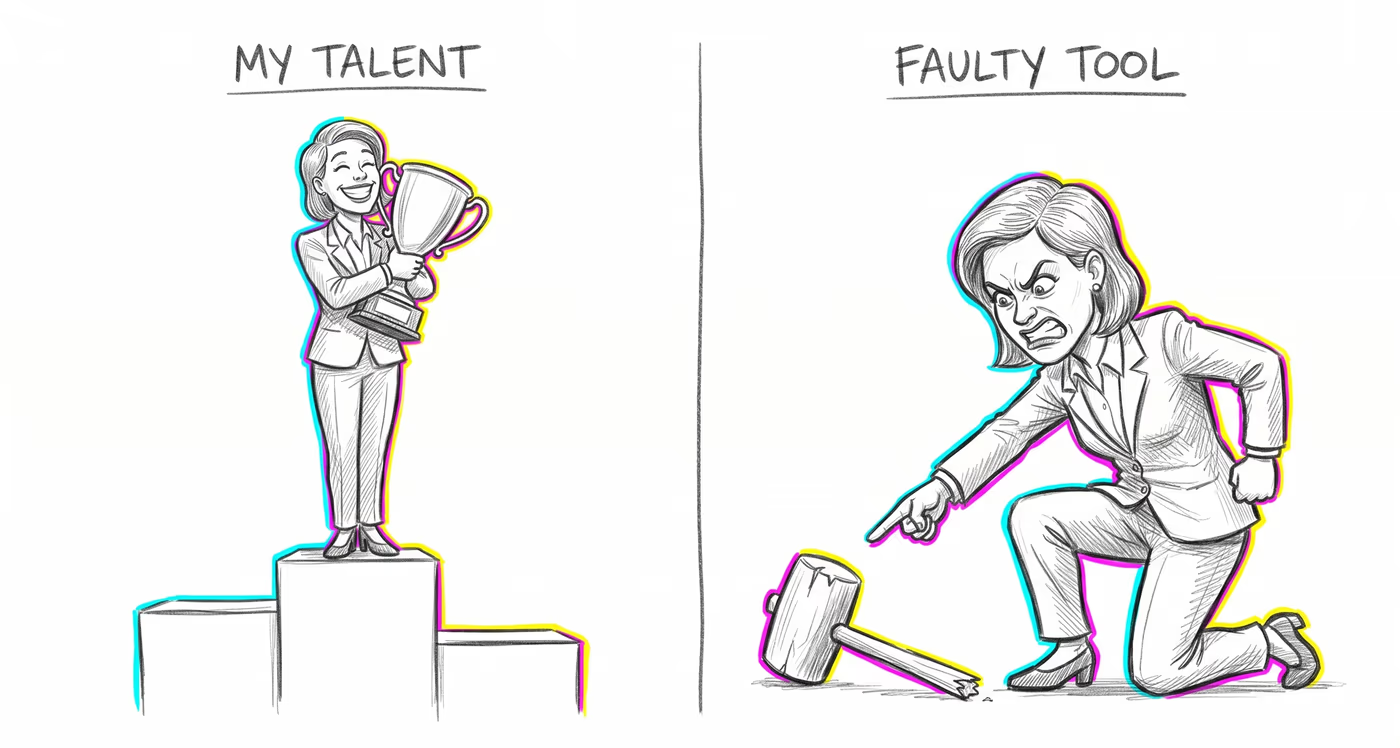
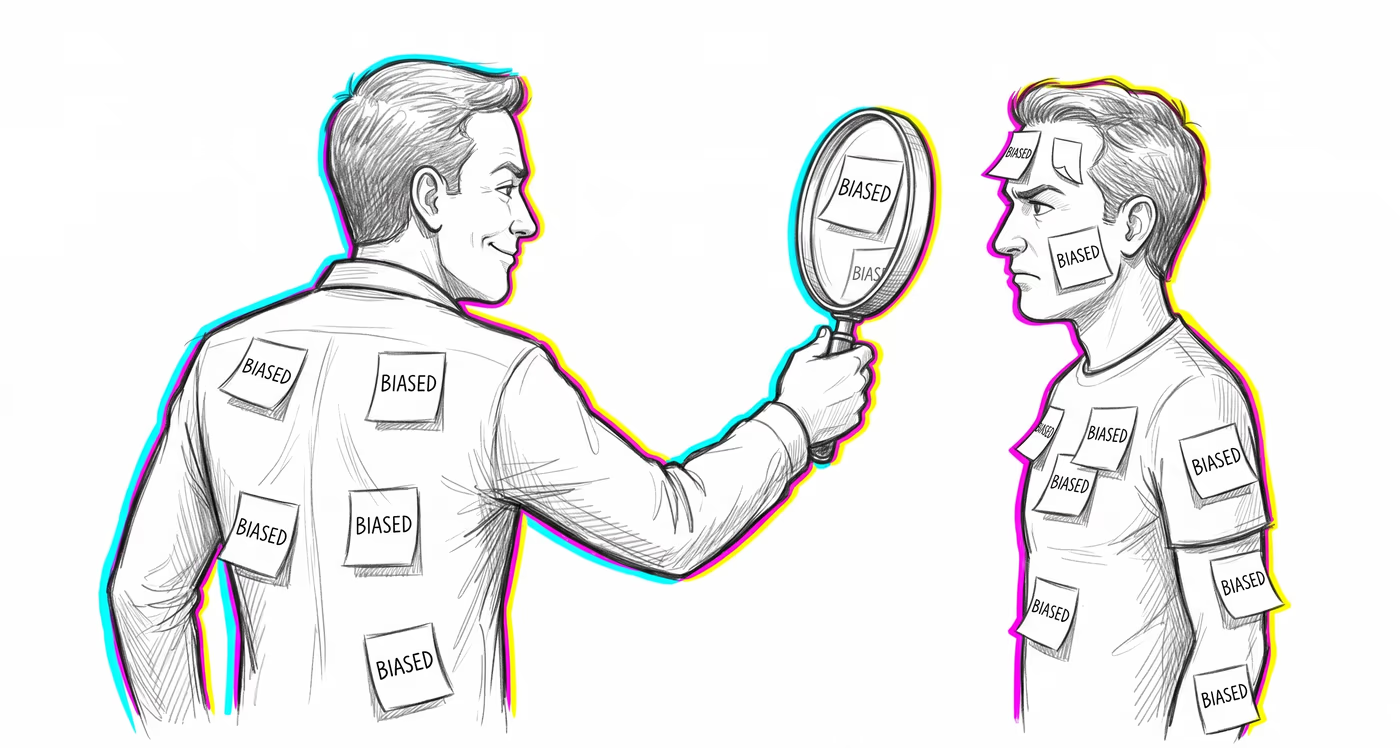
Believing you are more moral, honest, and virtuous than the average person, even without evidence to support it.

WHAT IT IS

The glitch, explained plainly.

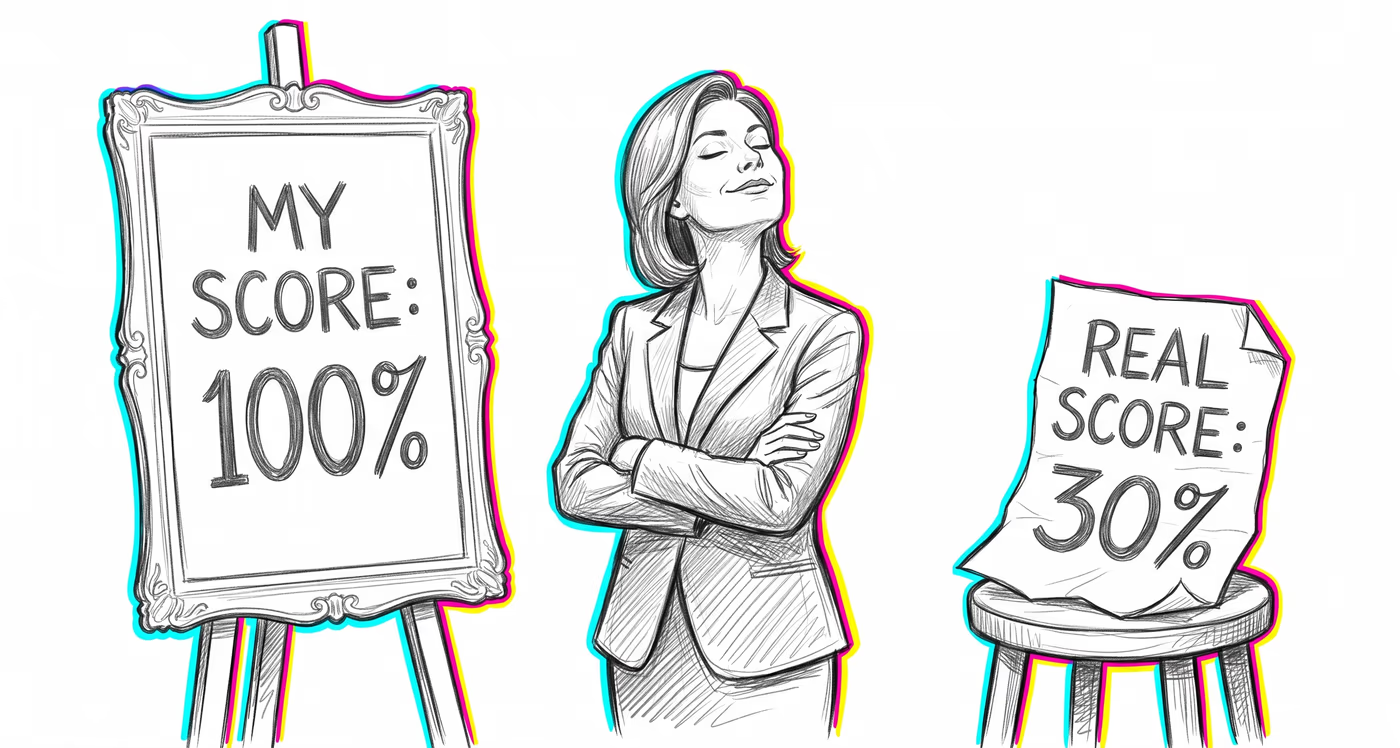
Imagine everyone in your class was asked to draw a picture of how good a person they are. Almost everyone would draw themselves taller and shinier than everyone else. Even the kid who just stole someone's crayon would draw himself as the nicest kid in the room. That's what our brains do—they make us feel like we're better, kinder, and more fair than everyone around us, even when we're really about the same.

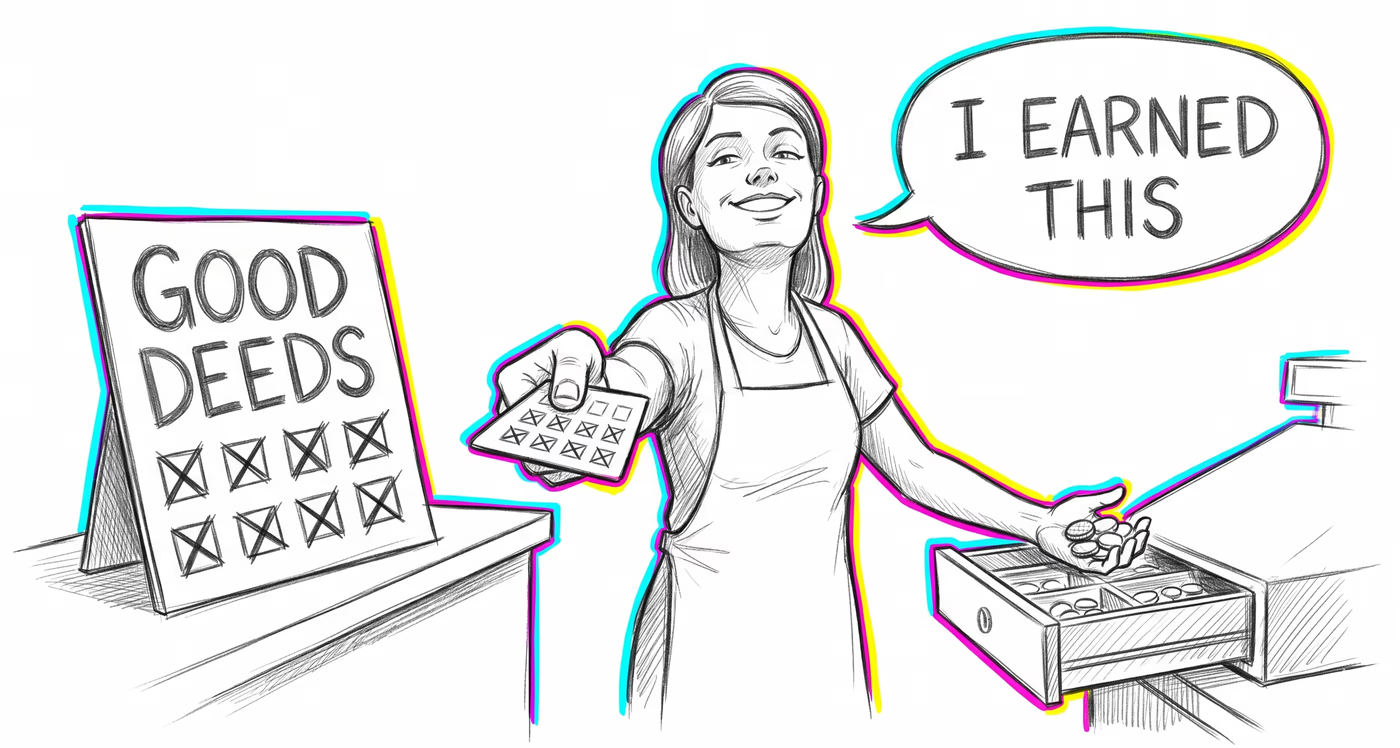
The Illusion of Moral Superiority is a uniquely potent form of the better-than-average effect in which people systematically overestimate their own moral qualities—such as honesty, fairness, and principled behavior—relative to others. Research demonstrates that while people also inflate their competence and sociability, the inflation in the moral domain is the strongest, most widespread, and most resistant to correction. Critically, this moral self-enhancement persists even when controlling for rational inferences from limited information about others, meaning it reflects genuine irrational bias rather than a reasonable inference gap. The bias creates a dangerous feedback loop: because morality is both highly valued and inherently ambiguous in its behavioral indicators, individuals have unusually wide latitude to interpret their own actions as morally motivated while attributing less noble motives to others.

SOUND FAMILIAR?

Where it shows up.

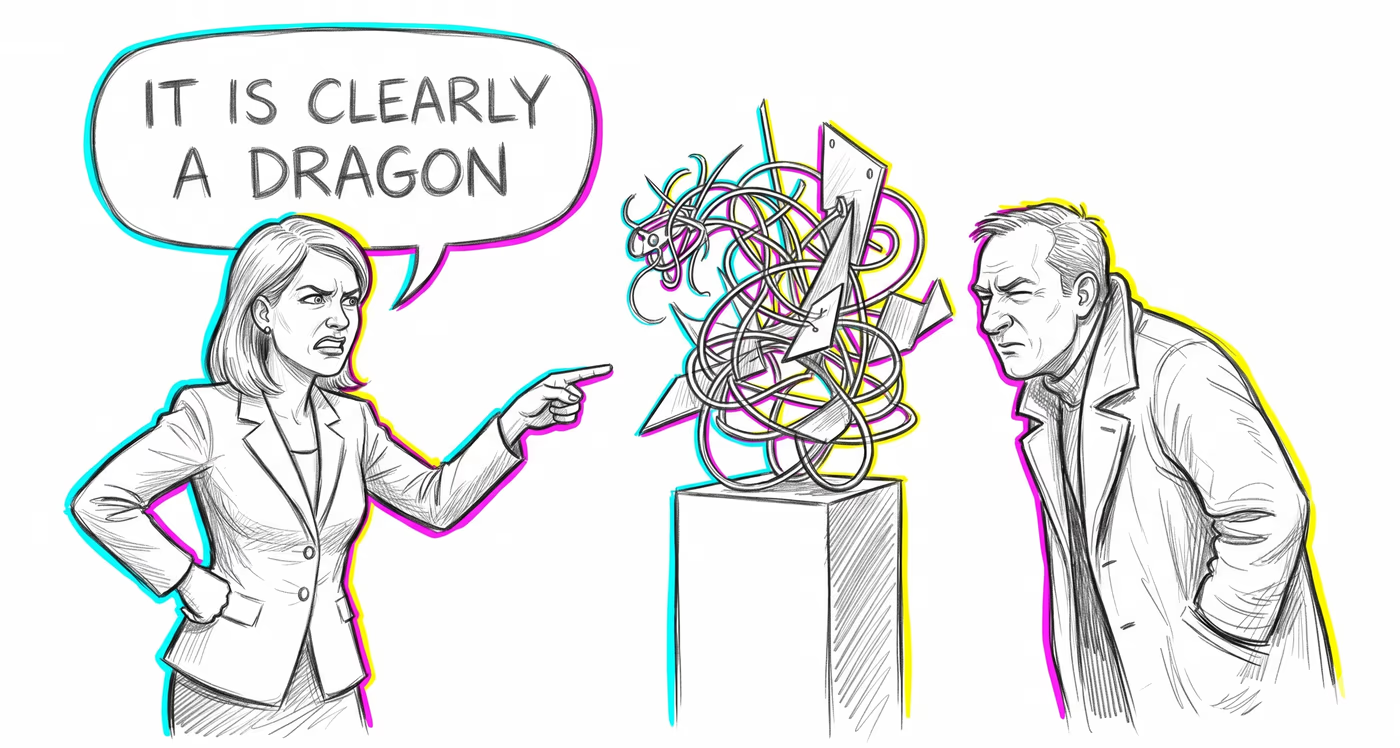
  1. 01 Maria and her neighbor both complain about noise in their apartment building. Maria plays music loudly on weekends but views it as 'reasonable enjoyment of her home,' while she considers her neighbor's barking dog to be 'inconsiderate and selfish.' When a third party points out the parallel, Maria insists her situation is different because she's 'a considerate person at heart.'
  2. 02 During a team ethics training, every participant rates themselves as significantly more ethical than the average employee at their company. When the facilitator reveals that statistically this is impossible, several participants insist that their department truly is more ethical, and the average must be dragged down by 'other teams.'
  3. 03 A political commentator reads about corruption scandals on the opposing side and feels vindicated in the moral clarity of his own party. He dismisses similar scandals within his own party as 'isolated incidents' that don't reflect the group's true character, genuinely believing his side operates from higher principles.
  4. 04 A manager prides herself on always giving candid, constructive feedback, viewing it as proof of her integrity. She dismisses a direct report's complaint that her feedback feels harsh and personal, reasoning that 'people who can't handle honesty just have lower moral standards than I do.'
  5. 05 A researcher studying charitable giving discovers that his own donation patterns are statistically average for his income bracket. Rather than updating his self-concept, he reasons that his donations are qualitatively different—more thoughtfully chosen, more impactful—and concludes he is still more morally committed than peers who give the same amount.
IN DIFFERENT DOMAINS

Where it shows up at work.

The same glitch looks different depending on the terrain. Finance, medicine, a relationship, a team — same mechanism, different costume.

Finance & investing

Investors often believe they are more ethically principled in their investment choices than peers, overestimating the extent to which their portfolios reflect moral values while underestimating others' ESG considerations, leading to complacency about their own ethically questionable holdings.
Medicine & diagnosis

Healthcare professionals may believe they are less susceptible to pharmaceutical industry influence or diagnostic bias than their colleagues, leading to reduced vigilance about conflicts of interest and less receptivity to systemic safeguards like blinded prescribing protocols.

Education & grading

Teachers tend to rate themselves as more fair and unbiased graders than their peers, which can reduce their willingness to adopt standardized rubrics or blind-grading practices that would genuinely reduce favoritism.

Relationships

Partners in a relationship each tend to believe they contribute more fairness, compromise, and emotional labor than the other, creating persistent resentment because both feel underappreciated for their supposedly superior moral effort.

Tech & product

Product teams may believe their company handles user data more ethically than competitors, resisting privacy audits or stricter consent flows because they perceive their own intentions as inherently good and sufficient.

Workplace & hiring

Managers consistently rate their own leadership as more ethical and employee-centered than that of other managers at the same level, making them resistant to 360-degree feedback that could reveal blind spots in how they treat subordinates.

Politics Media

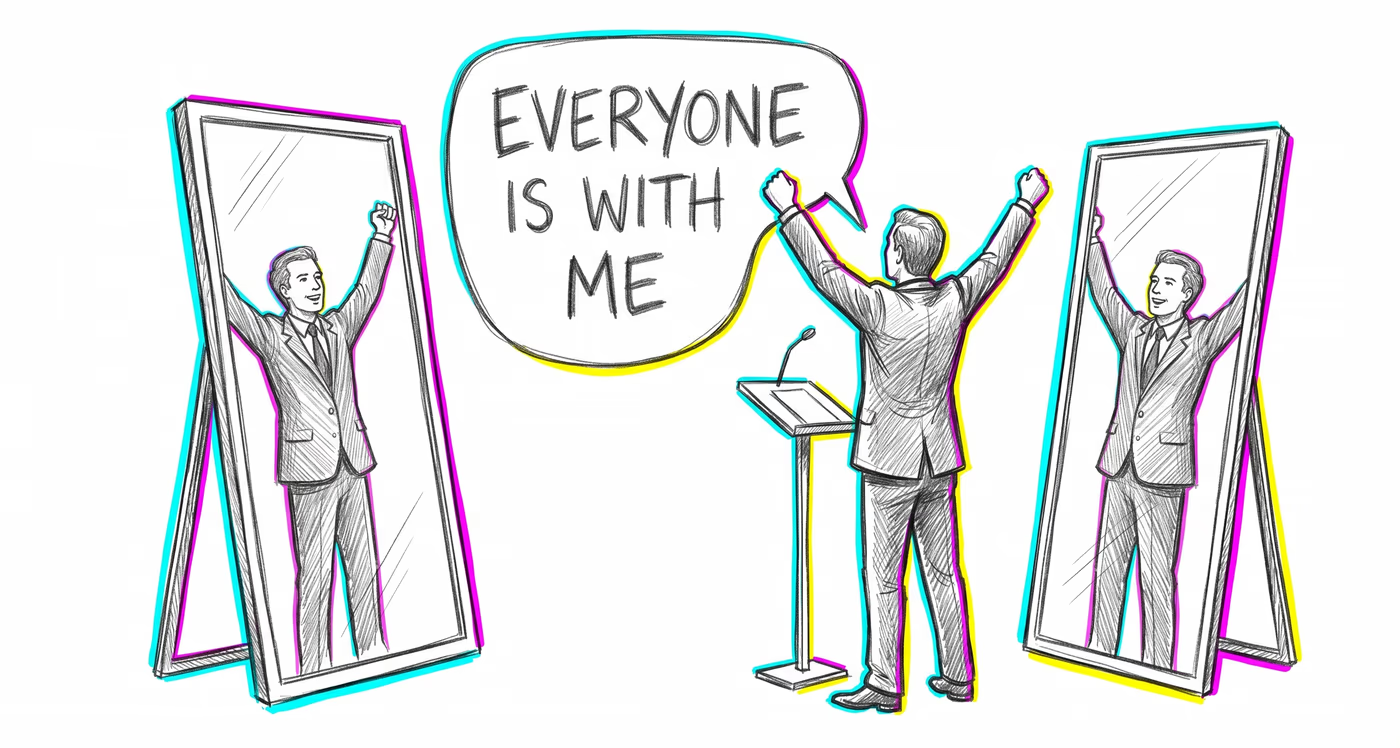
Voters on both sides of the political spectrum believe they are motivated by genuine concern for the common good while attributing selfish or tribal motives to opponents, fueling moral outrage and making cross-partisan dialogue extremely difficult.

HOW TO SPOT IT

Ask yourself…

  • Am I assuming my motives are purer than those of the people I'm judging right now?
  • If someone I disagreed with did exactly what I'm doing, would I still call it moral?
  • Am I giving myself credit for good intentions while judging others only by their visible actions?
HOW TO DEFEND AGAINST IT

The playbook.

  • Practice 'moral humility audits': regularly ask yourself to list three recent instances where your behavior fell short of your moral ideals, and resist the urge to explain them away.
  • When judging someone else's morality, force yourself to articulate the most charitable interpretation of their motives before forming a conclusion.
  • Seek genuine behavioral feedback from trusted others about your ethical blind spots—not just whether you are 'a good person,' but specific situations where you may have acted inconsistently with your values.
  • Remember that morality is defined by behavior over time, not by self-concept. Compare your actions (not your intentions) to the actions of others before concluding you are superior.
  • When you feel morally superior in a disagreement, treat it as a diagnostic red flag rather than confirmation of your position.
FAMOUS CASES

In history.

  • Political polarization in the United States, where surveys consistently show partisans on both sides rating themselves and their party as significantly more moral and principled than the opposition, contributing to democratic erosion.
  • The 2022–2023 European energy crisis, where research found individuals attributed stronger moral motives to their own gas-saving behavior compared to others who were saving the same amount.
WHERE IT COMES FROM
Academic origin

Formalized by Ben M. Tappin and Ryan T. McKay in 2017 at Royal Holloway, University of London, published in Social Psychological and Personality Science. The concept builds on decades of research on the better-than-average effect (Alicke, 1985; Brown, 1986) and positive illusions (Taylor & Brown, 1988).

Evolutionary origin

In ancestral environments, signaling moral reliability was critical for securing cooperative partnerships and group membership. Individuals who genuinely believed in their own moral superiority may have been more convincing moral signalers, gaining trust and reciprocal alliances. A sincere belief in one's own virtue is harder to fake than a strategic performance, so self-deception about moral standing could have served as an honest signal of cooperative intent, providing a survival and reproductive advantage in highly interdependent social groups.

IN AI SYSTEMS

How the machines inherit it.

Language models trained on human-generated text can inherit moral self-enhancement patterns, producing outputs that frame certain viewpoints or cultural norms as morally superior while subtly devaluing others. Recommendation algorithms can amplify moral superiority by curating feeds that validate users' existing moral self-image and expose them primarily to outgroup moral failures, reinforcing the illusion at scale.

FREE FIELD ZINE

10 glitches quietly running your life.

A free field-zine PDF — ten cognitive glitches named, illustrated, with a defense move for each. Plus the weekly Glitch Report on Fridays — one bias named, two spotted in the wild, one defense move. Unsubscribe any time.

EXPLORE MORE

Related glitches.

LAUNCH PRICE

Train against your blindspots.

50 cards are free to preview. Buyers unlock the rest of the deck plus the interactive training — Spot-the-Bias Quiz unlimited, Swipe Deck with spaced repetition, My Blindspots, Decision Pre-Flight, the Printable Deck + Cheat Sheets, and the Field Guide e-book. $29.50$59.

Unlock the full deck

Everything below — yours forever. Pay once, use across every device.

Half-off launch — limited to the first 100 readers. Auto-applied at checkout.
$59 $29.50
one-time payment · lifetime access
  • All interactive digital cards — search, filter, flip, shuffle on any device
  • Five training modes — Spot-the-Bias Quiz, Swipe Deck, Pre-Flight, Blindspots, Journal
  • Curated Lenses + Decision Templates + Defense Playbook
  • Printable Deck PDFs + Field Guide e-book + Cheat Sheets + Anki Export
  • Every future improvement, included
Unlock  $29.50

30-day refund · no questions asked

Unlock the full deck

Everything below — yours forever. Pay once, use across every device.

Half-off launch — limited to the first 100 readers. Auto-applied at checkout.
$59 $29.50
one-time payment · lifetime access
  • All interactive digital cards — search, filter, flip, shuffle on any device
  • Five training modes — Spot-the-Bias Quiz, Swipe Deck, Pre-Flight, Blindspots, Journal
  • Curated Lenses + Decision Templates + Defense Playbook
  • Printable Deck PDFs + Field Guide e-book + Cheat Sheets + Anki Export
  • Every future improvement, included
Unlock  $29.50

30-day refund · no questions asked