Overconfidence Effect

aka Overconfidence Bias · Miscalibration of Confidence

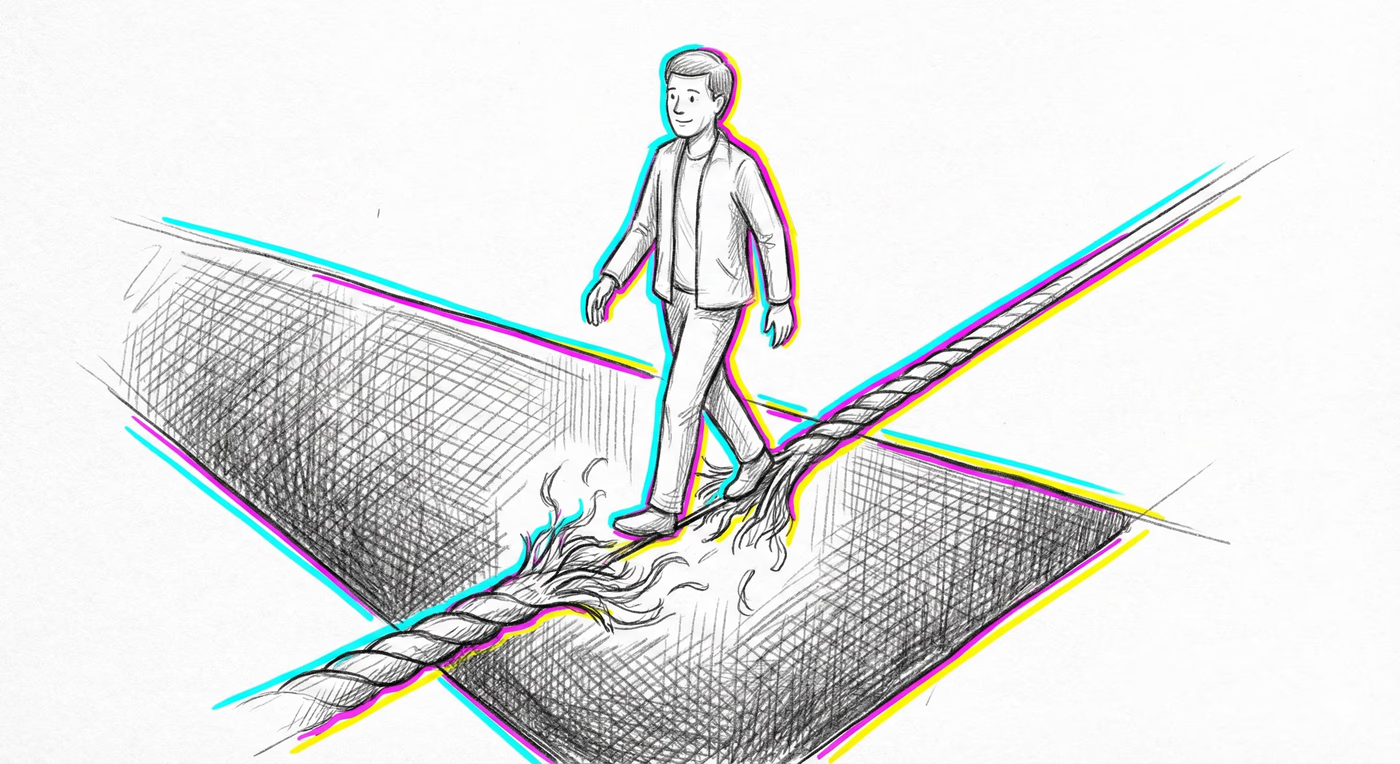
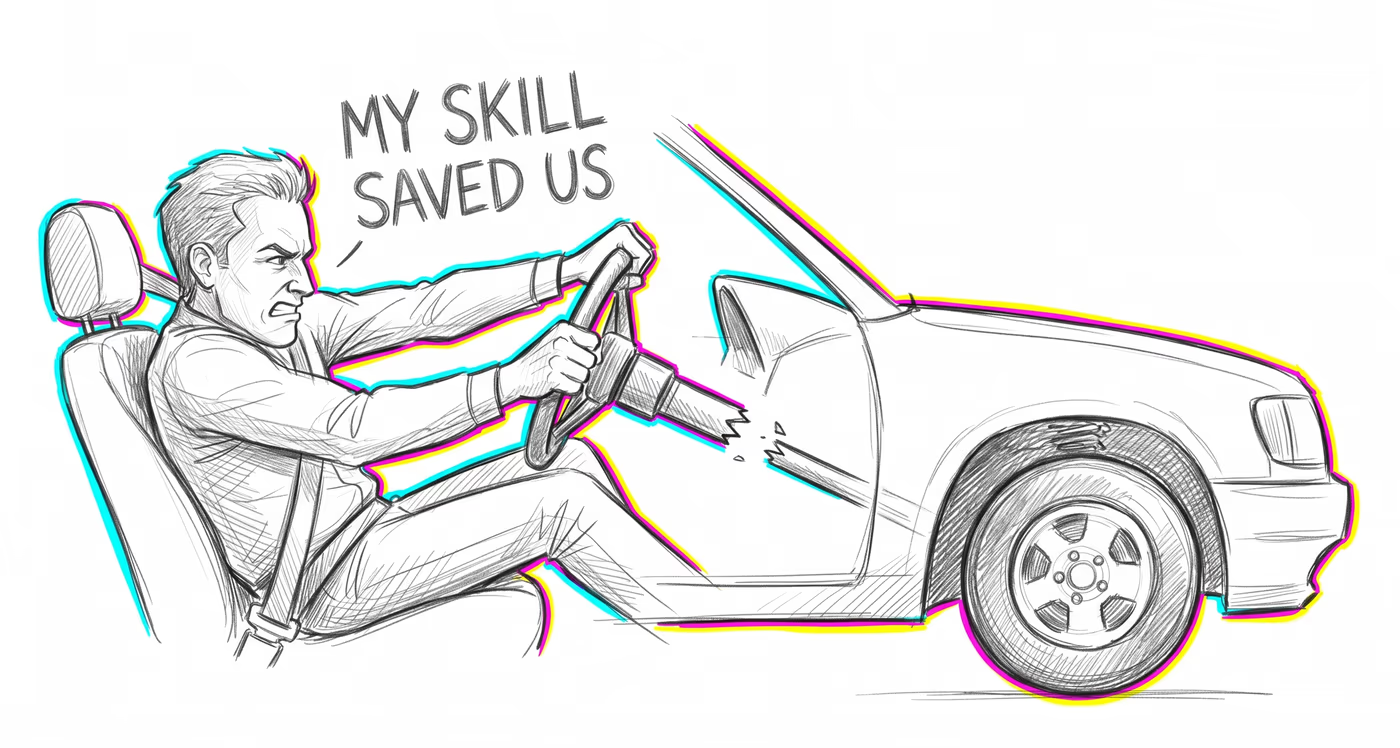
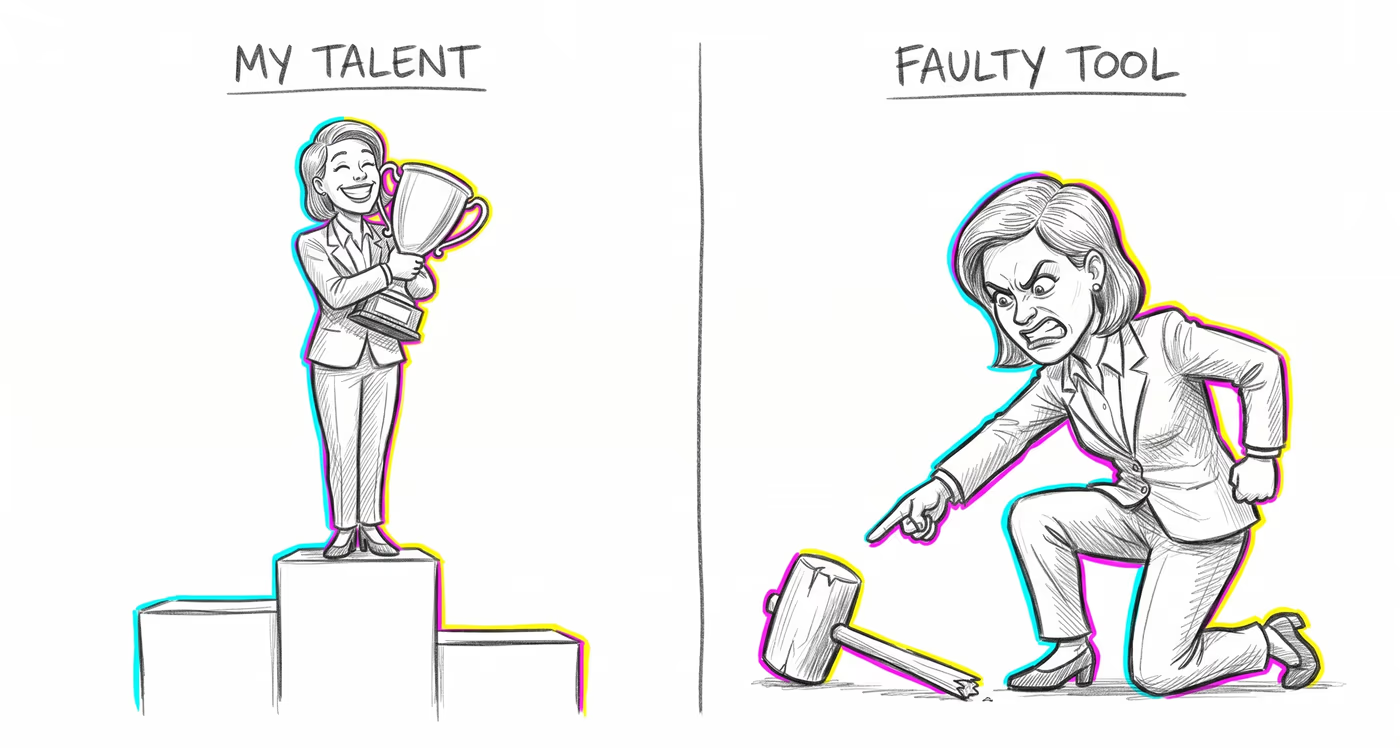
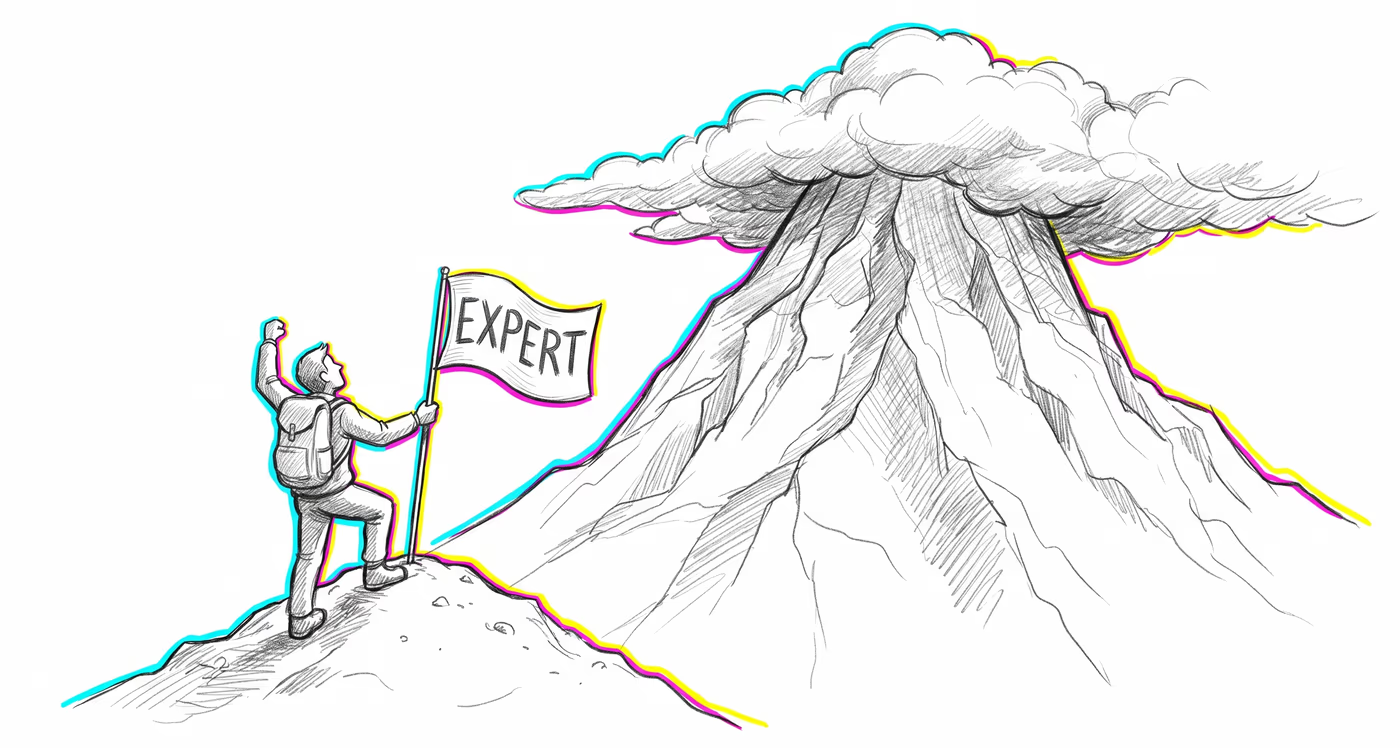
Confidence in your own judgments, knowledge, or abilities consistently exceeding their actual accuracy.

WHAT IT IS

The glitch, explained plainly.

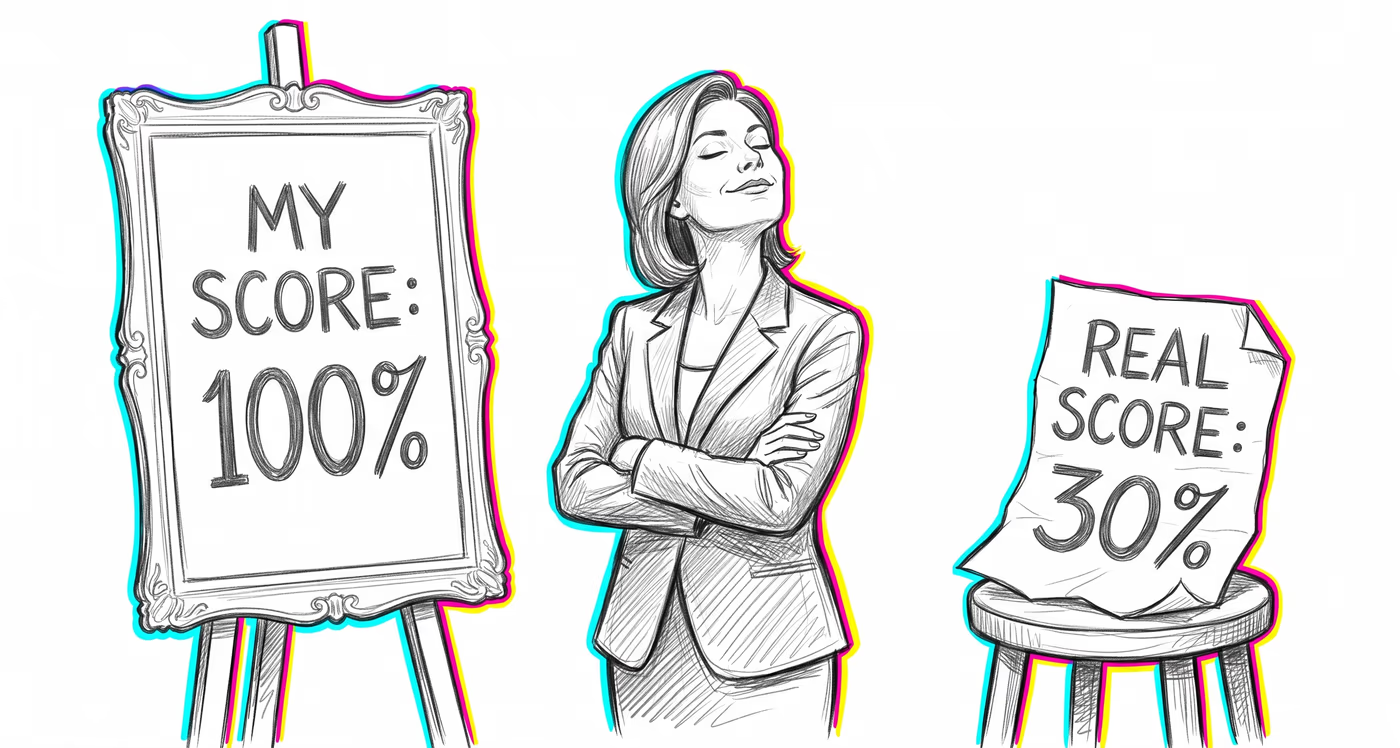
Imagine you took a really hard test and felt pretty sure you got a B+. But when you get it back, you actually got a D. That gap between how good you FELT about your answers and how good they ACTUALLY were — that's overconfidence. Almost everyone has this gap, even really smart people. It's like your brain has a cheerleader inside that always rounds your score up.

The overconfidence effect encompasses three distinct but related phenomena: overestimation (believing your performance or knowledge is better than it actually is), overplacement (believing you are better than others on a given dimension), and overprecision (expressing excessive certainty in the accuracy of your beliefs, such as setting confidence intervals that are far too narrow). The bias is particularly pronounced on difficult tasks, where people dramatically overestimate their likelihood of success, yet it can reverse on very easy tasks, where people underestimate how well they will do relative to others. Overconfidence is not simply arrogance — even humble, intelligent individuals demonstrate it, because the bias stems from fundamental limitations in how people access and evaluate internal evidence for their beliefs. It reinforces other decision-making errors by creating a false sense of epistemic security that discourages the careful checking and doubt that would catch mistakes.

SOUND FAMILIAR?

Where it shows up.

  1. 01 A portfolio manager, after three years of strong returns, allocates 40% of client funds into a single volatile sector. When a colleague suggests hedging, she replies: 'I've been right about this market three years running — I can read where it's heading.' The sector crashes the following quarter.
  2. 02 An engineering team lead is asked how confident he is that the new software release will be bug-free. He says '95% sure,' based on his thorough code review. Post-launch data reveals critical bugs in 30% of edge cases he never considered testing.
  3. 03 A surgeon with 20 years of experience decides not to order additional imaging before a complex procedure, telling residents that her clinical intuition is sufficient. She has not tracked her diagnostic accuracy rate and is unaware that studies show experienced clinicians in her specialty are correct roughly 60% of the time when they report feeling 90% certain.
  4. 04 During a strategy meeting, a CEO dismisses a consultant's market analysis and insists the company should expand into a new region based on his 'gut read' of the opportunity. He cites his past successes as evidence of his judgment, without acknowledging that three of his last five major strategic bets underperformed projections.
  5. 05 A graduate student submits a paper to a top-tier journal and tells friends she expects acceptance, reasoning that her methodology is airtight. She set her 90% confidence interval for the key statistical finding at ±2%, but the true margin of error is ±12%. She genuinely believes her estimate reflects appropriate uncertainty, unaware that her confidence interval is far too narrow for the data.
IN DIFFERENT DOMAINS

Where it shows up at work.

The same glitch looks different depending on the terrain. Finance, medicine, a relationship, a team — same mechanism, different costume.

Finance & investing

Investors systematically overtrade because they believe they can outperform the market, setting confidence intervals on returns that are far too narrow. This overprecision leads to under-diversified portfolios, excessive transaction costs, and vulnerability to market downturns that fall outside their anticipated range.
Medicine & diagnosis

Clinicians, particularly experienced ones, tend to overestimate their diagnostic accuracy and may prematurely close on a diagnosis without considering sufficient alternatives. Studies show physicians reporting 90% confidence are often correct only about 50-70% of the time on difficult cases, leading to missed diagnoses and delayed treatment.

Education & grading

Students who feel familiar with material after passive review dramatically overestimate their exam readiness, leading them to under-study. Teachers overestimate their ability to accurately predict student outcomes, and schools collectively claim above-average performance — a statistical impossibility known as the Lake Wobegon effect.

Relationships

People systematically overestimate their own contributions to shared household tasks, their fairness in arguments, and their moral character relative to their partner. This creates chronic disagreements about equity and effort, because both parties genuinely believe they are doing more than their share.

Tech & product

Development teams routinely underestimate project timelines and overestimate the reliability of their code, leading to scope creep and buggy releases. Product managers overplace their ability to predict user behavior, shipping features based on intuition rather than A/B testing, often finding that users behave nothing like expected.

Workplace & hiring

Managers rate their own leadership abilities and fairness well above average, making them resistant to feedback. In hiring, interviewers express high confidence in their ability to assess candidates from unstructured interviews despite evidence that such interviews have poor predictive validity.

Politics Media

Voters and pundits express extreme certainty in election predictions and policy outcomes that are objectively uncertain. Political commentators who got predictions wrong rarely recalibrate, and audiences trust confident-sounding analysts over hedging ones, rewarding overconfidence in the media ecosystem.

HOW TO SPOT IT

Ask yourself…

  • Am I expressing more certainty about this than the evidence actually warrants — would I bet serious money on it?
  • If I had to argue the opposite position, what evidence would I use, and how strong is it?
  • Have I tracked my past predictions on similar topics, and was I actually as accurate as I felt at the time?
HOW TO DEFEND AGAINST IT

The playbook.

  • Keep a decision journal: record your predictions, confidence levels, and reasoning before outcomes are known, then review accuracy over time to build a personal calibration track record.
  • Practice the 'consider the opposite' technique: before finalizing a judgment, force yourself to generate three strong reasons why you might be wrong.
  • Use reference class forecasting: instead of estimating from your own experience, find the base rate of success for similar projects, predictions, or decisions made by others.
  • Widen your confidence intervals deliberately: whatever range you think captures 90% of possible outcomes, make it 50% wider as a default correction.
  • Seek out 'red team' feedback: ask a trusted colleague or friend to actively argue against your position before you commit to a decision.
FAMOUS CASES

In history.

  • The 2008 financial crisis, in which investment banks, rating agencies, and traders expressed extreme confidence in complex mortgage-backed securities whose underlying risks they dramatically underestimated.
  • The Deepwater Horizon oil spill (2010), where BP engineers were overconfident in the safety of their well design and dismissed warning signs, leading to the largest marine oil spill in history.
  • The Challenger Space Shuttle disaster (1986), where NASA managers were overconfident in O-ring performance at low temperatures despite engineer warnings, proceeding with the launch.
  • The Iraq War (2003), in which intelligence agencies and political leaders expressed high confidence in the existence of weapons of mass destruction that were never found.
WHERE IT COMES FROM
Academic origin

Formalized through the calibration research of Sarah Lichtenstein, Baruch Fischhoff, and Lawrence Phillips (1977), who demonstrated systematic overconfidence in probability judgments. The tripartite framework (overestimation, overplacement, overprecision) was later articulated by Don Moore and Paul Healy (2008).

Evolutionary origin

In ancestral environments, displaying confidence — even unwarranted confidence — conferred social advantages including higher status, greater access to mates and resources, and the ability to deter rivals without physical confrontation. Overconfident individuals who pursued risky opportunities (hunting, exploration, territorial disputes) sometimes gained outsized rewards, and even when they failed, the social benefits of projecting confidence often outweighed the costs. Robert Trivers theorized that self-deception evolved because deception is more convincing and less cognitively costly when the deceiver genuinely believes the deception.

IN AI SYSTEMS

How the machines inherit it.

Language models and AI systems inherit overconfidence from training data and architectural features. LLMs produce confidently worded but factually incorrect statements ('hallucinations') without expressing appropriate uncertainty. Predictive models trained on historical data can produce overly precise forecasts with narrow confidence intervals that fail to capture true uncertainty. Recommendation algorithms that optimize for engagement metrics may propagate overconfident predictions about user preferences, compounding errors over time.

Read more on Wikipedia
FREE FIELD ZINE

10 glitches quietly running your life.

A free field-zine PDF — ten cognitive glitches named, illustrated, with a defense move for each. Plus the weekly Glitch Report on Fridays — one bias named, two spotted in the wild, one defense move. Unsubscribe any time.

EXPLORE MORE

Related glitches.

LAUNCH PRICE

Train against your blindspots.

50 cards are free to preview. Buyers unlock the rest of the deck plus the interactive training — Spot-the-Bias Quiz unlimited, Swipe Deck with spaced repetition, My Blindspots, Decision Pre-Flight, the Printable Deck + Cheat Sheets, and the Field Guide e-book. $29.50$59.

Unlock the full deck

Everything below — yours forever. Pay once, use across every device.

Half-off launch — limited to the first 100 readers. Auto-applied at checkout.
$59 $29.50
one-time payment · lifetime access
  • All interactive digital cards — search, filter, flip, shuffle on any device
  • Five training modes — Spot-the-Bias Quiz, Swipe Deck, Pre-Flight, Blindspots, Journal
  • Curated Lenses + Decision Templates + Defense Playbook
  • Printable Deck PDFs + Field Guide e-book + Cheat Sheets + Anki Export
  • Every future improvement, included
Unlock  $29.50

30-day refund · no questions asked

Unlock the full deck

Everything below — yours forever. Pay once, use across every device.

Half-off launch — limited to the first 100 readers. Auto-applied at checkout.
$59 $29.50
one-time payment · lifetime access
  • All interactive digital cards — search, filter, flip, shuffle on any device
  • Five training modes — Spot-the-Bias Quiz, Swipe Deck, Pre-Flight, Blindspots, Journal
  • Curated Lenses + Decision Templates + Defense Playbook
  • Printable Deck PDFs + Field Guide e-book + Cheat Sheets + Anki Export
  • Every future improvement, included
Unlock  $29.50

30-day refund · no questions asked