Diffusion of Responsibility

aka Responsibility Diffusion · Shared Responsibility Effect

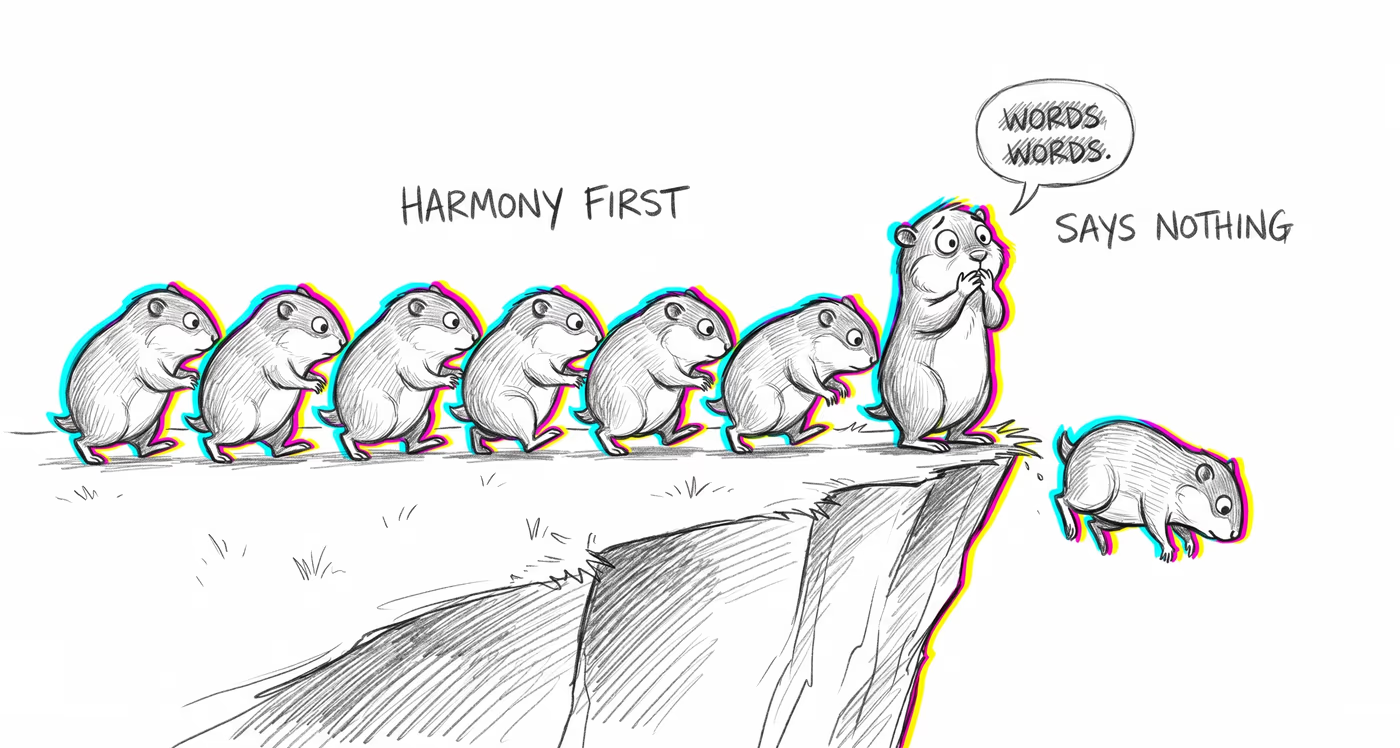
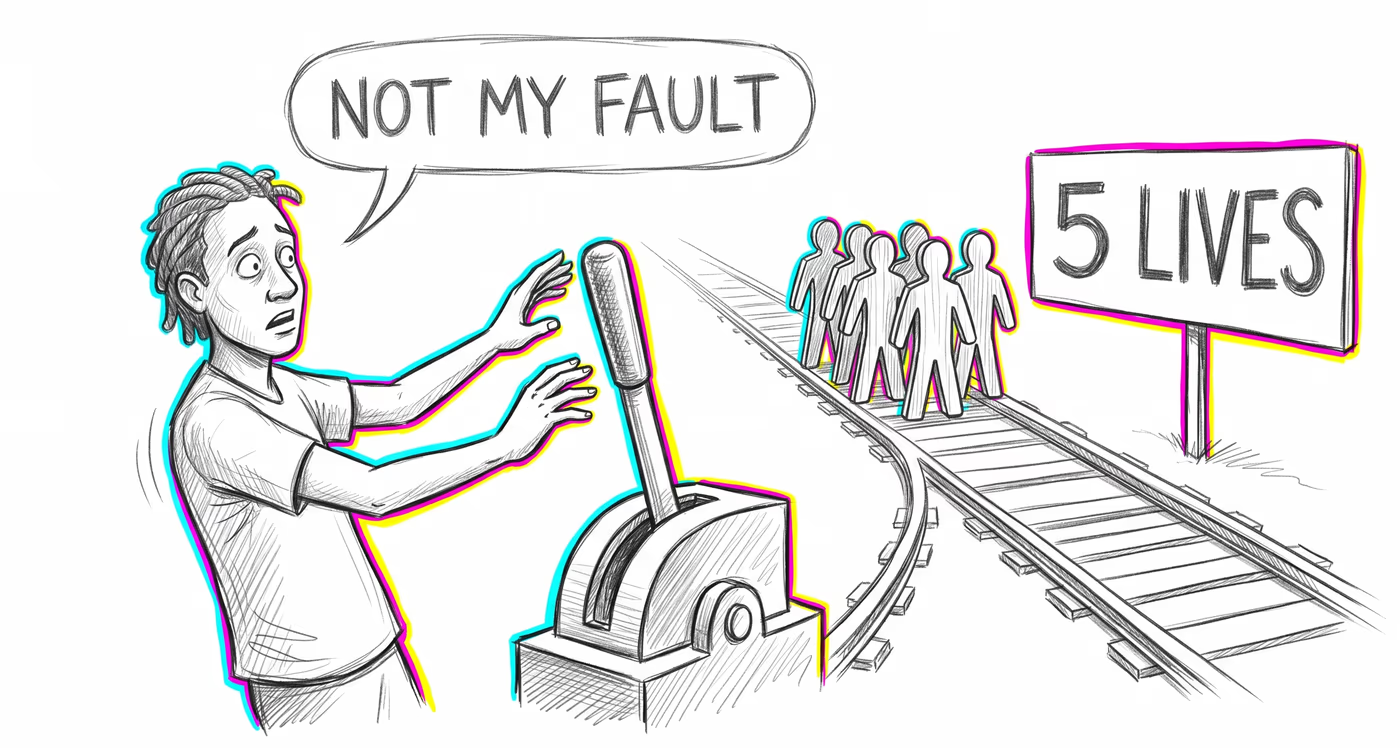
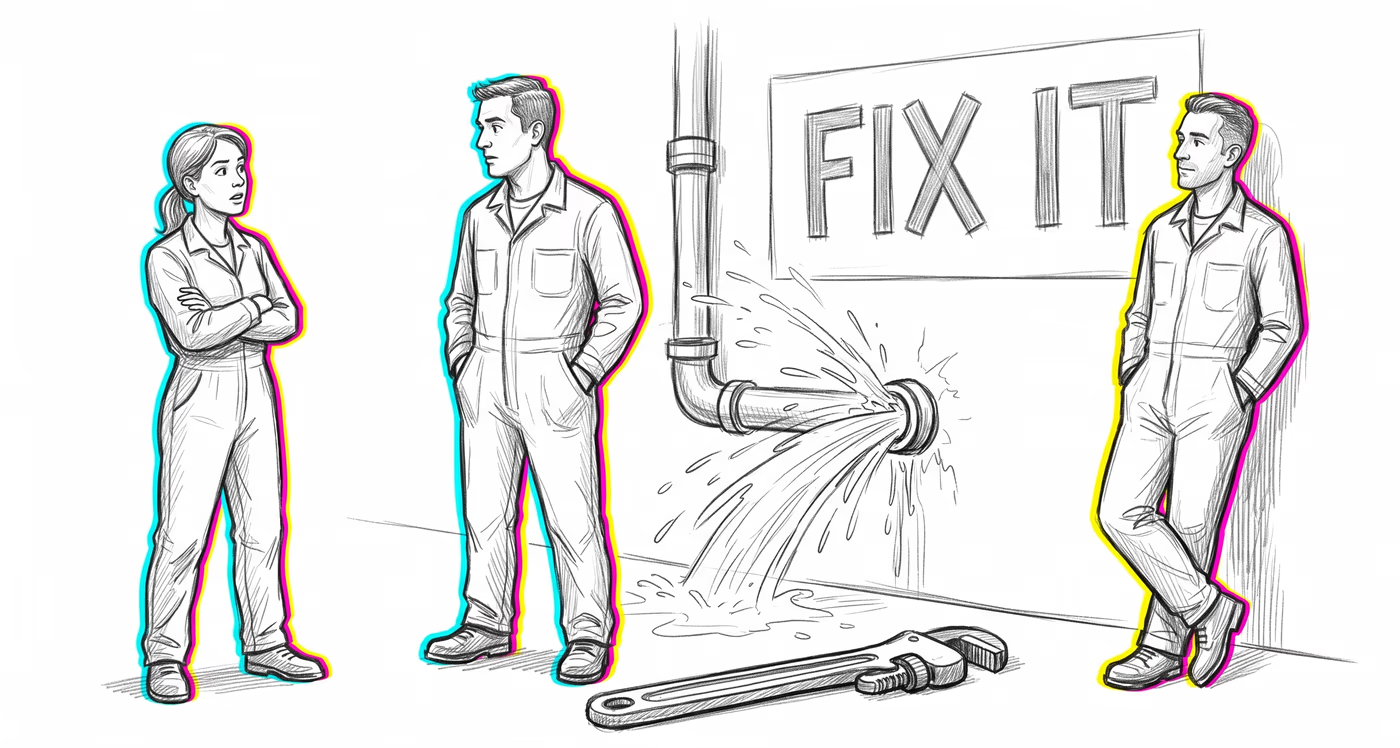
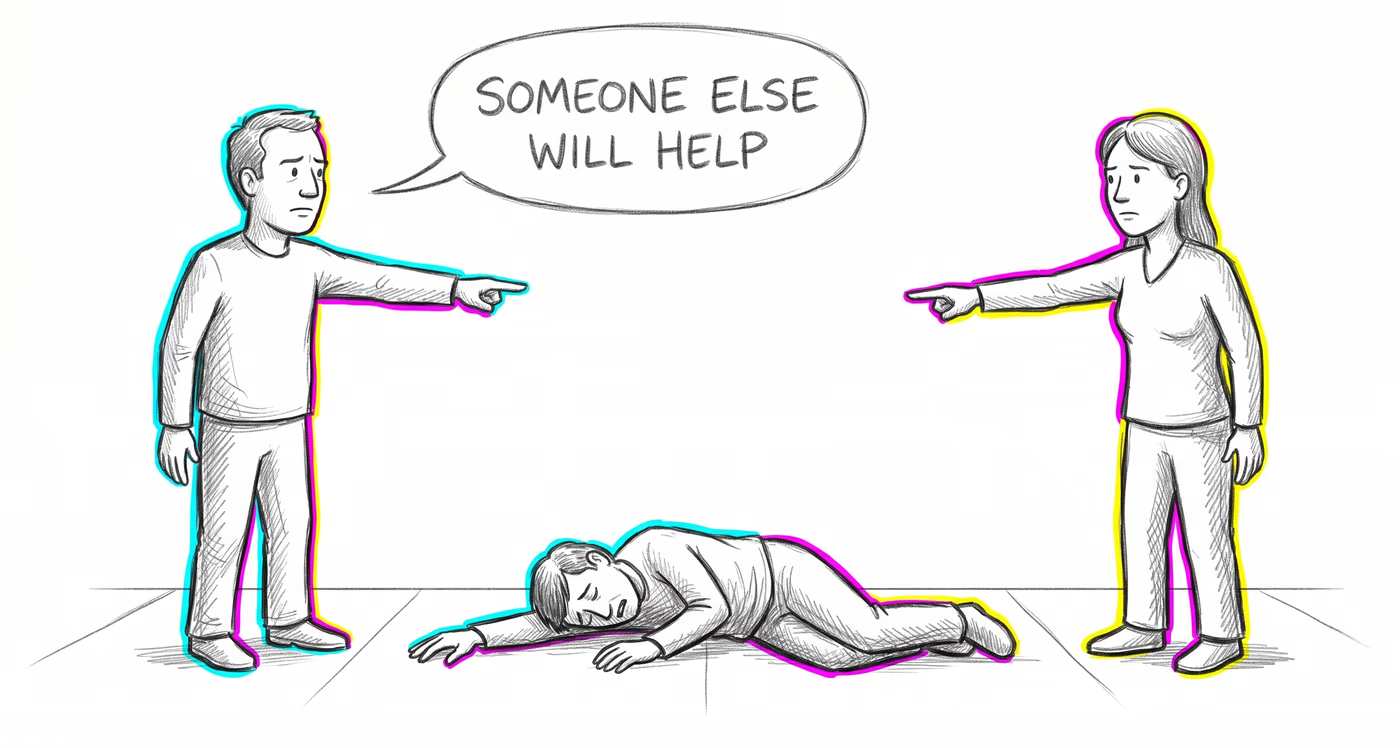
Feeling less personal obligation to act when others are present, because the responsibility feels shared across the group.

WHAT IT IS

The glitch, explained plainly.

Imagine you and twenty friends are all watching a ball roll toward a puddle. Everyone thinks, 'Someone else will grab it,' so nobody moves and the ball gets soaked. But if you were alone, you'd just pick it up without thinking. The more people around, the more everyone assumes it's not their job.

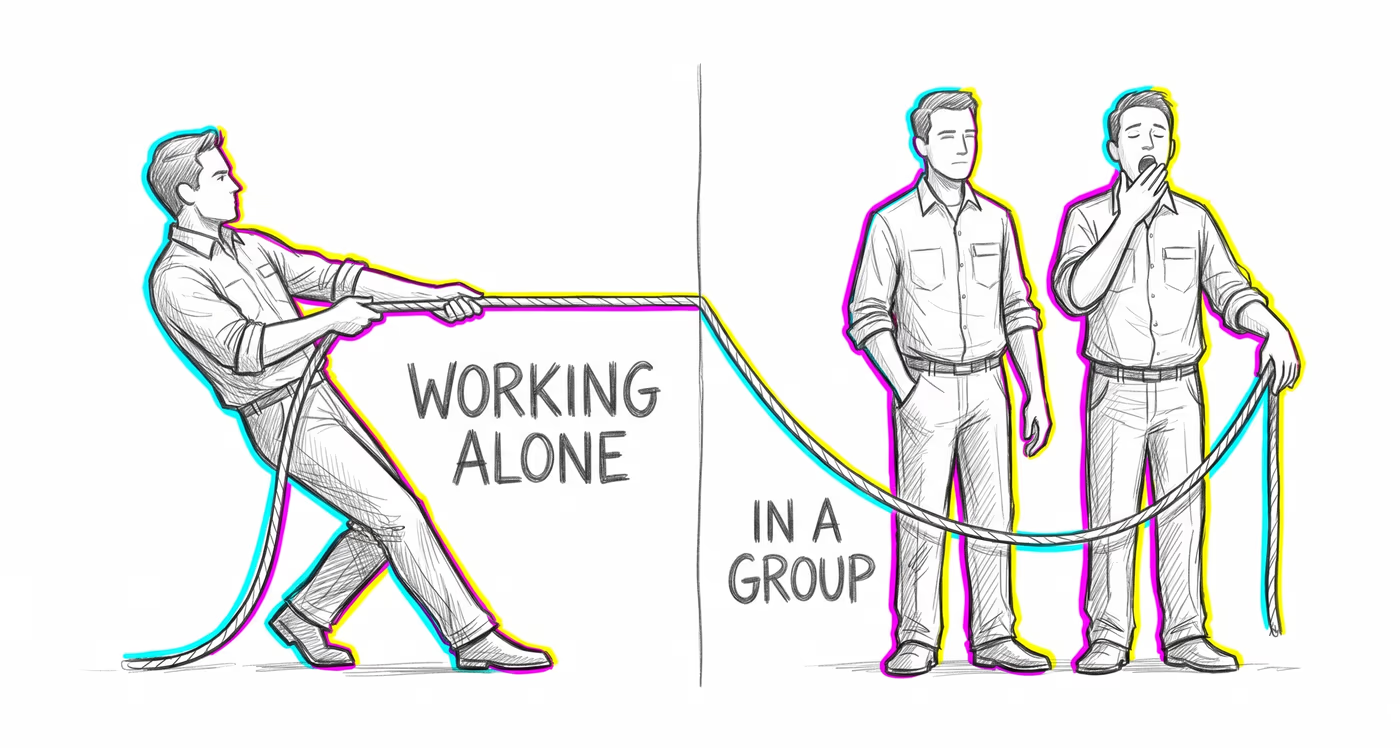
Diffusion of responsibility occurs when the presence of other people causes each individual to feel a diminished sense of personal obligation to act, intervene, or contribute. As group size increases, each member's perceived share of the responsibility shrinks proportionally, often resulting in collective inaction even when every individual privately recognizes the need for action. This effect extends beyond emergencies into workplaces, online spaces, and group projects, where ambiguous ownership of tasks leads to critical failures. The phenomenon is distinct from simple apathy — individuals often experience genuine concern but rationalize their inaction by assuming someone else is better positioned, more qualified, or already taking steps to address the situation.

SOUND FAMILIAR?

Where it shows up.

  1. 01 A team of eight engineers receives an automated alert that a critical production server is showing warning signs. Each engineer sees the alert, notices the seven other recipients, and assumes one of the more senior engineers will investigate. Two hours later, the server crashes and the team discovers that not a single person checked on it.
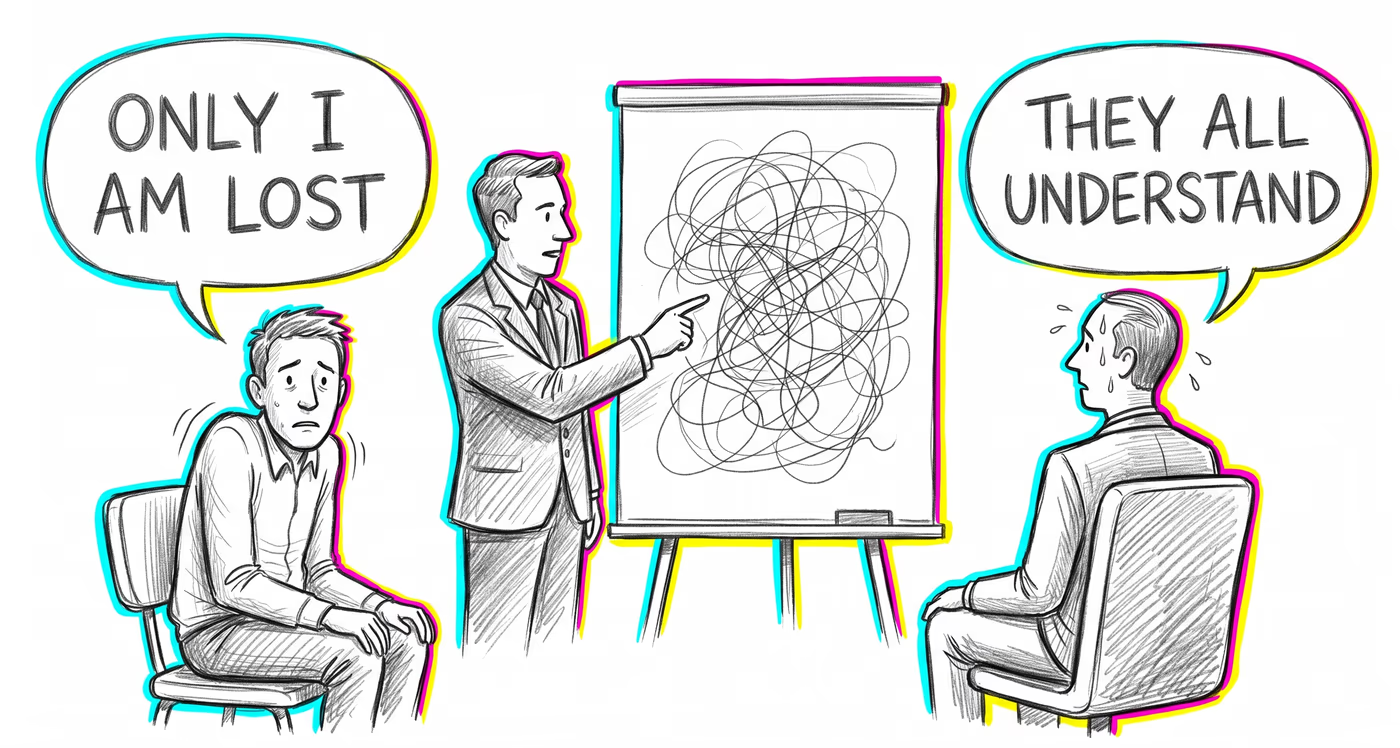
  2. 02 During a company-wide town hall, the CEO asks if anyone has concerns about the new restructuring plan. Dozens of employees privately disagree with key elements but remain silent, each believing that someone more tenured or outspoken will raise the issue. The plan passes without a single objection.
  3. 03 A neighborhood Facebook group posts about a string of package thefts. Hundreds of residents express outrage and agree that someone should organize a neighborhood watch. Weeks pass with no action because every resident assumes another neighbor with more free time will take the lead.
  4. 04 A nonprofit board of twelve directors reviews a financial report showing irregularities. Each director finds the numbers concerning but assumes the finance committee or the auditor will flag the issue formally. The irregularities grow for two fiscal quarters before anyone formally raises the matter.
  5. 05 A research lab has six co-authors on a paper. During peer review, a reviewer points out a potential error in the statistical analysis. Each co-author reads the comment and assumes the lead statistician among them will verify the calculation. The paper is resubmitted with the error unaddressed because the statistician assumed the first author had handled it.
IN DIFFERENT DOMAINS

Where it shows up at work.

The same glitch looks different depending on the terrain. Finance, medicine, a relationship, a team — same mechanism, different costume.

Finance & investing

In large investment committees, individual analysts may dilute their personal accountability for risk warnings, assuming that other members or the risk management team will escalate concerns — leading to unaddressed portfolio vulnerabilities that compound over time.
Medicine & diagnosis

In crowded emergency departments or during code situations with many staff present, individual clinicians may delay initiating interventions, each assuming another team member with clearer authority has already taken charge, potentially delaying time-critical treatment.

Education & grading

In group projects, students consistently reduce their individual effort as group size increases, relying on more motivated teammates to carry the workload. Teachers who assign collective grades without individual accountability measures routinely observe this free-riding pattern.

Relationships

In extended families dealing with an aging parent's care needs, each sibling may contribute less, assuming other siblings are handling medical appointments, finances, or emotional support — leading to caregiver burnout for whichever family member finally steps up.

Tech & product

In large engineering organizations, shared codebases and collectively owned services suffer from degraded quality because no single engineer feels personally responsible for maintenance, monitoring, or documentation — the 'tragedy of the commons' in code ownership.

Workplace & hiring

When company-wide emails flag an urgent issue without naming a specific owner, response rates plummet. Managers who say 'someone should look into this' instead of assigning a named individual reliably produce inaction.

Politics Media

Voters in large democracies may abstain from elections, assuming their single vote is inconsequential when millions of others are casting ballots. Similarly, citizens witnessing misinformation online may not report or correct it, assuming others in the vast audience will do so.

HOW TO SPOT IT

Ask yourself…

  • Am I assuming someone else will handle this, and if so, do I actually know who that person is?
  • Would I act differently if I were the only person aware of this situation right now?
  • Is there a specific, named individual who has been assigned ownership of this, or is it floating in a shared void?
HOW TO DEFEND AGAINST IT

The playbook.

  • Assign a single named owner to every task, decision, or escalation — never say 'someone should' when you can say 'you should.'
  • Use the 'Lone Witness Test': mentally strip away every other person present and ask yourself what you would do if you were truly the only one who could act.
  • In emergencies, point directly at a specific person and give a clear instruction: 'You in the blue jacket, call 911.'
  • In teams, implement a RACI matrix (Responsible, Accountable, Consulted, Informed) so every task has exactly one accountable individual.
  • Create personal commitment devices: publicly state 'I will handle this' before the diffusion instinct kicks in.
FAMOUS CASES

In history.

  • The 1964 Kitty Genovese murder in New York, where multiple witnesses reportedly failed to intervene or call police, became the catalyst for research on diffusion of responsibility (though later investigations revealed the original reporting significantly overstated the number of passive witnesses).
  • The 2008 global financial crisis involved widespread diffusion of responsibility across ratings agencies, regulators, and banks, where each institution assumed others were monitoring systemic risk.
  • The Challenger space shuttle disaster (1986), where multiple engineers and managers each had concerns about the O-ring seals but deferred to others in the decision chain, assuming someone with more authority would halt the launch.
WHERE IT COMES FROM
Academic origin

John M. Darley and Bibb Latané, 1968. Formalized in their paper 'Bystander Intervention in Emergencies: Diffusion of Responsibility,' published in the Journal of Personality and Social Psychology.

Evolutionary origin

In small ancestral groups, cooperative survival depended on role specialization and turn-taking in vigilance and labor. When multiple group members were present, it was genuinely adaptive for individuals to conserve energy and defer to whoever was best positioned to act — overresponding by every member to every threat would waste collective resources. The cognitive shortcut of reducing personal urgency when others are available likely evolved as a coordination heuristic for efficient group action.

IN AI SYSTEMS

How the machines inherit it.

In multi-agent AI systems and ensemble models, diffusion of responsibility can emerge as a design flaw: when multiple AI subsystems share oversight of a process, none may flag an anomaly if the architecture assumes another module will catch it. In content moderation at scale, automated systems combined with human review teams can create gaps where each layer assumes the other will handle edge cases, allowing harmful content to slip through.

Read more on Wikipedia
FREE FIELD ZINE

10 glitches quietly running your life.

A free field-zine PDF — ten cognitive glitches named, illustrated, with a defense move for each. Plus the weekly Glitch Report on Fridays — one bias named, two spotted in the wild, one defense move. Unsubscribe any time.

EXPLORE MORE

Related glitches.

LAUNCH PRICE

Train against your blindspots.

50 cards are free to preview. Buyers unlock the rest of the deck plus the interactive training — Spot-the-Bias Quiz unlimited, Swipe Deck with spaced repetition, My Blindspots, Decision Pre-Flight, the Printable Deck + Cheat Sheets, and the Field Guide e-book. $29.50$59.

Unlock the full deck

Everything below — yours forever. Pay once, use across every device.

Half-off launch — limited to the first 100 readers. Auto-applied at checkout.
$59 $29.50
one-time payment · lifetime access
  • All interactive digital cards — search, filter, flip, shuffle on any device
  • Five training modes — Spot-the-Bias Quiz, Swipe Deck, Pre-Flight, Blindspots, Journal
  • Curated Lenses + Decision Templates + Defense Playbook
  • Printable Deck PDFs + Field Guide e-book + Cheat Sheets + Anki Export
  • Every future improvement, included
Unlock  $29.50

30-day refund · no questions asked

Unlock the full deck

Everything below — yours forever. Pay once, use across every device.

Half-off launch — limited to the first 100 readers. Auto-applied at checkout.
$59 $29.50
one-time payment · lifetime access
  • All interactive digital cards — search, filter, flip, shuffle on any device
  • Five training modes — Spot-the-Bias Quiz, Swipe Deck, Pre-Flight, Blindspots, Journal
  • Curated Lenses + Decision Templates + Defense Playbook
  • Printable Deck PDFs + Field Guide e-book + Cheat Sheets + Anki Export
  • Every future improvement, included
Unlock  $29.50

30-day refund · no questions asked