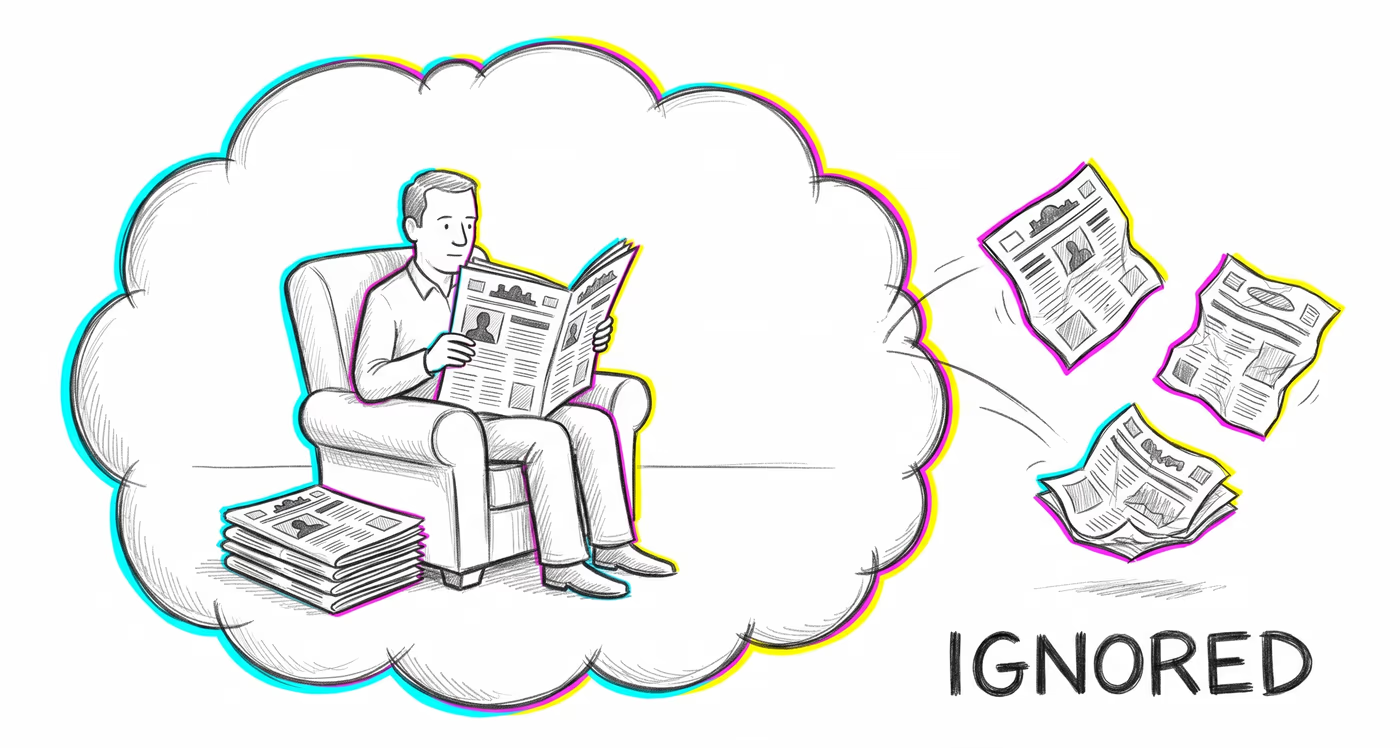
The same glitch looks different depending on the terrain. Finance, medicine, a
relationship, a team — same mechanism, different costume.
Finance & investing
Investors told by regulators or advisors that they must not invest in a particular asset class sometimes increase their allocation to that very asset, perceiving the restriction as an infringement on their financial autonomy — a dynamic observed during speculative frenzies around restricted or controversial securities.

Medicine & diagnosis
Patients who perceive physician recommendations as commands rather than suggestions may refuse to comply with treatment regimens, reduce medication adherence, or do the opposite of what was prescribed, particularly when the language used is directive or authoritarian rather than collaborative.
Education & grading
Students who feel that a teacher is forcing a particular viewpoint on them may reject the material entirely or adopt contrarian positions, not because they genuinely disagree but because the perceived pressure to conform triggers resistance to the educational message.
Relationships
When one partner issues ultimatums or demands behavioral changes (e.g., 'You need to stop spending time with that friend'), the other partner often doubles down on the behavior, perceiving the demand as a threat to their personal autonomy within the relationship.
Tech & product
Aggressive pop-ups, forced account creation walls, and mandatory app update prompts tend to drive user abandonment or workarounds rather than compliance; users who feel their browsing freedom is restricted often develop negative attitudes toward the product regardless of its quality.
Workplace & hiring
Top-down policy mandates delivered without employee input or explanation often generate passive resistance, decreased morale, and malicious compliance, as workers experience the directives as threats to their professional autonomy and decision-making authority.
Politics Media
Government censorship of media content, social media deplatforming, or attempts to suppress political speech frequently amplify the reach and perceived credibility of the restricted content — a pattern known as the Streisand Effect — as citizens perceive their informational freedom as under threat.