Backfire Effect

aka Worldview Backfire Effect · Belief Perseverance Effect · Conceptual Conservatism

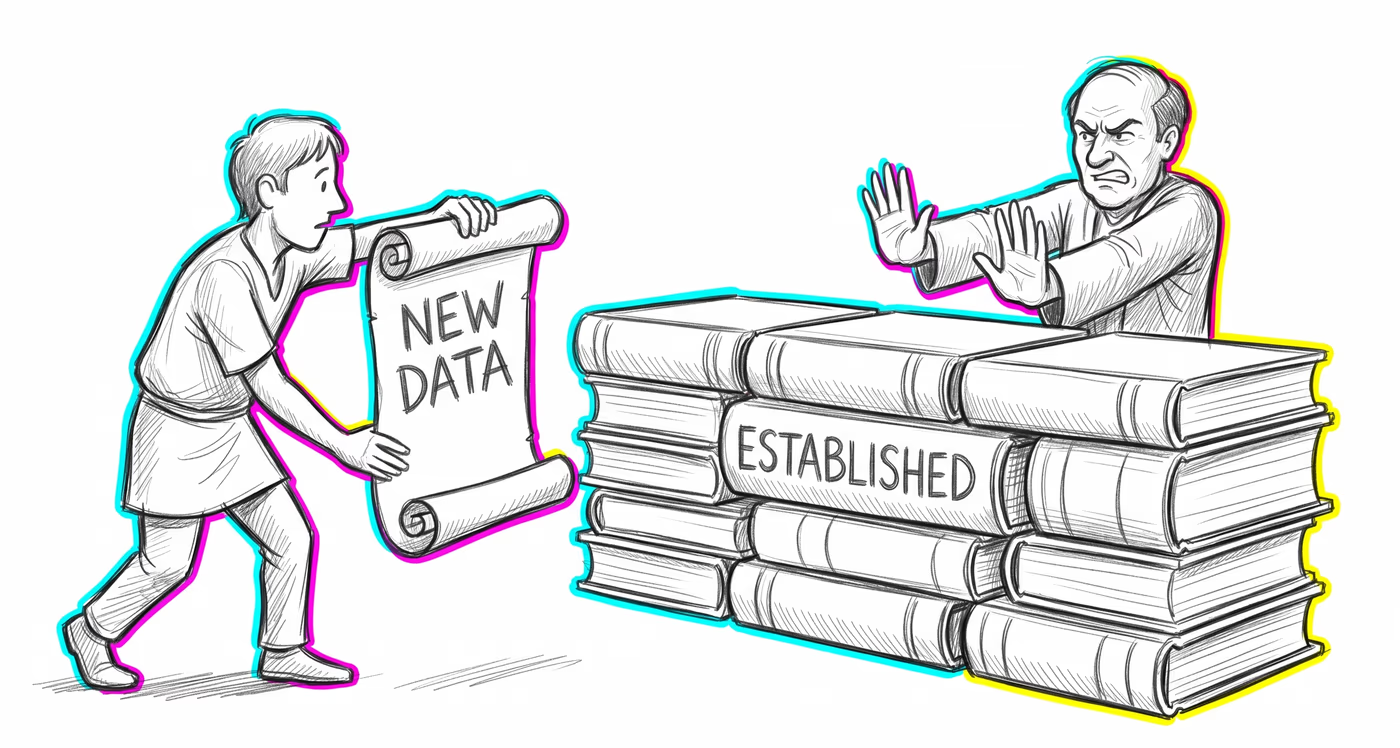
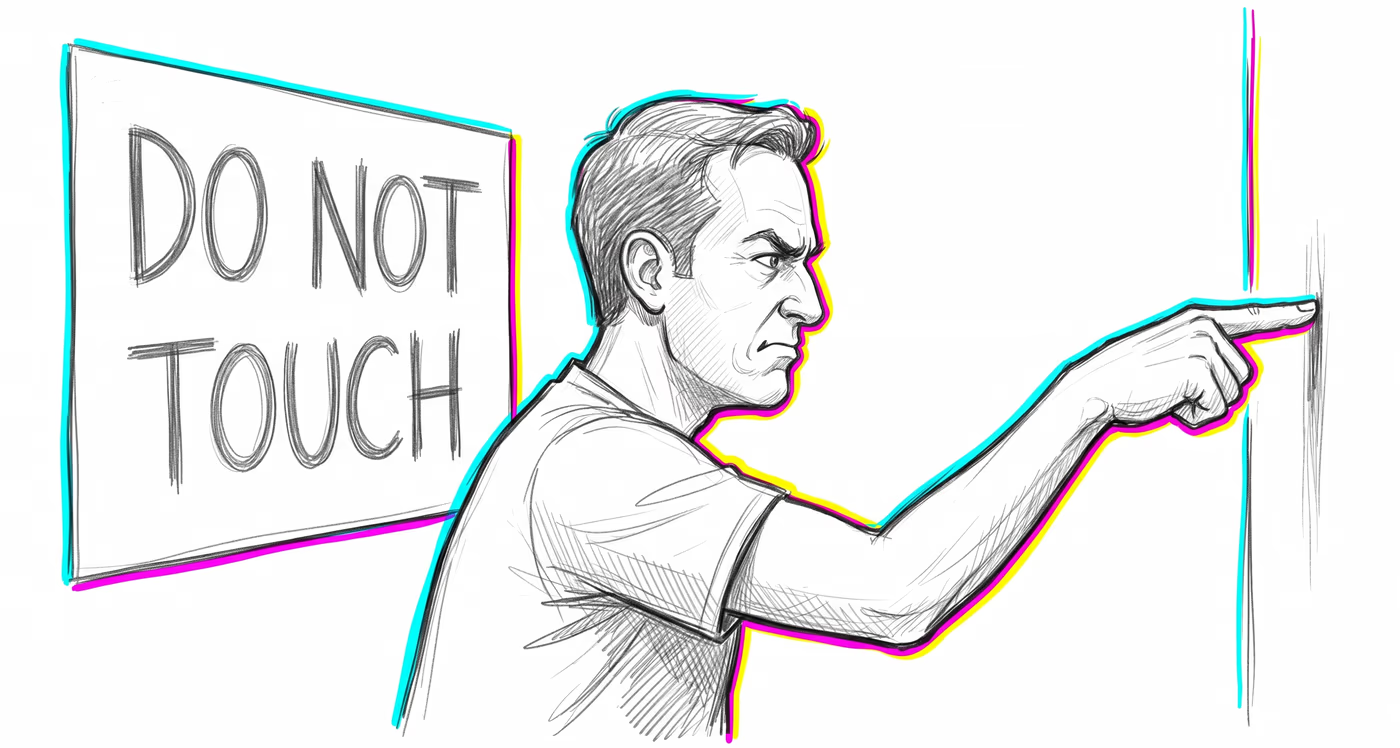
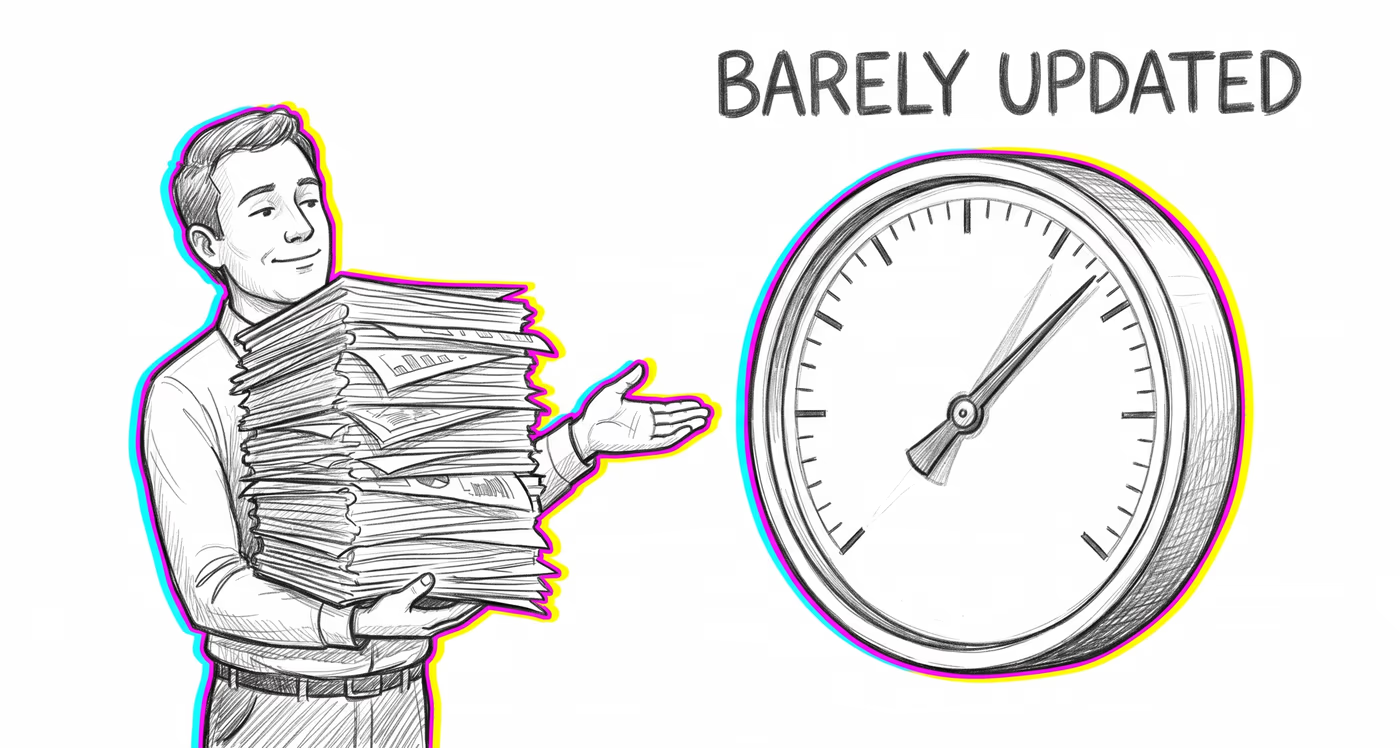
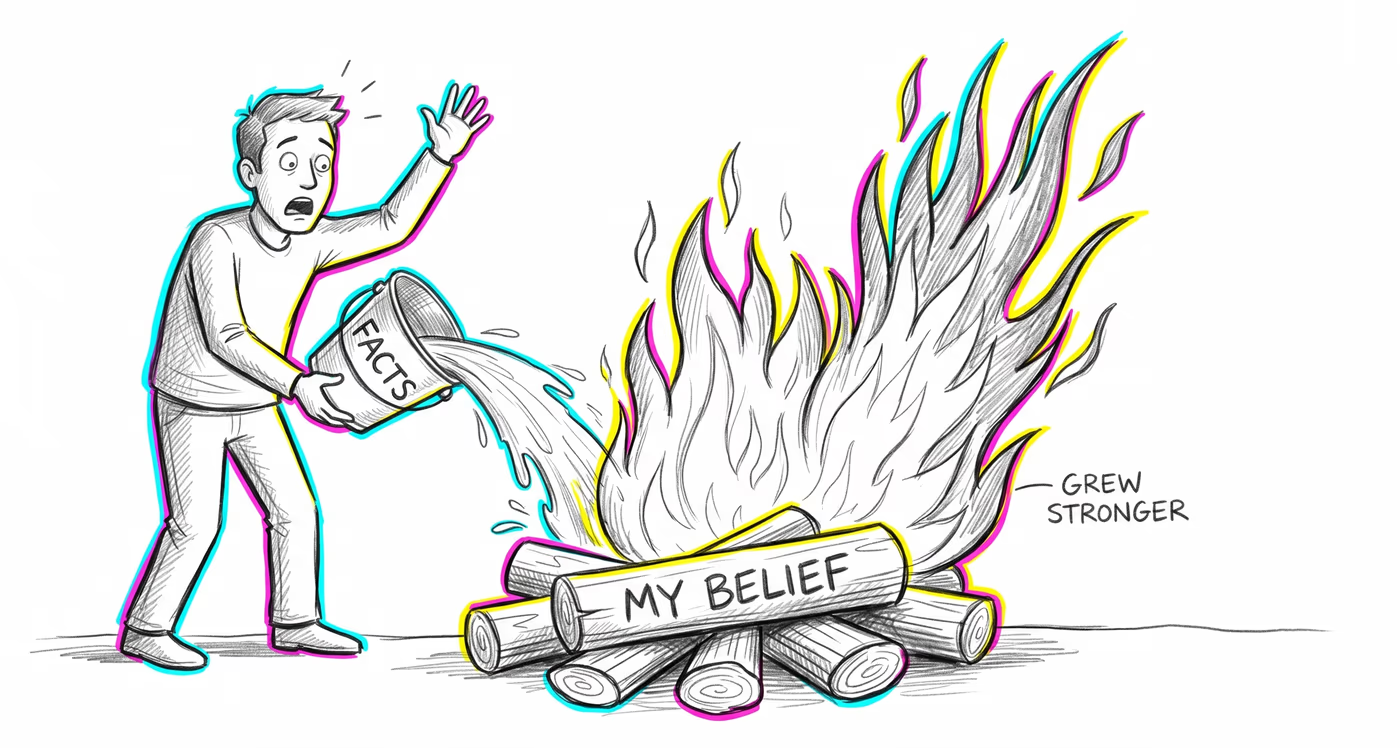
Corrective evidence paradoxically strengthening a belief it was meant to change — especially when tied to identity.

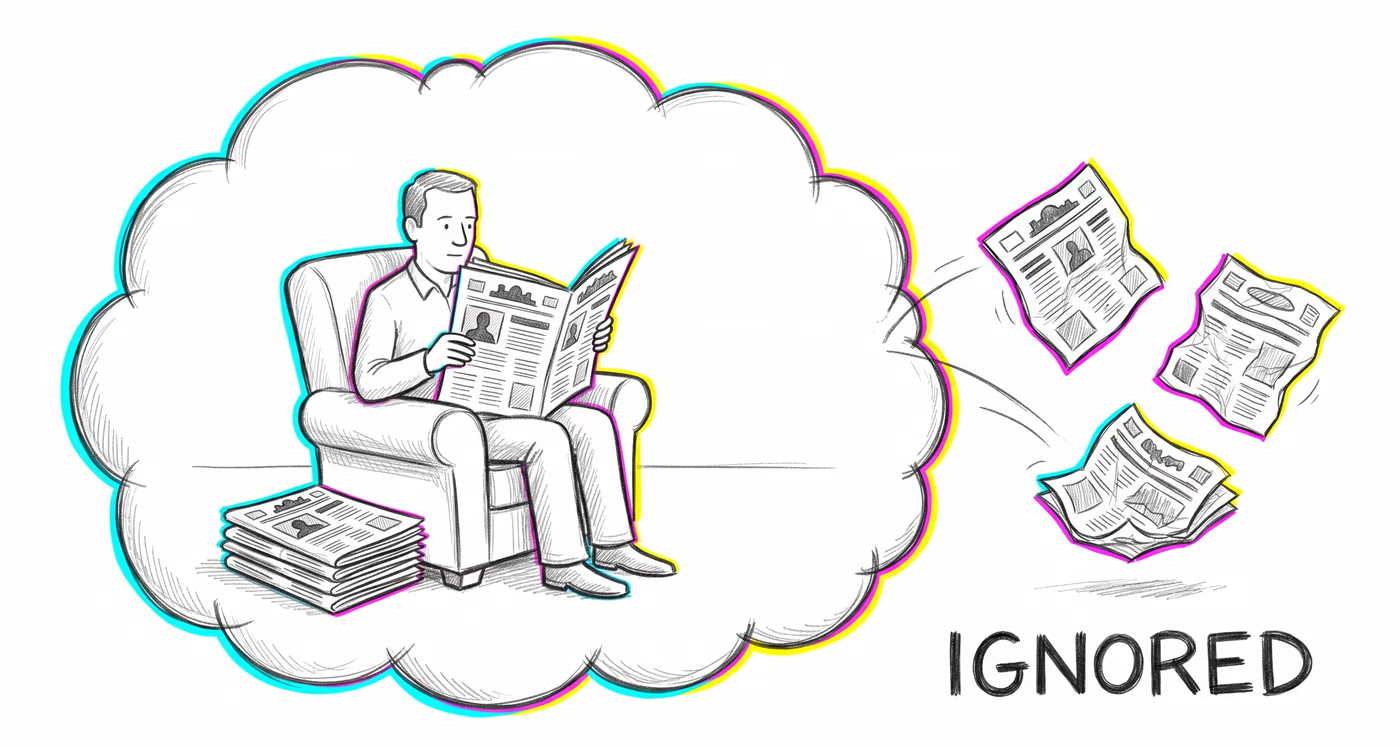
Illustration: Backfire Effect
WHAT IT IS

The glitch, explained plainly.

Imagine you tell your friend that their favorite superhero actually lost a fight, and you show them proof. Instead of saying 'Oh, you're right,' they get even more convinced their hero is the best ever. The more you try to show them they're wrong, the more they dig in and insist they're right — it's like the proof makes them believe harder.

The backfire effect describes a paradoxical cognitive response in which encountering corrective evidence or fact-checks causes an individual to become more entrenched in their original — often erroneous — belief rather than updating it. This occurs most strongly when the challenged belief is tightly woven into the person's identity, political allegiance, or deeply held worldview. When confronted with disconfirming information, the individual engages in internal counter-arguing, generating more supporting arguments for their original position than they held before the correction. Importantly, more recent research has found this effect to be rarer and less robust than initially thought, appearing primarily under specific conditions where beliefs are strongly identity-linked, rather than being a universal response to correction.

SOUND FAMILIAR?

Where it shows up.

  1. 01 Maria has believed for years that eating organic food prevents cancer. Her coworker shares a peer-reviewed meta-analysis showing no significant cancer-prevention benefit from organic diets. After reading the study, Maria not only dismisses it as industry-funded propaganda but begins sharing even more articles supporting organic food's anti-cancer benefits — articles she had never bothered to seek out before.
  2. 02 A city council member who championed a costly traffic-calming project receives a detailed independent report showing the project actually increased average commute times. Rather than reconsidering the project, he spends the weekend compiling testimonials from residents who 'feel safer' and publishes a newsletter arguing the project is an even greater success than originally claimed.
  3. 03 During a team retrospective, a software engineer is shown telemetry data proving that the microservices architecture she advocated for has increased system latency by 40%. She acknowledges the data but concludes that the real problem is insufficient investment in the architecture, and she drafts a proposal to double down by migrating two more services — more committed to the approach than before seeing the metrics.
  4. 04 A financial analyst who publicly predicted a stock would rise receives quarterly earnings data showing the company underperformed. Instead of revising his outlook, he interprets the poor results as evidence of a 'shakeout' that will reward patient holders, and increases his price target above his original forecast.
  5. 05 A parent who opposes a new math curriculum reads a school-district report showing improved test scores since the curriculum was adopted. She reasons that the tests must have been made easier, shares the report on a parent forum with her own critical annotations, and begins organizing a petition — something she hadn't considered before the positive data was released.
IN DIFFERENT DOMAINS

Where it shows up at work.

The same glitch looks different depending on the terrain. Finance, medicine, a relationship, a team — same mechanism, different costume.

Finance & investing

Investors who have publicly committed to a market thesis may react to disconfirming earnings reports or analyst downgrades by increasing their position size rather than reducing it, interpreting negative signals as temporary setbacks that validate their long-term conviction.

Medicine & diagnosis

Patients presented with clinical evidence contradicting their health beliefs — such as studies showing a favored supplement is ineffective — may dismiss the evidence as biased and become more committed to the treatment, sometimes reducing trust in their healthcare provider.

Education & grading

Students who hold strong misconceptions about scientific topics may emerge from corrective lessons with those misconceptions reinforced rather than resolved, particularly when the correction directly confronts the error without providing an alternative explanatory framework.

Relationships

When a friend or partner presents evidence that a person's romantic interest is not reciprocated — such as pointing out clear signs of disinterest — the person may reinterpret the evidence as proof of the other party 'playing hard to get' and pursue even more intensely.

Tech & product

When A/B test results show that a product team's favored design underperforms, team members who championed the design may question the methodology, sample size, or testing conditions rather than accept the data, and push to run the test again with modified parameters.

Workplace & hiring

Employees who receive critical performance feedback that contradicts their self-assessment may become more entrenched in their work habits and more vocal about their competence, viewing the feedback as evidence of the evaluator's misunderstanding rather than a signal to change.

Politics Media

Fact-checks of politically charged claims can cause partisans to increase their support for the corrected politician, viewing the fact-check itself as evidence of media bias or a coordinated attack, thereby deepening their original commitment.

HOW TO SPOT IT

Ask yourself…

  • Am I feeling defensive right now — does this correction feel like a personal attack rather than new information?
  • Did I just generate more arguments for my position than I had before I saw the contradicting evidence?
  • Am I discrediting the source of this information specifically because it challenges something I believe?
HOW TO DEFEND AGAINST IT

The playbook.

  • Practice identity separation: consciously remind yourself that updating a belief does not mean your identity or values are under attack.
  • Use the 'steel man' technique: before defending your position, articulate the strongest version of the opposing argument in your own words.
  • Delay your response: when confronted with contradicting evidence, impose a 24-hour cooling-off period before forming a conclusion.
  • Seek out the correction from in-group sources: information from trusted, ideologically similar sources is less likely to trigger defensive processing.
  • Frame belief updating as strength, not weakness: adopting a personal norm that changing your mind based on evidence is a mark of intellectual courage.
FAMOUS CASES

In history.

  • Nyhan and Reifler's 2010 study found that conservative participants who were shown corrections about Iraqi WMDs became more likely to believe Iraq had WMDs, not less.
  • Anti-vaccination movements have demonstrated backfire dynamics, where public health campaigns presenting safety data have, in some subgroups, been associated with decreased vaccination intent.
  • The Flat Earth movement has shown resilience to scientific correction, with some members reporting strengthened conviction after engaging with debunking content.
WHERE IT COMES FROM
Academic origin

Brendan Nyhan and Jason Reifler, 2010, in 'When Corrections Fail: The Persistence of Political Misperceptions,' published in Political Behavior. Conceptual groundwork was laid by Leon Festinger's cognitive dissonance theory (1957) and Lee Ross and Craig Anderson's belief perseverance research (1975–1980s).

Evolutionary origin

In ancestral environments, rapidly abandoning core beliefs in response to external challenges could be socially dangerous — tribal cohesion depended on shared narratives, and individuals who easily flipped their allegiances under pressure risked exclusion from the group. A bias toward defending established beliefs, especially those tied to group identity, helped maintain social bonds and signaled loyalty to in-group members.

IN AI SYSTEMS

How the machines inherit it.

When AI fact-checking systems or content-moderation algorithms flag misinformation and append corrections, users who are ideologically committed to the flagged content may distrust the platform more and share the content more aggressively. Additionally, recommendation algorithms that serve corrective content to users may inadvertently increase engagement with the original misinformation by making it more salient and familiar, creating a digital feedback loop that mirrors the backfire dynamic.

FREE FIELD ZINE

10 glitches quietly running your life.

A free field-zine PDF — ten cognitive glitches named, illustrated, with a defense move for each. Plus the weekly Glitch Report on Fridays — one bias named, two spotted in the wild, one defense move. Unsubscribe any time.

EXPLORE MORE

Related glitches.

LAUNCH PRICE

Train against your blindspots.

50 cards are free to preview. Buyers unlock the rest of the deck plus the interactive training — Spot-the-Bias Quiz unlimited, Swipe Deck with spaced repetition, My Blindspots, Decision Pre-Flight, the Printable Deck + Cheat Sheets, and the Field Guide e-book. $29.50$59.

Unlock the full deck

Everything below — yours forever. Pay once, use across every device.

Half-off launch — limited to the first 100 readers. Auto-applied at checkout.
$59 $29.50
one-time payment · lifetime access
  • All interactive digital cards — search, filter, flip, shuffle on any device
  • Five training modes — Spot-the-Bias Quiz, Swipe Deck, Pre-Flight, Blindspots, Journal
  • Curated Lenses + Decision Templates + Defense Playbook
  • Printable Deck PDFs + Field Guide e-book + Cheat Sheets + Anki Export
  • Every future improvement, included
Unlock  $29.50

30-day refund · no questions asked

Unlock the full deck

Everything below — yours forever. Pay once, use across every device.

Half-off launch — limited to the first 100 readers. Auto-applied at checkout.
$59 $29.50
one-time payment · lifetime access
  • All interactive digital cards — search, filter, flip, shuffle on any device
  • Five training modes — Spot-the-Bias Quiz, Swipe Deck, Pre-Flight, Blindspots, Journal
  • Curated Lenses + Decision Templates + Defense Playbook
  • Printable Deck PDFs + Field Guide e-book + Cheat Sheets + Anki Export
  • Every future improvement, included
Unlock  $29.50

30-day refund · no questions asked