Ultimate Attribution Error

aka Group Attribution Bias · Intergroup Attribution Bias

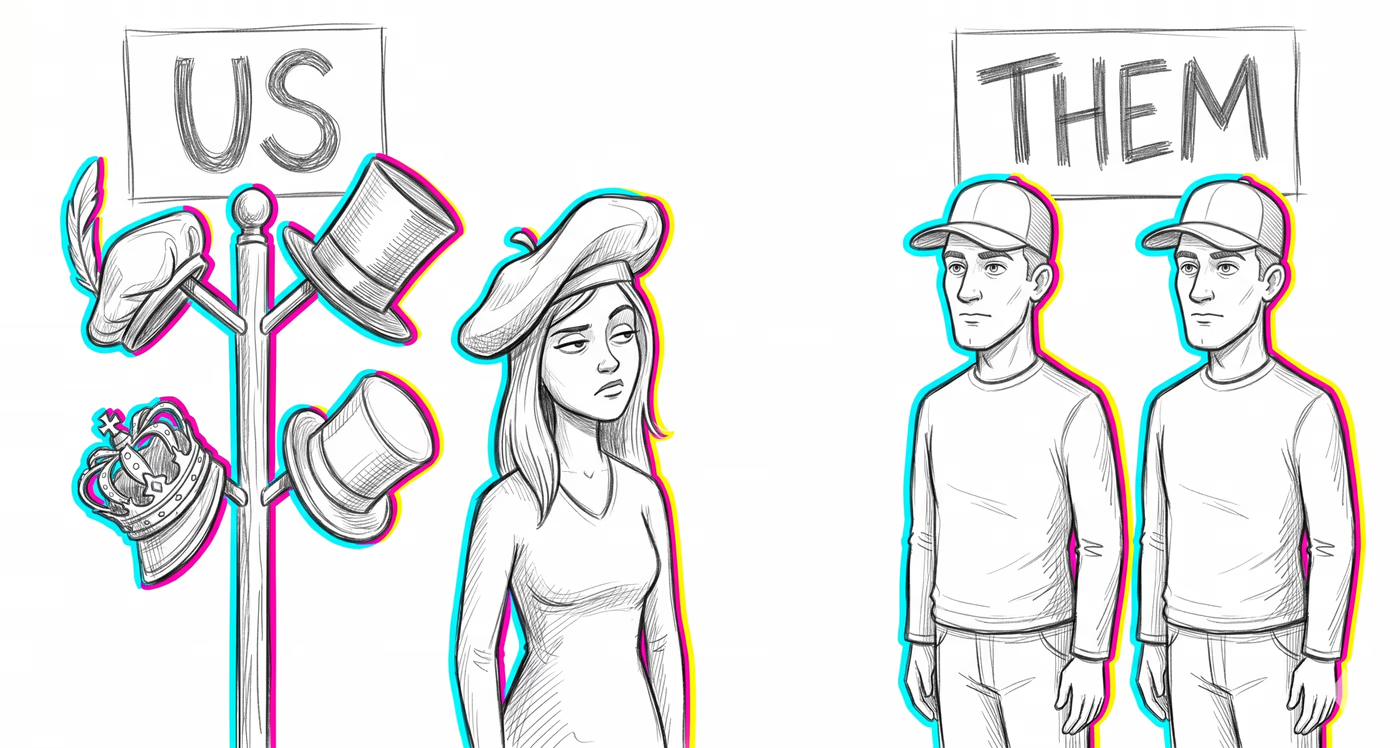
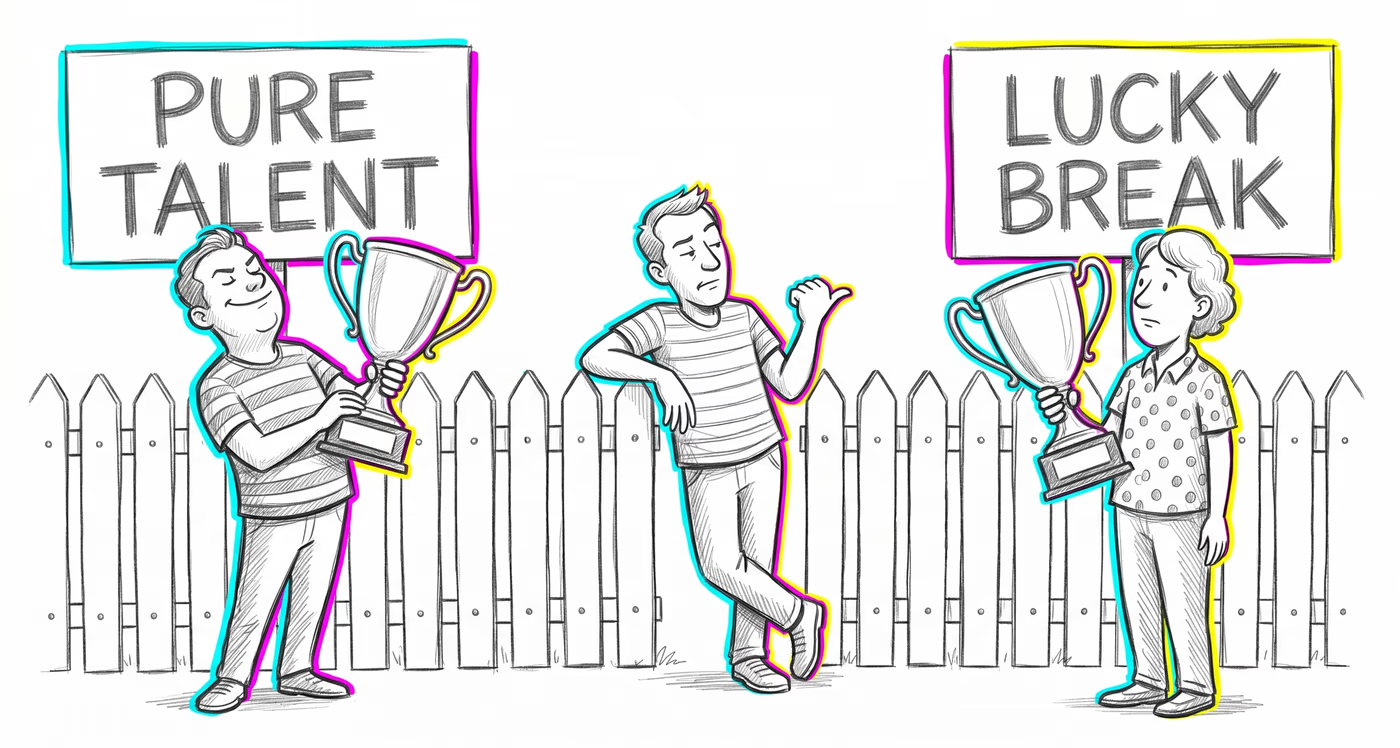
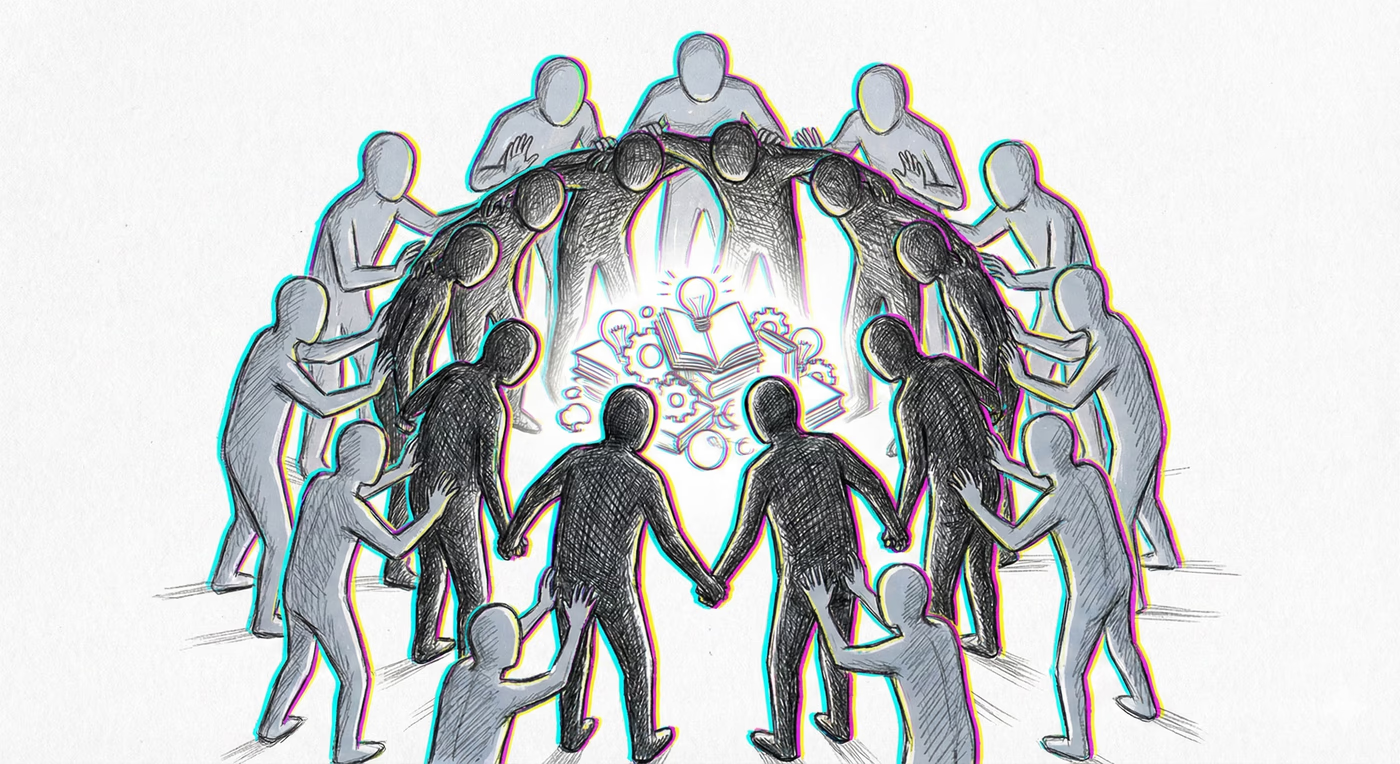
Blaming an out-group member's bad behavior on their character but crediting their good behavior to luck — and the reverse for your own group.

WHAT IT IS

The glitch, explained plainly.

Imagine you have two teams on a playground. When someone on YOUR team wins a race, you say 'We're so fast!' But when someone on the OTHER team wins, you say 'They just got lucky.' And when someone on the other team trips, you say 'They're clumsy,' but when your teammate trips, you say 'The ground was slippery.' You always find a way to make your team look good and the other team look bad, no matter what actually happens.

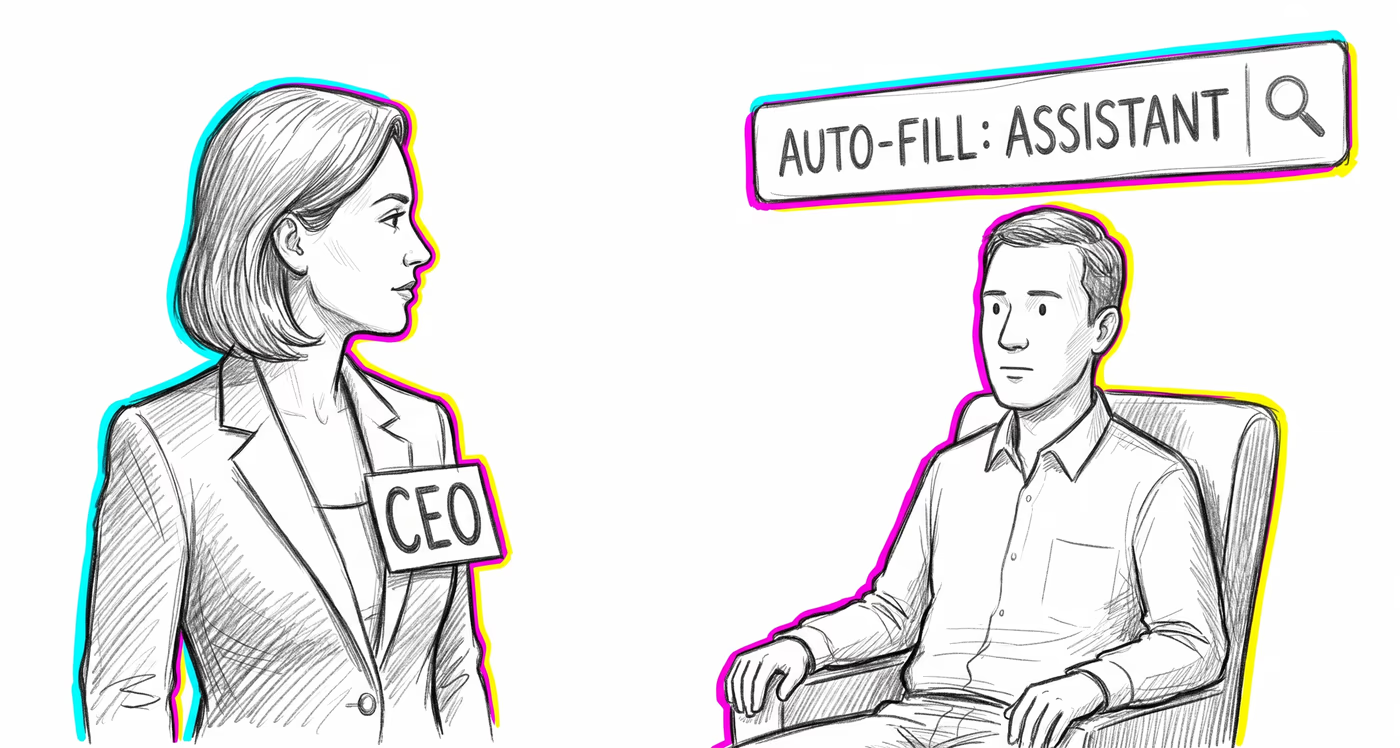
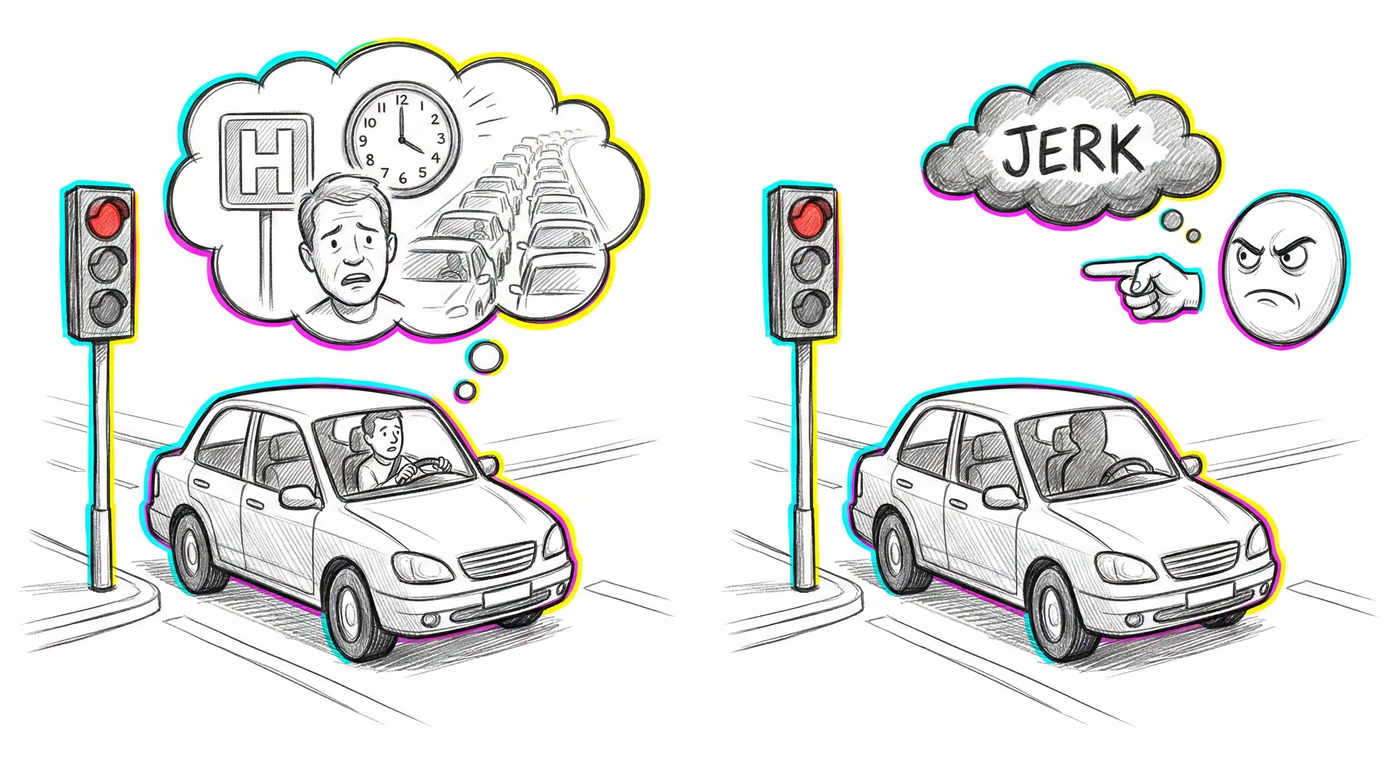
The Ultimate Attribution Error extends the fundamental attribution error from the individual level to the group level. When people observe negative behavior from an out-group member, they over-attribute it to deep dispositional or even genetic causes and generalize it to the entire out-group. Conversely, when an out-group member behaves positively, the behavior is 'explained away' as an exceptional case, luck, unfair advantage, or extreme effort—anything to prevent updating the negative group stereotype. The mirror image applies to the in-group: successes are attributed to character and talent, while failures are excused by circumstances. This asymmetric attribution pattern creates a self-reinforcing cycle that perpetuates prejudice and resists disconfirming evidence.

SOUND FAMILIAR?

Where it shows up.

  1. 01 After a project fails, a manager notes that the contractors from an outside firm were 'clearly incompetent and sloppy.' When his own internal team's project fails the following month under similar circumstances, he tells leadership that 'the timeline was unrealistic and the requirements kept changing.'
  2. 02 A political commentator consistently explains corruption scandals in the opposing party as evidence of deep moral rot in their ideology, while explaining identical scandals within her own party as isolated cases caused by the pressures of modern campaigning and media scrutiny.
  3. 03 A hiring manager reviews two equally strong candidates. He attributes the Ivy League degree of the candidate from his own alma mater network to 'talent and work ethic,' but attributes the identical credential of the candidate from a different background to 'affirmative action and grade inflation.'
  4. 04 A tech lead notices that when an engineer from the acquired startup writes clean code, she assumes it was because the task was straightforward. When an engineer from the original team writes clean code on a similarly straightforward task, she sees it as confirmation that the original team has superior engineering culture.
  5. 05 A historian argues that the economic success of certain nations proves their cultural superiority and industriousness, while attributing the identical economic rise of rival nations primarily to favorable geography, foreign aid, and fortunate timing—never to the same dispositional qualities credited to the favored nations.
IN DIFFERENT DOMAINS

Where it shows up at work.

The same glitch looks different depending on the terrain. Finance, medicine, a relationship, a team — same mechanism, different costume.

Finance & investing

Investment analysts may attribute strong performance by companies led by executives from their own demographic or educational background to superior leadership, while attributing equivalent performance by out-group-led firms to favorable market conditions or luck, leading to biased stock recommendations.
Medicine & diagnosis

Healthcare providers may attribute poor health outcomes in minority patients to lifestyle choices and personal irresponsibility (dispositional), while attributing similar outcomes in patients from their own group to systemic barriers like insurance difficulties or work stress (situational), leading to disparities in empathy and treatment quality.

Education & grading

Teachers may attribute academic success of students from different racial or socioeconomic groups to grade inflation, easy coursework, or parental pressure rather than ability, while attributing equivalent success by in-group students to natural talent and hard work. This shapes differential expectations and feedback.

Relationships

In cross-cultural or inter-community marriages, family members may attribute relationship difficulties to the partner's cultural background or inherent personality flaws ('that's how those people are'), while excusing identical behaviors from their own family member as reactions to stress or circumstance.

Tech & product

Engineering teams may attribute bugs produced by an outsourced or acquired team to fundamental incompetence, while attributing their own bugs to tight deadlines, unclear specs, or technical debt. This asymmetry biases build-vs-buy decisions and integration strategies after acquisitions.

Workplace & hiring

In performance reviews, managers may attribute strong performance by out-group employees to easy assignments or team carry, while attributing identical performance by in-group employees to personal skill and leadership. This creates systematic promotion and compensation disparities.

Politics Media

Media coverage frequently frames violence or social problems originating from out-groups as reflecting inherent cultural deficiencies, while framing similar problems within the in-group as products of poverty, mental illness, or circumstance—reinforcing prejudicial narratives and shaping public policy preferences.

HOW TO SPOT IT

Ask yourself…

  • Am I explaining this person's behavior differently than I would if they belonged to my own group?
  • Am I dismissing this out-group member's success as an exception, luck, or unfair advantage rather than earned competence?
  • Would I attribute the same negative behavior to 'character' if it were done by someone from my own group, or would I look for situational explanations?
HOW TO DEFEND AGAINST IT

The playbook.

  • Apply the 'swap test': mentally replace the person's group membership and ask if your explanation would change. If it does, attribution bias is likely operating.
  • Seek meaningful, equal-status contact with out-group members to build individuated impressions that override group schemas.
  • Practice perspective-taking by deliberately constructing situational explanations for out-group negative behavior and dispositional explanations for out-group positive behavior.
  • When evaluating someone's performance, write your causal explanation before you know their group membership.
  • Use structured decision-making frameworks in hiring, evaluation, and judgment contexts that require the same causal criteria to be applied regardless of group membership.
FAMOUS CASES

In history.

  • Duncan's 1976 'ambiguous shove' experiment demonstrated that white participants rated identical physical contact as 'playing around' when performed by a white person but as 'violent behavior' when performed by a Black person, attributing the behavior to disposition.
  • Taylor and Jaggi's 1974 study in South India found that Hindu participants attributed desirable acts by fellow Hindus to dispositional causes and undesirable acts to situational causes, with the opposite pattern for Muslim actors.
  • Post-9/11 media coverage in the U.S. often attributed acts of violence by Muslim individuals to religious ideology (dispositional), while similar acts by non-Muslim individuals were more frequently attributed to mental illness or personal circumstances (situational).
WHERE IT COMES FROM
Academic origin

Thomas F. Pettigrew, 1979. Published in 'Personality and Social Psychology Bulletin' (5:4, 461-476) as an extension of Gordon Allport's cognitive analysis of prejudice and the fundamental attribution error identified by Fritz Heider (1958) and formalized by Lee Ross (1977).

Evolutionary origin

In ancestral environments, rapid categorization of individuals as friend or foe was survival-critical. Assuming the worst about out-group members' intentions (dispositional hostility) while giving in-group members the benefit of the doubt maintained coalition cohesion and guarded against exploitation by rival groups. This asymmetric attribution pattern helped tribes remain vigilant against outsiders while preserving internal trust and cooperation.

IN AI SYSTEMS

How the machines inherit it.

Machine learning models trained on biased text corpora can replicate the ultimate attribution error by learning asymmetric sentiment associations for different demographic groups. NLP models may generate explanations that attribute negative outcomes for minority groups to inherent characteristics while attributing similar outcomes for majority groups to external circumstances, perpetuating the same dispositional-vs-situational asymmetry found in human prejudice.

Read more on Wikipedia
FREE FIELD ZINE

10 glitches quietly running your life.

A free field-zine PDF — ten cognitive glitches named, illustrated, with a defense move for each. Plus the weekly Glitch Report on Fridays — one bias named, two spotted in the wild, one defense move. Unsubscribe any time.

EXPLORE MORE

Related glitches.

LAUNCH PRICE

Train against your blindspots.

50 cards are free to preview. Buyers unlock the rest of the deck plus the interactive training — Spot-the-Bias Quiz unlimited, Swipe Deck with spaced repetition, My Blindspots, Decision Pre-Flight, the Printable Deck + Cheat Sheets, and the Field Guide e-book. $29.50$59.

Unlock the full deck

Everything below — yours forever. Pay once, use across every device.

Half-off launch — limited to the first 100 readers. Auto-applied at checkout.
$59 $29.50
one-time payment · lifetime access
  • All interactive digital cards — search, filter, flip, shuffle on any device
  • Five training modes — Spot-the-Bias Quiz, Swipe Deck, Pre-Flight, Blindspots, Journal
  • Curated Lenses + Decision Templates + Defense Playbook
  • Printable Deck PDFs + Field Guide e-book + Cheat Sheets + Anki Export
  • Every future improvement, included
Unlock  $29.50

30-day refund · no questions asked

Unlock the full deck

Everything below — yours forever. Pay once, use across every device.

Half-off launch — limited to the first 100 readers. Auto-applied at checkout.
$59 $29.50
one-time payment · lifetime access
  • All interactive digital cards — search, filter, flip, shuffle on any device
  • Five training modes — Spot-the-Bias Quiz, Swipe Deck, Pre-Flight, Blindspots, Journal
  • Curated Lenses + Decision Templates + Defense Playbook
  • Printable Deck PDFs + Field Guide e-book + Cheat Sheets + Anki Export
  • Every future improvement, included
Unlock  $29.50

30-day refund · no questions asked