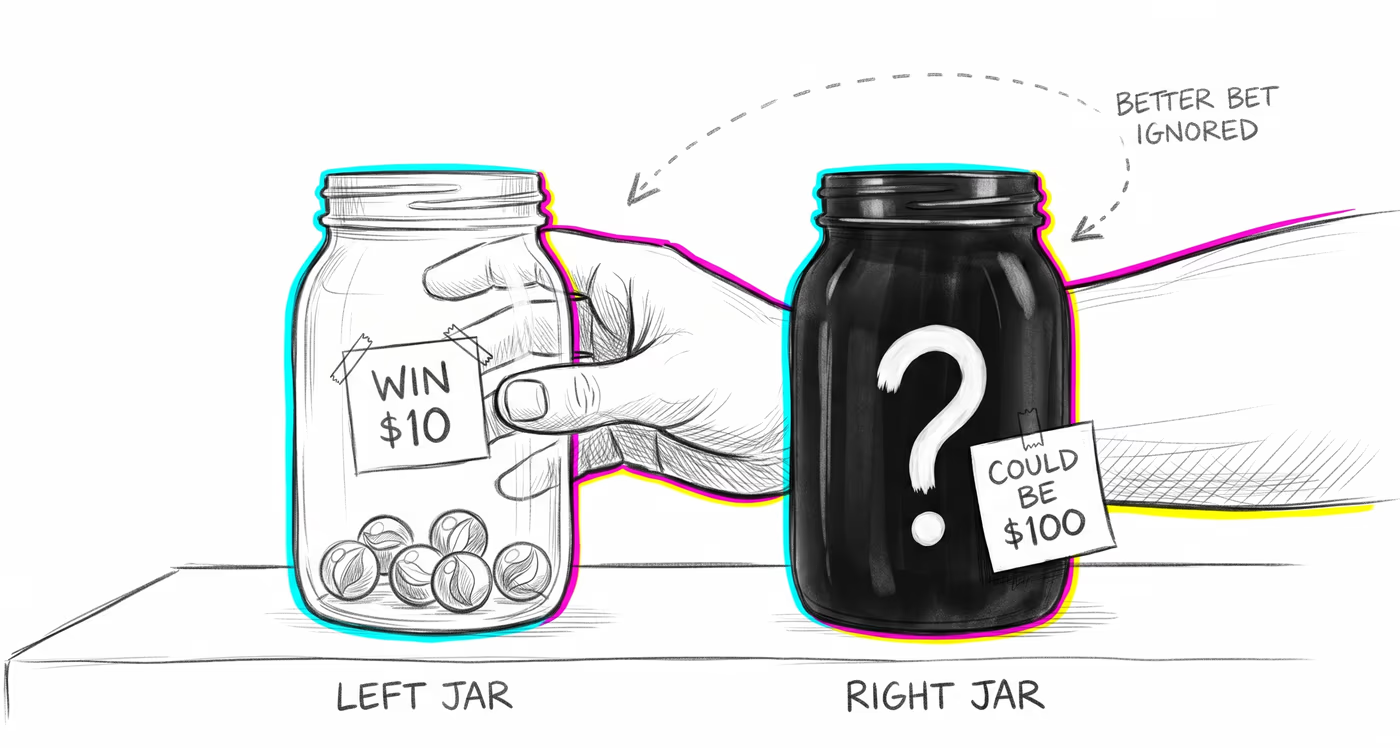
The same glitch looks different depending on the terrain. Finance, medicine, a
relationship, a team — same mechanism, different costume.
Finance & investing
Investors systematically underweight assets with uncertain probability distributions — such as emerging market equities, novel asset classes, or IPOs lacking track records — in favor of familiar instruments with known historical returns, even when expected returns are comparable or lower. This contributes to the equity home bias and the equity premium puzzle.
Medicine & diagnosis
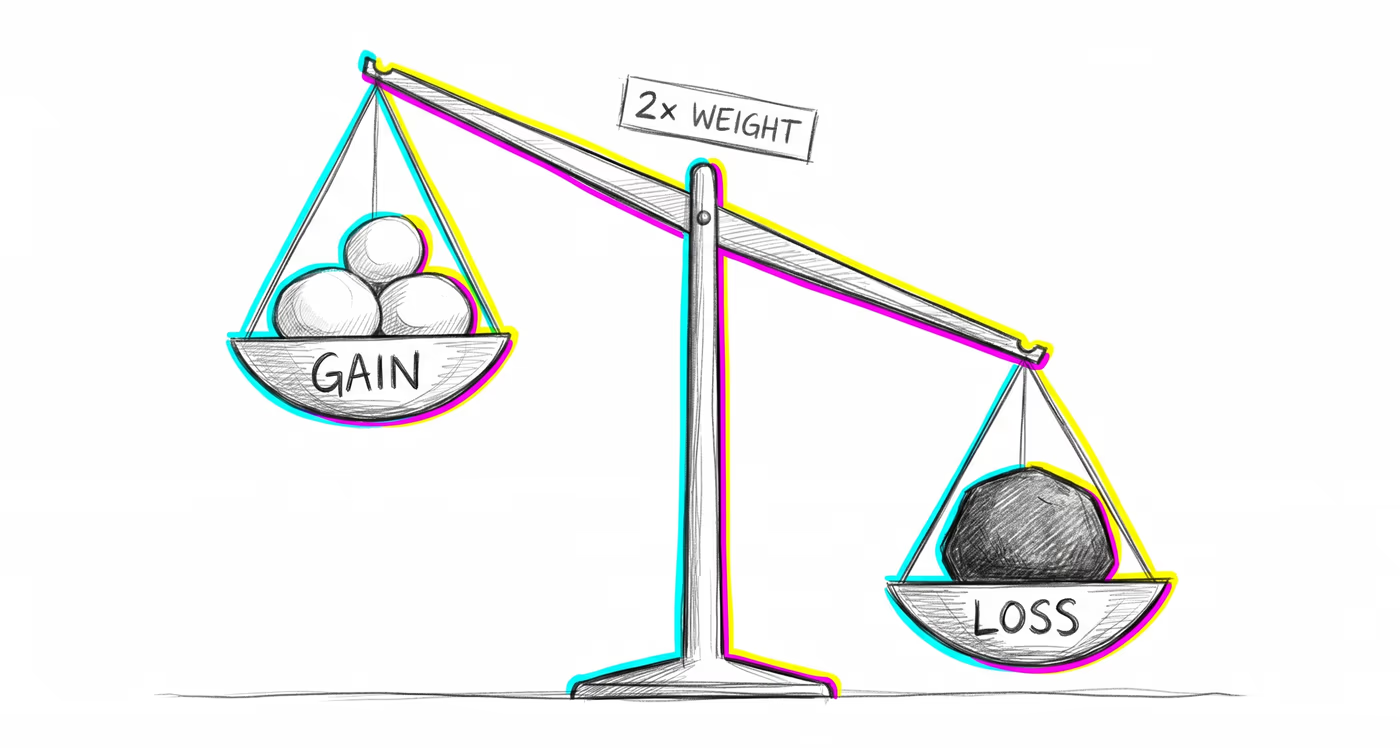
Patients and clinicians tend to favor established treatments with well-documented success rates over newer therapies where evidence is still emerging, even when preliminary data suggests equal or superior efficacy. This delays adoption of innovative treatments and contributes to under-enrollment in clinical trials.
Education & grading
Students preferentially enroll in courses taught by professors with established rating histories over new instructors with no reviews, potentially missing excellent teaching. Similarly, educators may favor well-known curricula with documented outcomes over experimental approaches that lack long-term data.
Relationships
People tend to remain in familiar but mediocre relationships rather than pursuing new connections where outcomes are uncertain. In dating, individuals gravitate toward partners who resemble known 'types' rather than exploring connections with people from unfamiliar backgrounds.
Tech & product
Users prefer established platforms with known functionality over new products whose capabilities are uncertain. Product teams exploit this by prominently displaying metrics, reviews, and usage statistics to reduce perceived ambiguity. Conversely, new features with unclear benefits see low adoption rates compared to incremental updates to familiar tools.
Workplace & hiring
Organizations prefer established vendors, processes, and strategies with known performance records over innovative alternatives with uncertain outcomes. This creates institutional inertia favoring incumbents and penalizing novel proposals, even when expected outcomes favor the new approach.
Politics Media
Voters tend to favor incumbent candidates or established parties with known policy track records over newcomer candidates with untested platforms. Media consumers gravitate toward familiar news sources rather than exploring unfamiliar outlets, reinforcing information silos.