Information Avoidance

aka Willful Ignorance · Strategic Ignorance · Deliberate Ignorance

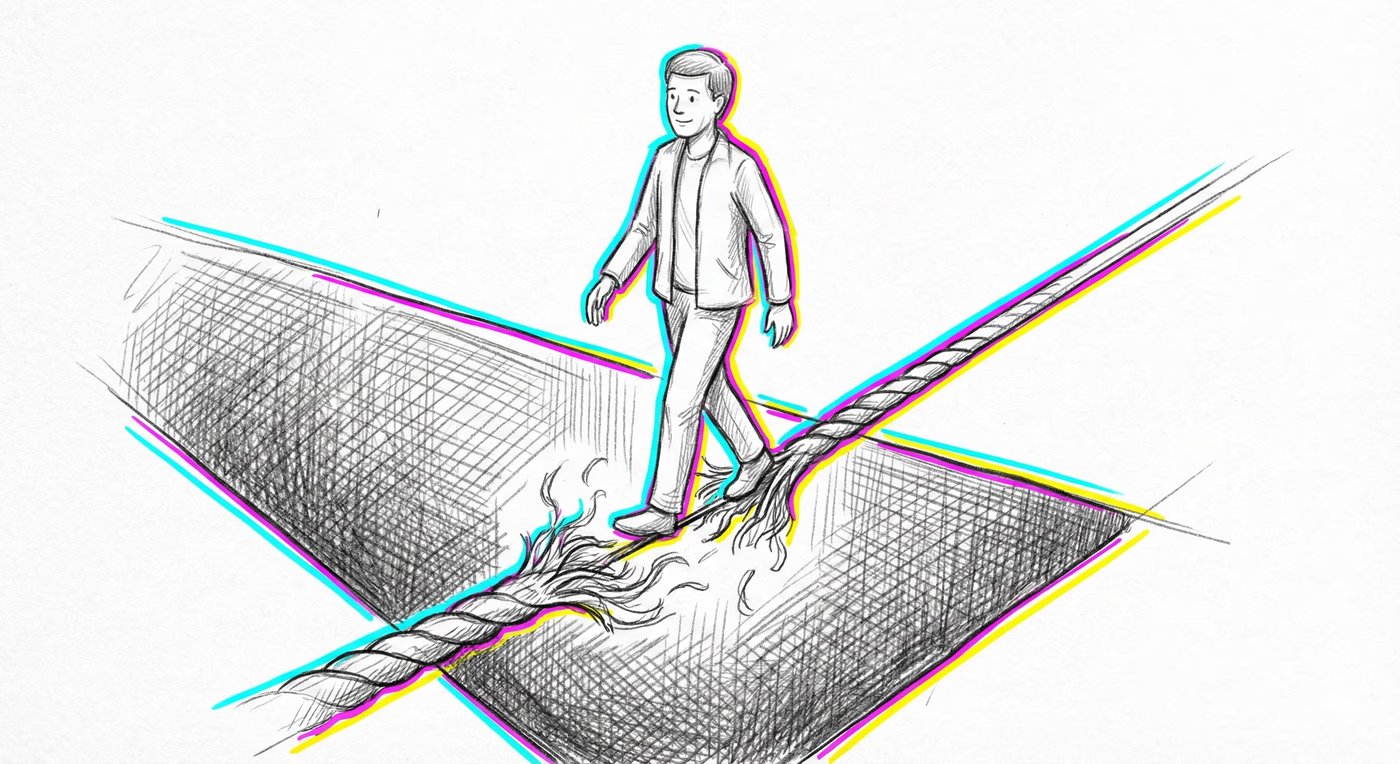
Deliberately avoiding freely available information because it might be unpleasant, threatening, or require unwanted action.

WHAT IT IS

The glitch, explained plainly.

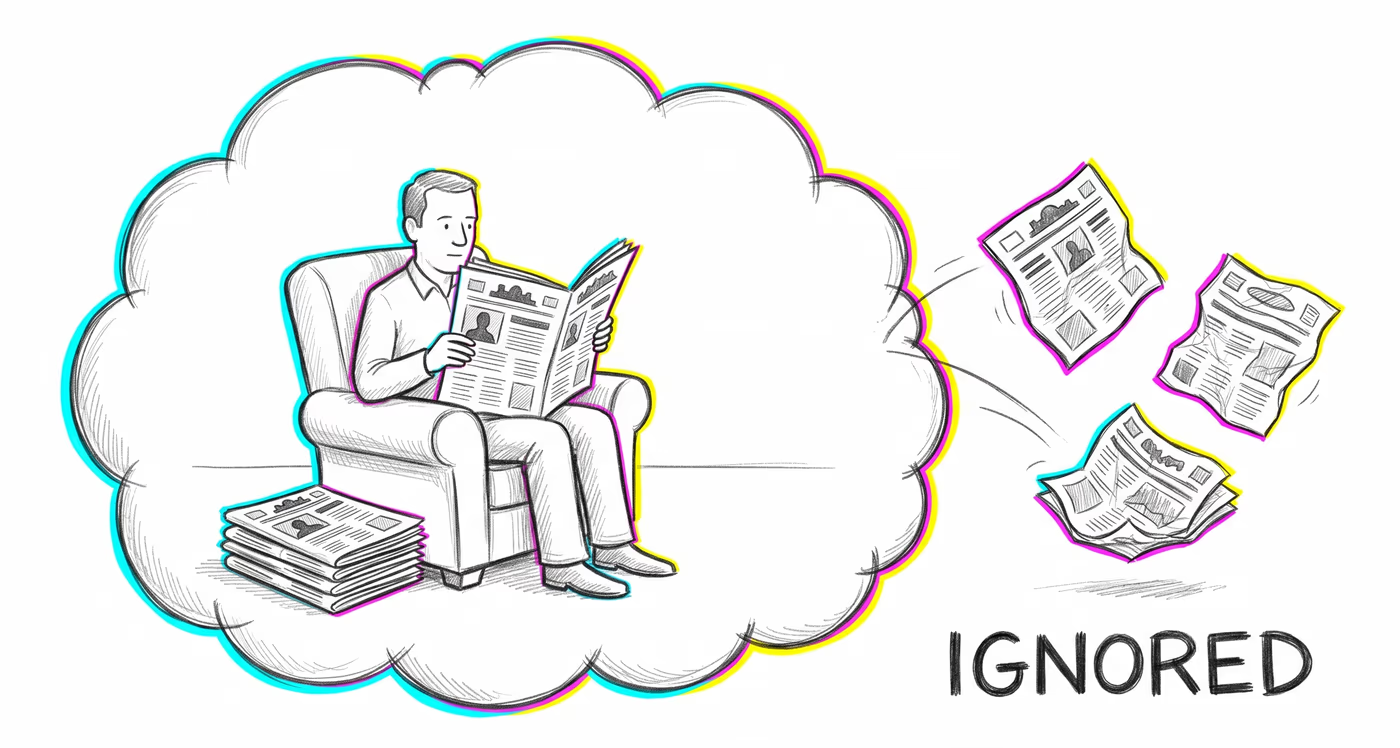
Imagine you ate a whole bag of candy and you know your mom might be upset. The candy wrapper is in the trash and you could look at it to see exactly how many pieces you ate — but you don't want to look because seeing the number would make you feel bad. So you just… don't look. That's information avoidance: choosing not to find something out because you're scared the answer will make you feel worse.

Information avoidance encompasses any behavior designed to prevent or delay the acquisition of available but potentially unwanted information. Unlike simply being unaware that information exists, information avoiders know that relevant knowledge is accessible but actively choose not to obtain it — whether by not opening a medical test result, refusing to check a bank balance, or declining a genetic screening. The behavior can be temporary (planning to learn later) or permanent (deciding never to learn), and it operates through multiple channels including physical avoidance, deliberate inattention, biased interpretation of partial information, and even motivated forgetting. Crucially, people engage in information avoidance even when the information is free, decision-relevant, and could materially improve their outcomes, because the anticipated emotional cost of knowing outweighs the perceived instrumental benefit.

SOUND FAMILIAR?

Where it shows up.

  1. 01 Marcus has a family history of colon cancer and his doctor recommends a routine screening. He's had the test ordered for three months but keeps canceling the appointment — not because he's busy, but because he says he'd 'rather not know' if something is wrong since there's nothing he can do about genetics anyway.
  2. 02 Priya manages a stock portfolio that dropped sharply last quarter. She stops logging into her brokerage account entirely, telling herself she's a 'long-term investor' who shouldn't check daily. In reality, she hasn't looked at her holdings in four months and has missed a margin call notification.
  3. 03 A startup CEO receives a detailed customer satisfaction report from her analytics team. She glances at the executive summary, which is positive, but deliberately doesn't open the appendix containing verbatim customer complaints because she says she wants to 'stay focused on the big picture' before the next board meeting.
  4. 04 David suspects his romantic partner may be unhappy in the relationship, but he avoids asking directly or reading her journal entry she accidentally left open. He reasons that 'if something were really wrong, she'd bring it up herself,' and continues acting as if everything is fine.
  5. 05 A climate researcher is offered a free, comprehensive carbon footprint analysis of her personal lifestyle. She declines, explaining that she already 'does her best' and that seeing a precise number would only make her feel guilty without changing her core habits — even though the analysis includes personalized, actionable reduction strategies.
IN DIFFERENT DOMAINS

Where it shows up at work.

The same glitch looks different depending on the terrain. Finance, medicine, a relationship, a team — same mechanism, different costume.

Finance & investing

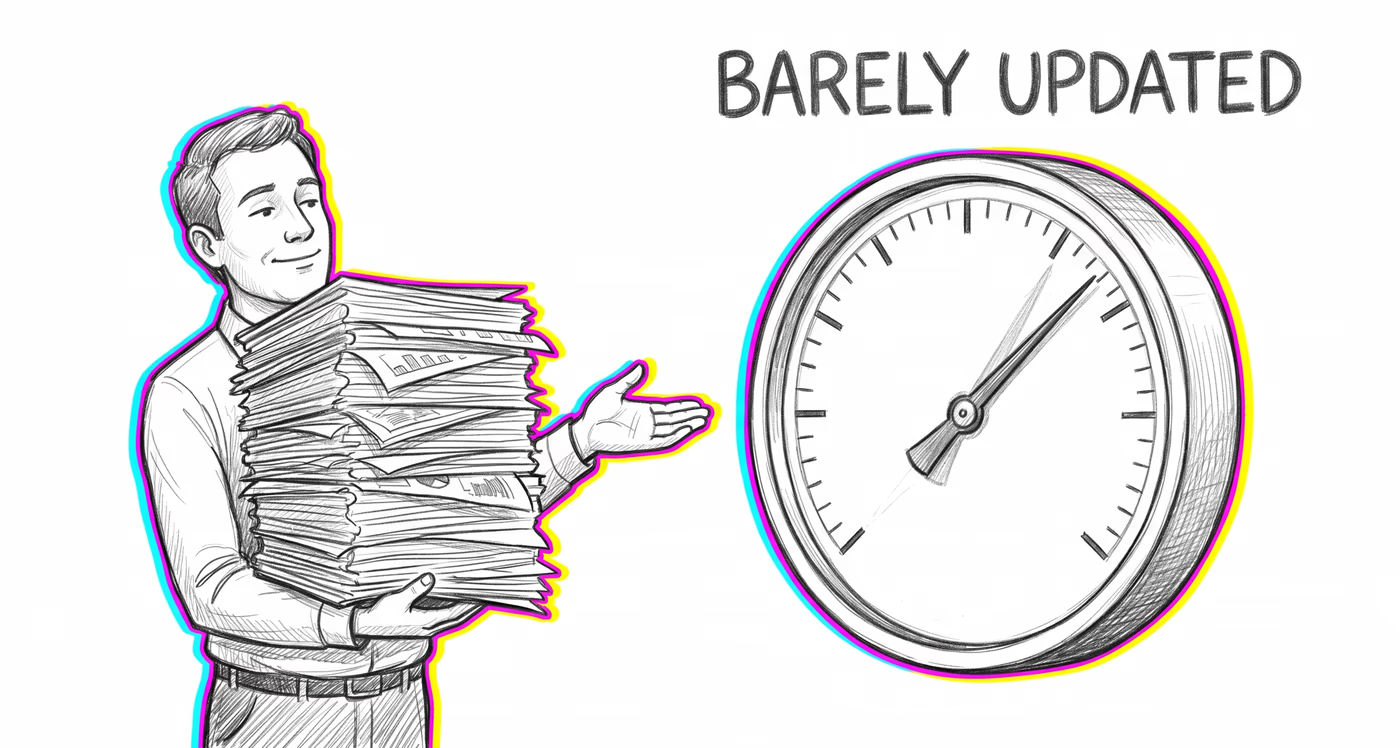
Investors check their portfolio accounts significantly less during market downturns than during rallies — a pattern known as the ostrich effect. This selective monitoring means they miss rebalancing opportunities, fail to notice margin calls, and make less informed decisions about asset allocation during the periods when active management matters most.
Medicine & diagnosis

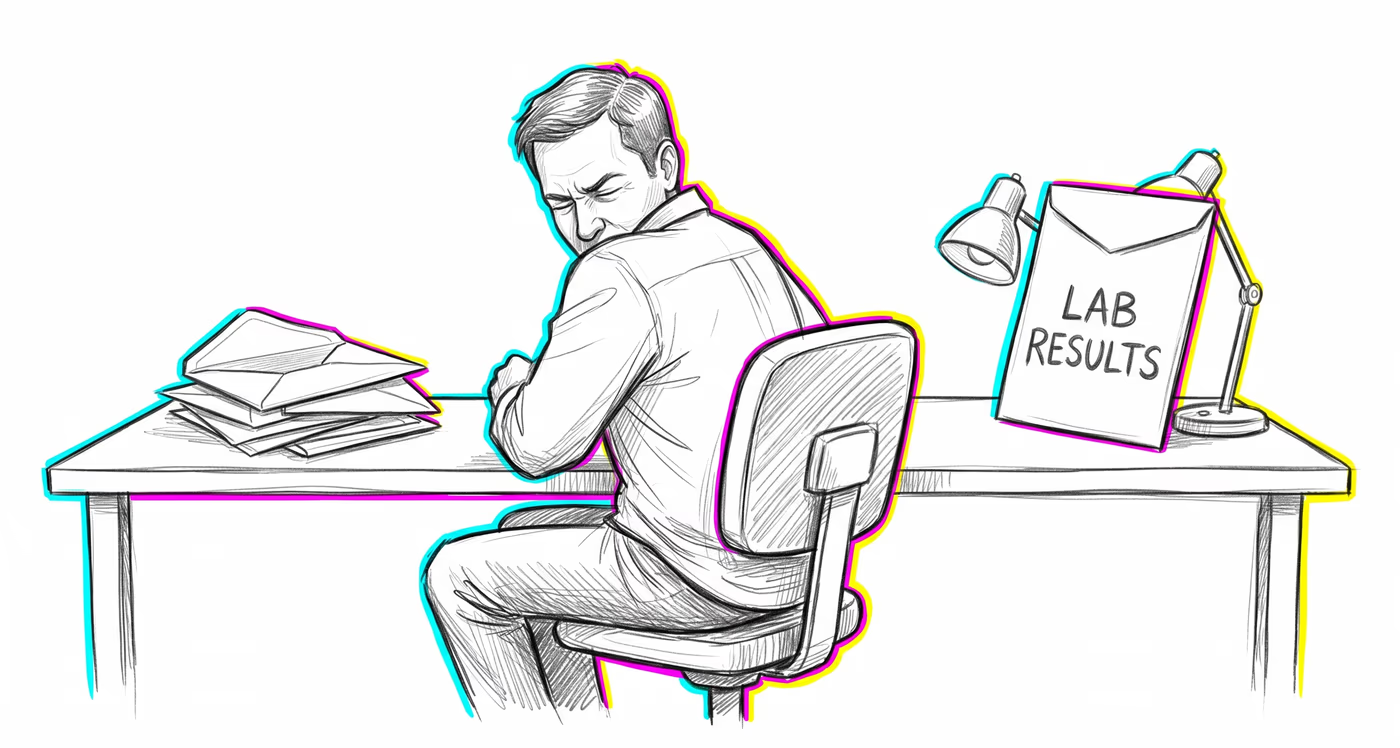
Patients at elevated risk for hereditary conditions such as Huntington's disease or BRCA-related cancers frequently decline available genetic testing, and high-risk individuals sometimes fail to return to clinics for HIV or STI test results. This avoidance delays early intervention and preventive care precisely when it would be most effective.

Education & grading

Students avoid reviewing graded exams or reading detailed instructor feedback, especially after poor performance, depriving themselves of diagnostic information that could improve future study strategies. Teachers may also avoid examining disaggregated test data that would reveal persistent achievement gaps requiring difficult pedagogical changes.

Relationships

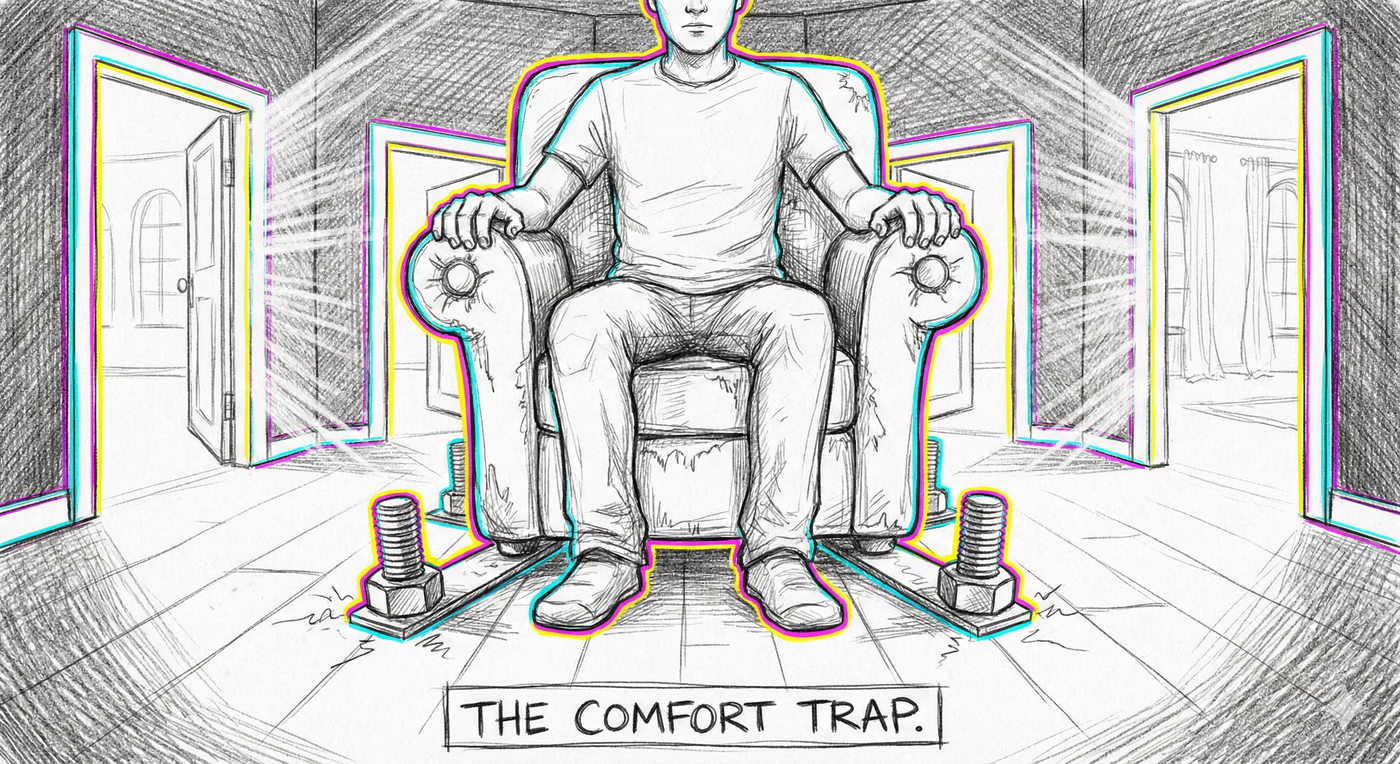
Partners avoid initiating difficult conversations about dissatisfaction, financial problems, or fidelity concerns, preferring the comfort of ambiguity to the potential pain of confirmation. This pattern allows small relational problems to compound into crises that become harder to resolve over time.

Tech & product

Product teams delay reading negative user feedback, skip usability test recordings that show frustration, or avoid examining churn analytics because the data might require expensive redesigns. Users themselves avoid reading terms of service or privacy policies because knowing the extent of data collection would create uncomfortable cognitive dissonance about continued use.

Workplace & hiring

Managers avoid soliciting candid 360-degree feedback, employees skip reading performance reviews, and teams postpone post-mortems on failed projects. This pattern prevents organizational learning and allows dysfunctional dynamics to persist unchallenged.

Politics Media

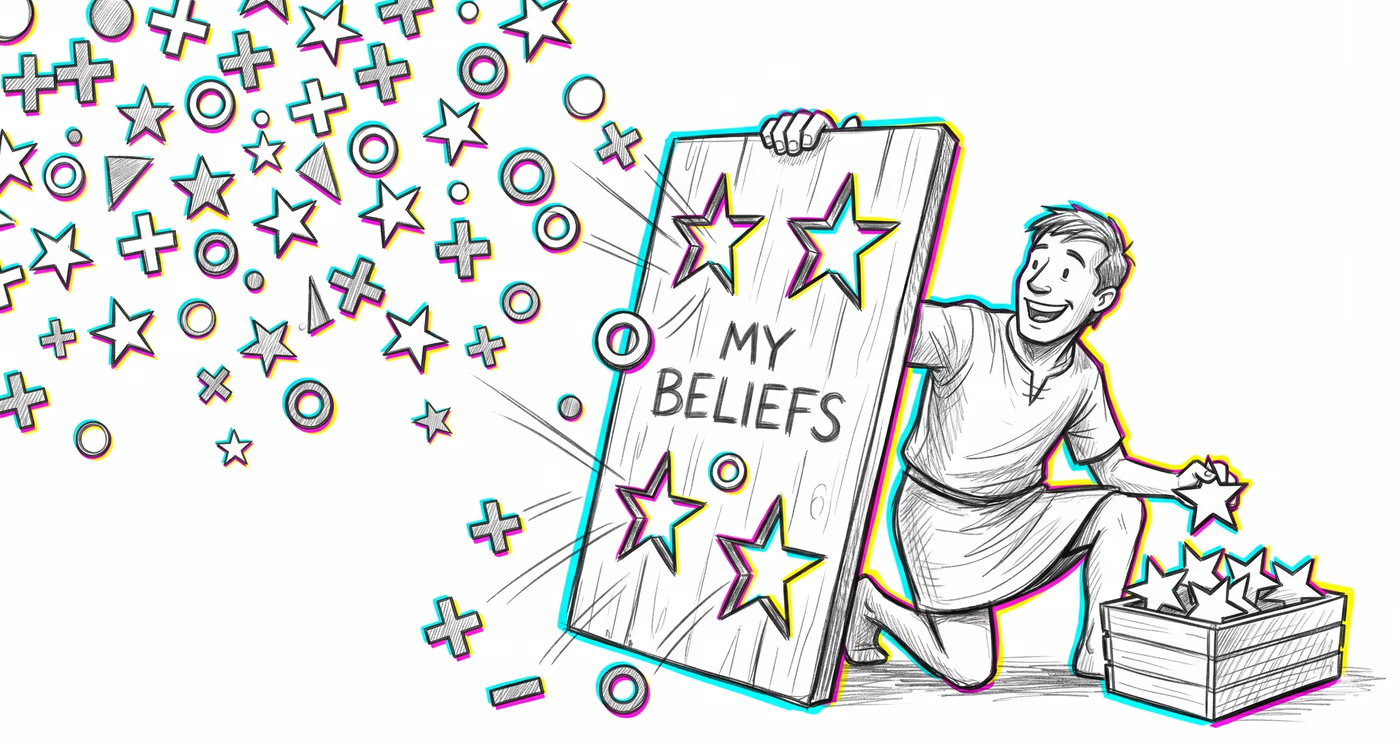
Citizens selectively avoid news coverage of issues that challenge their political identity or imply a need for personal sacrifice, such as climate change data or reports on systemic inequality. This contributes to political polarization as people construct information environments that never challenge their priors.

HOW TO SPOT IT

Ask yourself…

  • Am I choosing not to look at something specifically because I'm afraid of what it might show me?
  • Would a neutral observer say I'm avoiding this information to protect my feelings rather than because it's genuinely irrelevant?
  • If the information were likely to be good news, would I still be avoiding it — or would I eagerly check?
HOW TO DEFEND AGAINST IT

The playbook.

  • Schedule automatic information delivery: set up portfolio alerts, medical appointment reminders, and feedback reviews so the information arrives without requiring you to actively seek it.
  • Use the 'asymmetry test': ask yourself whether you would avoid this information if you expected it to be good news. If the answer is no, your avoidance is emotionally motivated.
  • Practice self-affirmation before engaging with threatening information — remind yourself of your core values and strengths to buffer the emotional impact.
  • Commit to a trusted accountability partner who will check in on whether you've obtained key information by a specific deadline.
  • Reframe information as a tool, not a verdict: knowing a number (weight, debt, test result) is the first step toward changing it, not a final judgment on your worth.
FAMOUS CASES

In history.

  • Many individuals at risk for Huntington's disease have historically declined predictive genetic testing even when freely available, as documented in multiple studies from the 1990s onward.
  • During the early HIV/AIDS epidemic, high-risk individuals frequently failed to return to clinics for test results, with one multistate study finding substantial non-return rates among those tested.
  • Investors during the 2008 financial crisis dramatically reduced how often they checked their portfolio accounts, consistent with ostrich effect research by Karlsson, Loewenstein, and Seppi.
WHERE IT COMES FROM
Academic origin

Formalized as a distinct research construct by Kate Sweeny, Darya Melnyk, Wendi Miller, and James A. Shepperd in 2010 in their comprehensive review published in the Review of General Psychology. The concept was further developed in behavioral economics by Russell Golman, David Hagmann, and George Loewenstein in a 2017 review in the Journal of Economic Literature.

Evolutionary origin

In ancestral environments, attending to every piece of threatening information could trigger chronic stress responses that impaired survival-relevant functioning such as foraging, mating, and social bonding. The ability to selectively disengage from threats that were uncontrollable or distant preserved psychological resources for immediate, actionable dangers. Temporary ignorance also supported optimistic persistence — continuing to hunt, build shelter, or explore new territory despite uncertain outcomes — which was often adaptive when the alternative was paralyzing anxiety.

IN AI SYSTEMS

How the machines inherit it.

AI systems can inherit and amplify information avoidance in several ways. Recommendation algorithms learn user avoidance patterns and stop surfacing challenging or disconfirming content, creating filter bubbles that reinforce existing beliefs. LLMs trained on human-generated text may underrepresent uncomfortable truths that authors systematically avoided discussing. Additionally, users may leverage AI assistants to pre-filter information, asking the system to summarize only positive aspects of a situation, effectively automating their own avoidance behavior.

Read more on Wikipedia
FREE FIELD ZINE

10 glitches quietly running your life.

A free field-zine PDF — ten cognitive glitches named, illustrated, with a defense move for each. Plus the weekly Glitch Report on Fridays — one bias named, two spotted in the wild, one defense move. Unsubscribe any time.

EXPLORE MORE

Related glitches.

LAUNCH PRICE

Train against your blindspots.

50 cards are free to preview. Buyers unlock the rest of the deck plus the interactive training — Spot-the-Bias Quiz unlimited, Swipe Deck with spaced repetition, My Blindspots, Decision Pre-Flight, the Printable Deck + Cheat Sheets, and the Field Guide e-book. $29.50$59.

Unlock the full deck

Everything below — yours forever. Pay once, use across every device.

Half-off launch — limited to the first 100 readers. Auto-applied at checkout.
$59 $29.50
one-time payment · lifetime access
  • All interactive digital cards — search, filter, flip, shuffle on any device
  • Five training modes — Spot-the-Bias Quiz, Swipe Deck, Pre-Flight, Blindspots, Journal
  • Curated Lenses + Decision Templates + Defense Playbook
  • Printable Deck PDFs + Field Guide e-book + Cheat Sheets + Anki Export
  • Every future improvement, included
Unlock  $29.50

30-day refund · no questions asked

Unlock the full deck

Everything below — yours forever. Pay once, use across every device.

Half-off launch — limited to the first 100 readers. Auto-applied at checkout.
$59 $29.50
one-time payment · lifetime access
  • All interactive digital cards — search, filter, flip, shuffle on any device
  • Five training modes — Spot-the-Bias Quiz, Swipe Deck, Pre-Flight, Blindspots, Journal
  • Curated Lenses + Decision Templates + Defense Playbook
  • Printable Deck PDFs + Field Guide e-book + Cheat Sheets + Anki Export
  • Every future improvement, included
Unlock  $29.50

30-day refund · no questions asked