Attentional Bias

aka Attention Bias · Selective Attention Bias · Threat-Related Attentional Bias

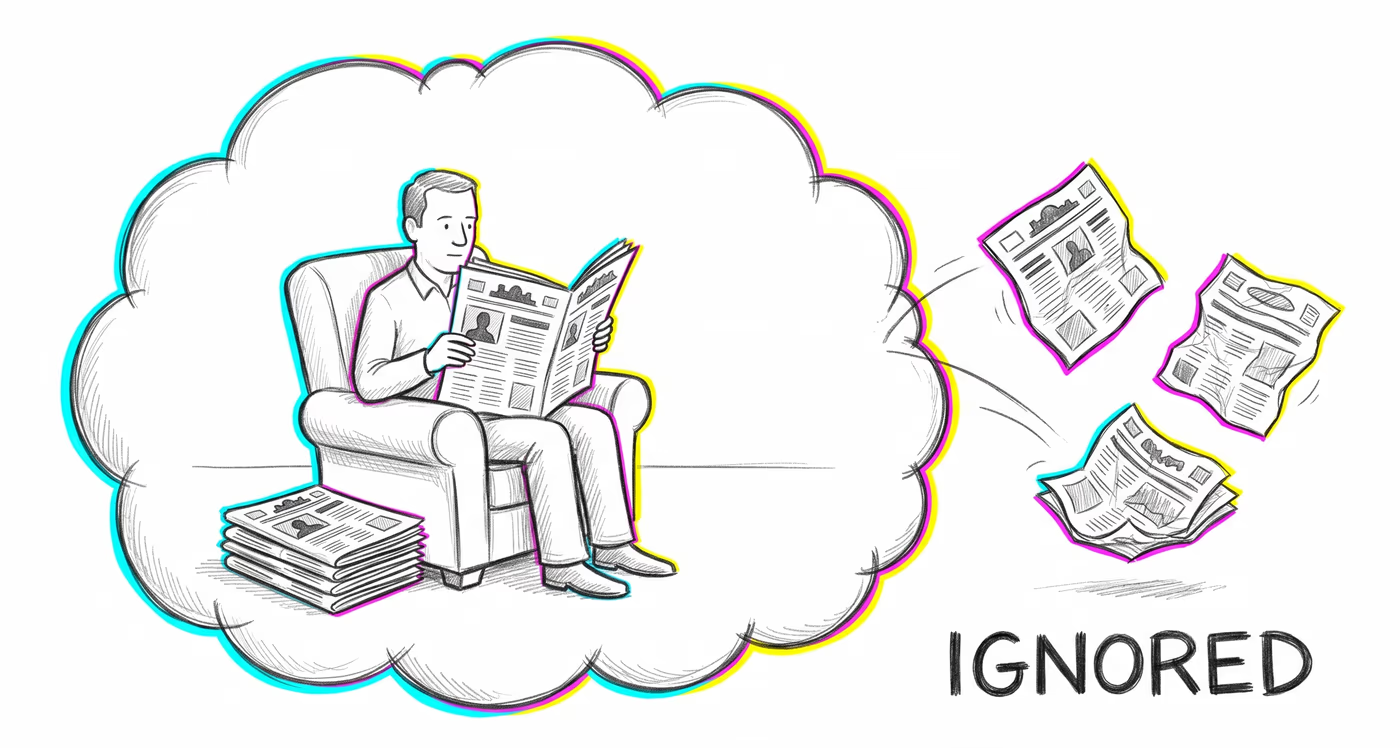
Disproportionately focusing on emotionally charged or personally relevant stimuli while ignoring other available information.

Illustration: Attentional Bias
WHAT IT IS

The glitch, explained plainly.

Imagine you're wearing special glasses that only let you see red things. Even though the room is full of blue, green, and yellow objects, all you notice are the red ones. Attentional bias is like your brain putting on invisible glasses that make you notice only the stuff you're worried about, want badly, or are scared of — and you don't even realize you're wearing them.

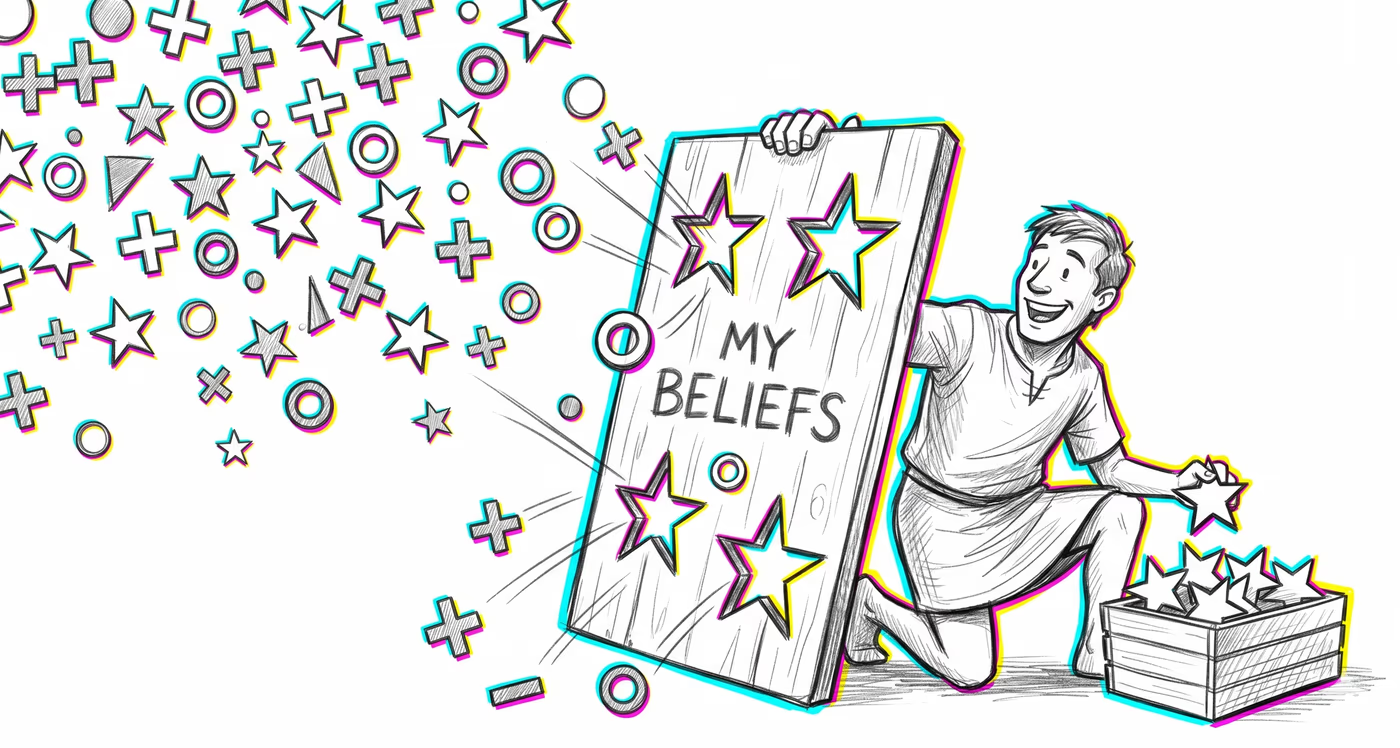
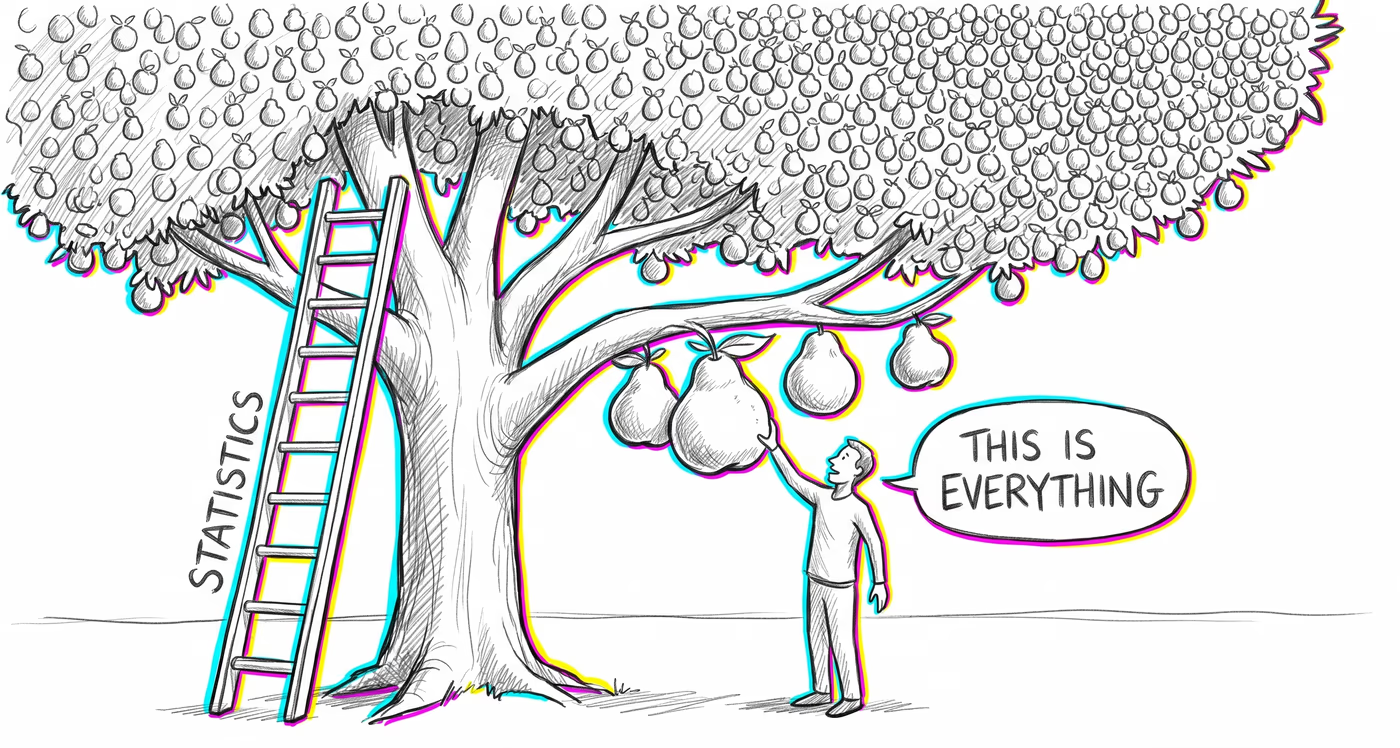
Attentional bias is the involuntary, often automatic tendency for attention to be captured and held by stimuli that match an individual's current emotional state, preoccupations, or deeply held concerns. It operates through three distinct mechanisms: facilitated orientation (rapidly detecting the salient stimulus), difficulty disengaging (struggling to pull attention away once captured), and sustained maintenance (continuing to process the stimulus long after it is relevant). This means a person's lived experience is not shaped by what is objectively present in the environment, but by whatever their cognitive filters have flagged as important — fears, cravings, insecurities, or desires. The bias is particularly pronounced in clinical conditions like anxiety, depression, chronic pain, and substance addiction, where it creates self-reinforcing feedback loops that maintain the disorder.

SOUND FAMILIAR?

Where it shows up.

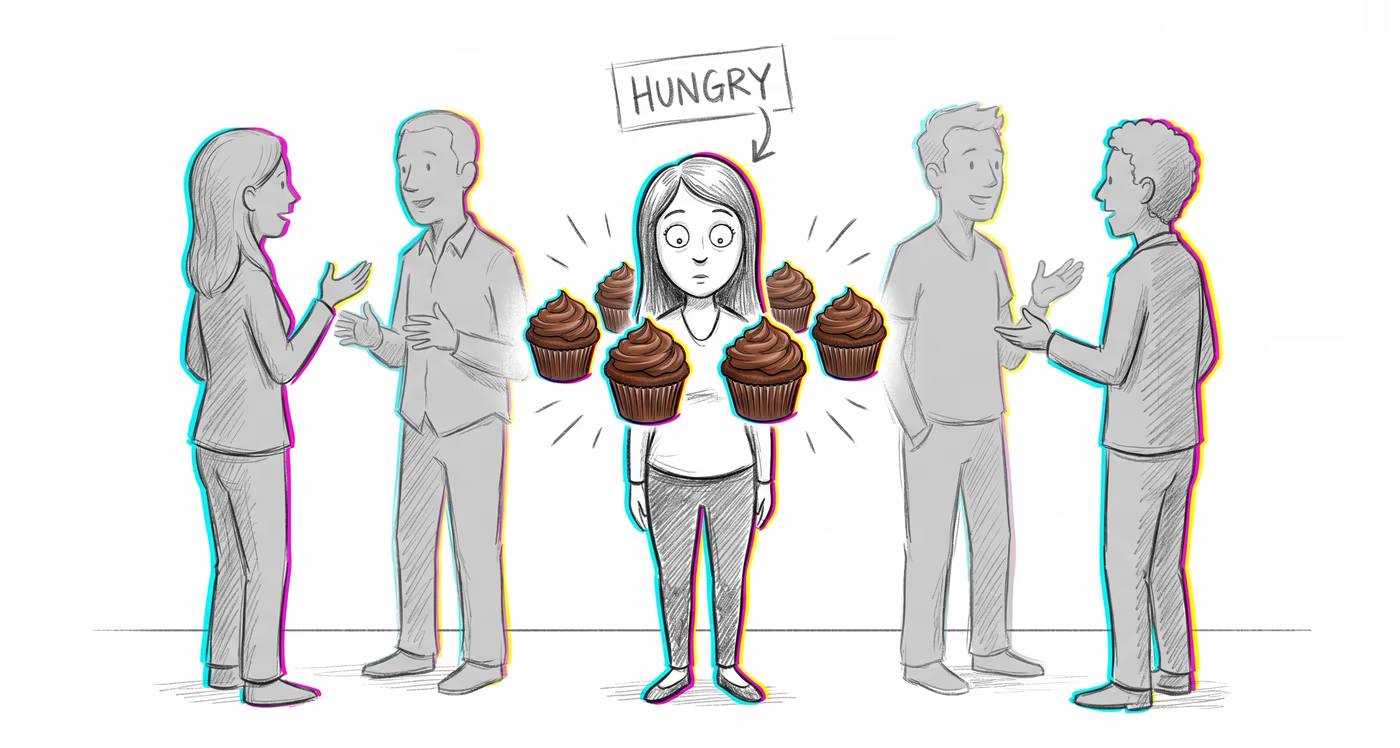
  1. 01 Maria just started a strict diet. Walking through a grocery store, she finds herself physically unable to stop staring at the bakery section. She tries to focus on the produce aisle, but her eyes keep drifting back to the pastries. She leaves the store convinced the bakery section takes up half the store, though it's only one small corner.
  2. 02 Tom is anxious about an upcoming job interview. While reading the morning news on his phone, he skips past articles about sports, weather, and technology but immediately clicks on a headline about unemployment rising. At breakfast, he overhears a stranger mention 'layoffs' in a crowded café and tunes into their conversation, missing what his wife is telling him about their weekend plans.
  3. 03 A recovering smoker attends a dinner party. Despite engaging conversation, live music, and good food, she keeps noticing the one guest who steps out to smoke, the cigarette ads on the walk over, and the lighter sitting on the host's counter. She later describes the party as being 'full of smokers,' though only one guest smoked.
  4. 04 A venture capitalist who recently lost money on a startup scans a pitch deck from a new company. The deck contains 40 slides, mostly showing strong financials and market traction. However, on slide 27, there is a small note about a regulatory risk. The VC spends 80% of his evaluation time on that one slide and ultimately passes on the deal, later citing 'too many red flags' to his partners.
  5. 05 Dr. Chen, an ER physician who recently misdiagnosed a case of meningitis, begins over-ordering spinal taps for patients presenting with common headaches. She finds herself rapidly zeroing in on any symptom that could conceivably relate to meningitis — neck stiffness, mild photosensitivity — while spending less time evaluating more statistically likely diagnoses. Her colleagues notice the pattern, but she insists she's simply being thorough.
IN DIFFERENT DOMAINS

Where it shows up at work.

The same glitch looks different depending on the terrain. Finance, medicine, a relationship, a team — same mechanism, different costume.

Finance & investing

Investors who have recently experienced losses tend to disproportionately attend to negative market signals and risk indicators while overlooking positive data, leading to overly conservative or panic-driven decisions. Conversely, during bull markets, attention gravitates toward gains and success stories, filtering out warning signs of overvaluation.

Medicine & diagnosis

Clinicians who have recently encountered a rare but serious misdiagnosis may begin over-attending to symptoms of that condition in subsequent patients, leading to unnecessary testing. Patients with health anxiety disproportionately notice bodily sensations and health-related information, perpetuating a cycle of worry and symptom-monitoring.

Education & grading

Students with test anxiety selectively attend to the questions they find most difficult while spending less time on questions they could easily answer, reducing overall performance. Teachers may disproportionately notice disruptive behavior from students they have flagged as 'problematic' while overlooking the same behavior from other students.

Relationships

A person insecure about their relationship will selectively notice every instance their partner seems distant or distracted while discounting moments of warmth and affection, creating a skewed mental record that confirms their fears of rejection.

Tech & product

Users who are anxious about data privacy will notice and fixate on every permission request and data-sharing prompt while paying little attention to the app's privacy-protective features. Designers exploit attentional bias by making desired actions (purchase buttons, upgrade prompts) visually salient while de-emphasizing cancellation or downgrade options.

Workplace & hiring

Managers who are worried about a project deadline selectively attend to delays and obstacles while failing to register the progress being made, creating a distorted sense of the project's status. Employees with job insecurity hyper-attend to any organizational change or managerial comment that could signal layoffs.

Politics Media

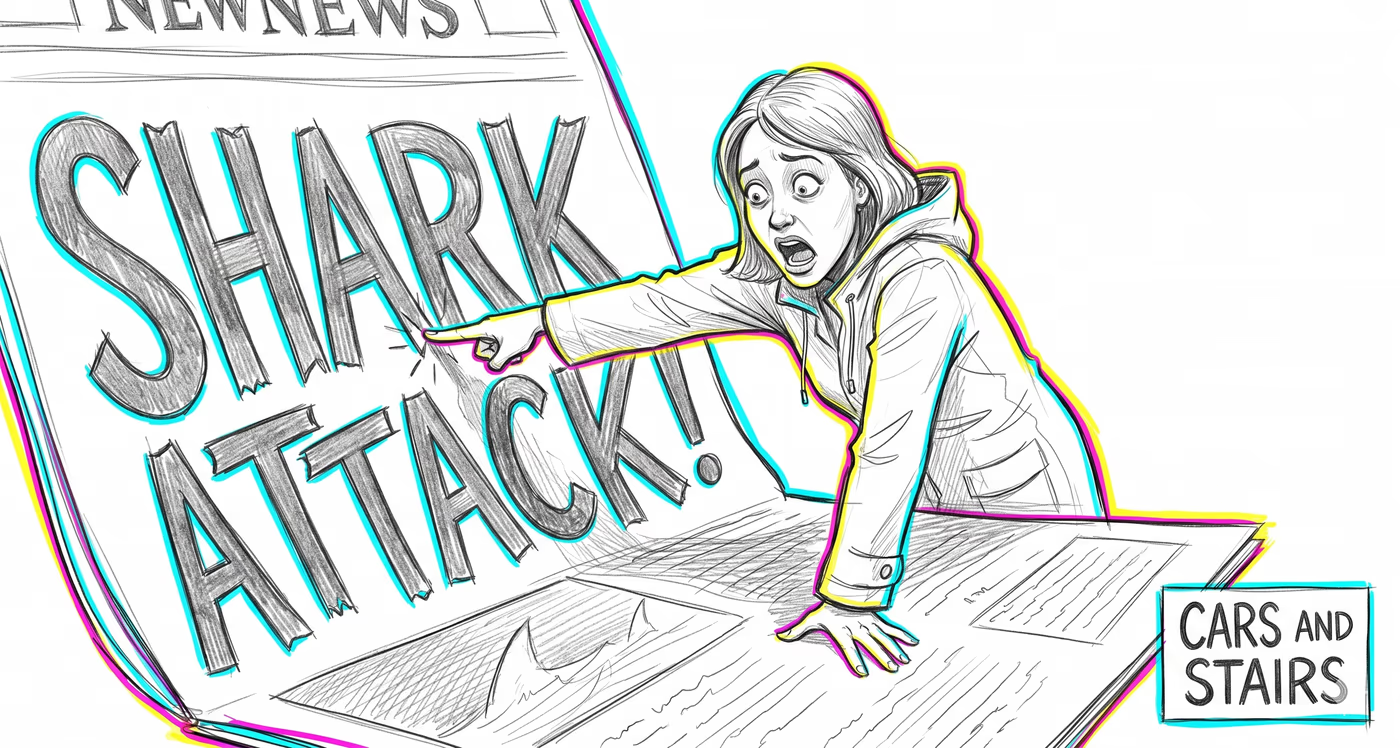
News consumers selectively attend to stories that align with their pre-existing fears or concerns — economic anxiety, immigration, crime — while filtering out stories that contradict their worldview. Media outlets exploit this by emphasizing emotionally provocative content, knowing that threat-salient headlines capture disproportionate attention.

HOW TO SPOT IT

Ask yourself…

  • Am I repeatedly drawn to one specific type of information while ignoring other relevant data that's equally available?
  • Would someone without my current emotional state or preoccupation notice the same things I'm noticing right now?
  • Is my summary of a situation disproportionately shaped by one or two emotionally charged details rather than the full picture?
HOW TO DEFEND AGAINST IT

The playbook.

  • Practice the 'full inventory' technique: before drawing conclusions, force yourself to list all the data points you encountered, not just the ones that grabbed your attention.
  • Use structured decision checklists that require you to evaluate positive, negative, and neutral evidence before reaching a judgment.
  • Ask a trusted person with a different emotional state or perspective to review the same information and compare what they noticed.
  • Mindfulness meditation training has been shown to reduce attentional bias by improving the ability to notice where attention is going without automatically following it.
  • Implement 'attention audits': periodically pause and ask, 'What am I not seeing right now because of what I am seeing?'
FAMOUS CASES

In history.

  • Intelligence analysts prior to the September 11, 2001 attacks were criticized for attending disproportionately to known threat signatures (state-level actors, conventional weapons) while filtering out non-traditional threat indicators that didn't match existing schemas.
  • During the 2008 financial crisis, many investors and regulators exhibited attentional bias toward positive indicators of housing market growth while systematically underweighting accumulating risk signals in subprime mortgage data.
WHERE IT COMES FROM
Academic origin

Colin MacLeod, Andrew Mathews, and Philip Tata (1986) published the foundational dot-probe study demonstrating attentional bias toward threat in anxious individuals. J. Mark G. Williams, Andrew Mathews, and Colin MacLeod further formalized the concept through their 1996 review of the emotional Stroop task and psychopathology.

Evolutionary origin

Organisms that preferentially detected and processed threat-related stimuli — a predator's shape, a rival's angry face, a snake in the grass — survived at higher rates than those who distributed attention evenly. This rapid threat-detection system was essential in ancestral environments where the cost of missing a real danger far outweighed the cost of false alarms.

IN AI SYSTEMS

How the machines inherit it.

Machine learning models trained on datasets where certain features are over-represented can develop a computational analogue of attentional bias, weighting those features disproportionately in predictions. Recommendation algorithms amplify users' existing attentional biases by surfacing content matching their engagement history, creating filter bubbles. Sentiment analysis models may over-attend to strongly negative or positive lexical items while underweighting nuanced or contextual signals.

Read more on Wikipedia
FREE FIELD ZINE

10 glitches quietly running your life.

A free field-zine PDF — ten cognitive glitches named, illustrated, with a defense move for each. Plus the weekly Glitch Report on Fridays — one bias named, two spotted in the wild, one defense move. Unsubscribe any time.

EXPLORE MORE

Related glitches.

LAUNCH PRICE

Train against your blindspots.

50 cards are free to preview. Buyers unlock the rest of the deck plus the interactive training — Spot-the-Bias Quiz unlimited, Swipe Deck with spaced repetition, My Blindspots, Decision Pre-Flight, the Printable Deck + Cheat Sheets, and the Field Guide e-book. $29.50$59.

Unlock the full deck

Everything below — yours forever. Pay once, use across every device.

Half-off launch — limited to the first 100 readers. Auto-applied at checkout.
$59 $29.50
one-time payment · lifetime access
  • All interactive digital cards — search, filter, flip, shuffle on any device
  • Five training modes — Spot-the-Bias Quiz, Swipe Deck, Pre-Flight, Blindspots, Journal
  • Curated Lenses + Decision Templates + Defense Playbook
  • Printable Deck PDFs + Field Guide e-book + Cheat Sheets + Anki Export
  • Every future improvement, included
Unlock  $29.50

30-day refund · no questions asked

Unlock the full deck

Everything below — yours forever. Pay once, use across every device.

Half-off launch — limited to the first 100 readers. Auto-applied at checkout.
$59 $29.50
one-time payment · lifetime access
  • All interactive digital cards — search, filter, flip, shuffle on any device
  • Five training modes — Spot-the-Bias Quiz, Swipe Deck, Pre-Flight, Blindspots, Journal
  • Curated Lenses + Decision Templates + Defense Playbook
  • Printable Deck PDFs + Field Guide e-book + Cheat Sheets + Anki Export
  • Every future improvement, included
Unlock  $29.50

30-day refund · no questions asked