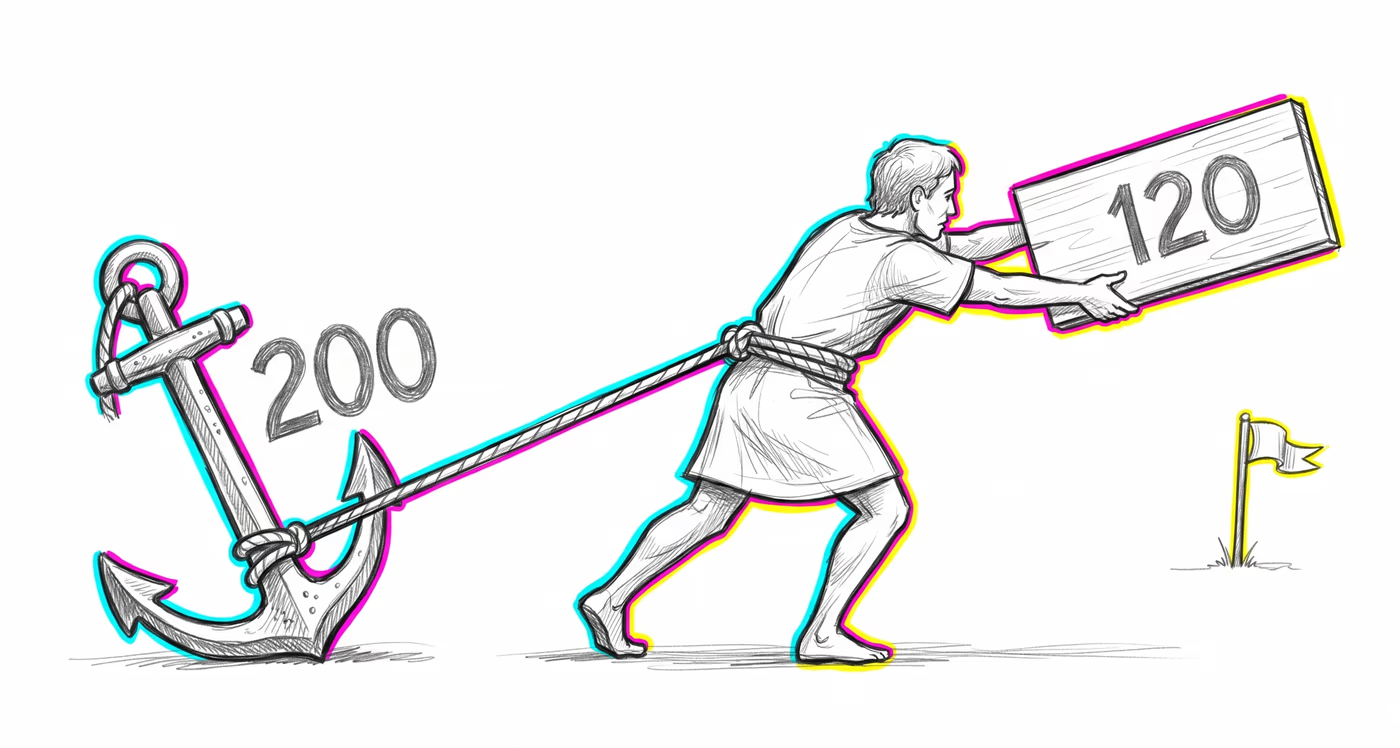
The same glitch looks different depending on the terrain. Finance, medicine, a
relationship, a team — same mechanism, different costume.
Finance & investing
Investors overestimate how much a single windfall (bonus, inheritance, stock gain) will improve their overall financial satisfaction, neglecting that daily spending habits, debt, and lifestyle costs quickly absorb the gains and return them to a baseline sense of financial well-being.
Medicine & diagnosis
Patients and clinicians overpredict the long-term emotional impact of a diagnosis or a medical procedure, expecting it to dominate well-being indefinitely, when in reality people adapt and return to near-baseline life satisfaction as the condition recedes from the focus of daily attention.

Education & grading
Students choose universities based heavily on one salient feature — campus beauty, sports reputation, or prestige ranking — while neglecting factors like class size, advising quality, and social fit that contribute more substantially to their day-to-day academic experience and satisfaction.
Relationships
People fixate on one attribute of a potential partner (physical attractiveness, income, humor) when predicting relationship happiness, underweighting the many routine interactions — communication style, shared chores, conflict resolution — that actually determine long-term satisfaction.
Tech & product
Designers over-invest in flashy onboarding experiences or visually impressive features that are salient during demos and reviews, while underweighting the mundane usability factors — load speed, error recovery, navigation consistency — that users interact with daily and that actually drive retention.
Workplace & hiring
Employees assume that a prestigious title, a corner office, or a higher salary will transform their work experience, while underweighting the daily reality of commute time, team dynamics, managerial style, and task autonomy that shape moment-to-moment job satisfaction.
Politics Media
A single dramatic incident — a viral video, a scandal — monopolizes public attention and is treated as the defining issue of a political era, displacing structural concerns like infrastructure or education funding that affect far more people but lack the attentional salience to compete.