Motivated Reasoning

aka Motivated Inference · Directional Motivated Reasoning · Myside Bias

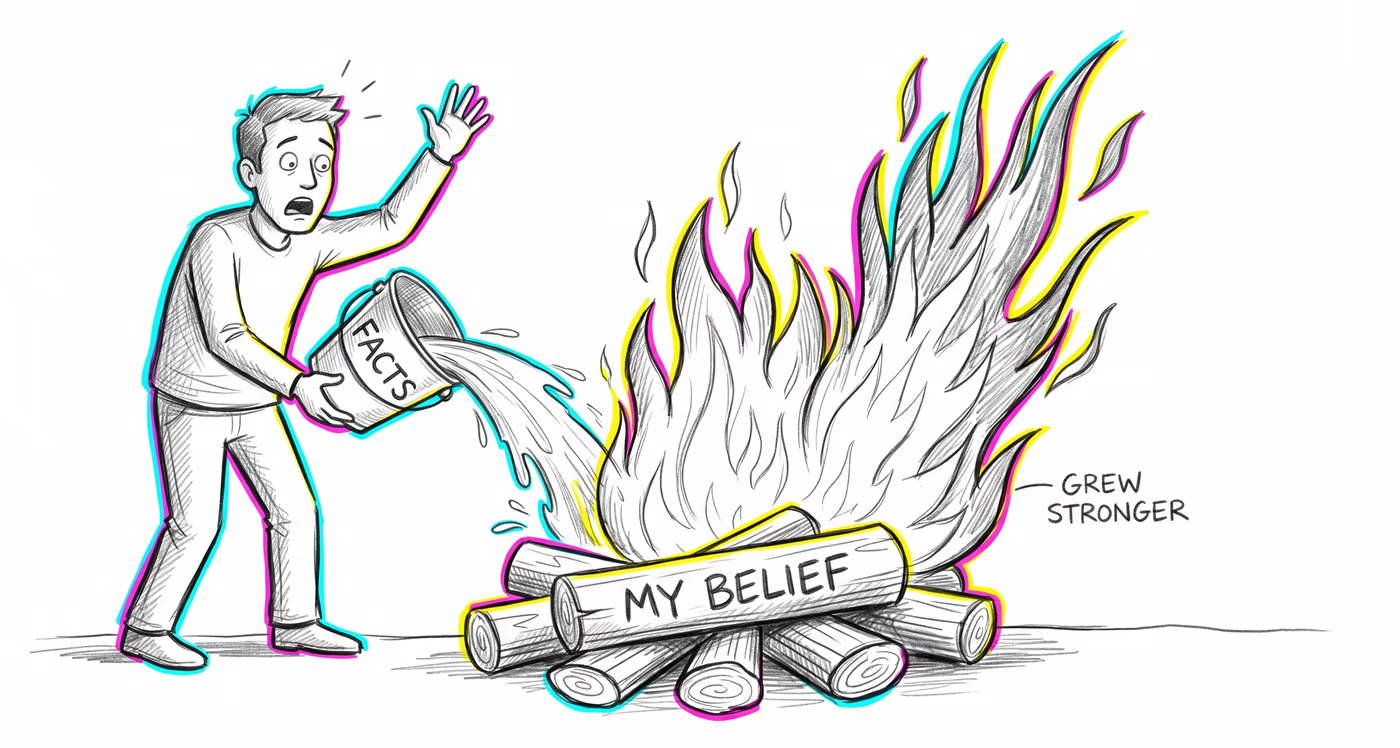
Using reasoning not to find truth but to arrive at a conclusion already wanted, selectively gathering supporting evidence.

WHAT IT IS

The glitch, explained plainly.

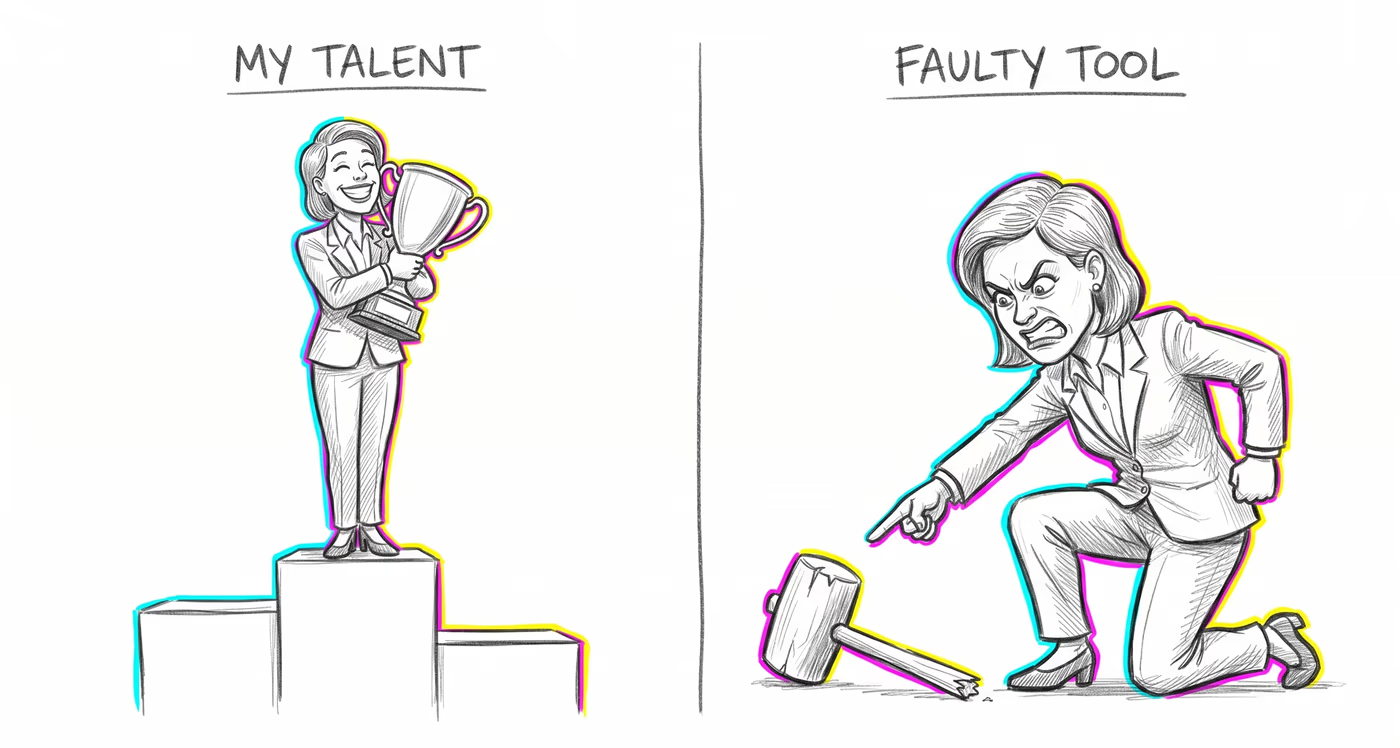
Imagine you really, really want a cookie before dinner. So when Mom says 'no sweets before dinner,' you start thinking of all the reasons why it should be okay — 'but I ate all my vegetables at lunch!' and 'cookies have wheat in them, which is healthy!' You're not lying, but you're only thinking of the arguments that get you the cookie. That's what your brain does with big, important things too — it acts like a lawyer for what you already want to believe, instead of being a judge who looks at both sides.

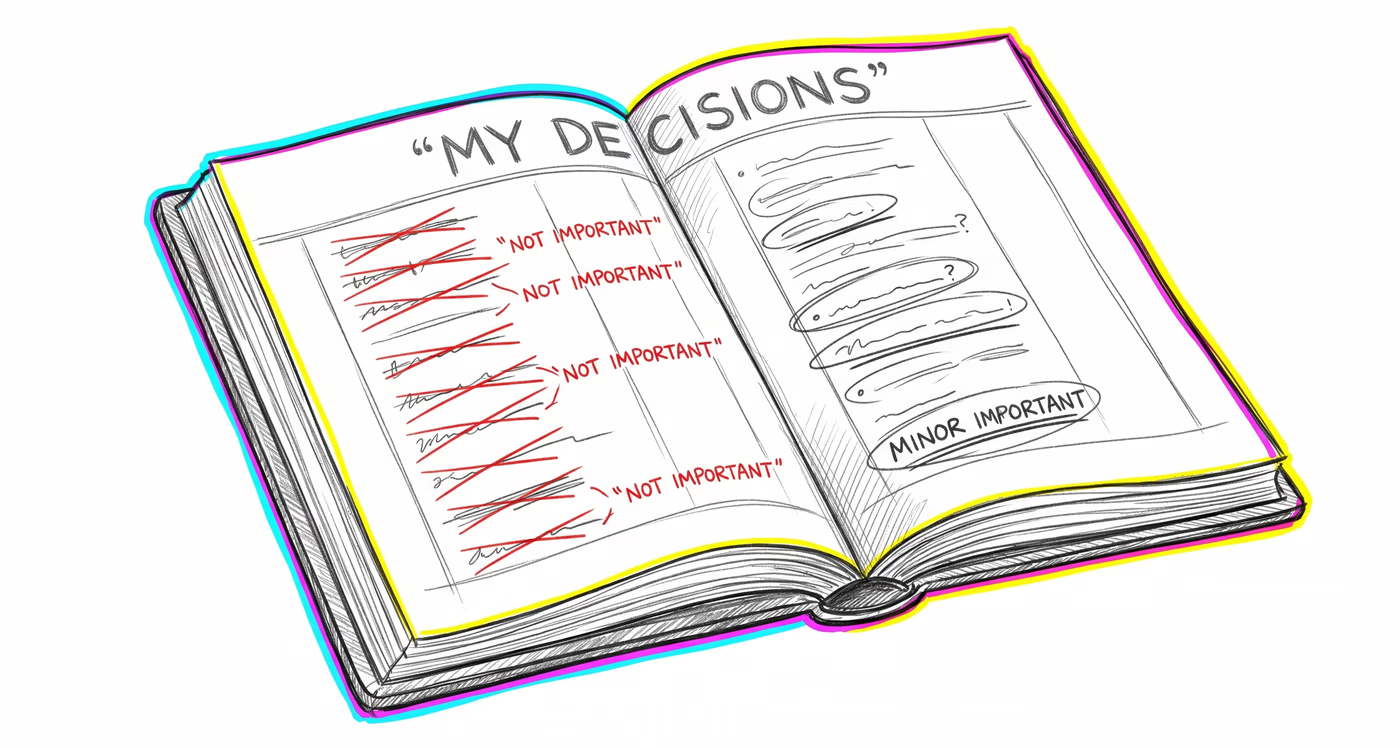
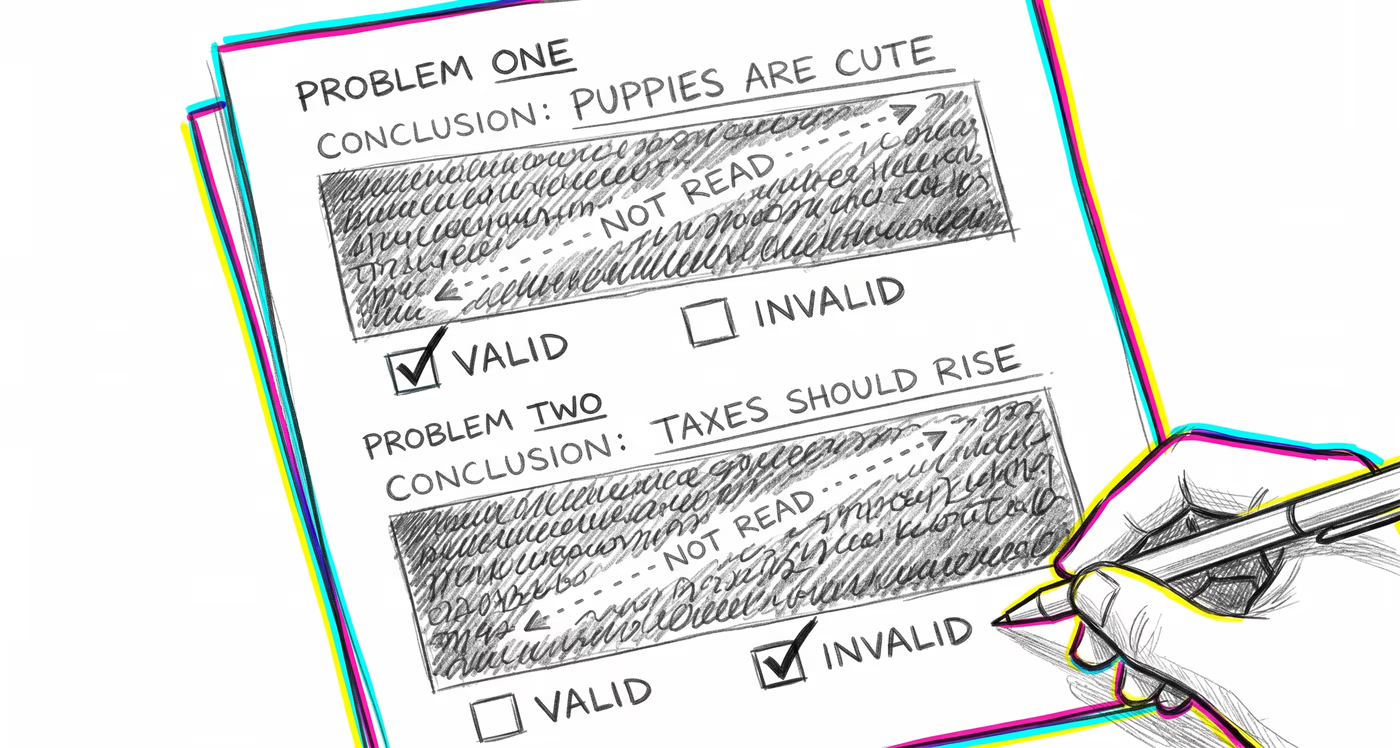
Motivated reasoning describes the process by which individuals unconsciously select which cognitive strategies, memories, and inferential rules to deploy based on the conclusion they wish to reach, rather than on an objective assessment of available evidence. Unlike simple ignorance, the individual genuinely engages in effortful reasoning — but the reasoning process itself is steered by emotional goals, identity commitments, or desired outcomes. People constrained by motivated reasoning can only arrive at their preferred conclusions if they can construct a justification that appears reasonable to themselves, meaning the bias operates within bounds of perceived plausibility rather than through outright fantasy. This creates an 'illusion of objectivity' in which the reasoner sincerely believes they have weighed the evidence fairly, when in reality the scales were set before the weighing began.

SOUND FAMILIAR?

Where it shows up.

  1. 01 Dr. Patel has spent five years developing a new therapeutic approach. When a peer-reviewed meta-analysis suggests the approach is no more effective than existing treatments, she spends the weekend drafting a detailed critique of the meta-analysis's inclusion criteria and statistical methods — scrutiny she never applied to the original studies that supported her approach.
  2. 02 Marcus recently invested his savings in a cryptocurrency. When a respected financial analyst publishes a report highlighting fundamental weaknesses in that token's technology, Marcus dismisses the analyst as 'not understanding crypto' and shares a blog post from an anonymous enthusiast defending the token's potential. He feels he's done his due diligence.
  3. 03 A hiring committee is reviewing a candidate who graduated from the same university as the committee chair. The chair constructs an argument that the candidate's slightly lower test scores actually reflect 'creative thinking' and 'risk-taking,' while the competing candidate's higher scores are dismissed as reflecting 'mere test-taking ability.' The chair genuinely believes this analysis is objective.
  4. 04 Lena is passionate about organic food. When a large-scale study finds no significant nutritional difference between organic and conventional produce, she focuses on the study's funding sources to disqualify it, but never investigates who funded the smaller studies she cites in favor of organic food.
  5. 05 After voting for a candidate who later enacts an unpopular policy, Roberto reconstructs his original reasons for voting, emphasizing the candidate's other qualities and concluding that, given the information available at the time, his reasoning process was sound — when in reality he had barely researched the candidate's platform before voting.
IN DIFFERENT DOMAINS

Where it shows up at work.

The same glitch looks different depending on the terrain. Finance, medicine, a relationship, a team — same mechanism, different costume.

Finance & investing

Investors disproportionately scrutinize evidence that contradicts their existing positions while uncritically accepting information that supports them, leading to delayed exits from losing investments and overcondident doubling down on favored assets. Analysts with directional stakes in a recommendation tend to weight supportive data more heavily in their models.
Medicine & diagnosis

Patients who engage in risky health behaviors (e.g., smoking, poor diet) apply greater scrutiny to studies linking those behaviors to disease than to studies that minimize the connection. Clinicians may selectively interpret ambiguous test results in ways that confirm their initial diagnostic hypothesis rather than considering disconfirming alternatives.

Education & grading

Students who hold strong views on a subject evaluate supporting evidence less critically than contradictory evidence in essays and research papers. Teachers may interpret ambiguous student performance in light of pre-existing expectations, constructing justifications that align with their initial impressions of a student's ability.

Relationships

People in romantic relationships selectively interpret their partner's ambiguous behavior in ways that confirm their desired view of the relationship, either ignoring warning signs when invested or magnifying flaws when seeking reasons to leave. After breakups, individuals reconstruct narratives that cast their own behavior in a favorable light.

Tech & product

Product teams that have championed a particular feature or design decision apply far more critical scrutiny to usability data that suggests it should be changed than to data that supports keeping it. A/B test results that confirm existing design choices are accepted quickly, while unfavorable results trigger deep methodological questioning.

Workplace & hiring

Managers evaluate employee performance data through the lens of pre-existing opinions, giving more weight to evidence consistent with their initial impressions. In strategic decisions, leaders who have publicly committed to a direction construct elaborate justifications for staying the course even as contradictory market signals mount.

Politics Media

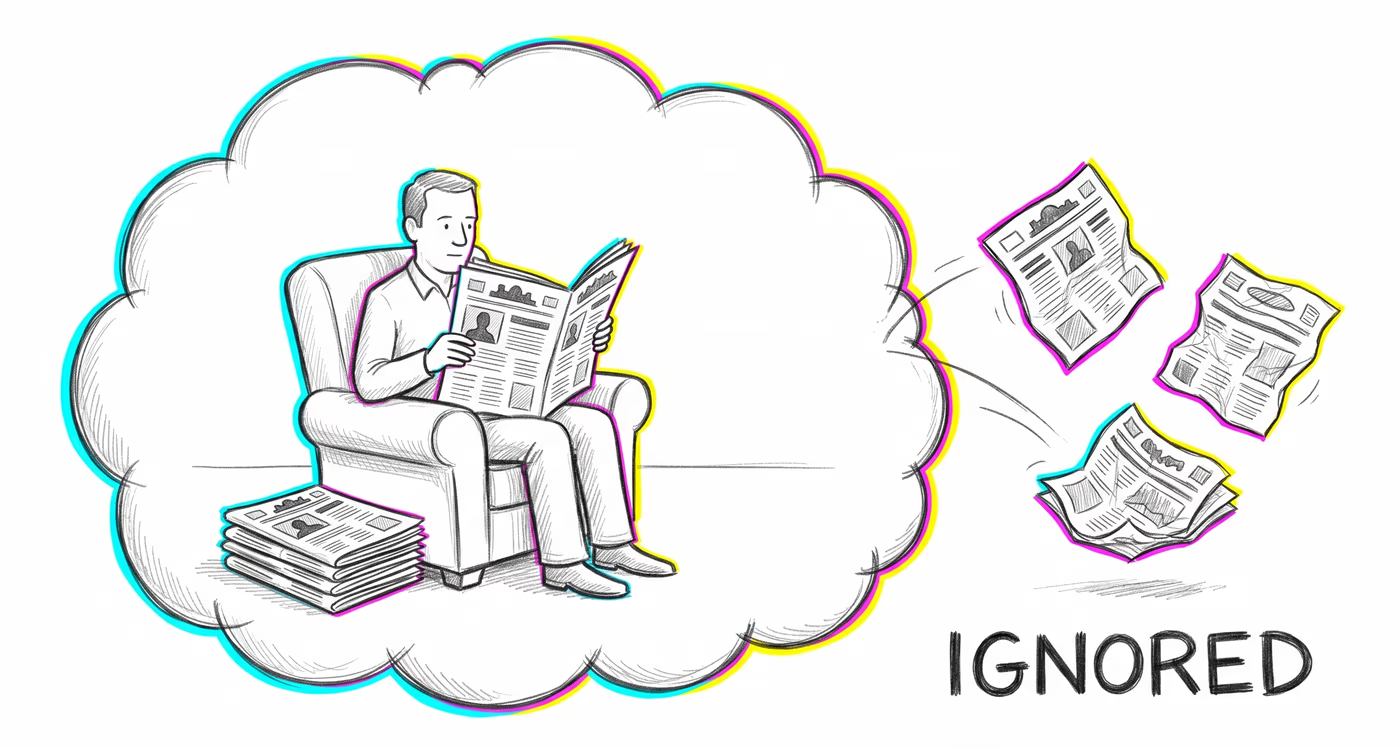
Partisans evaluate the credibility of news sources and factual claims based on whether the information supports their political identity. Identical policy proposals are rated differently depending on which party is credited with proposing them. Citizens consume media that aligns with existing beliefs and apply asymmetric skepticism to opposing outlets.

HOW TO SPOT IT

Ask yourself…

  • Am I applying the same level of scrutiny to evidence that supports my position as I am to evidence that challenges it?
  • Would I find this argument convincing if it were being used to support the opposite conclusion?
  • Am I searching for reasons why I'm right, or genuinely considering the possibility that I might be wrong?
HOW TO DEFEND AGAINST IT

The playbook.

  • Practice the 'consider the opposite' technique: before accepting any conclusion you favor, spend equal time constructing the strongest possible case against it.
  • Apply the 'ideological Turing test': ask whether someone on the other side of the issue would recognize your description of their position as fair and accurate.
  • Use structured analytic techniques like Analysis of Competing Hypotheses, where you list all plausible explanations and systematically evaluate evidence for and against each one.
  • Establish pre-commitment criteria: before reviewing evidence, write down what specific finding would change your mind, and hold yourself to it.
  • Seek out 'steel man' critics — people who disagree with you but whose reasoning you respect — and genuinely engage with their arguments before forming conclusions.
FAMOUS CASES

In history.

  • The tobacco industry and its consumers spent decades constructing elaborate rationalizations to dismiss accumulating evidence linking smoking to cancer, a process Ziva Kunda used as a central example in her original formulation of motivated reasoning.
  • During the 2004 U.S. Presidential election, committed Democrats and Republicans shown contradictory statements by their preferred candidates engaged in motivated reasoning to dismiss the contradictions, a process captured in the Westen et al. fMRI study.
  • The lead-up to the 2003 Iraq War involved intelligence analysts and policymakers interpreting ambiguous evidence about weapons of mass destruction in ways consistent with pre-existing policy goals.
WHERE IT COMES FROM
Academic origin

Ziva Kunda formalized the concept in her 1990 paper 'The Case for Motivated Reasoning' published in Psychological Bulletin, building on her earlier 1987 experimental work on 'motivated inference' in the Journal of Personality and Social Psychology. The concept draws on earlier traditions in cognitive dissonance theory (Festinger, 1957) and attribution research.

Evolutionary origin

In ancestral environments, rapid alignment of beliefs with group consensus and personal emotional commitments was socially adaptive. Individuals who could quickly construct justifications for their actions maintained coalitional bonds, avoided costly social conflicts, and sustained the motivational confidence needed for decisive action under uncertainty. Maintaining coherent self-narratives also supported stable identity in small-group settings where reputation was paramount.

IN AI SYSTEMS

How the machines inherit it.

Language models trained on human-generated text can reproduce motivated reasoning patterns present in their training data, generating more fluent and detailed arguments for popular or emotionally charged positions while giving weaker treatment to unpopular ones. In reinforcement learning from human feedback (RLHF), annotator preferences shaped by their own motivated reasoning can bias model outputs. Additionally, users interacting with AI tools may selectively prompt and accept AI-generated outputs that confirm their pre-existing views, using the AI as an authority to legitimize predetermined conclusions.

FREE FIELD ZINE

10 glitches quietly running your life.

A free field-zine PDF — ten cognitive glitches named, illustrated, with a defense move for each. Plus the weekly Glitch Report on Fridays — one bias named, two spotted in the wild, one defense move. Unsubscribe any time.

EXPLORE MORE

Related glitches.

LAUNCH PRICE

Train against your blindspots.

50 cards are free to preview. Buyers unlock the rest of the deck plus the interactive training — Spot-the-Bias Quiz unlimited, Swipe Deck with spaced repetition, My Blindspots, Decision Pre-Flight, the Printable Deck + Cheat Sheets, and the Field Guide e-book. $29.50$59.

Unlock the full deck

Everything below — yours forever. Pay once, use across every device.

Half-off launch — limited to the first 100 readers. Auto-applied at checkout.
$59 $29.50
one-time payment · lifetime access
  • All interactive digital cards — search, filter, flip, shuffle on any device
  • Five training modes — Spot-the-Bias Quiz, Swipe Deck, Pre-Flight, Blindspots, Journal
  • Curated Lenses + Decision Templates + Defense Playbook
  • Printable Deck PDFs + Field Guide e-book + Cheat Sheets + Anki Export
  • Every future improvement, included
Unlock  $29.50

30-day refund · no questions asked

Unlock the full deck

Everything below — yours forever. Pay once, use across every device.

Half-off launch — limited to the first 100 readers. Auto-applied at checkout.
$59 $29.50
one-time payment · lifetime access
  • All interactive digital cards — search, filter, flip, shuffle on any device
  • Five training modes — Spot-the-Bias Quiz, Swipe Deck, Pre-Flight, Blindspots, Journal
  • Curated Lenses + Decision Templates + Defense Playbook
  • Printable Deck PDFs + Field Guide e-book + Cheat Sheets + Anki Export
  • Every future improvement, included
Unlock  $29.50

30-day refund · no questions asked