Continued Influence Effect

aka CIE · Belief Perseverance After Correction

Retracted misinformation continuing to shape beliefs and decisions even after the correction has been accepted.

Illustration: Continued Influence Effect
WHAT IT IS

The glitch, explained plainly.

Imagine someone tells you a story about a house fire and says it was caused by fireworks left in the garage. Later they say, 'Actually, there were no fireworks in the garage.' Even though you heard the correction, when someone asks you why there was so much smoke, your brain still whispers 'fireworks.' The first explanation got stuck like glue in your brain's story, and pulling it out leaves a hole your brain doesn't like.

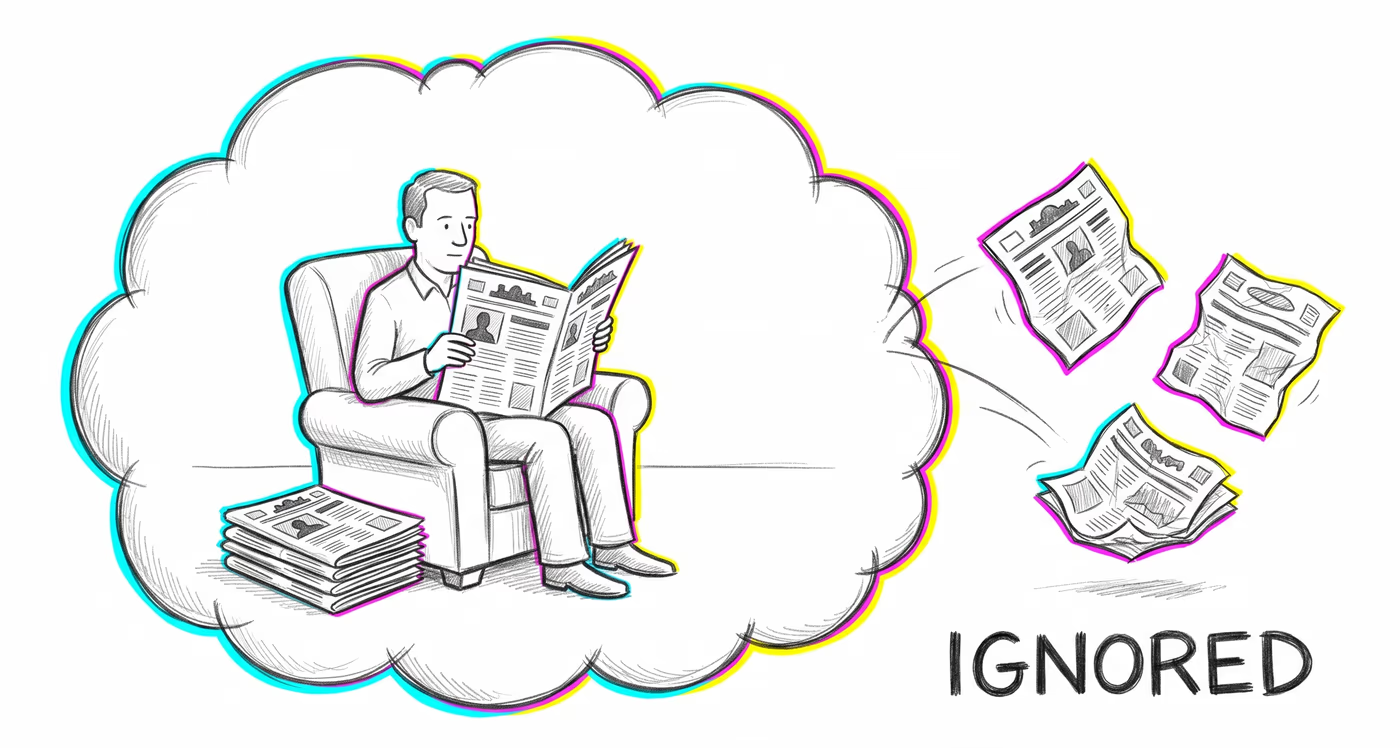
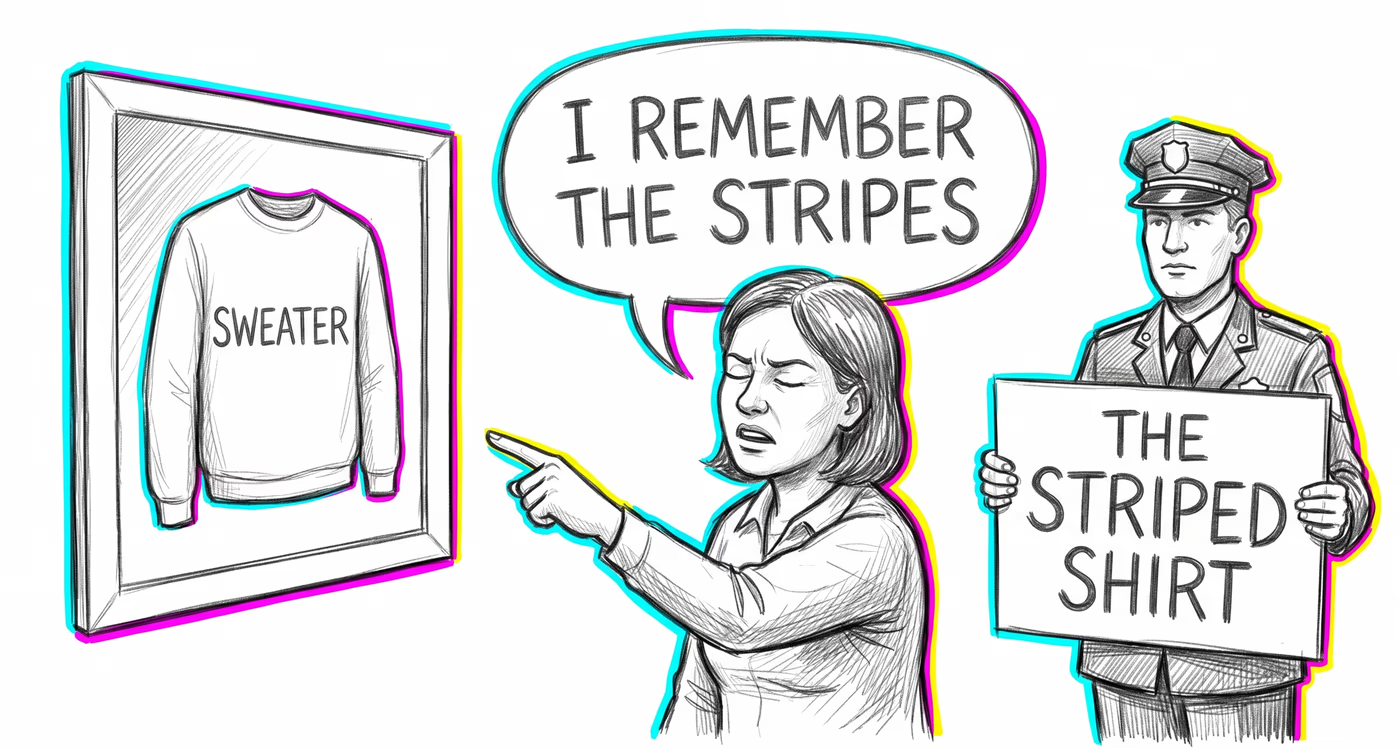
The Continued Influence Effect describes how information that was initially accepted as true but later retracted or debunked continues to contaminate reasoning and judgment. Even when people explicitly remember and accept a correction, they still draw inferences based on the discredited information, particularly when it served a causal or explanatory role in their understanding of events. The effect is driven by the brain's preference for coherent narratives: removing a piece of causal information leaves an uncomfortable gap in one's mental model, so the mind defaults to using the old, false explanation rather than tolerating incompleteness. This makes the CIE extremely robust and difficult to eliminate, with research showing it persists across fictional and real-world scenarios, across cultures, and even when corrections are repeated multiple times.

SOUND FAMILIAR?

Where it shows up.

  1. 01 A product manager reads an internal report claiming that competitor X is about to discontinue their flagship product. A week later, the report is officially retracted as based on unverified rumors. Despite acknowledging the retraction, the product manager builds the next quarter's strategy around capturing competitor X's supposedly departing customers.
  2. 02 During a criminal trial, a witness statement implicating the defendant is read aloud. The judge then instructs the jury to disregard it because it was obtained improperly. During deliberation, jurors who heard the statement still rate the defendant as more likely to be guilty than jurors in a control group who never heard it.
  3. 03 A doctor initially suspects a patient has a rare autoimmune condition and mentions this to the patient. Later tests rule it out completely, and the doctor explains the corrected diagnosis. Months later, the patient reports to a new specialist and says, 'I may have an autoimmune issue — a previous doctor thought so,' even though she remembers the correction and can articulate what the actual diagnosis was.
  4. 04 A journalist publishes a story attributing a chemical spill to negligence at a specific factory. An investigation later proves the factory was not involved at all, and a prominent correction is issued. When surveyed six months later, residents near the factory still cite the factory's 'history of carelessness' when explaining the spill, even those who recall reading the correction.
  5. 05 A data scientist presents preliminary findings at a team meeting suggesting that Feature A is driving user churn. After a deeper analysis, she sends a follow-up email explaining that the correlation was spurious. In the next planning meeting, two teammates who read the correction still argue for deprioritizing Feature A because 'we already know it causes churn.'
IN DIFFERENT DOMAINS

Where it shows up at work.

The same glitch looks different depending on the terrain. Finance, medicine, a relationship, a team — same mechanism, different costume.

Finance & investing

Investors continue to factor in debunked earnings forecasts or retracted analyst reports when making buy/sell decisions, even after corrections are issued. Initial misinformation about a company's financial health creates a persistent anchor in mental models of that company's value.
Medicine & diagnosis

Patients who initially hear an incorrect diagnosis or a debunked health claim (such as vaccines causing autism) continue to let that misinformation influence their treatment decisions and risk assessments, even after accepting the correction from their physician.

Education & grading

Students who learn an incorrect fact early in a course continue to use it on exams and in reasoning tasks even after the instructor explicitly corrects it. Teachers who initially hear a student is a 'problem child' continue to interpret ambiguous behavior through that lens after the label is retracted.

Relationships

A partner hears a rumor that their significant other was unfaithful. Even after the rumor is conclusively debunked, suspicion and distrust persist, coloring the interpretation of neutral behaviors like late arrivals or unanswered texts.

Tech & product

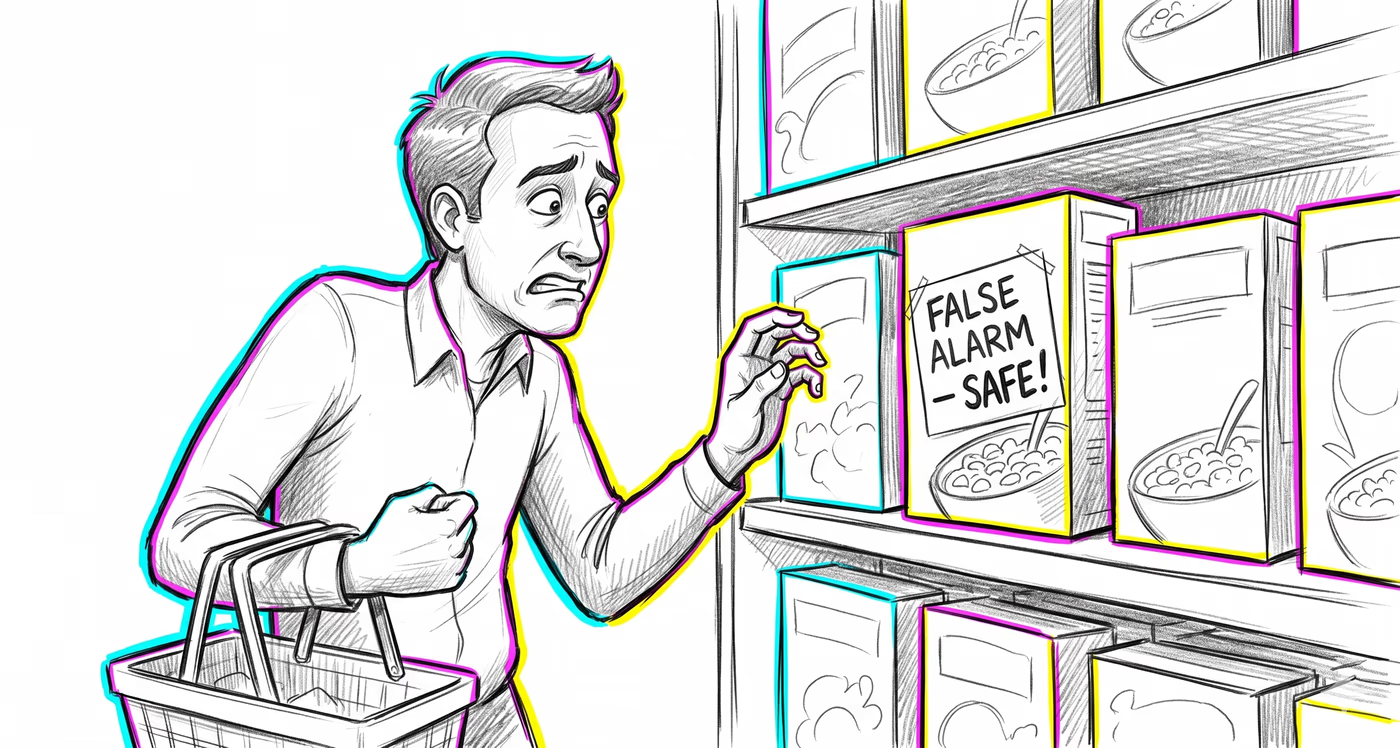
When a product recall or security vulnerability is announced and later found to be a false alarm, users continue to distrust the product. Brands may need to rename or redesign products entirely to escape the lingering association, as Samsung did by rebranding the Galaxy Note 7 as the Galaxy Note Fan Edition.

Workplace & hiring

An employee is falsely accused of misconduct in a company-wide email. Even after a formal retraction and exoneration, colleagues continue to treat the employee differently in meetings and hesitate to include them in sensitive projects.

Politics Media

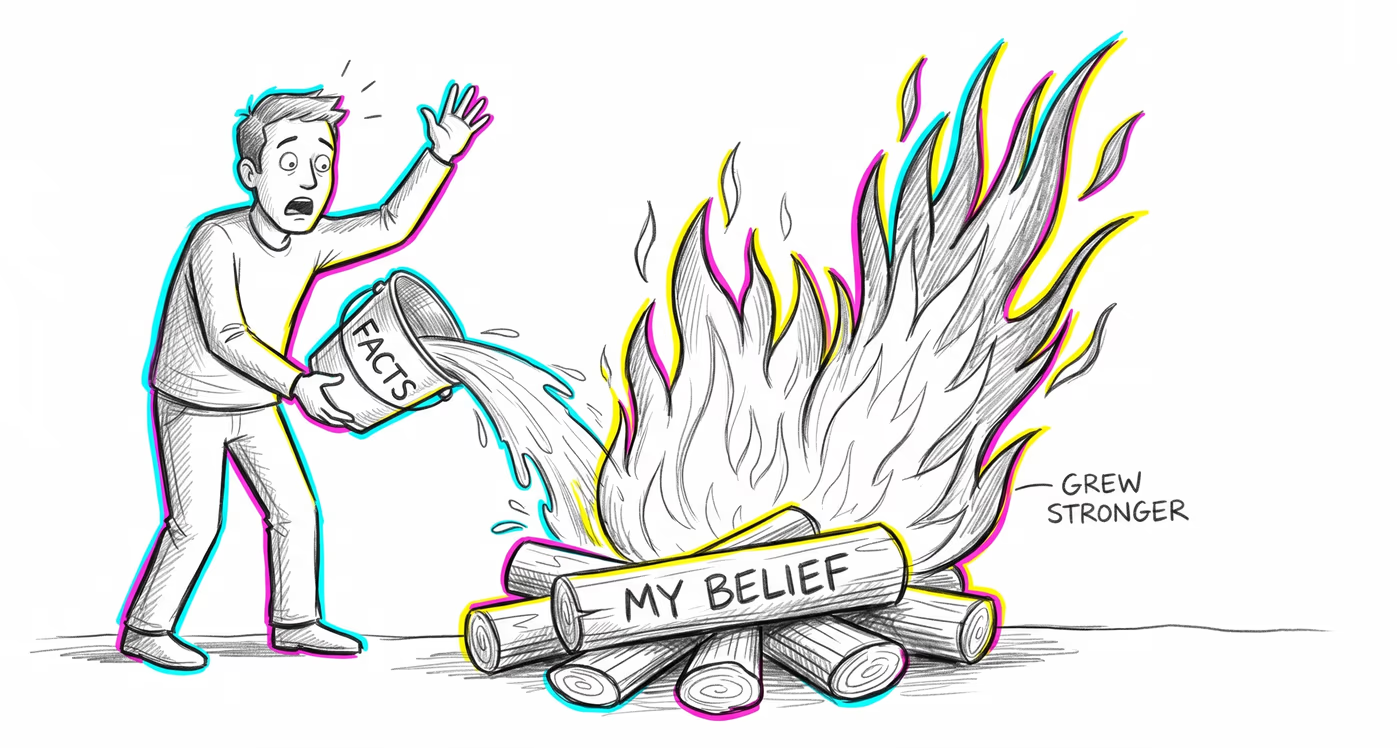
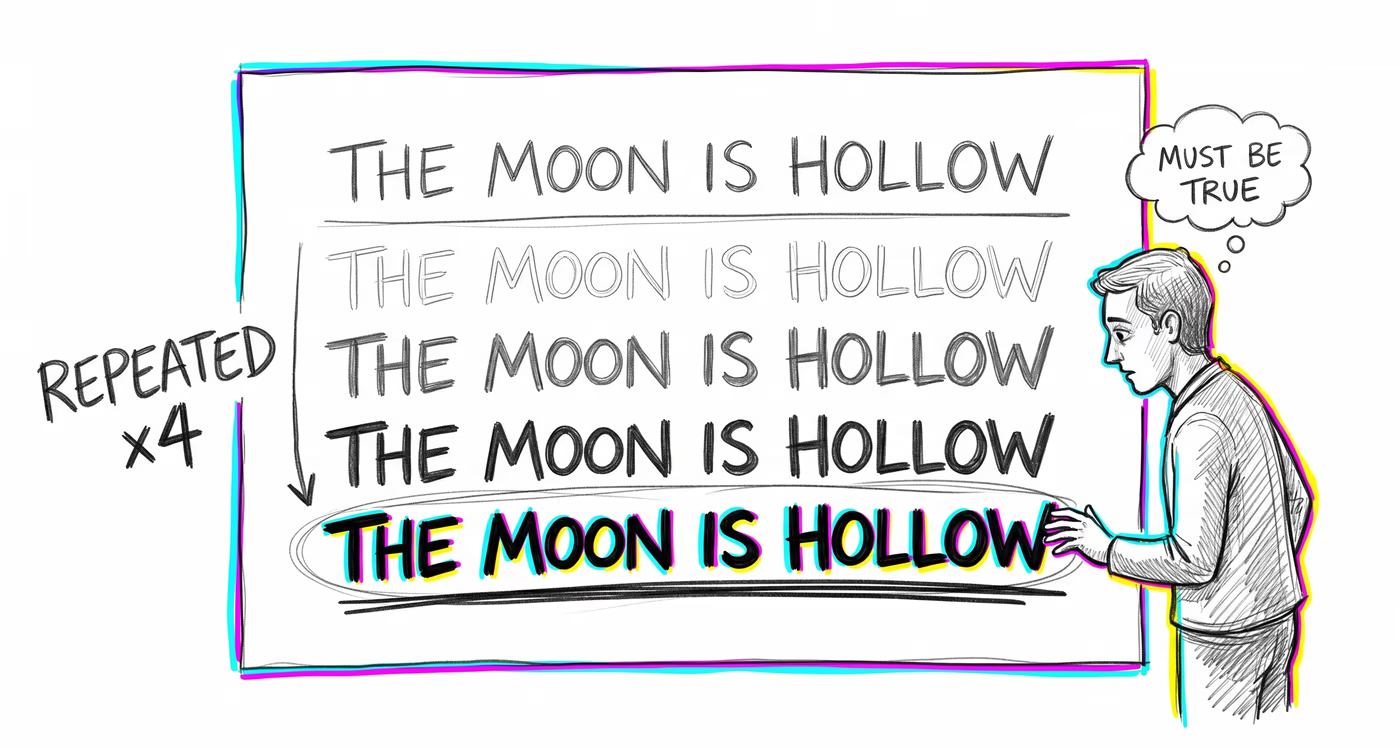
Political claims that are debunked by fact-checkers continue to shape voter attitudes and policy preferences. Repeated corrections can paradoxically increase familiarity with the original claim, making the misinformation feel more true over time.

HOW TO SPOT IT

Ask yourself…

  • Am I basing my reasoning on a piece of information that I know was later corrected or retracted?
  • If I removed this belief from my mental story, would there be an uncomfortable gap I'm trying to avoid?
  • Would someone who never heard the original claim reach the same conclusion I'm reaching right now?
HOW TO DEFEND AGAINST IT

The playbook.

  • When correcting misinformation, always provide a plausible alternative explanation to fill the causal gap — simply saying 'that's false' leaves the mental model incomplete and the old information in place.
  • Before accepting any initial claim, ask: 'If this turns out to be wrong, what would replace it in my understanding?' This pre-builds cognitive flexibility.
  • Practice the 'clean slate test': Imagine you're encountering this situation for the first time with only the corrected information. What would you conclude?
  • Explicitly tag retracted information in your notes and memory as 'DEBUNKED' and write out the replacement explanation in your own words.
  • Seek out repeated exposures to the correction from multiple credible sources, as repetition of corrections helps reduce (though not eliminate) the effect.
FAMOUS CASES

In history.

  • Despite no weapons of mass destruction being found in Iraq, polls showed approximately 20% of Americans continued to believe Iraq had possessed them years after the intelligence was widely discredited.
  • The fraudulent 1998 Lancet study linking the MMR vaccine to autism was retracted, yet belief in the vaccine-autism link persists globally and has contributed to ongoing vaccine hesitancy.
  • During the 2019-2020 Australian Black Summer wildfires, debunked claims that arson was a major cause continued to influence public opinion and polarize the climate-change debate.
WHERE IT COMES FROM
Academic origin

The phenomenon was first empirically demonstrated by A. L. Wilkes and M. Leatherbarrow in 1988, using the warehouse fire paradigm. The term 'continued influence effect' was formalized by Hollyn M. Johnson and Colleen M. Seifert in their 1994 paper in the Journal of Experimental Psychology: Learning, Memory, and Cognition.

Evolutionary origin

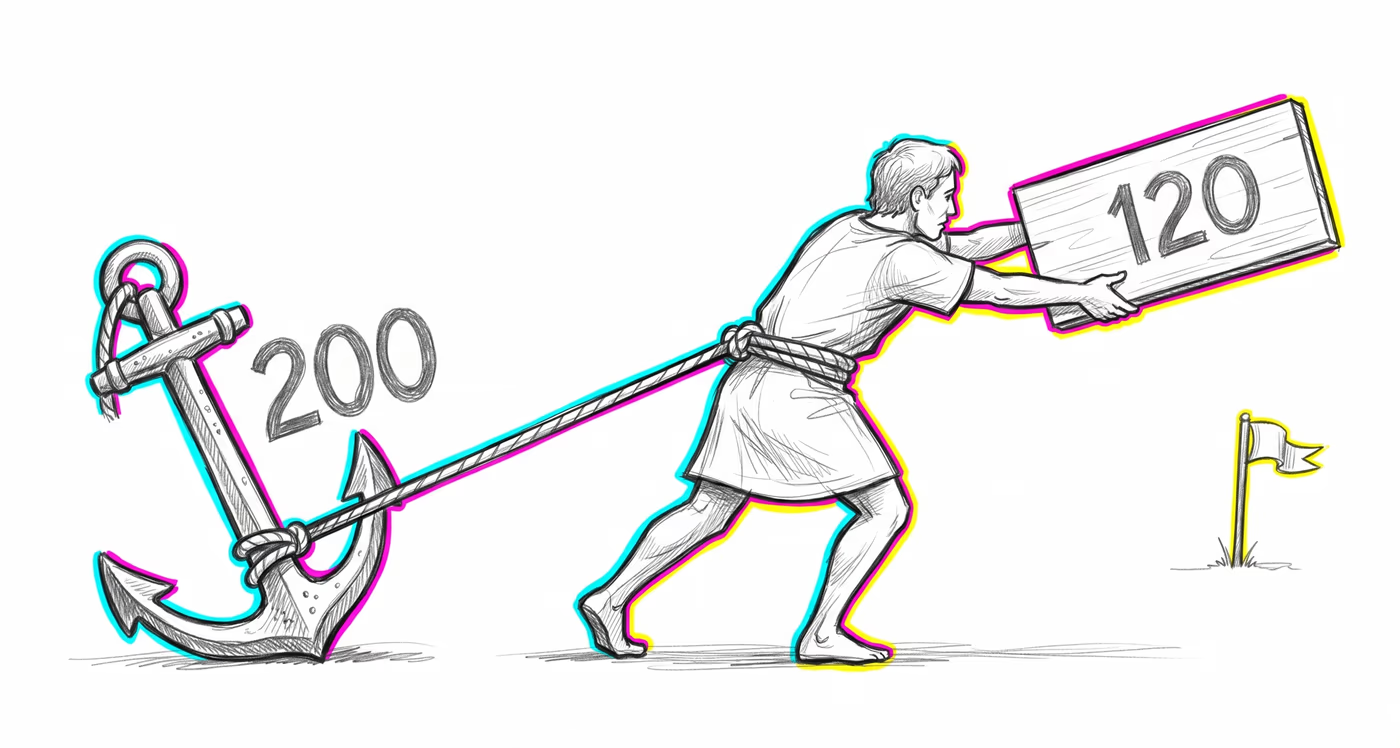
In ancestral environments, first-received information about threats or resources was usually accurate and acted as a survival cue. Rapidly encoding and retaining initial causal explanations — such as 'that bush rustled because of a predator' — and being slow to overwrite them provided a safety margin against false negatives. The cost of clinging to a slightly outdated belief was usually lower than the cost of discarding a true warning.

IN AI SYSTEMS

How the machines inherit it.

Language models trained on large corpora absorb misinformation alongside corrections. Because debunked claims often appear in more sources and with greater frequency than the corrections, models may assign higher probability to false claims. Additionally, when fine-tuned on outdated data that includes since-retracted information, models can perpetuate and even amplify the continued influence effect by confidently restating corrected falsehoods without the retraction context.

FREE FIELD ZINE

10 glitches quietly running your life.

A free field-zine PDF — ten cognitive glitches named, illustrated, with a defense move for each. Plus the weekly Glitch Report on Fridays — one bias named, two spotted in the wild, one defense move. Unsubscribe any time.

EXPLORE MORE

Related glitches.

LAUNCH PRICE

Train against your blindspots.

50 cards are free to preview. Buyers unlock the rest of the deck plus the interactive training — Spot-the-Bias Quiz unlimited, Swipe Deck with spaced repetition, My Blindspots, Decision Pre-Flight, the Printable Deck + Cheat Sheets, and the Field Guide e-book. $29.50$59.

Unlock the full deck

Everything below — yours forever. Pay once, use across every device.

Half-off launch — limited to the first 100 readers. Auto-applied at checkout.
$59 $29.50
one-time payment · lifetime access
  • All interactive digital cards — search, filter, flip, shuffle on any device
  • Five training modes — Spot-the-Bias Quiz, Swipe Deck, Pre-Flight, Blindspots, Journal
  • Curated Lenses + Decision Templates + Defense Playbook
  • Printable Deck PDFs + Field Guide e-book + Cheat Sheets + Anki Export
  • Every future improvement, included
Unlock  $29.50

30-day refund · no questions asked

Unlock the full deck

Everything below — yours forever. Pay once, use across every device.

Half-off launch — limited to the first 100 readers. Auto-applied at checkout.
$59 $29.50
one-time payment · lifetime access
  • All interactive digital cards — search, filter, flip, shuffle on any device
  • Five training modes — Spot-the-Bias Quiz, Swipe Deck, Pre-Flight, Blindspots, Journal
  • Curated Lenses + Decision Templates + Defense Playbook
  • Printable Deck PDFs + Field Guide e-book + Cheat Sheets + Anki Export
  • Every future improvement, included
Unlock  $29.50

30-day refund · no questions asked