Bizarreness Effect

aka Bizarre Imagery Effect · Bizarreness Mnemonic

Bizarre or unusual things being remembered more vividly than ordinary things, especially when both appear together.

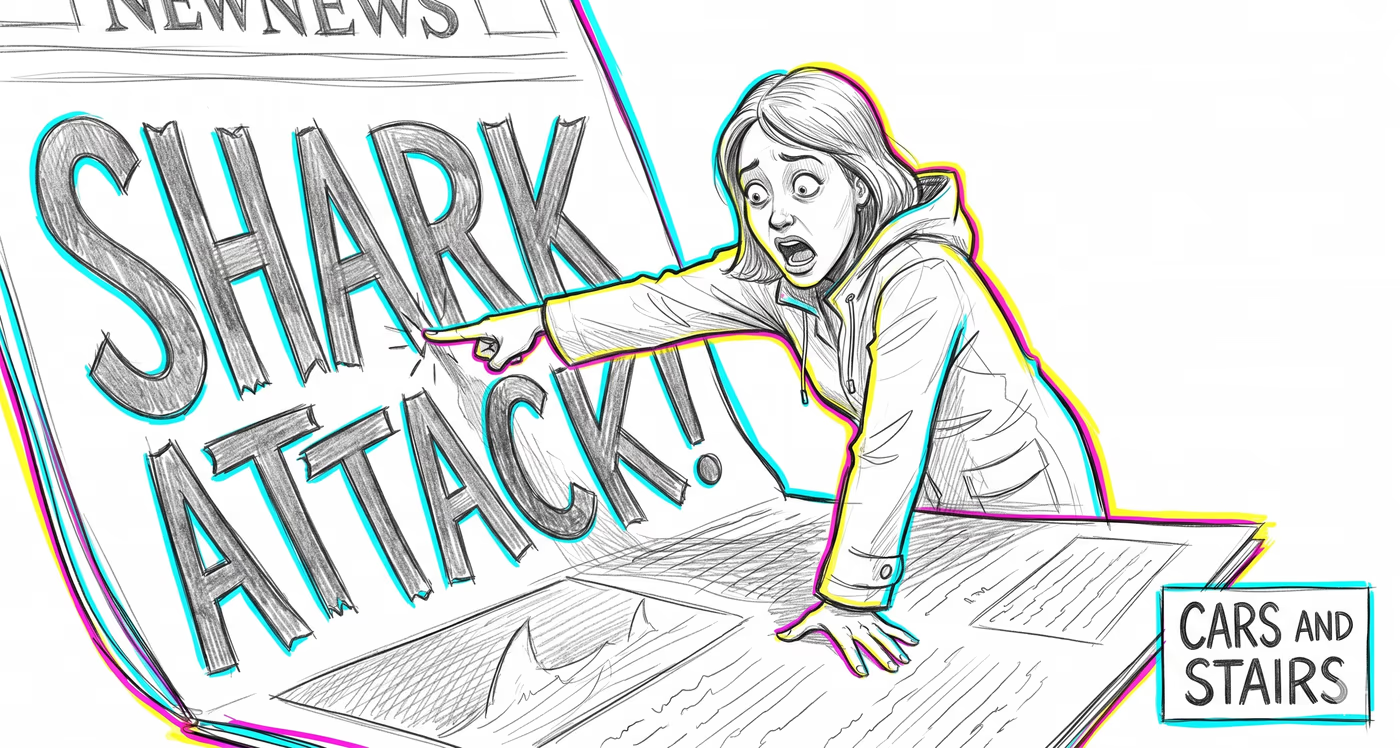
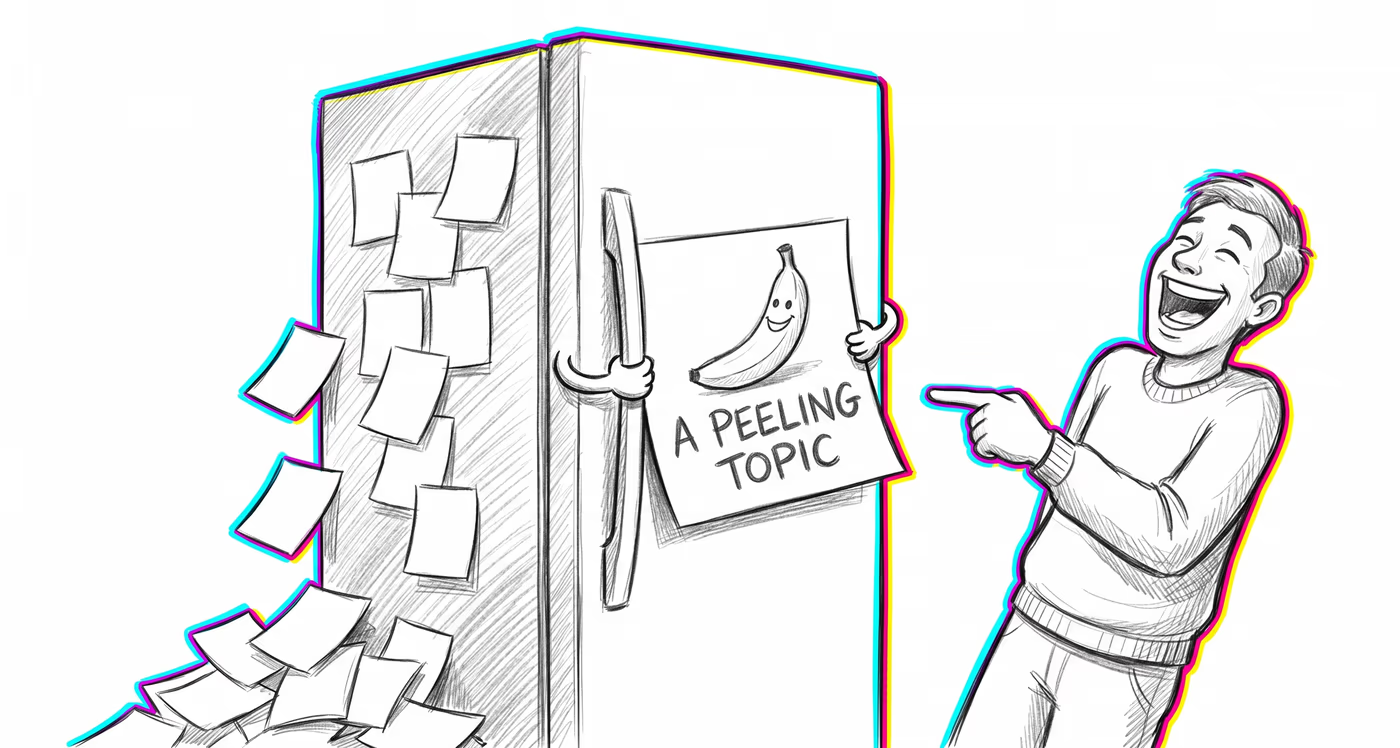
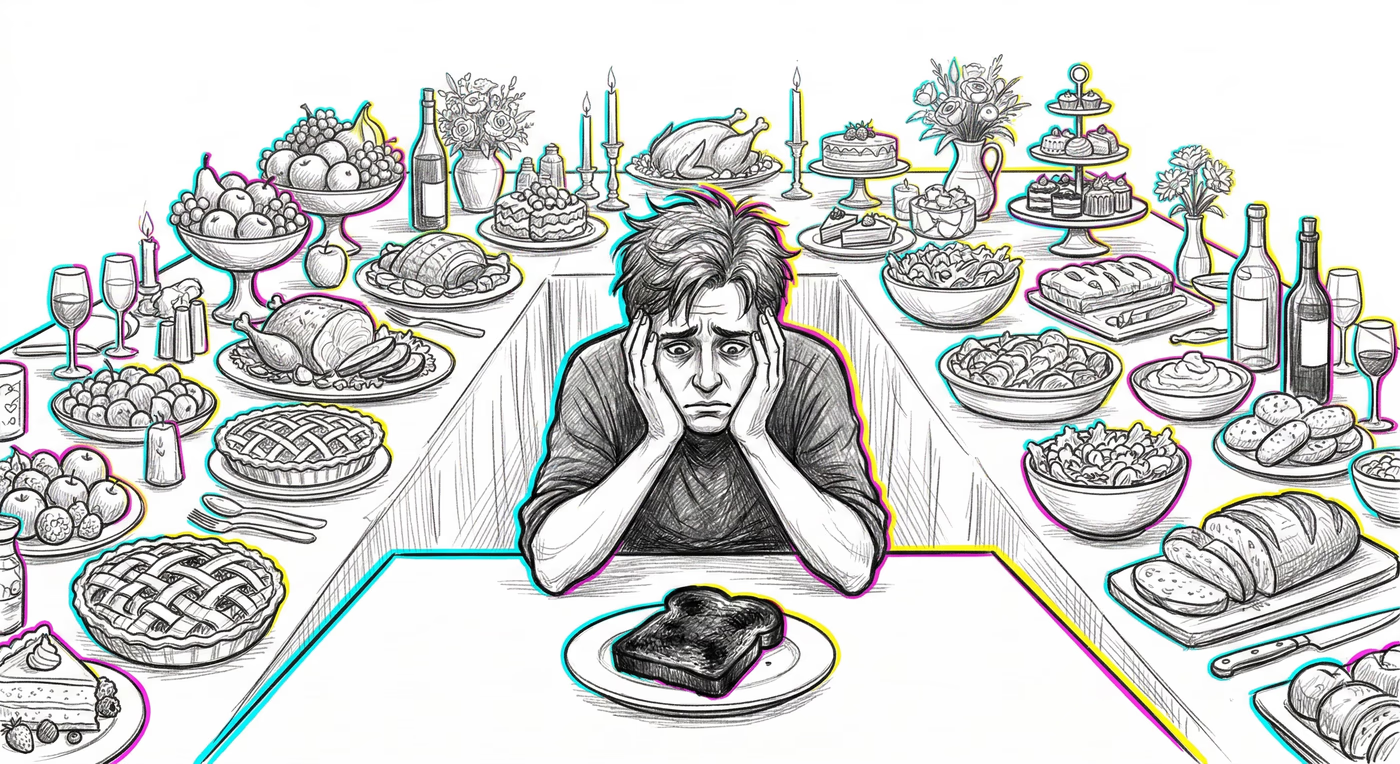
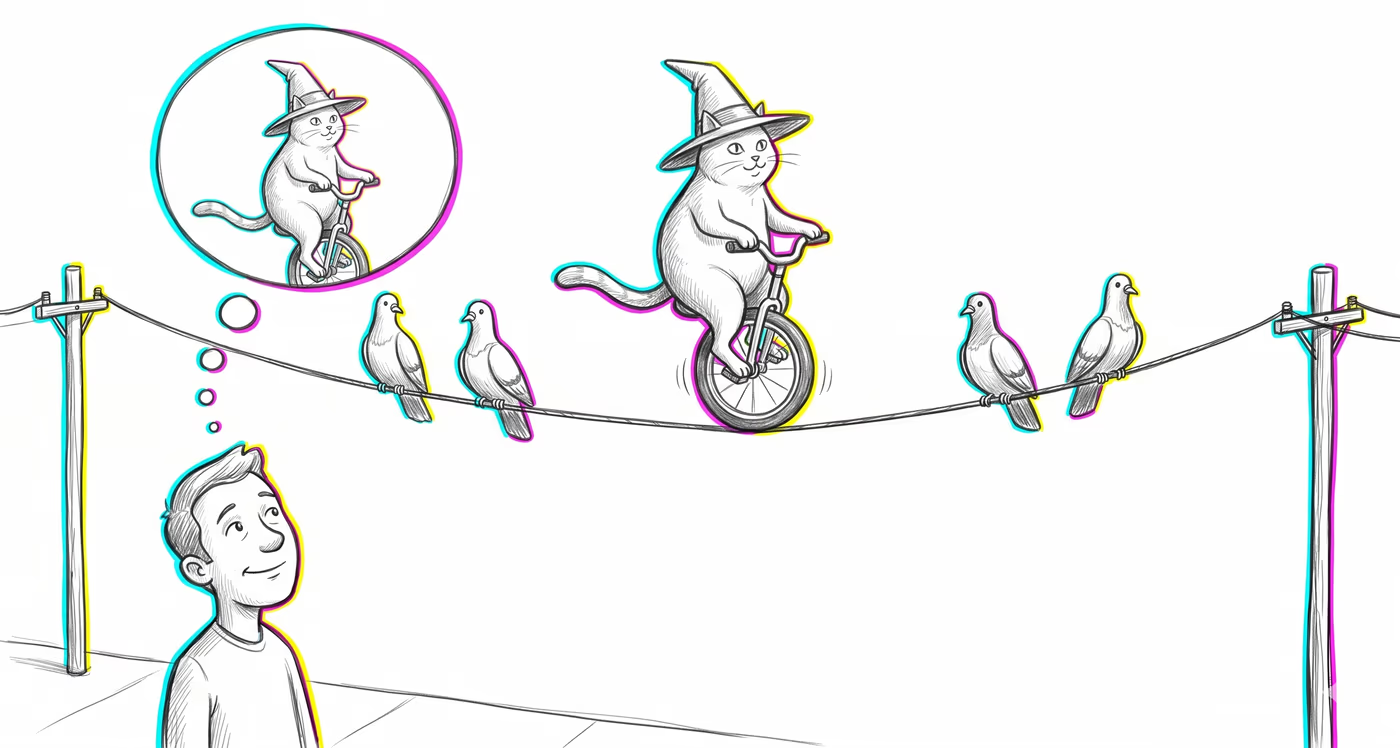
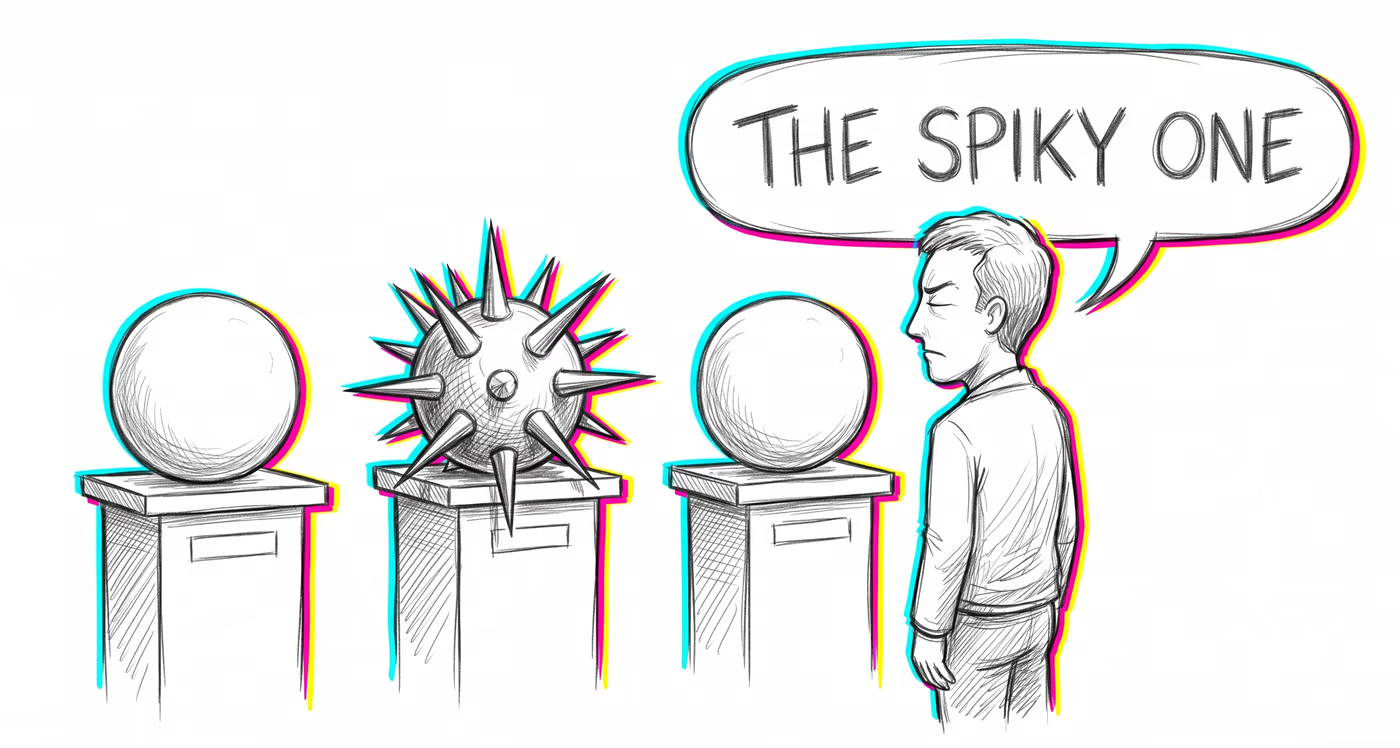
Illustration: Bizarreness Effect
WHAT IT IS

The glitch, explained plainly.

Imagine you see ten dogs at the park — all brown, all normal. You probably won't remember any one of them. But if one dog is wearing a tiny top hat and riding a skateboard, that's the one you'll tell your friends about. Your brain loves weird stuff because it pops out from everything normal around it.

The Bizarreness Effect describes a memory advantage for information that is strange, surreal, or incongruent with expectations. This advantage is most reliably observed in mixed-list designs, where bizarre items are interleaved with common items, allowing the unusual material to stand out by contrast. When all items are equally bizarre, the effect diminishes or disappears because there is no mundane backdrop against which oddness can register. The effect primarily boosts free recall rather than recognition, and it is strongest under incidental learning conditions where people are not deliberately trying to memorize, suggesting that the benefit arises naturally from the way the brain flags surprising deviations from predictable patterns.

SOUND FAMILIAR?

Where it shows up.

  1. 01 A medical student is reviewing a list of 30 drug side effects for an exam. She remembers the one her professor illustrated with an absurd image of a dancing skeleton but forgets several clinically important side effects that were presented in standard text format. She ends up studying the mundane ones again because they simply didn't stick.
  2. 02 A marketing team reviews five campaign pitches. Four are solid, data-backed proposals. The fifth involves a surreal video of a cat piloting a helicopter. Weeks later, when the team votes, everyone remembers the cat helicopter pitch in vivid detail but can barely recall the specifics of the other four, leading them to rate it as the strongest idea.
  3. 03 A jury deliberates after a weeklong trial. Among dozens of witness testimonies, one witness wore a bright purple suit and spoke with theatrical gestures. The jurors find themselves giving that witness's account disproportionate weight — not because the testimony was more credible, but because they remember it more clearly and completely than the others.
  4. 04 A product manager reads through 40 user feedback submissions. Most describe standard usability complaints, but one user wrote their feedback as a limerick about a glitch. In the next sprint planning meeting, the manager advocates fixing the limerick-user's issue first, feeling certain it's the most common complaint, even though the frequency data tells a different story.
  5. 05 An investor reviews quarterly earnings reports from several companies. One CEO included a stunt where he smashed a product prototype on stage during the earnings call. Months later, the investor recalls that company's performance narrative far more readily than the others, and unconsciously factors this inflated familiarity into portfolio rebalancing decisions, mistaking memorability for importance.
IN DIFFERENT DOMAINS

Where it shows up at work.

The same glitch looks different depending on the terrain. Finance, medicine, a relationship, a team — same mechanism, different costume.

Finance & investing

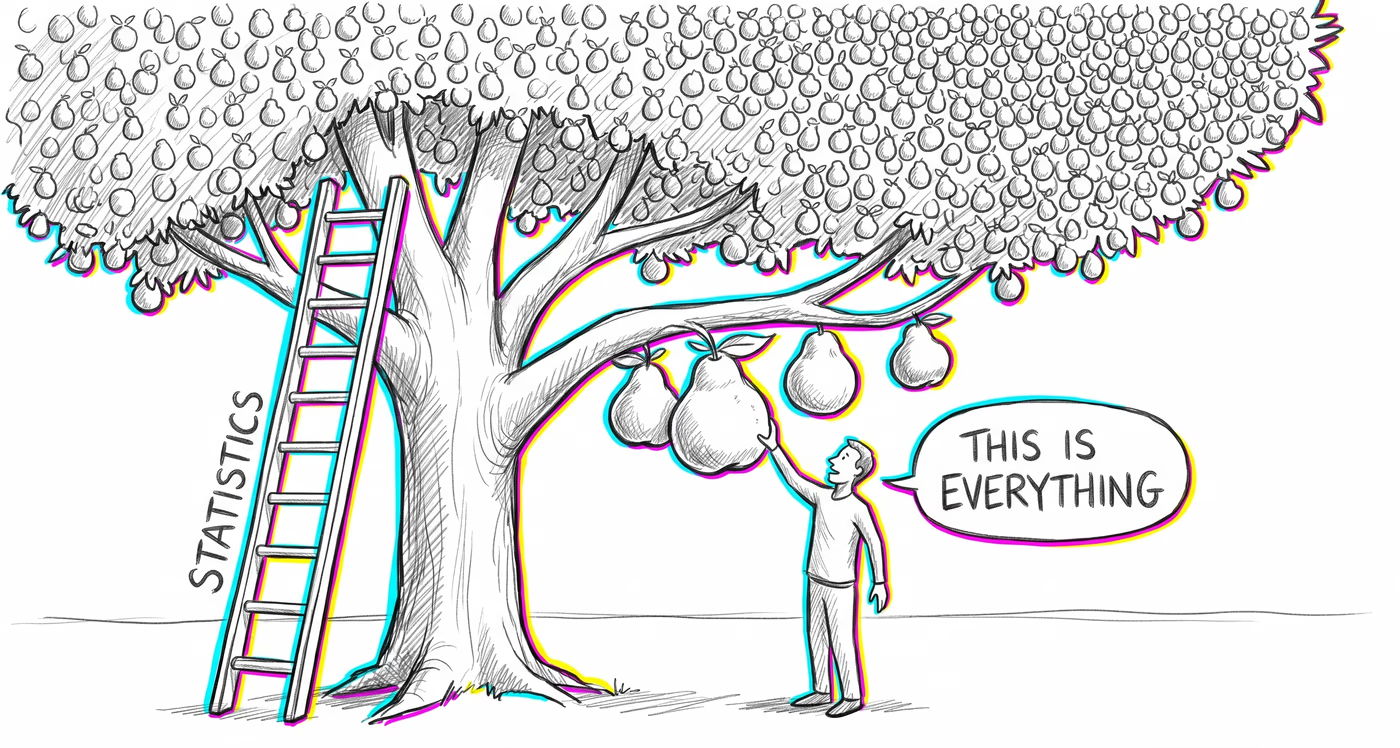
Investors tend to overweight dramatic, unusual market events (flash crashes, meme-stock surges) in their risk models while underweighting steady, incremental trends. The memorability of bizarre financial episodes inflates their perceived frequency and importance, skewing portfolio strategies toward guarding against rare spectacles rather than addressing more common, mundane risks.
Medicine & diagnosis

Clinicians may disproportionately recall rare, dramatic case presentations (e.g., a patient with an exotic parasitic infection) over common conditions they see daily. This can subtly bias differential diagnosis, causing physicians to consider unusual diagnoses more readily than warranted by base rates, simply because those cases are more mentally available.

Education & grading

Students who use bizarre or absurd mnemonics retain vocabulary and concepts more effectively than those who use straightforward repetition, but only when the bizarre items are mixed with standard material. Teachers who rely entirely on outlandish examples may find students remember the examples but not the underlying lessons, as everything becomes equally 'weird' and the distinctiveness advantage vanishes.

Relationships

People tend to remember the one outrageous fight or the one spectacularly romantic gesture far more than months of steady, caring behavior. This can distort perceptions of a relationship's overall quality, making it seem more volatile or more magical than it actually is, based on a few vivid, unusual moments.

Tech & product

Product designers leverage the effect by making key call-to-action buttons visually unusual (unexpected color, animation, playful microcopy) so users remember and return to them. However, if every element on a page competes for attention through novelty, the distinctiveness advantage collapses and users experience cognitive overload instead.

Workplace & hiring

During performance reviews, managers tend to recall the employee who made one spectacularly unusual presentation or one dramatic mistake far more than the employee who consistently delivered solid, unremarkable work. This skews evaluations toward memorable incidents rather than sustained performance.

Politics Media

News outlets exploit this effect by featuring bizarre or shocking stories that are more memorable than policy analysis or statistical trends. Voters subsequently overestimate the prevalence of dramatic events (e.g., unusual crimes, outrageous political statements) while underestimating slow-moving systemic issues, distorting public priorities.

HOW TO SPOT IT

Ask yourself…

  • Am I giving this idea or memory more weight simply because it was unusual or surprising, rather than because it was objectively more important?
  • Would I remember this information as vividly if it had been presented in a plain, ordinary way?
  • Am I confusing how easily I can recall something with how frequently or importantly it actually occurs?
HOW TO DEFEND AGAINST IT

The playbook.

  • When making decisions based on recalled information, ask: 'What am I NOT remembering?' Actively search for the mundane items that may have faded from memory.
  • Use written records, checklists, and logs rather than relying on memory for important decisions — systematic documentation neutralizes the recall advantage of bizarre items.
  • In evaluations (performance reviews, project assessments), weight frequency data and objective metrics over recalled anecdotes.
  • When studying or learning, deliberately mix bizarre mnemonics with structured review of all material to ensure the non-bizarre content also receives adequate encoding.
  • Before prioritizing a recalled event or idea, check whether its vividness matches its actual frequency or importance using base-rate data.
FAMOUS CASES

In history.

  • The 'Daisy' political ad of 1964 (Lyndon B. Johnson's campaign) used a bizarre juxtaposition of a girl picking flower petals with a nuclear countdown, making it one of the most remembered political advertisements in history despite airing only once.
  • The Challenger disaster (1986) is remembered far more vividly than routine successful shuttle missions, partly because the bizarre and shocking visual of the explosion against a clear blue sky created an indelible memory trace that overshadowed years of successful spaceflight in public consciousness.
WHERE IT COMES FROM
Academic origin

Formalized by Mark A. McDaniel and Gilles O. Einstein in 1986, building on earlier work on bizarre imagery and memory dating to the 1970s. The underlying distinctiveness framework draws on Hedwig von Restorff's 1933 isolation paradigm.

Evolutionary origin

In ancestral environments, novel and unexpected stimuli — a predator in an unusual location, an unfamiliar plant, a strange sound — signaled potential threats or opportunities that demanded immediate attention and lasting memory. Organisms that preferentially encoded surprising, pattern-breaking events were better equipped to detect danger and exploit rare resources, conferring a survival advantage.

IN AI SYSTEMS

How the machines inherit it.

Language models and recommendation algorithms trained on engagement metrics may learn to prioritize bizarre, unusual, or sensational content because such content generates more clicks, shares, and dwell time — all reflections of the human bizarreness effect. This creates a feedback loop where models surface increasingly outlandish content, amplifying sensationalism in news feeds and search results while burying mundane but important information.

Read more on Wikipedia
FREE FIELD ZINE

10 glitches quietly running your life.

A free field-zine PDF — ten cognitive glitches named, illustrated, with a defense move for each. Plus the weekly Glitch Report on Fridays — one bias named, two spotted in the wild, one defense move. Unsubscribe any time.

EXPLORE MORE

Related glitches.

LAUNCH PRICE

Train against your blindspots.

50 cards are free to preview. Buyers unlock the rest of the deck plus the interactive training — Spot-the-Bias Quiz unlimited, Swipe Deck with spaced repetition, My Blindspots, Decision Pre-Flight, the Printable Deck + Cheat Sheets, and the Field Guide e-book. $29.50$59.

Unlock the full deck

Everything below — yours forever. Pay once, use across every device.

Half-off launch — limited to the first 100 readers. Auto-applied at checkout.
$59 $29.50
one-time payment · lifetime access
  • All interactive digital cards — search, filter, flip, shuffle on any device
  • Five training modes — Spot-the-Bias Quiz, Swipe Deck, Pre-Flight, Blindspots, Journal
  • Curated Lenses + Decision Templates + Defense Playbook
  • Printable Deck PDFs + Field Guide e-book + Cheat Sheets + Anki Export
  • Every future improvement, included
Unlock  $29.50

30-day refund · no questions asked

Unlock the full deck

Everything below — yours forever. Pay once, use across every device.

Half-off launch — limited to the first 100 readers. Auto-applied at checkout.
$59 $29.50
one-time payment · lifetime access
  • All interactive digital cards — search, filter, flip, shuffle on any device
  • Five training modes — Spot-the-Bias Quiz, Swipe Deck, Pre-Flight, Blindspots, Journal
  • Curated Lenses + Decision Templates + Defense Playbook
  • Printable Deck PDFs + Field Guide e-book + Cheat Sheets + Anki Export
  • Every future improvement, included
Unlock  $29.50

30-day refund · no questions asked