Von Restorff Effect

aka Isolation Effect · Distinctiveness Effect · Novelty Effect

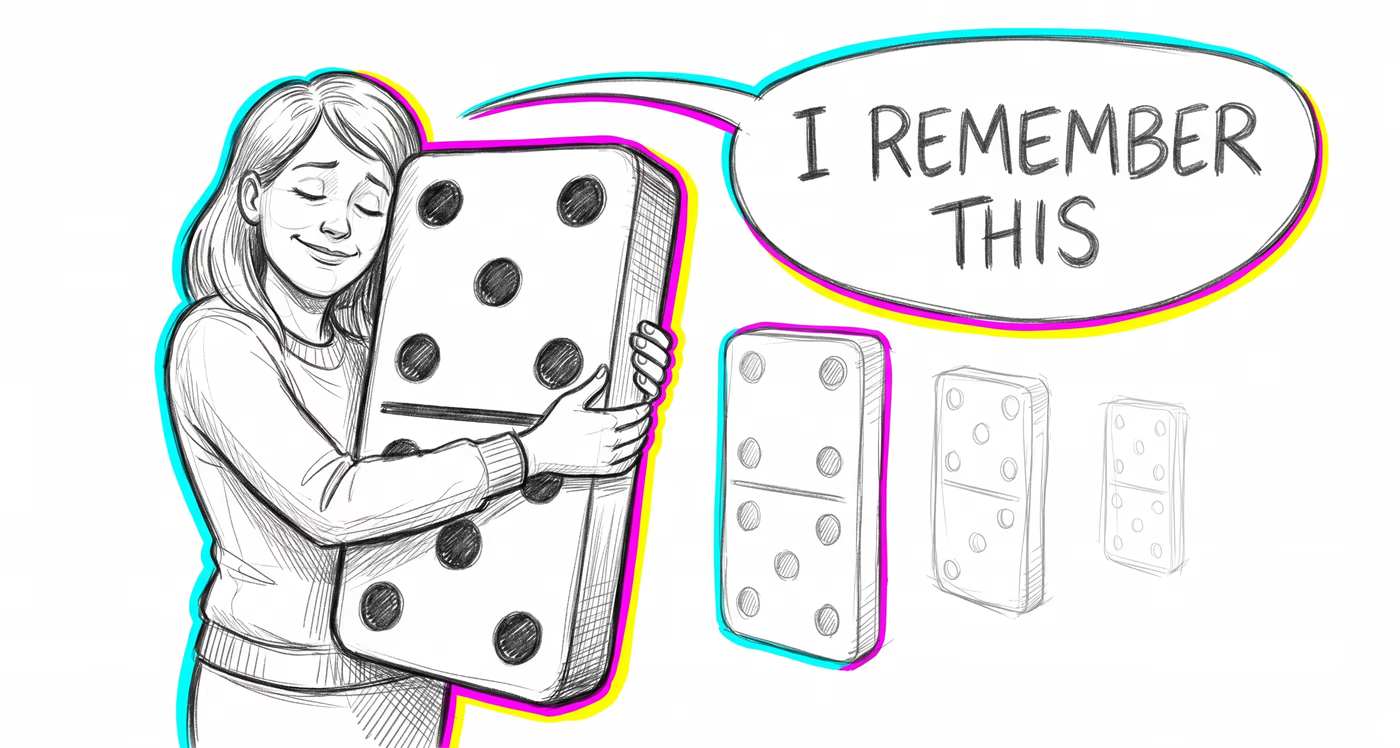
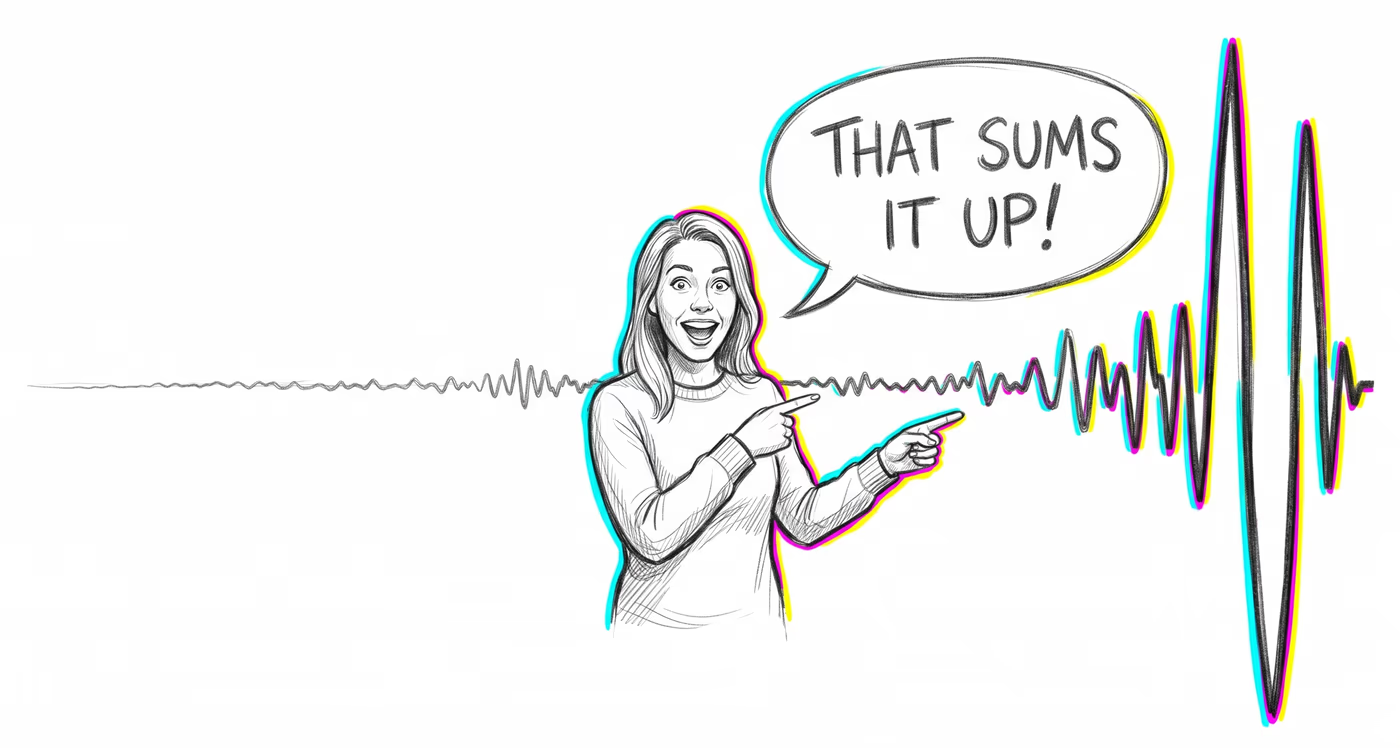
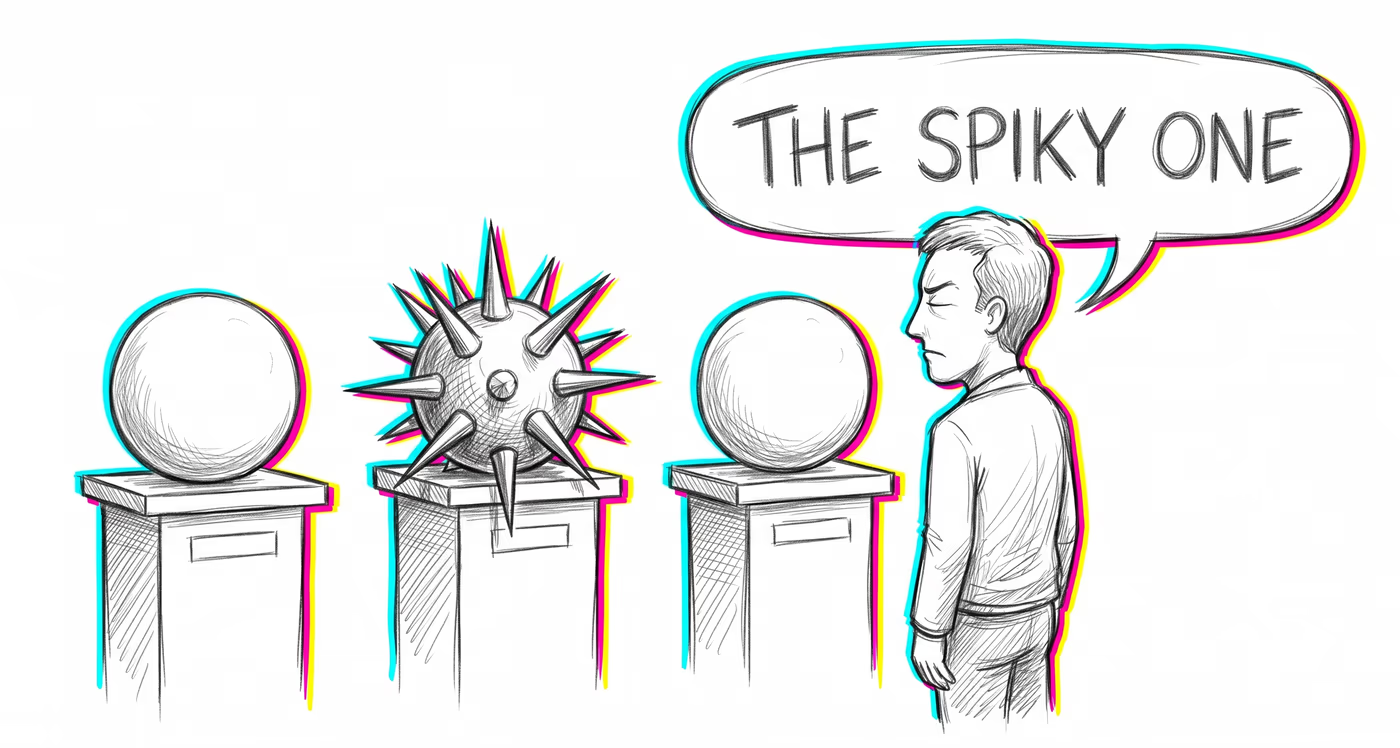
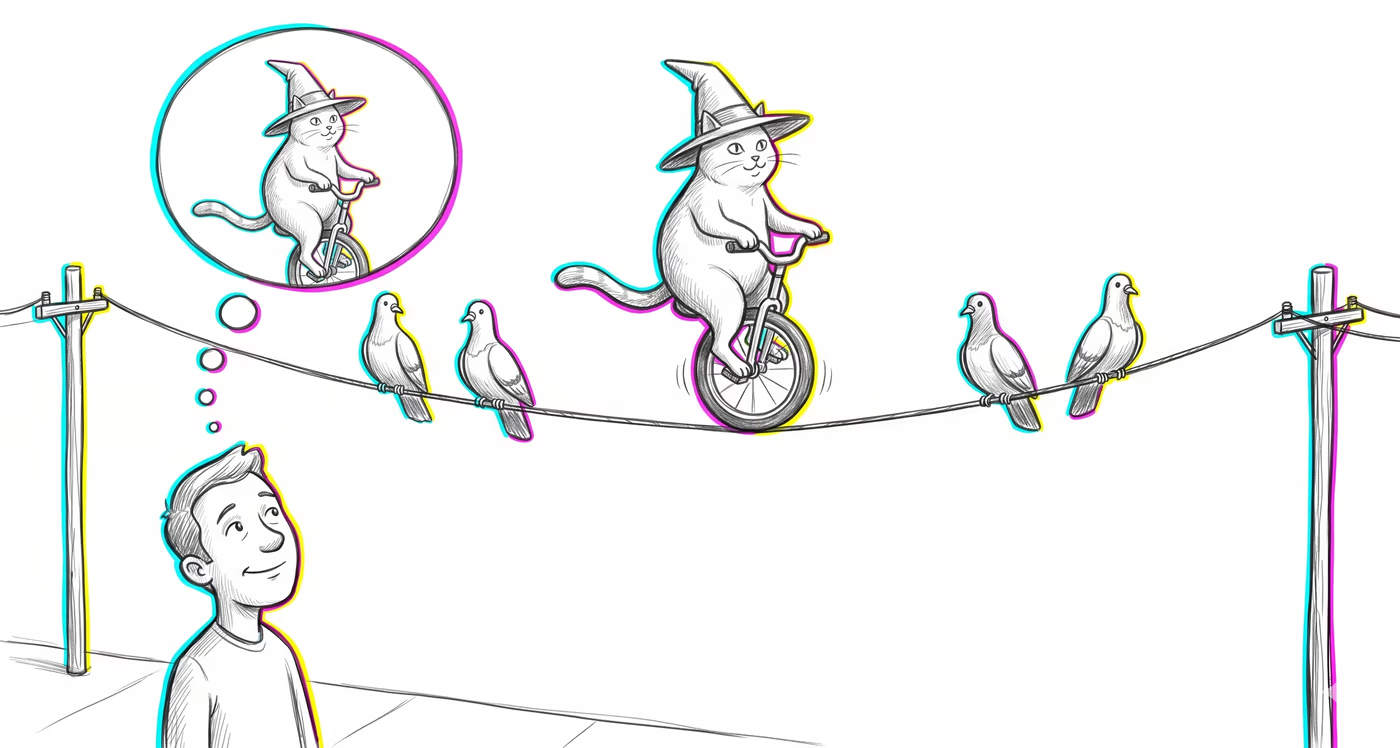
The one item that stands out from a group of similar items being the one most likely to be remembered.

WHAT IT IS

The glitch, explained plainly.

Imagine you have a bag full of green gummy bears and one red gummy bear is mixed in. Later, when someone asks you what was in the bag, you'll remember the red one way better than any of the green ones. Your brain really notices the thing that's different from everything else around it, and that makes it stick in your memory like glue.

The Von Restorff Effect describes the robust tendency for items that are perceptually or conceptually distinct from their surroundings to enjoy a significant memory advantage over homogeneous items. This distinctiveness can be achieved through any salient dimension—color, size, semantic category, emotional valence, or format—so long as it breaks from an established pattern. Critically, the memory boost for the isolated item often comes at a cost: the surrounding non-distinctive items tend to be recalled even more poorly than they would be in a fully heterogeneous list, suggesting the effect operates partly through interference reduction for the isolate rather than purely through enhanced encoding. The phenomenon has broad implications for how information competes for cognitive resources and why certain details dominate memory while equally important but uniform details fade.

SOUND FAMILIAR?

Where it shows up.

  1. 01 A professor gives a lecture using 30 plain-text slides, but one slide in the middle features a large, colorful photograph. On the exam, students consistently answer questions about the content of the photograph slide correctly while performing poorly on the surrounding slides, even though they spent equal time on each.
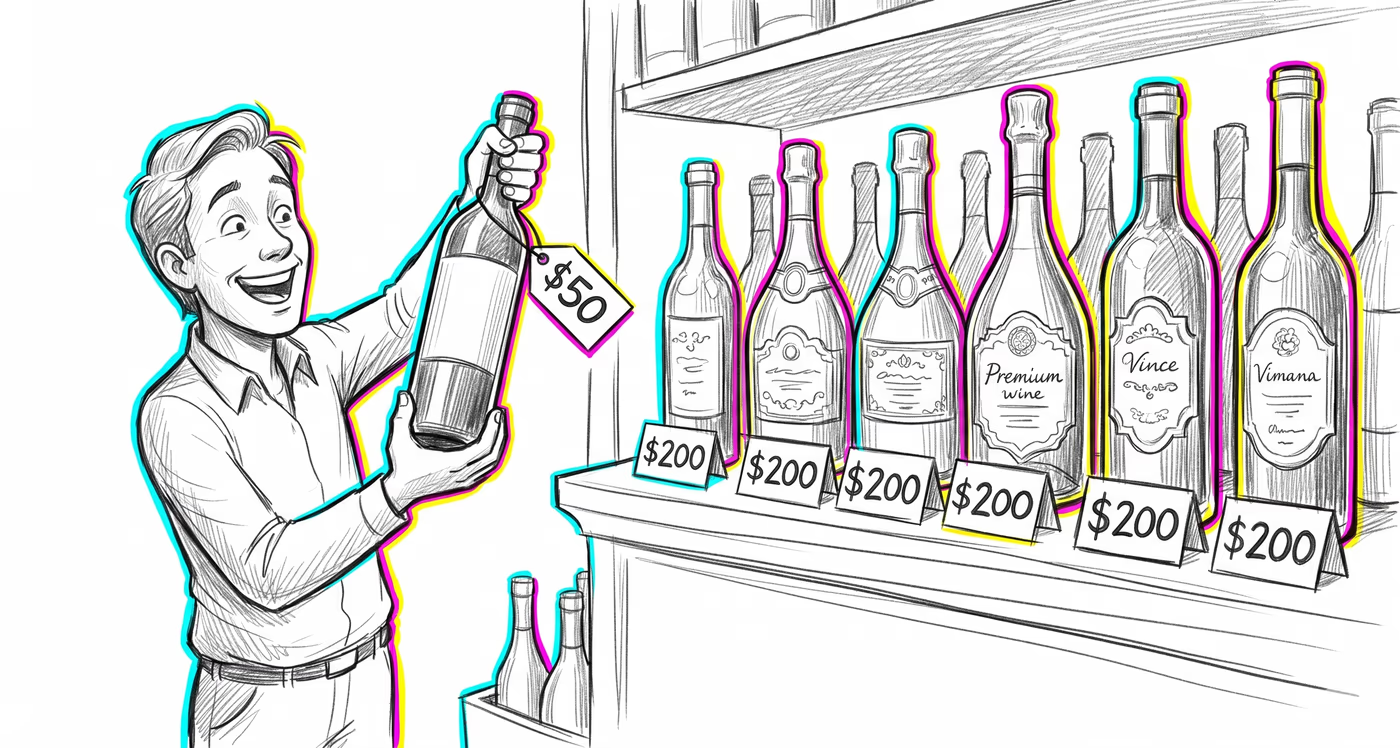
  2. 02 A product designer places five subscription tiers on a pricing page, making the recommended plan a different color with a 'Most Popular' badge and larger card size. User testing reveals that customers recall the details of that plan accurately but frequently misremember the features of the adjacent tiers, leading to complaints after purchase.
  3. 03 A hiring manager reviews 20 résumés with standard formatting. One applicant submitted theirs on cream-colored paper with a unique layout. During the committee meeting, the manager can describe this applicant's qualifications in detail but struggles to differentiate among the other 19 candidates, despite several being more qualified.
  4. 04 An investor reads a quarterly earnings report where all metrics show modest, steady growth. One metric, however, is printed in bold red because it dipped slightly. In a later conversation, the investor describes the company as 'struggling' based almost entirely on the red-highlighted figure, unable to recall the consistently positive numbers surrounding it.
  5. 05 A researcher presents a list of 15 policy recommendations to a congressional committee, all formatted identically except that recommendation #9 was accidentally displayed in a larger font due to a formatting error. Months later, committee members most frequently cite recommendation #9 in legislative drafts, not because it was the most impactful, but because it is the only one they clearly remember from the presentation.
IN DIFFERENT DOMAINS

Where it shows up at work.

The same glitch looks different depending on the terrain. Finance, medicine, a relationship, a team — same mechanism, different costume.

Finance & investing

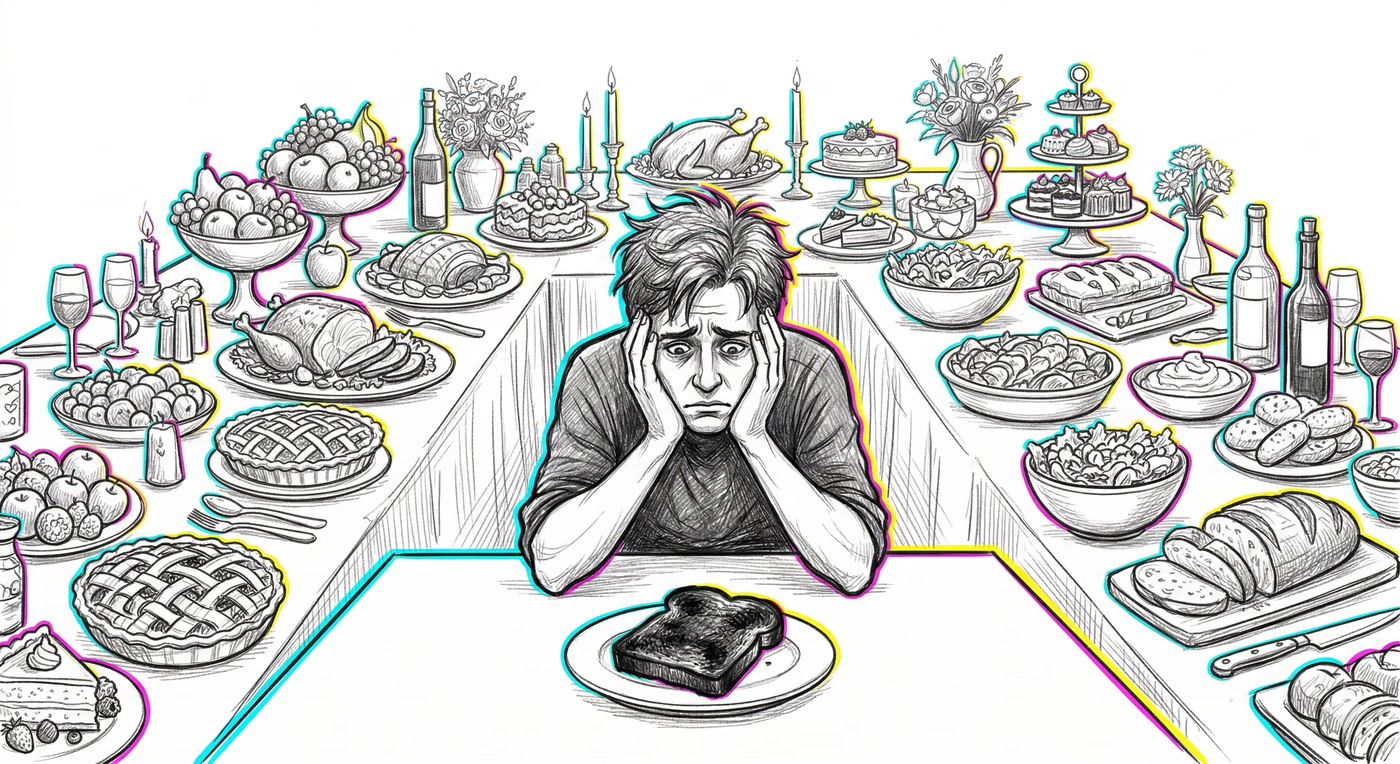
Investors disproportionately remember and react to the single dramatic event in an otherwise stable earnings history—such as one quarter of unexpected loss amid years of gains—leading to outsized sell-offs that don't reflect the overall trajectory.

Medicine & diagnosis

Physicians may anchor a diagnosis on the one symptom that stands out as unusual in an otherwise routine presentation, potentially overlooking patterns among the more common symptoms that together point to a different condition.

Education & grading

Students using highlighters tend to remember the highlighted passages while actually performing worse on non-highlighted material, creating an illusion of comprehensive studying when only the distinctive portions were encoded.

Relationships

People disproportionately remember the one dramatic argument amid months of harmony, causing them to characterize an otherwise healthy relationship as conflict-ridden.

Tech & product

Call-to-action buttons designed with high visual contrast against a uniform interface are more likely to be clicked and remembered, which is why pricing pages use color and size differences to steer users toward a preferred plan.

Workplace & hiring

In performance reviews, a single memorable mistake or achievement that deviated from an employee's otherwise consistent record dominates the evaluator's memory and disproportionately shapes the rating.

Politics Media

A single inflammatory quote from a politician stands out against a backdrop of measured policy statements, becoming the clip that dominates news cycles and public memory while the substantive positions are forgotten.

HOW TO SPOT IT

Ask yourself…

  • Am I remembering this particular detail primarily because it looked or felt different from its surroundings, rather than because it was actually more important?
  • Am I making a judgment based on the one thing that stood out, while forgetting the broader context of similar items I saw alongside it?
  • Could someone have intentionally made this element distinctive to capture my attention and steer my decision?
HOW TO DEFEND AGAINST IT

The playbook.

  • After encountering a mixed set of information, deliberately review all items equally rather than relying on what spontaneously comes to mind first.
  • When making decisions based on remembered information, write down all the options or data points before evaluating — do not rely on unaided recall alone.
  • Ask yourself: 'Would I remember this item just as well if it had been formatted identically to the others?'
  • Use structured checklists or rubrics that force equal weight on every criterion, preventing one memorable outlier from dominating evaluation.
  • When designing materials for yourself (notes, to-do lists), apply distinctive formatting only to genuinely high-priority items and resist over-highlighting.
FAMOUS CASES

In history.

  • The Challenger disaster became disproportionately memorable compared to dozens of successful shuttle missions, shaping public risk perception of the space program far beyond what base rates would justify.
  • Apple's 'Think Different' campaign deliberately leveraged distinctiveness against uniform competitor advertising to create outsized brand memorability in the late 1990s.
WHERE IT COMES FROM
Academic origin

Hedwig von Restorff, 1933. Published in her dissertation 'Über die Wirkung von Bereichsbildung im Spurenfeld' in Psychologische Forschung, supervised by Wolfgang Köhler at the University of Berlin.

Evolutionary origin

In ancestral environments, survival depended on rapidly detecting anomalies in otherwise uniform sensory fields—a single moving shape in still grass could signal a predator, or an unusual berry among familiar vegetation could indicate a new food source or toxin. Brains that preferentially encoded pattern-breaking stimuli could respond faster to threats and opportunities, conferring a strong fitness advantage.

IN AI SYSTEMS

How the machines inherit it.

Machine learning models trained on imbalanced datasets can exhibit a form of the Von Restorff Effect: rare or distinctive training examples may disproportionately influence model weights, leading to overfitting on outliers. In recommendation algorithms, items with unusual features (clickbait thumbnails, sensationalized titles) can receive inflated engagement signals, creating feedback loops that amplify distinctive but low-quality content over uniform but higher-quality alternatives.

Read more on Wikipedia
FREE FIELD ZINE

10 glitches quietly running your life.

A free field-zine PDF — ten cognitive glitches named, illustrated, with a defense move for each. Plus the weekly Glitch Report on Fridays — one bias named, two spotted in the wild, one defense move. Unsubscribe any time.

EXPLORE MORE

Related glitches.

LAUNCH PRICE

Train against your blindspots.

50 cards are free to preview. Buyers unlock the rest of the deck plus the interactive training — Spot-the-Bias Quiz unlimited, Swipe Deck with spaced repetition, My Blindspots, Decision Pre-Flight, the Printable Deck + Cheat Sheets, and the Field Guide e-book. $29.50$59.

Unlock the full deck

Everything below — yours forever. Pay once, use across every device.

Half-off launch — limited to the first 100 readers. Auto-applied at checkout.
$59 $29.50
one-time payment · lifetime access
  • All interactive digital cards — search, filter, flip, shuffle on any device
  • Five training modes — Spot-the-Bias Quiz, Swipe Deck, Pre-Flight, Blindspots, Journal
  • Curated Lenses + Decision Templates + Defense Playbook
  • Printable Deck PDFs + Field Guide e-book + Cheat Sheets + Anki Export
  • Every future improvement, included
Unlock  $29.50

30-day refund · no questions asked

Unlock the full deck

Everything below — yours forever. Pay once, use across every device.

Half-off launch — limited to the first 100 readers. Auto-applied at checkout.
$59 $29.50
one-time payment · lifetime access
  • All interactive digital cards — search, filter, flip, shuffle on any device
  • Five training modes — Spot-the-Bias Quiz, Swipe Deck, Pre-Flight, Blindspots, Journal
  • Curated Lenses + Decision Templates + Defense Playbook
  • Printable Deck PDFs + Field Guide e-book + Cheat Sheets + Anki Export
  • Every future improvement, included
Unlock  $29.50

30-day refund · no questions asked