Choice-Supportive Bias

aka Post-Purchase Rationalization · Choice-Supportive Memory Distortion · Post-Decisional Dissonance

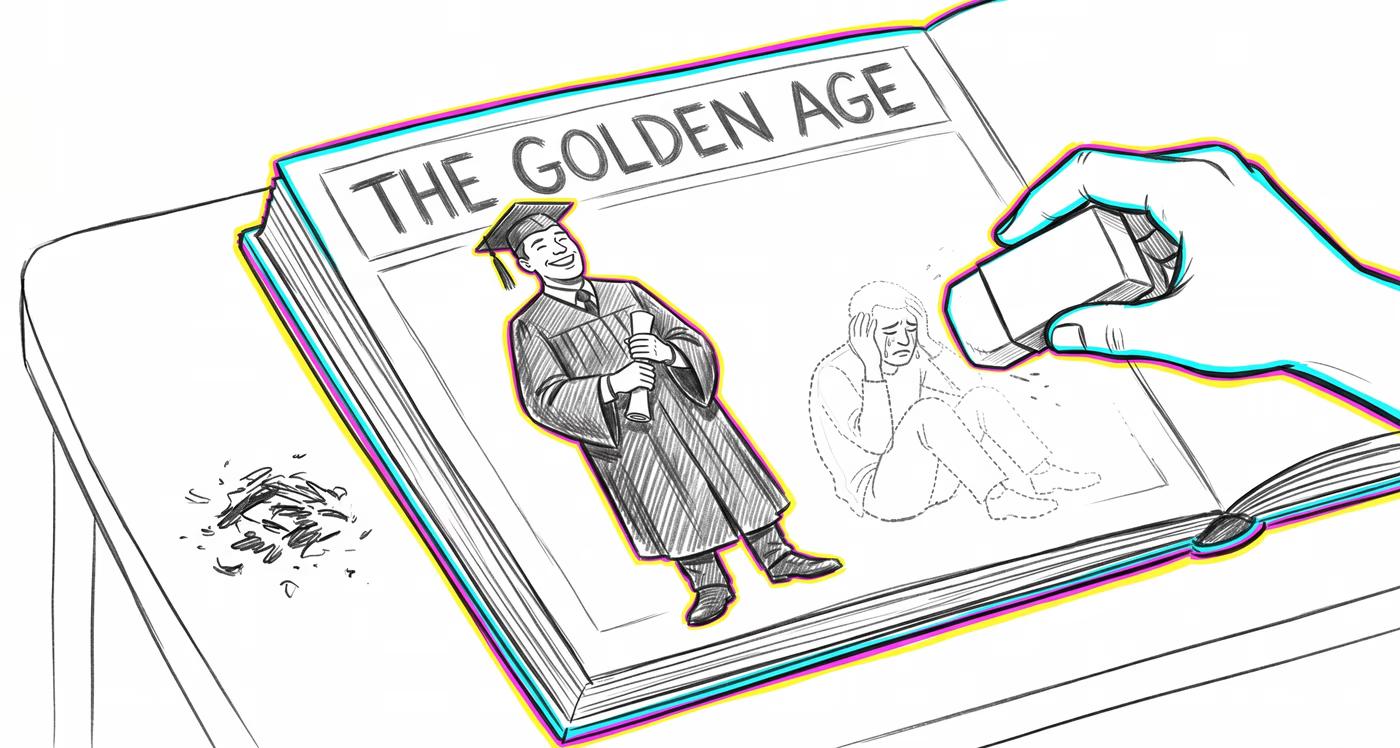
Remembering past choices as better than they were, while remembering rejected alternatives as worse.

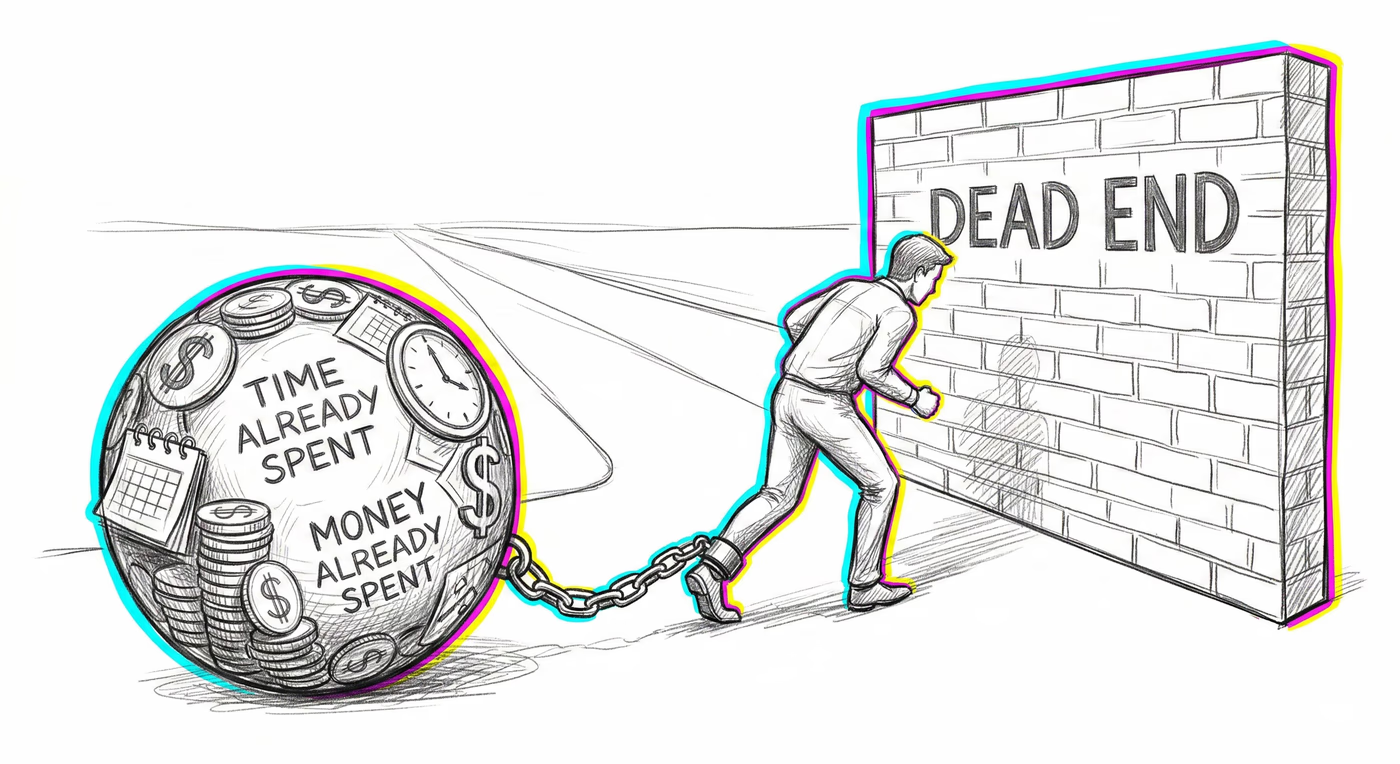
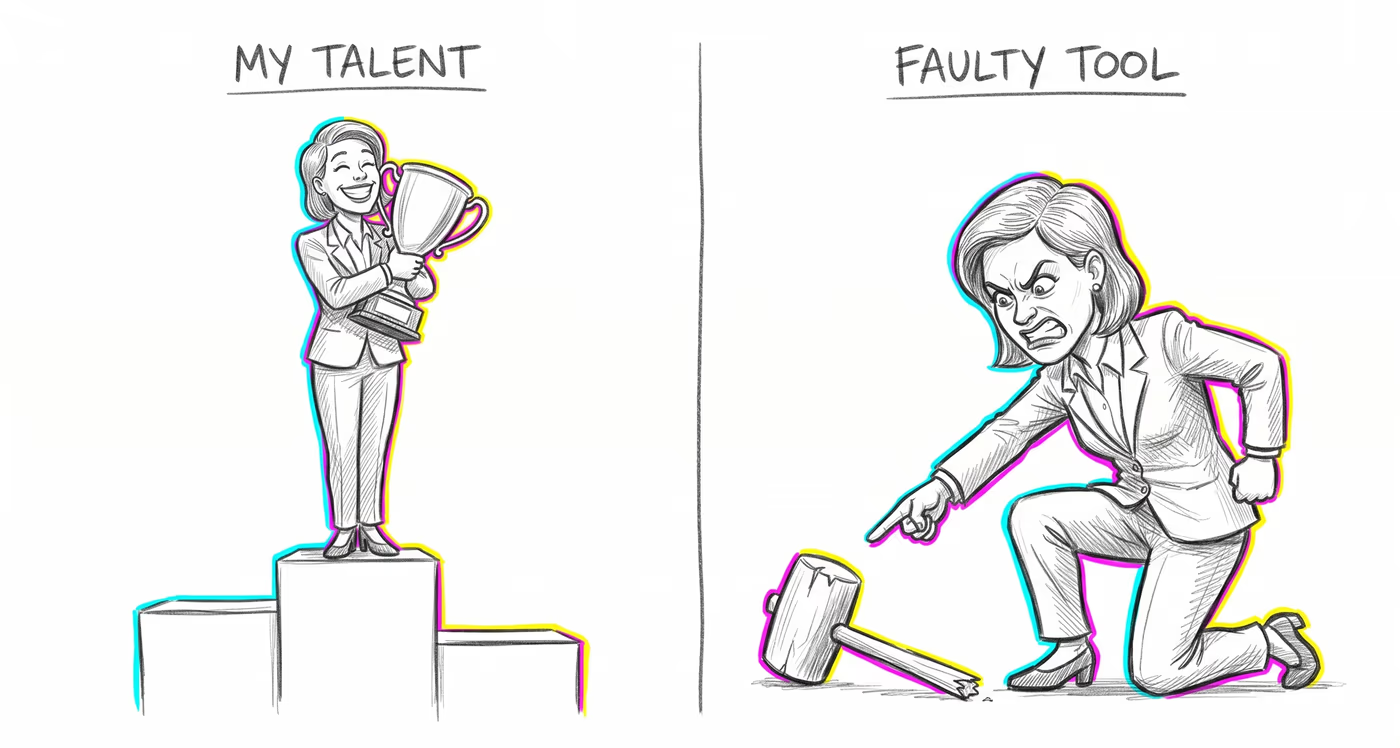
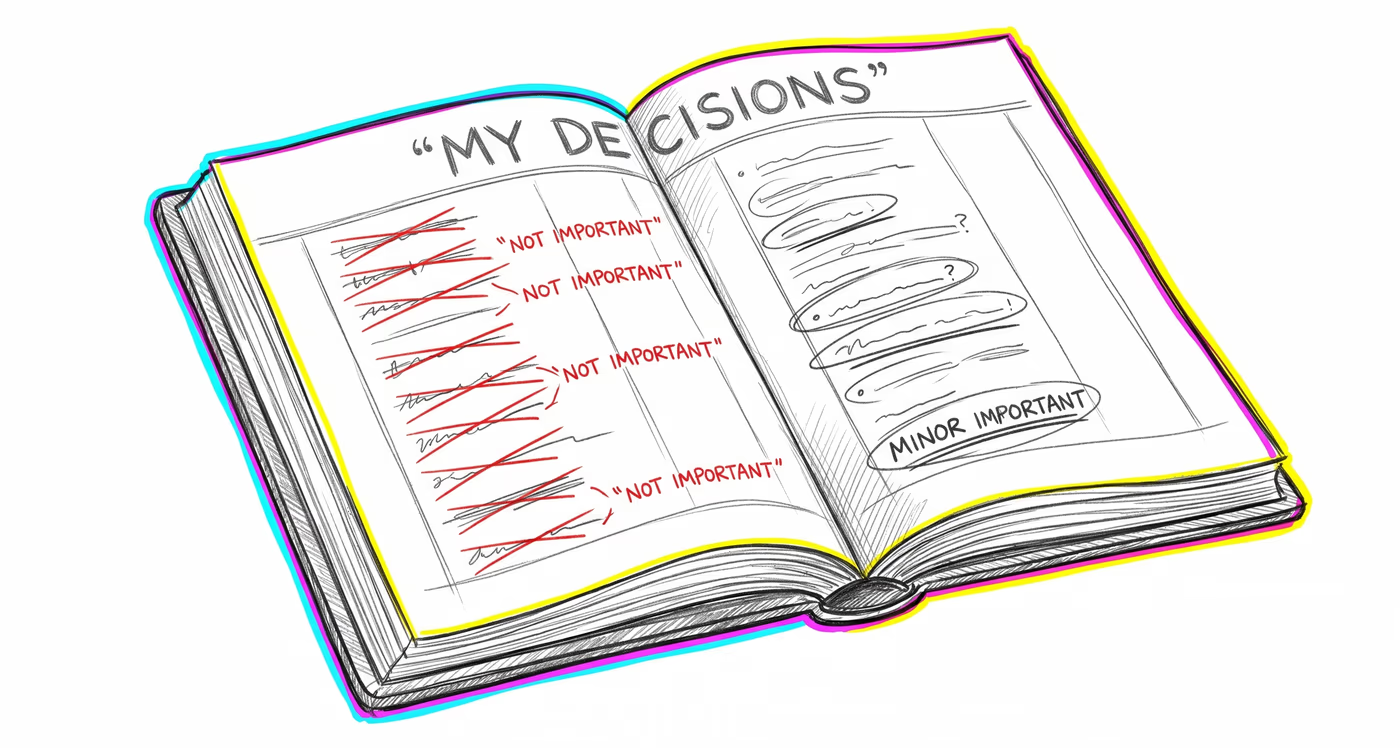
Illustration: Choice-Supportive Bias
WHAT IT IS

The glitch, explained plainly.

Imagine you picked the red lollipop instead of the blue one. Later, when you think back, you remember the red one tasting extra amazing and the blue one looking kind of gross—even though they were almost the same. Your brain is like a friend who always tells you 'Great choice!' and rewrites the story so you never feel bad about what you picked.

Choice-supportive bias is a memory-level distortion that occurs after a decision has been made, in which people systematically misremember the attributes of chosen and rejected options to favor the choice they made. Positive features tend to migrate in memory toward the chosen option—even features that originally belonged to the rejected alternative—while negative features drift toward the rejected option. This bias operates largely through faulty source monitoring at the time of retrieval rather than through biased encoding at the time of the decision itself. The effect is robust enough that even giving people false reminders about which option they chose produces memory distortion in favor of the believed-chosen option, demonstrating that it is the belief about one's choice, not the actual choice process, that drives the distortion.

SOUND FAMILIAR?

Where it shows up.

  1. 01 Maria spent weeks comparing two apartments before signing a lease on Apartment A. Six months later, when a friend asks about the other apartment, Maria confidently recalls that Apartment B had noisy neighbors and a tiny kitchen—details that weren't actually in its listing. She remembers Apartment A's cramped closets as 'cozy' and its lack of a dishwasher as 'no big deal.'
  2. 02 A hiring manager chose Candidate X over Candidate Y for a role. Three months into Candidate X's mediocre performance, the manager reviews her notes and is surprised to find that Candidate Y actually had stronger technical credentials. She distinctly 'remembered' Candidate Y as less qualified, and Candidate X as having impressed everyone in the interview.
  3. 03 A company's board voted to adopt Software Platform A over Platform B two years ago. During a strategy review, board members collectively recall Platform B as buggy and poorly supported, even though internal memos from the evaluation show it scored higher on reliability. No one questions this recollection because it aligns with their sense that they made the right call.
  4. 04 After choosing to invest in Fund A instead of Fund B, Derek tells his partner that Fund B 'had too many red flags.' When he actually checks his original comparison notes, the risk profiles were nearly identical—but his memory had quietly rewritten Fund B as the riskier option.
  5. 05 A surgeon who chose a particular surgical approach for a patient later presents the case at a conference, emphasizing the chosen method's advantages and citing complications associated with the alternative. A colleague who reviewed the original case notes points out that the surgeon's recollection of the alternative's complication rate is significantly inflated compared to the actual data.
IN DIFFERENT DOMAINS

Where it shows up at work.

The same glitch looks different depending on the terrain. Finance, medicine, a relationship, a team — same mechanism, different costume.

Finance & investing

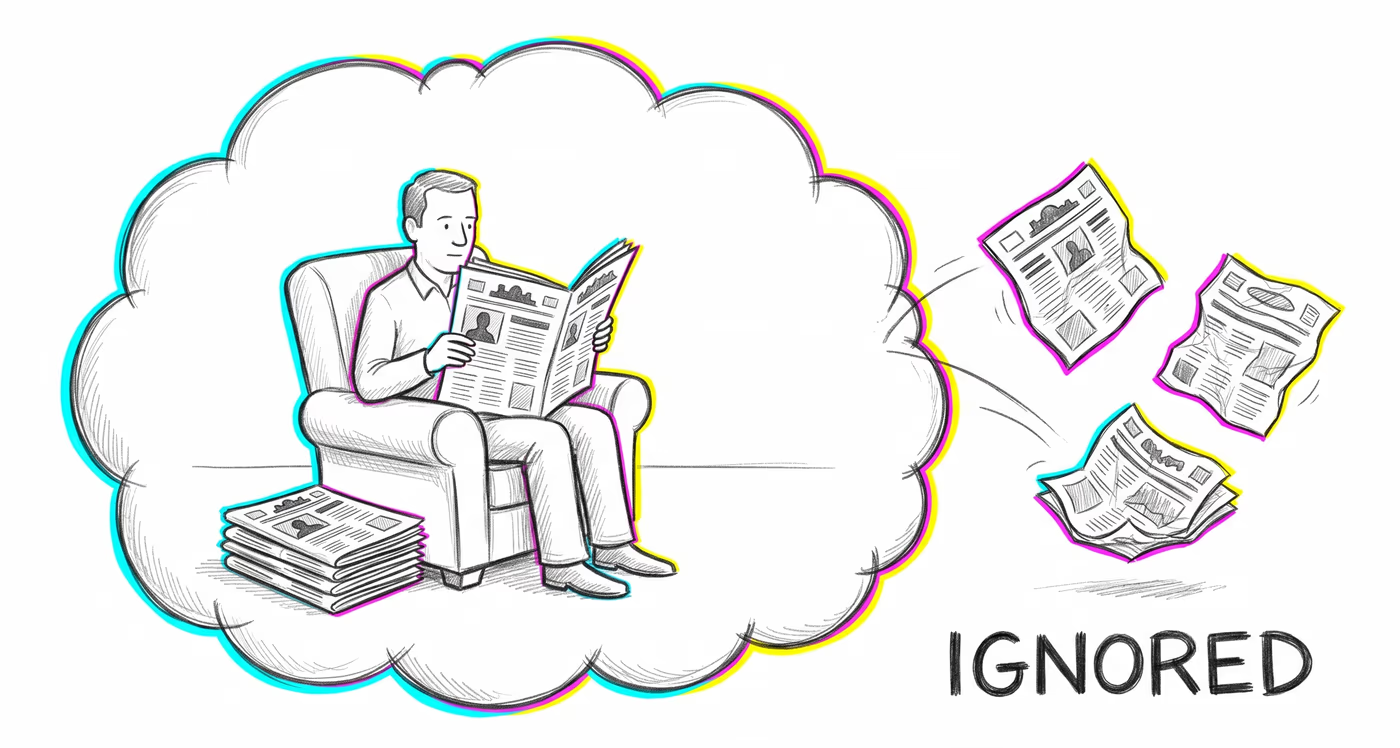
Investors tend to remember their purchased stocks as having been clearly superior picks at the time, while retroactively attributing more flaws to stocks they passed on. This distorted memory impairs the ability to conduct honest portfolio reviews and learn from losing trades.
Medicine & diagnosis

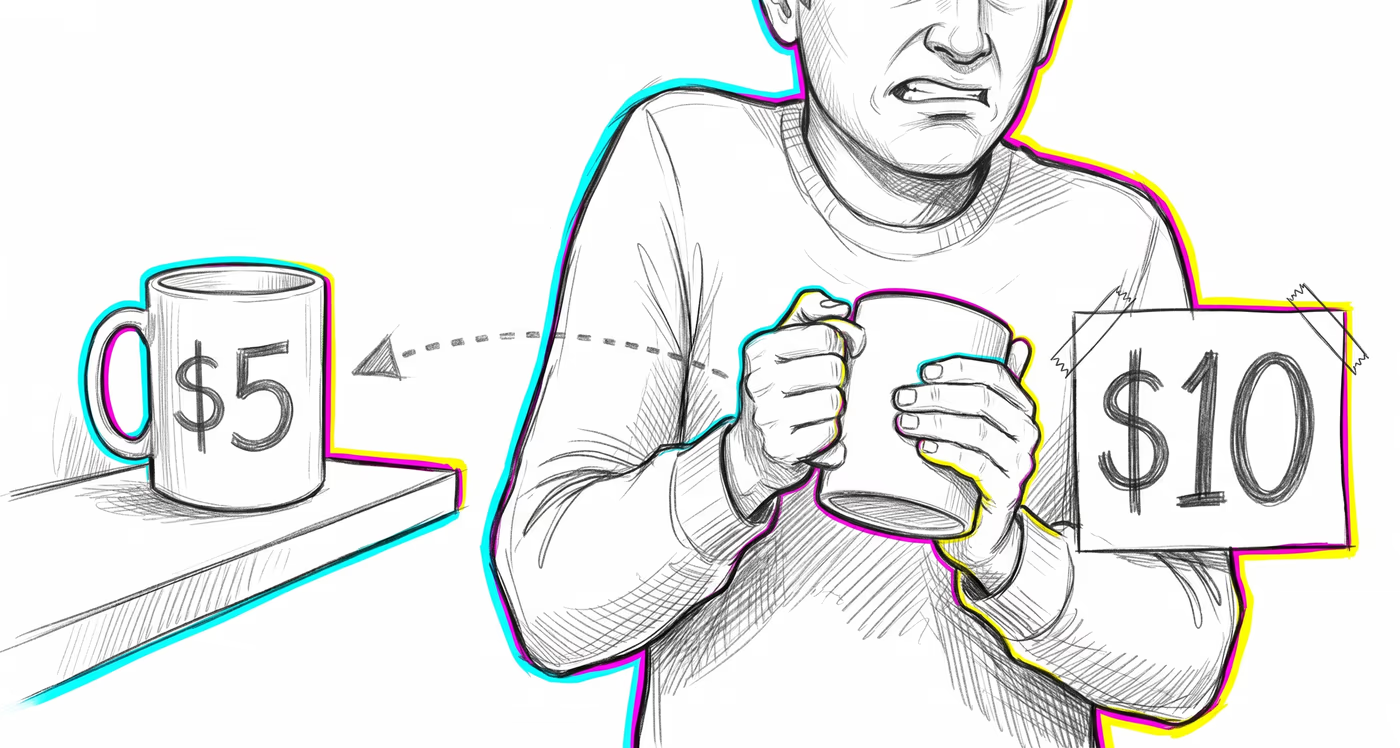
Physicians who chose a treatment protocol tend to recall more benefits of the selected approach and more risks of the alternatives when reflecting on outcomes, which can bias case reviews and impede evidence-based updating of clinical practice.

Education & grading

Students who chose a particular major or academic track tend to retroactively emphasize its strengths and downplay the appeal of paths not taken, which can prevent honest self-assessment about whether a change of direction might be warranted.

Relationships

People in committed relationships tend to remember their partner-selection process as more clear-cut than it was, recalling their partner's early qualities as more positive and those of other potential partners as less appealing, which can create unrealistic narratives about the relationship's inevitability.

Tech & product

Product teams that chose a particular tech stack or design direction tend to remember the rejected alternatives as more flawed than they were, making it harder to revisit architectural decisions even when mounting evidence suggests the chosen approach is suboptimal.

Workplace & hiring

Managers who championed a particular strategic initiative recall its rationale as more compelling than it originally was and downplay the merits of competing proposals, making organizational retrospectives unreliable and impeding process improvement.

Politics Media

After voting for a candidate, citizens tend to develop increasingly polarized positive memories of their chosen candidate's positions and increasingly negative recollections of the opponent's platform, reinforcing partisan identity and reducing openness to cross-party dialogue.

HOW TO SPOT IT

Ask yourself…

  • Am I remembering my chosen option more favorably now than when I was originally deciding?
  • Can I recall specific downsides of my chosen option without consulting my original notes?
  • Am I attributing flaws to the rejected alternative that I didn't notice or record at the time of my decision?
HOW TO DEFEND AGAINST IT

The playbook.

  • Write down the pros and cons of every option BEFORE making a decision, and store these notes for future reference during reviews.
  • When evaluating a past decision, consult original documentation rather than relying on memory.
  • Assign a 'devil's advocate' role in team retrospectives—someone specifically tasked with arguing the merits of the rejected options.
  • Practice the pre-mortem technique: before committing to a choice, imagine it failed and list reasons why, creating a record that resists later distortion.
  • Ask someone who was not involved in the original decision to independently evaluate the options and outcomes.
FAMOUS CASES

In history.

  • The post-invasion rationalization of the 2003 Iraq War decision, where proponents retroactively emphasized positives (Saddam Hussein's capture) as evidence the decision was correct, even though those outcomes were not part of the original decision calculus.
  • Corporate boards defending merger and acquisition decisions long after evidence of failure, with executives recalling the rejected alternatives as clearly inferior despite contradictory due-diligence records.
WHERE IT COMES FROM
Academic origin

Mara Mather, Eldar Shafir, and Marcia K. Johnson formalized choice-supportive memory distortion in 2000, building on earlier cognitive dissonance work by Jack Brehm (1956) on post-decision attitude changes.

Evolutionary origin

Constantly second-guessing past decisions would have been cognitively expensive and paralyzing for ancestral humans who needed to act decisively in survival contexts. A mechanism that retroactively reinforced confidence in past choices would reduce rumination, preserve mental energy for present threats, and maintain the social confidence needed to lead or persuade others in group settings.

IN AI SYSTEMS

How the machines inherit it.

LLM agents exhibit choice-supportive bias when acting as evaluators: after making an initial selection, they systematically attribute more positive features to the chosen option and more negative features to alternatives, even when no factual hallucination is present. A 2025 study across 19 LLM models found this bias increases when agents perceive they are in control of the decision, and it persists across diverse domains and prompt constructions.

Read more on Wikipedia
FREE FIELD ZINE

10 glitches quietly running your life.

A free field-zine PDF — ten cognitive glitches named, illustrated, with a defense move for each. Plus the weekly Glitch Report on Fridays — one bias named, two spotted in the wild, one defense move. Unsubscribe any time.

EXPLORE MORE

Related glitches.

LAUNCH PRICE

Train against your blindspots.

50 cards are free to preview. Buyers unlock the rest of the deck plus the interactive training — Spot-the-Bias Quiz unlimited, Swipe Deck with spaced repetition, My Blindspots, Decision Pre-Flight, the Printable Deck + Cheat Sheets, and the Field Guide e-book. $29.50$59.

Unlock the full deck

Everything below — yours forever. Pay once, use across every device.

Half-off launch — limited to the first 100 readers. Auto-applied at checkout.
$59 $29.50
one-time payment · lifetime access
  • All interactive digital cards — search, filter, flip, shuffle on any device
  • Five training modes — Spot-the-Bias Quiz, Swipe Deck, Pre-Flight, Blindspots, Journal
  • Curated Lenses + Decision Templates + Defense Playbook
  • Printable Deck PDFs + Field Guide e-book + Cheat Sheets + Anki Export
  • Every future improvement, included
Unlock  $29.50

30-day refund · no questions asked

Unlock the full deck

Everything below — yours forever. Pay once, use across every device.

Half-off launch — limited to the first 100 readers. Auto-applied at checkout.
$59 $29.50
one-time payment · lifetime access
  • All interactive digital cards — search, filter, flip, shuffle on any device
  • Five training modes — Spot-the-Bias Quiz, Swipe Deck, Pre-Flight, Blindspots, Journal
  • Curated Lenses + Decision Templates + Defense Playbook
  • Printable Deck PDFs + Field Guide e-book + Cheat Sheets + Anki Export
  • Every future improvement, included
Unlock  $29.50

30-day refund · no questions asked