Effort Heuristic

aka Labor Heuristic · Effort-Quality Heuristic

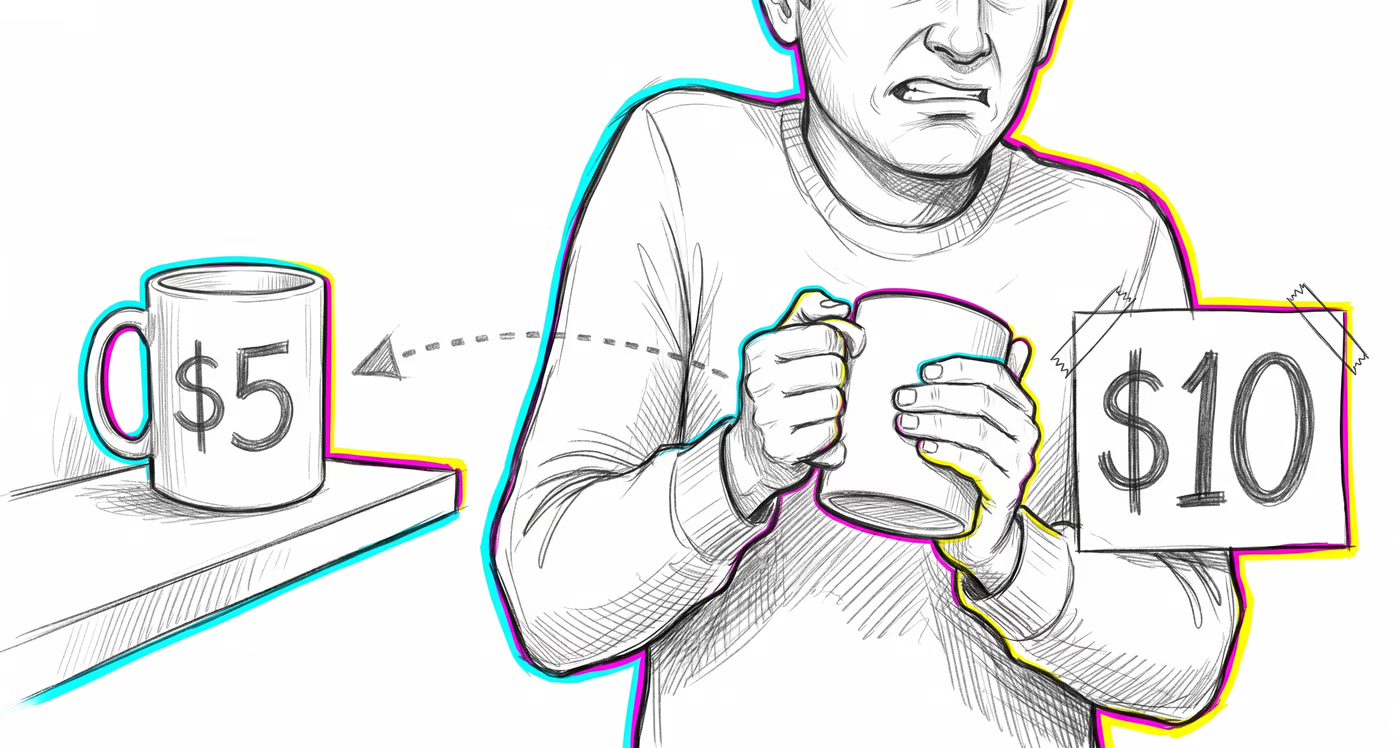
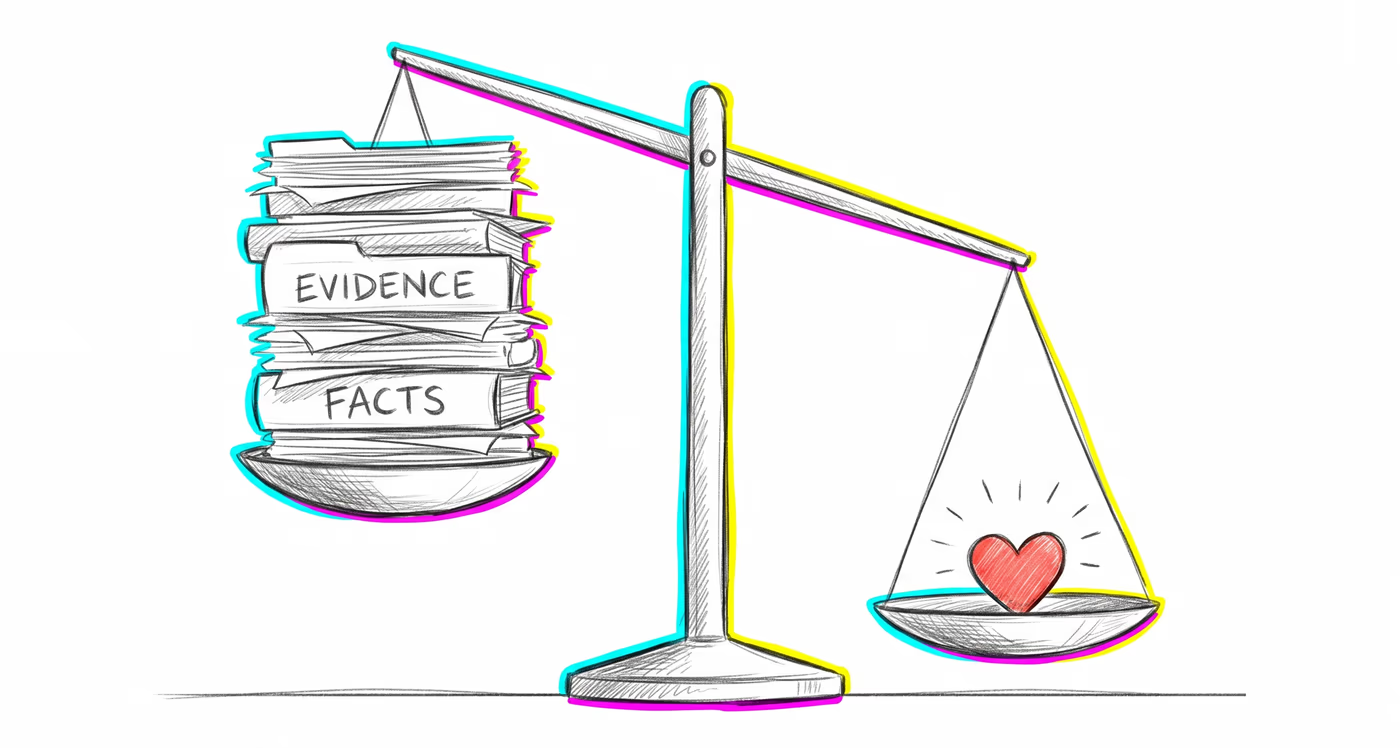
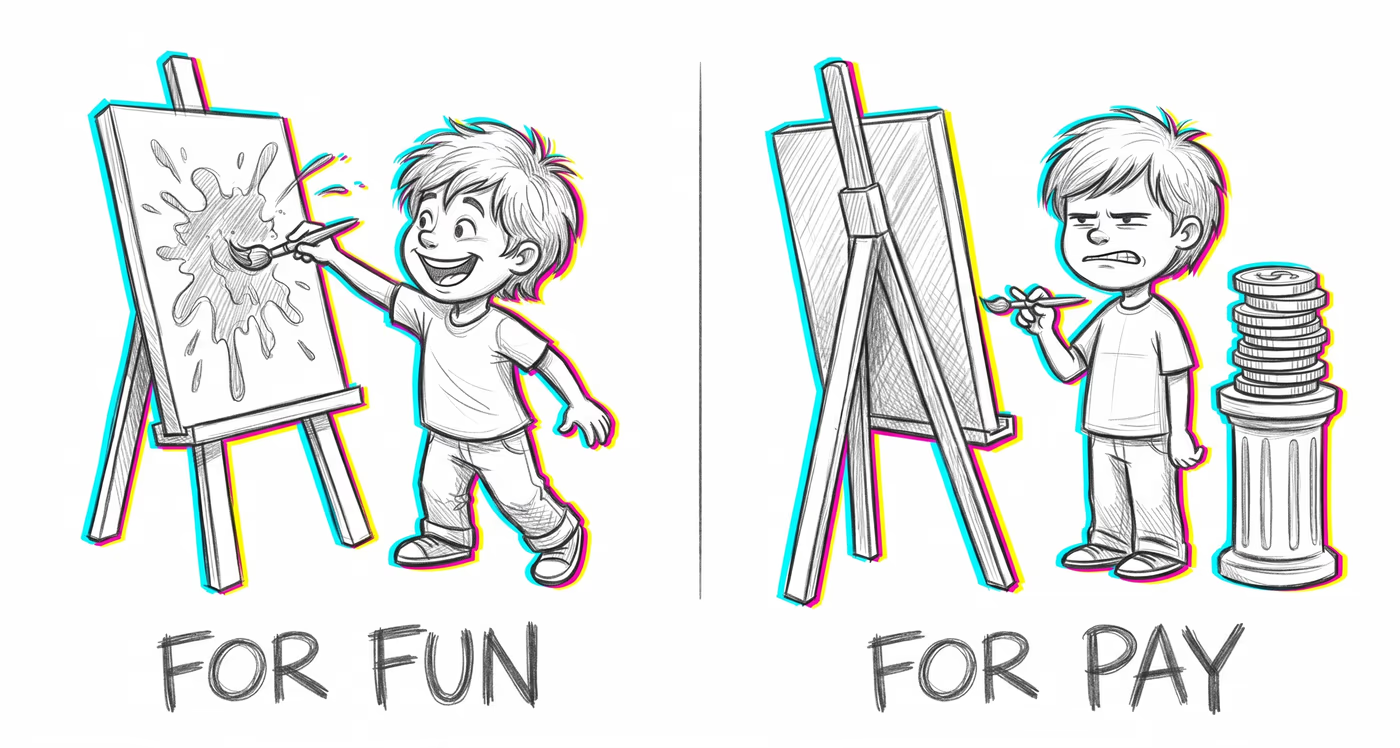
Judging something as higher quality or more valuable because more effort went into making it.

WHAT IT IS

The glitch, explained plainly.

Imagine your mom makes you two sandwiches that taste exactly the same. But she tells you one took her 30 minutes to make and the other took 2 minutes. You'd probably say the 30-minute one tastes better, even though they're identical. Your brain thinks 'more work = better thing,' like a shortcut for deciding what's good.

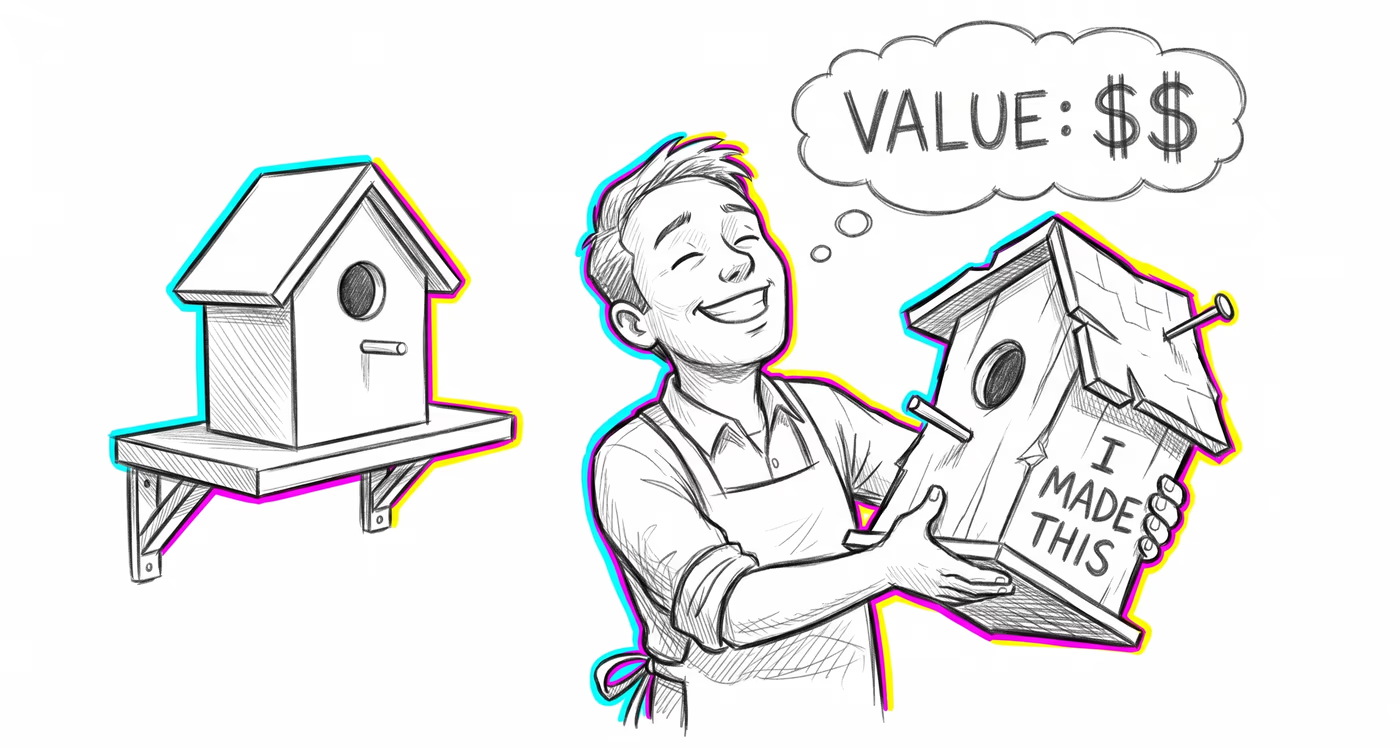
The effort heuristic describes how people systematically use the perceived effort, time, or labor invested in creating something as a proxy for its quality, even when that effort has no bearing on the objective output. This mental shortcut is especially pronounced in situations of ambiguity, where the evaluator lacks expertise or where objective quality criteria are difficult to assess. Unlike the closely related IKEA Effect, which concerns overvaluation of one's own labor, the effort heuristic applies broadly to evaluations of others' work as well. The heuristic operates bidirectionally: people not only judge high-effort products as superior, but also infer that high-quality outcomes must have required more effort to produce.

SOUND FAMILIAR?

Where it shows up.

  1. 01 A graphic designer presents two logo concepts to a client. The client learns that Logo A was sketched in 20 minutes of spontaneous inspiration, while Logo B went through 40 hours of iteration. Despite both logos testing equally well in focus groups, the client chooses Logo B and agrees to pay a premium for it, citing its 'depth and refinement.'
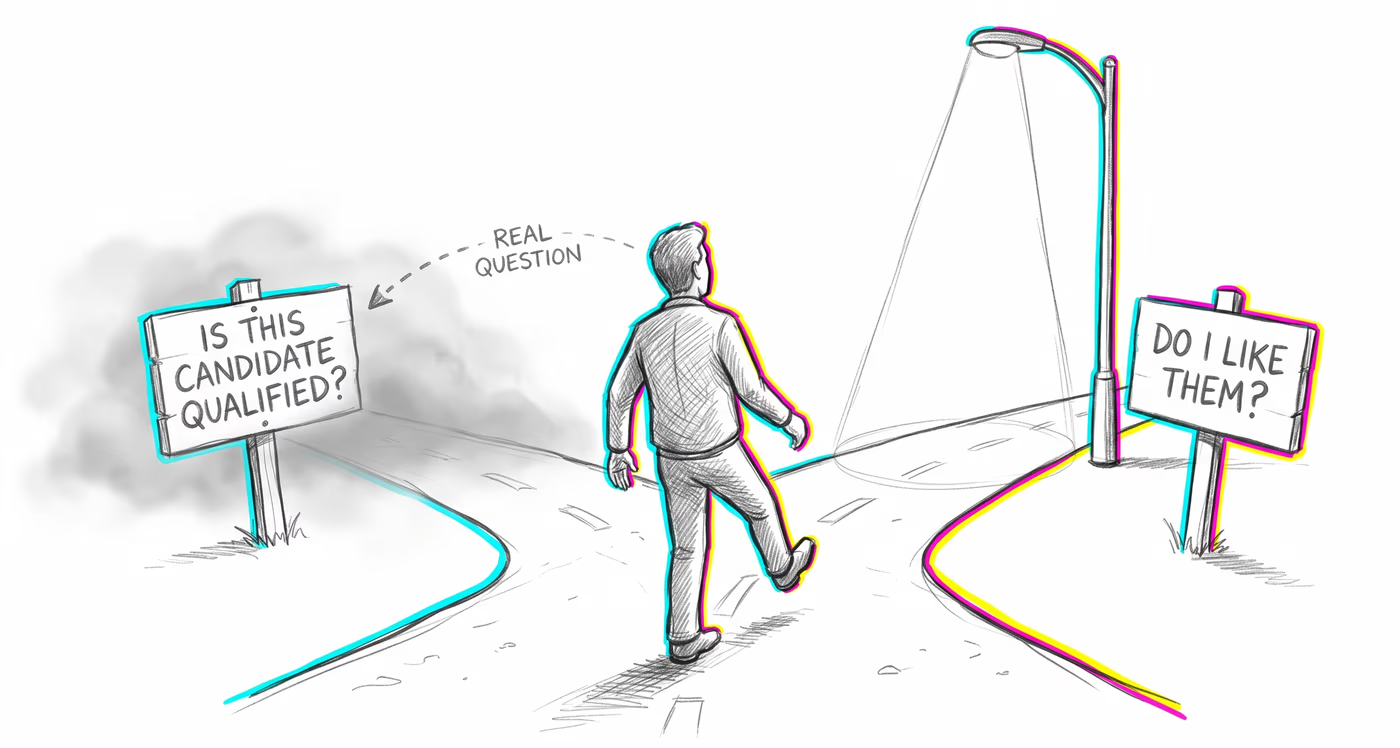
  2. 02 A hiring manager reviews two candidates who submitted identical coding test solutions. Upon learning that Candidate A solved the problem in 15 minutes while Candidate B worked on it for 3 hours, the manager rates Candidate B's solution as 'more thorough' and recommends them for the next round.
  3. 03 A wine enthusiast is told that Vineyard A's winemaker hand-picks and manually sorts every grape over six weeks, while Vineyard B uses an efficient optical sorting machine that achieves identical selectivity in hours. In a blind tasting, the enthusiast rated both wines equally, but after learning about the production methods, revised Vineyard A's rating significantly upward.
  4. 04 A museum curator is deciding between two restoration proposals for a damaged fresco. Both proposals promise identical visual outcomes, but Proposal A uses an AI-assisted technique completing the work in two weeks, while Proposal B involves a master restorer working by hand for eight months. The curator selects Proposal B, explaining that the artwork 'deserves that level of dedication.'
  5. 05 A consulting firm delivers a strategic report to a client in three days using a new analytical framework that dramatically accelerated their process. The client expresses disappointment, questioning whether the analysis was sufficiently rigorous. The firm learns to delay delivery by two weeks and add detailed appendices describing their process, after which identical reports receive glowing reviews.
IN DIFFERENT DOMAINS

Where it shows up at work.

The same glitch looks different depending on the terrain. Finance, medicine, a relationship, a team — same mechanism, different costume.

Finance & investing

Investors tend to assign higher value to actively managed funds with visible analyst labor over passive index funds, even when the passive funds deliver equal or superior returns after fees. Financial advisors who visibly demonstrate lengthy research processes are trusted more than those who reach the same conclusions quickly.
Medicine & diagnosis

Patients perceive diagnoses as more credible when doctors describe running extensive tests over days, compared to a rapid clinical assessment that reaches the same conclusion. Elaborate treatment protocols may be preferred over simpler, equally effective interventions because the perceived effort signals thoroughness.

Education & grading

Teachers may grade a lengthy, labor-intensive student project more favorably than a concise, equally insightful one. Students who visibly struggle through material are often perceived as more dedicated learners than those who grasp concepts quickly, even when learning outcomes are equivalent.

Relationships

Partners who invest visible effort into planning an elaborate date are perceived as more caring than those who arrange an equally enjoyable but simpler outing. Grand romantic gestures are valued over small, efficient acts of love that deliver the same emotional outcome.

Tech & product

Users trust search results or AI recommendations more when shown a progress bar or loading animation suggesting computational work, even if the delay is artificial. Software features developed through long sprints may be perceived as more robust than equivalent features built with efficient code generation tools.

Workplace & hiring

Employees who work long, visible hours are often rated higher in performance reviews than equally productive colleagues who complete work efficiently in fewer hours. Proposals requiring extensive committee review and revision cycles are perceived as more rigorous than streamlined alternatives.

Politics Media

Investigative journalism pieces that emphasize months of research are perceived as more credible than equally well-sourced reports produced quickly. Political campaigns that emphasize the candidate's tireless work ethic and grueling schedules generate more voter trust than those focused purely on policy outcomes.

HOW TO SPOT IT

Ask yourself…

  • Am I judging this output based on how long it took to make rather than its actual quality?
  • Would I rate this work differently if I didn't know anything about the production process behind it?
  • Am I discounting an efficient solution simply because it came together quickly or easily?
HOW TO DEFEND AGAINST IT

The playbook.

  • Blind evaluation: Assess outputs without knowing anything about the production process, timeline, or effort involved.
  • Outcome anchoring: Before learning about effort, write down your independent quality assessment and commit to it before hearing the backstory.
  • Ask the diagnostic question: 'If this exact same result had taken twice as long (or half as long), would that actually change its quality?'
  • Seek objective metrics: Identify measurable quality criteria independent of process, such as test results, user satisfaction scores, or functional performance.
  • Normalize efficiency: Actively reframe speed as a sign of expertise and mastery rather than laziness or corner-cutting.
FAMOUS CASES

In history.

  • The often-cited but historically disputed Betty Crocker cake mix story: General Mills reportedly found that adding the step of cracking a fresh egg into the mix (increasing effort) boosted consumer satisfaction and sales. While widely used to illustrate the effort heuristic, food historians note the reformulation was primarily driven by product quality improvements rather than consumer psychology.
  • The perceived superiority of hand-crafted luxury goods over machine-made equivalents in fashion and watchmaking, where brands like Patek Philippe command extreme premiums by emphasizing hundreds of hours of manual craftsmanship.
WHERE IT COMES FROM
Academic origin

Justin Kruger, Derrick Wirtz, Leaf Van Boven, and T. William Altermatt formalized the effort heuristic in 2004 in the Journal of Experimental Social Psychology. Related foundational work on effort justification traces back to Aronson and Mills (1959).

Evolutionary origin

In ancestral environments, effort was a broadly reliable proxy for value. A carefully crafted tool or weapon that took days to make was generally more effective than a hastily assembled one. Evaluating the true quality of complex objects required expertise and testing, so inferring quality from visible labor investment served as an efficient and usually accurate shortcut for survival-relevant judgments about tools, shelters, and food preparation.

IN AI SYSTEMS

How the machines inherit it.

AI-generated content faces systematic undervaluation compared to human-created work of identical quality, because users perceive minimal effort behind AI outputs. Conversely, AI systems that display artificial thinking indicators or processing delays are rated as more trustworthy. Research shows the effort heuristic only applies to human agents—people prefer faster algorithmic results but slower human advice, creating an asymmetric evaluation problem for hybrid AI-human workflows.

Read more on Wikipedia
FREE FIELD ZINE

10 glitches quietly running your life.

A free field-zine PDF — ten cognitive glitches named, illustrated, with a defense move for each. Plus the weekly Glitch Report on Fridays — one bias named, two spotted in the wild, one defense move. Unsubscribe any time.

EXPLORE MORE

Related glitches.

LAUNCH PRICE

Train against your blindspots.

50 cards are free to preview. Buyers unlock the rest of the deck plus the interactive training — Spot-the-Bias Quiz unlimited, Swipe Deck with spaced repetition, My Blindspots, Decision Pre-Flight, the Printable Deck + Cheat Sheets, and the Field Guide e-book. $29.50$59.

Unlock the full deck

Everything below — yours forever. Pay once, use across every device.

Half-off launch — limited to the first 100 readers. Auto-applied at checkout.
$59 $29.50
one-time payment · lifetime access
  • All interactive digital cards — search, filter, flip, shuffle on any device
  • Five training modes — Spot-the-Bias Quiz, Swipe Deck, Pre-Flight, Blindspots, Journal
  • Curated Lenses + Decision Templates + Defense Playbook
  • Printable Deck PDFs + Field Guide e-book + Cheat Sheets + Anki Export
  • Every future improvement, included
Unlock  $29.50

30-day refund · no questions asked

Unlock the full deck

Everything below — yours forever. Pay once, use across every device.

Half-off launch — limited to the first 100 readers. Auto-applied at checkout.
$59 $29.50
one-time payment · lifetime access
  • All interactive digital cards — search, filter, flip, shuffle on any device
  • Five training modes — Spot-the-Bias Quiz, Swipe Deck, Pre-Flight, Blindspots, Journal
  • Curated Lenses + Decision Templates + Defense Playbook
  • Printable Deck PDFs + Field Guide e-book + Cheat Sheets + Anki Export
  • Every future improvement, included
Unlock  $29.50

30-day refund · no questions asked