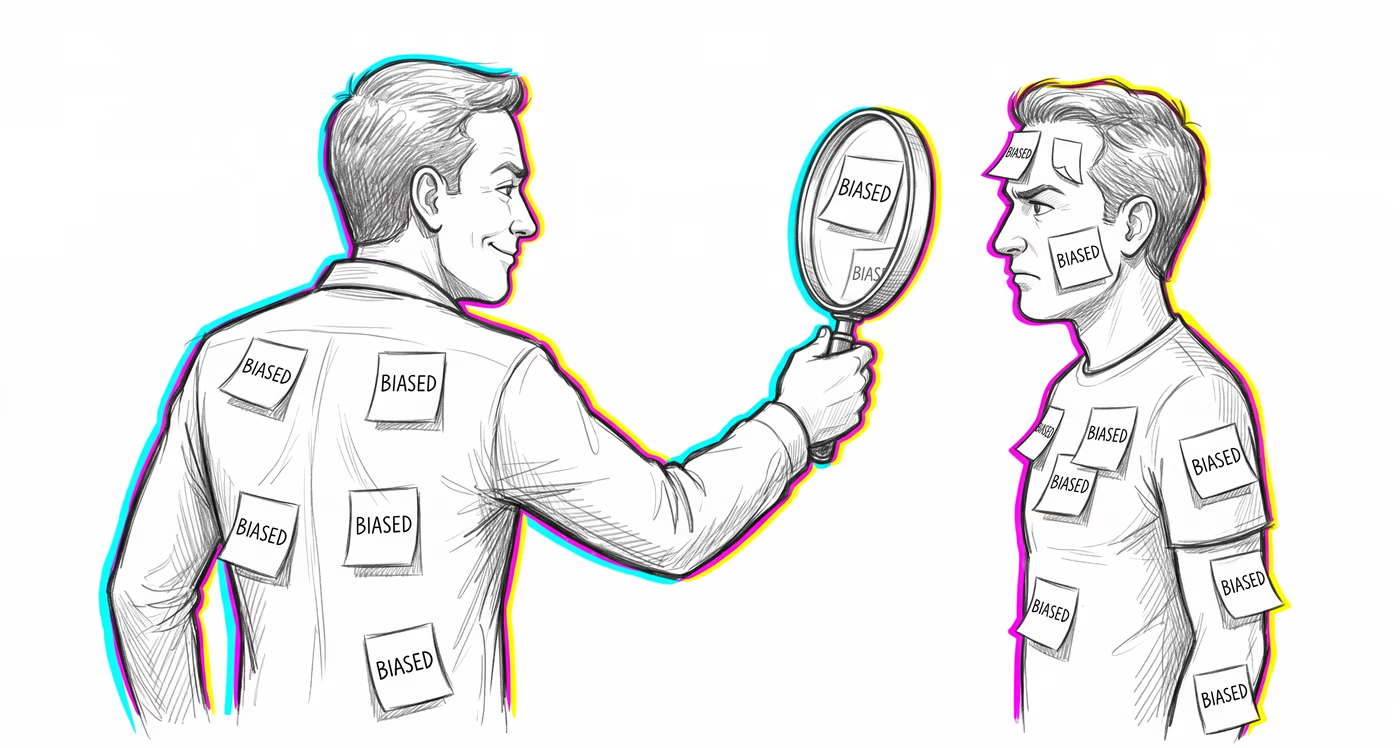
The same glitch looks different depending on the terrain. Finance, medicine, a
relationship, a team — same mechanism, different costume.
Finance & investing
Investors who have studied behavioral finance and can name biases like loss aversion and disposition effect still hold losing positions too long and sell winners too early. Financial literacy programs that teach about biases without building structural guardrails (like automatic rebalancing rules) tend to show minimal impact on actual trading behavior.
Medicine & diagnosis
Clinicians who complete training on diagnostic anchoring and premature closure continue to exhibit these biases at rates similar to untrained clinicians, particularly under time pressure in emergency settings. Awareness-based debiasing interventions in medicine frequently fail without accompanying structural changes like diagnostic checklists or mandatory second opinions.
Education & grading
Teachers who learn about stereotype threat and expectancy effects in professional development workshops often believe their awareness immunizes them, yet continue to show differential grading patterns and call-on rates. Students who study procrastination and the planning fallacy in psychology courses procrastinate on their assignments about procrastination at the same rate as other coursework.
Relationships
People who read extensively about attachment theory and can identify their own insecure attachment patterns still find themselves repeating dysfunctional relationship dynamics. Knowledge of communication pitfalls like contempt and stonewalling does not automatically translate into healthier conflict behavior under emotional stress.
Tech & product
UX designers who are well-versed in dark patterns and persuasive design still find themselves susceptible to the same engagement hooks in apps they use personally. Teams that receive bias training on sunk cost reasoning still resist killing failing features they invested heavily in, despite recognizing the pattern intellectually.
Workplace & hiring
Organizations invest heavily in bias awareness training for hiring panels, but meta-analyses show minimal lasting effect on hiring diversity when training is not paired with structural interventions like blind resume review or standardized scoring rubrics. Managers who can articulate the halo effect still allow a single strong trait to color entire performance reviews.
Politics Media
Citizens who score high on media literacy and can identify propaganda techniques still shift their attitudes in the direction of persuasive messaging they encounter. Knowing about filter bubbles does not lead people to seek out opposing viewpoints — awareness of the echo chamber does not break the echo chamber.