Illusion of Asymmetric Insight

aka Asymmetric Insight Bias

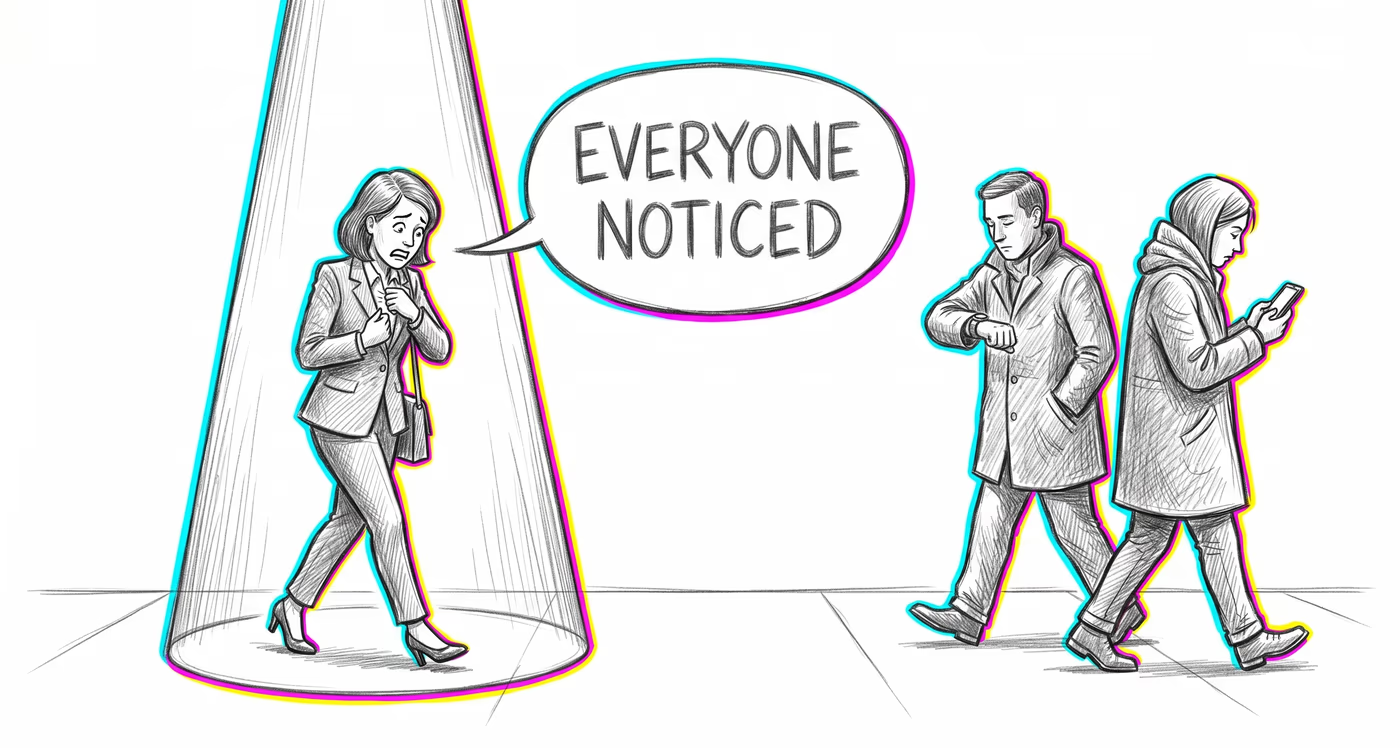
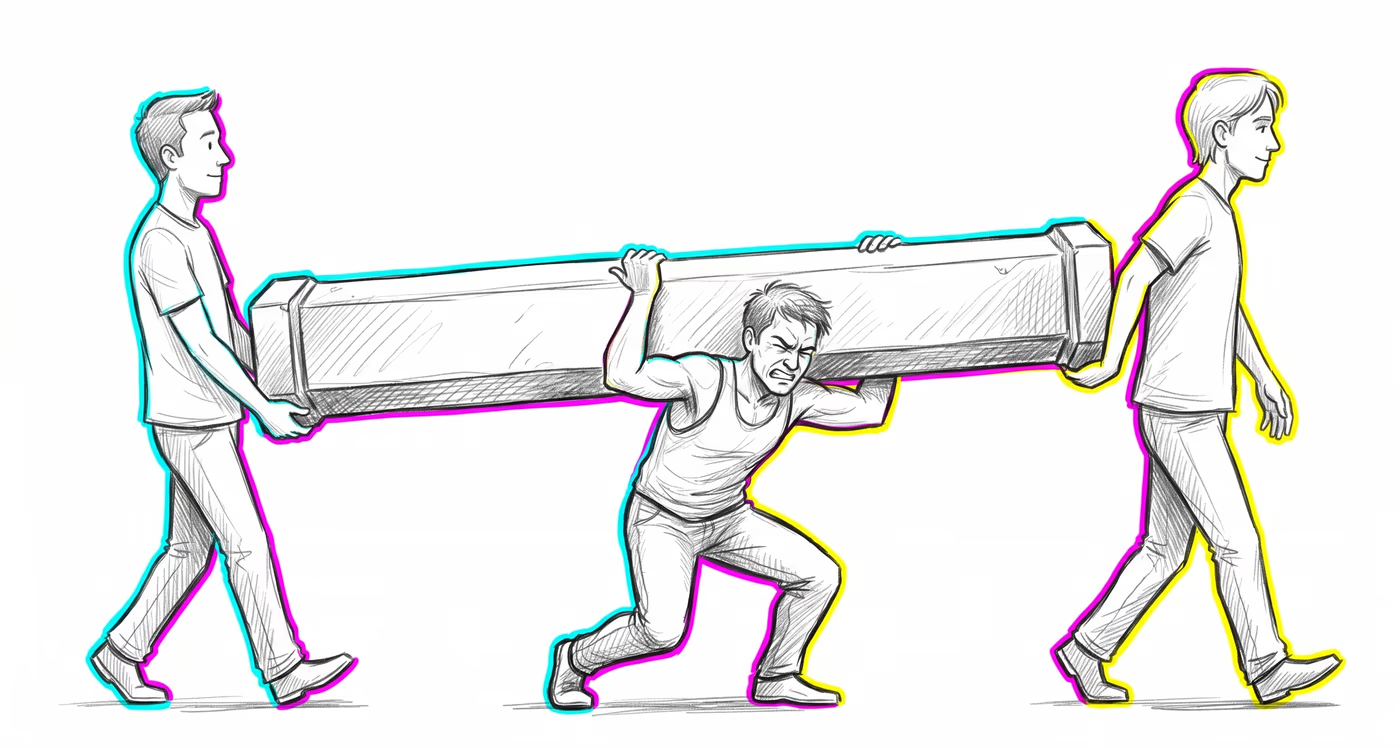
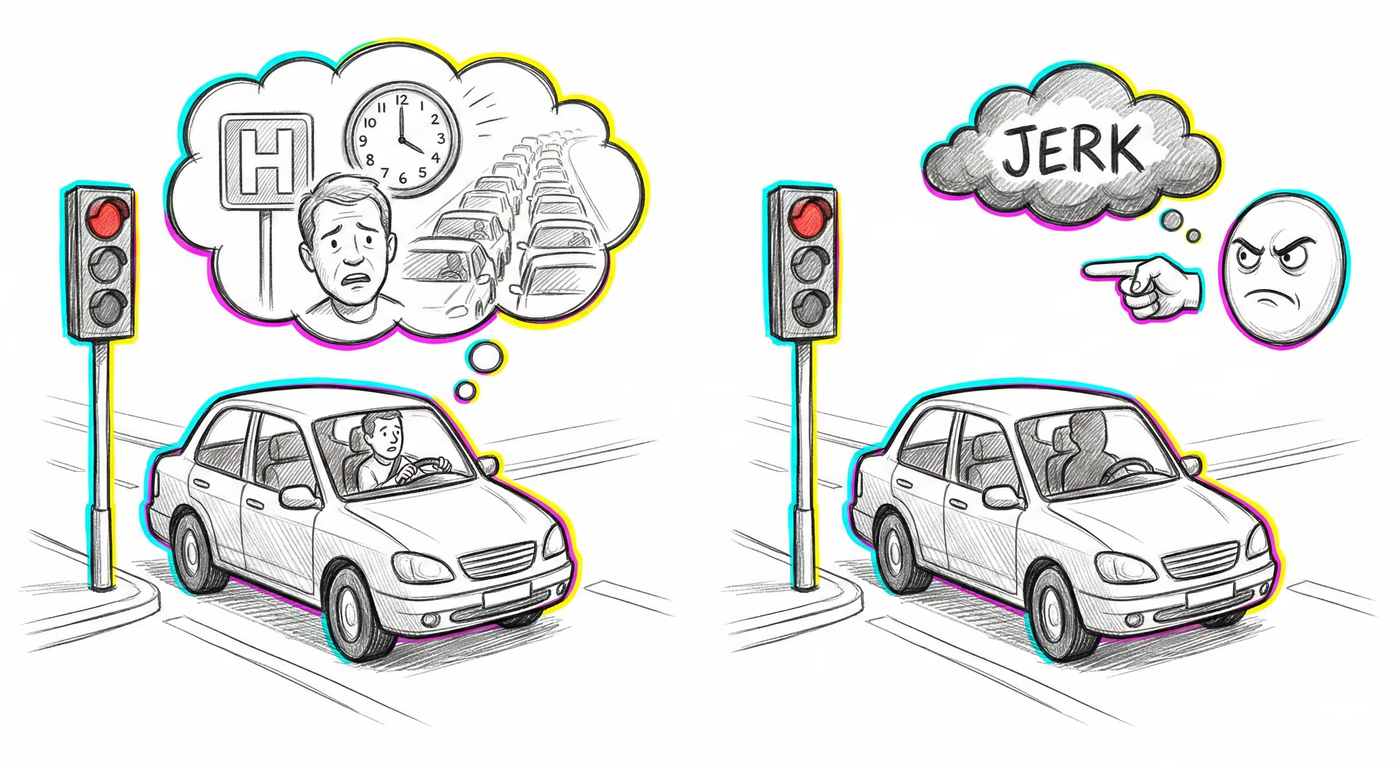
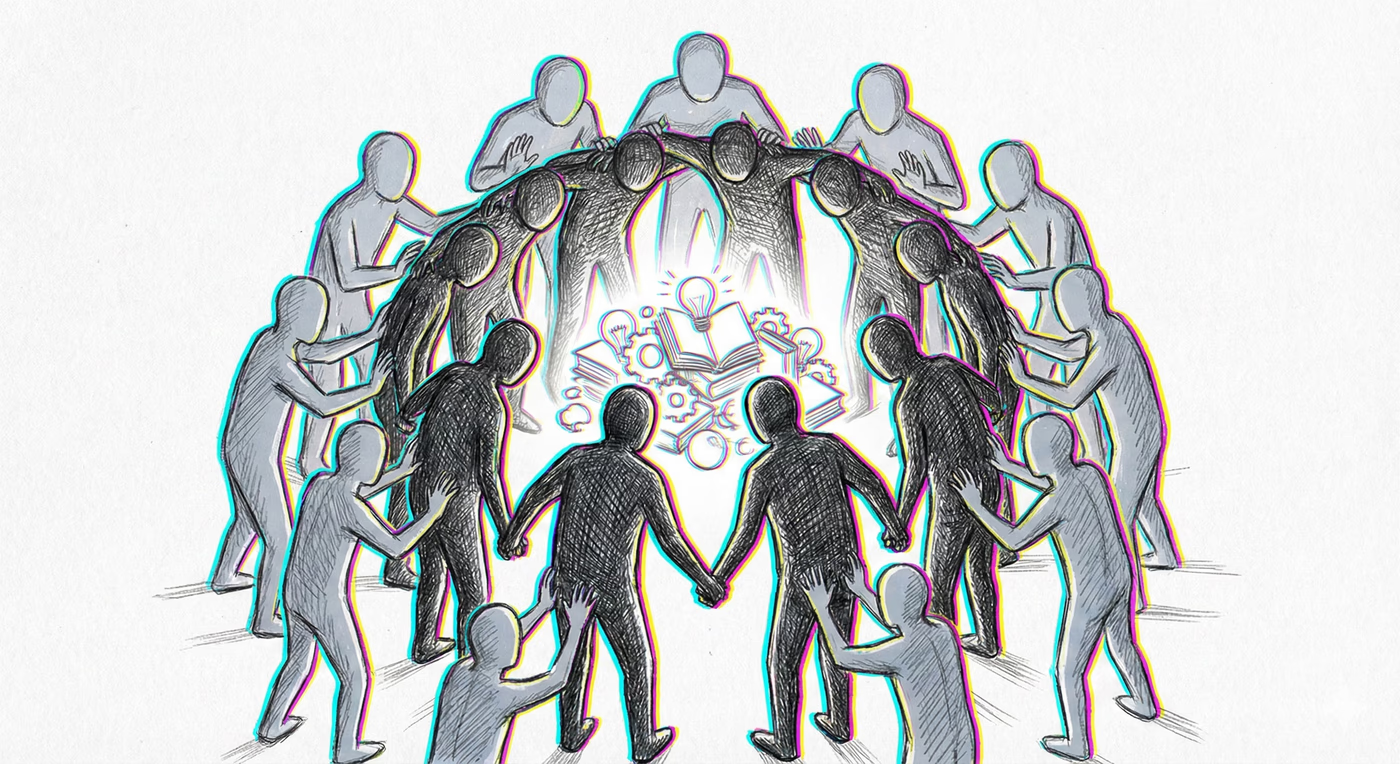
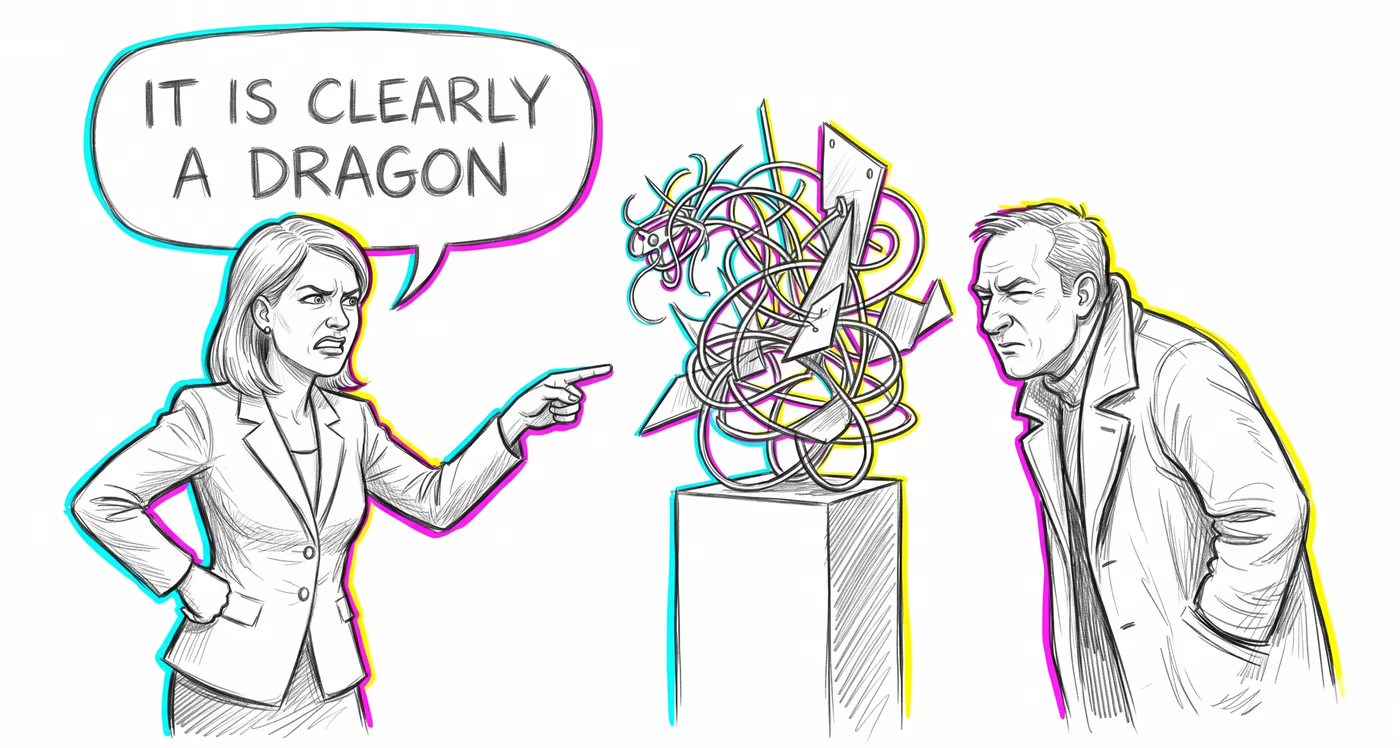
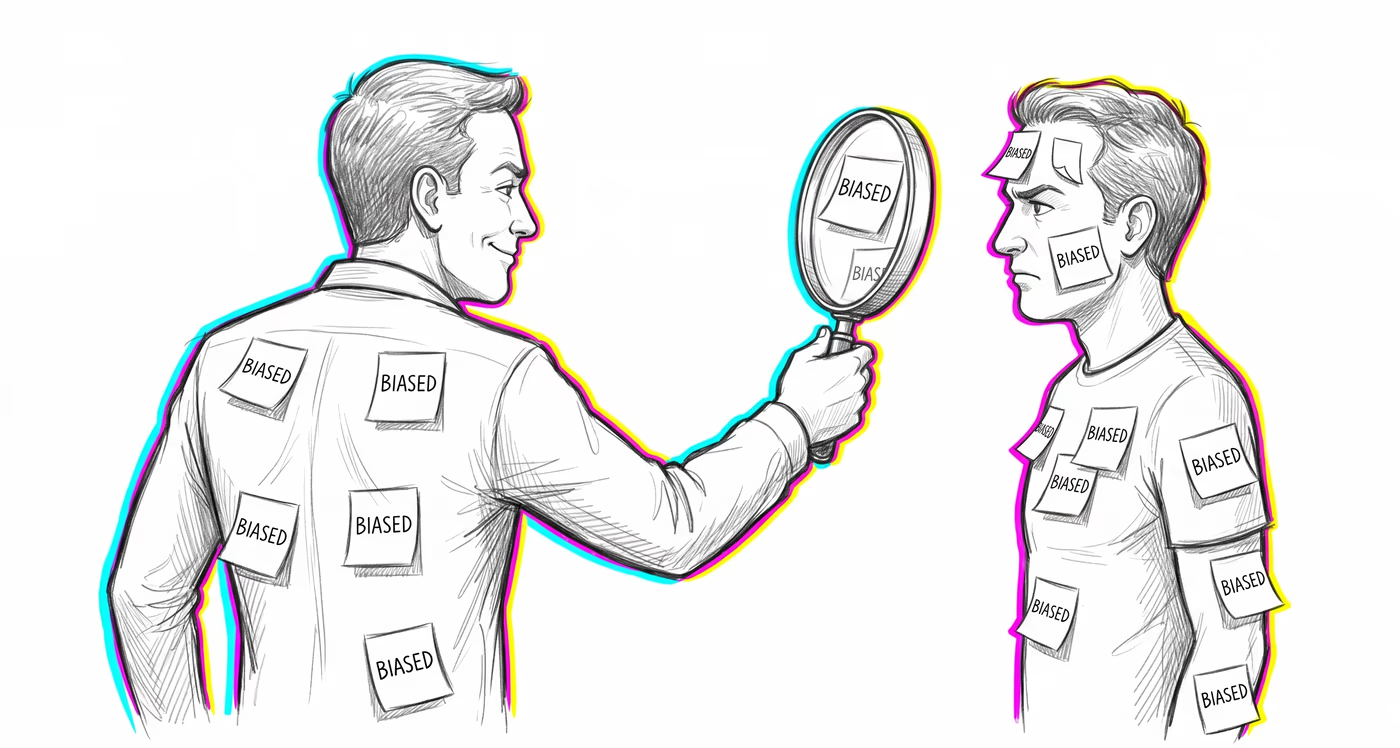
Believing you understand others better than they understand you, and that you know yourself better than others know you.

WHAT IT IS

The glitch, explained plainly.

Imagine you and your friend are both wearing Halloween masks. You feel like you can totally see through your friend's mask and know exactly what face they're making underneath, but you think your mask is way harder to see through—so your friend has no idea what you really look like. The funny thing is, your friend feels the exact same way about you.

The illusion of asymmetric insight describes a pervasive pattern in which individuals believe their understanding of others' thoughts, feelings, and motivations is deeper and more accurate than others' understanding of them. This bias operates at both individual and group levels: people assume they can see through their friends, partners, and colleagues while remaining opaque and complex themselves. At the intergroup level, members of political parties, organizations, and social groups consistently report that their group understands the opposing group better than the opposing group understands them. The asymmetry is driven by the conviction that one's own internal world is uniquely rich and hidden, while others' behaviors are transparent windows into simpler inner lives.

SOUND FAMILIAR?

Where it shows up.

  1. 01 After a team meeting, Maria tells a colleague, 'I can tell Jake is only pushing for that proposal because he wants to impress the VP—it's so obvious.' When her colleague suggests that Maria's own enthusiasm for a competing proposal might also be self-serving, she responds, 'No, my reasons are much more complicated than that. You'd have to know everything I've been working on behind the scenes to understand.'
  2. 02 During a political discussion, Carlos insists that he fully understands why people on the other side of the aisle hold their views—it's really just fear and misinformation. When someone from that group offers an equally confident analysis of his side's motivations, he dismisses it as superficial and says, 'They don't have the full picture of what drives us.'
  3. 03 A therapist notices that her client, David, frequently claims to know exactly what his wife is thinking and feeling during arguments, but when his wife offers her interpretation of David's behavior, he consistently replies, 'She only sees the surface. She doesn't understand what's really going on with me.' The therapist recognizes that David applies different standards of knowability to himself versus his wife.
  4. 04 Two rival departments in a company each submit reports analyzing the other department's strategic weaknesses. Both reports are equally detailed and evidence-based. Yet when employees in each department read the other's analysis of them, they rate it as shallow and inaccurate, while considering their own analysis of the rival department to be highly perceptive and fair.
  5. 05 A graduate student completes a word-association exercise alongside a peer. When reviewing her peer's responses, she feels she can detect meaningful personality traits in the answers. But when she considers her own responses to the same exercise, she dismisses them as random and uninformative—she knows her real self isn't captured by such a superficial task.
IN DIFFERENT DOMAINS

Where it shows up at work.

The same glitch looks different depending on the terrain. Finance, medicine, a relationship, a team — same mechanism, different costume.

Finance & investing

Investment managers may believe they understand the psychology driving retail investors' poor decisions while remaining blind to how their own emotional biases—such as overconfidence or anchoring—are equally transparent to outside analysts reviewing their track record.
Medicine & diagnosis

Physicians may assume they understand a patient's noncompliance better than the patient understands the physician's reasoning, leading to paternalistic communication where the doctor feels they have full insight into the patient's motivations while the patient's legitimate concerns about treatment are dismissed as unsophisticated.

Education & grading

Teachers may believe they have deep insight into a student's lack of motivation or learning difficulties, while assuming the student cannot perceive the teacher's own frustrations, biases, or inconsistencies in grading and instruction.

Relationships

Partners in romantic relationships frequently believe they can read their significant other like a book while feeling chronically misunderstood themselves, creating a dynamic where both people feel unappreciated and neither feels compelled to ask clarifying questions.

Tech & product

Product teams may assume they deeply understand user behavior and pain points from analytics data, while believing users cannot discern the team's design trade-offs or commercial motivations—leading to condescending UX copy or features that talk down to users.

Workplace & hiring

Managers may believe they have clear insight into employees' true performance and motivations from observed behavior, while assuming employees cannot see through management's strategic decisions or political maneuvering, creating trust gaps that erode team cohesion.

Politics Media

Political commentators and partisan media frequently claim to explain 'what the other side really thinks,' presenting opposing groups as simplistic and predictable, while treating their own constituency's views as nuanced and resistant to easy characterization by outsiders.

HOW TO SPOT IT

Ask yourself…

  • Am I assuming I understand this person's real motivations while feeling they couldn't possibly understand mine?
  • Am I treating their behavior as a transparent window into their character while treating my own similar behavior as context-dependent and complex?
  • When someone offers their reading of me, am I dismissing it as shallow without genuinely considering whether they might be right?
HOW TO DEFEND AGAINST IT

The playbook.

  • Practice epistemic humility by regularly asking: 'What might this person know about me that I haven't considered?'
  • When you feel certain you understand someone's motives, generate at least two alternative explanations for their behavior before settling on one.
  • Actively solicit feedback about how others perceive you, and treat their impressions as data rather than dismissing them as surface-level.
  • In group conflicts, apply the same analytical depth to understanding your own group's biases as you do to analyzing the out-group.
  • Use structured perspective-taking exercises: literally write out the other person's likely view of the situation, including their view of you.
FAMOUS CASES

In history.

  • Cold War diplomacy was marked by both the U.S. and Soviet Union claiming to deeply understand the other's strategic motivations while insisting the other side fundamentally misread their own intentions, contributing to escalatory miscalculations.
  • The Israeli-Palestinian conflict features both sides consistently claiming superior understanding of the other's true motivations while asserting that the other side fails to grasp the complexity of their own position.
WHERE IT COMES FROM
Academic origin

Emily Pronin, Justin Kruger, Kenneth Savitsky, and Lee Ross, 2001. Published in the Journal of Personality and Social Psychology (Vol. 81, No. 4, pp. 639–656) under the title 'You Don't Know Me, But I Know You: The Illusion of Asymmetric Insight.'

Evolutionary origin

In ancestral social environments, quickly reading the intentions and emotional states of others from behavioral cues was critical for survival—detecting deception, predicting aggression, and forming alliances. Simultaneously, concealing one's own vulnerabilities and intentions from potential rivals conferred a strategic advantage. The brain evolved to prioritize outward-facing social perception while maintaining a protective sense of inner opacity, creating the asymmetry between how knowable we feel versus how knowable we perceive others to be.

IN AI SYSTEMS

How the machines inherit it.

LLMs trained on human text may replicate the asymmetric insight pattern by generating confident analyses of users' intentions, motivations, or psychological states based on limited input, while being structurally incapable of recognizing the limitations of their own interpretive framework. Recommendation algorithms may also encode group-level asymmetric insight by modeling out-group preferences as simpler and more predictable than in-group preferences.

Read more on Wikipedia
FREE FIELD ZINE

10 glitches quietly running your life.

A free field-zine PDF — ten cognitive glitches named, illustrated, with a defense move for each. Plus the weekly Glitch Report on Fridays — one bias named, two spotted in the wild, one defense move. Unsubscribe any time.

EXPLORE MORE

Related glitches.

LAUNCH PRICE

Train against your blindspots.

50 cards are free to preview. Buyers unlock the rest of the deck plus the interactive training — Spot-the-Bias Quiz unlimited, Swipe Deck with spaced repetition, My Blindspots, Decision Pre-Flight, the Printable Deck + Cheat Sheets, and the Field Guide e-book. $29.50$59.

Unlock the full deck

Everything below — yours forever. Pay once, use across every device.

Half-off launch — limited to the first 100 readers. Auto-applied at checkout.
$59 $29.50
one-time payment · lifetime access
  • All interactive digital cards — search, filter, flip, shuffle on any device
  • Five training modes — Spot-the-Bias Quiz, Swipe Deck, Pre-Flight, Blindspots, Journal
  • Curated Lenses + Decision Templates + Defense Playbook
  • Printable Deck PDFs + Field Guide e-book + Cheat Sheets + Anki Export
  • Every future improvement, included
Unlock  $29.50

30-day refund · no questions asked

Unlock the full deck

Everything below — yours forever. Pay once, use across every device.

Half-off launch — limited to the first 100 readers. Auto-applied at checkout.
$59 $29.50
one-time payment · lifetime access
  • All interactive digital cards — search, filter, flip, shuffle on any device
  • Five training modes — Spot-the-Bias Quiz, Swipe Deck, Pre-Flight, Blindspots, Journal
  • Curated Lenses + Decision Templates + Defense Playbook
  • Printable Deck PDFs + Field Guide e-book + Cheat Sheets + Anki Export
  • Every future improvement, included
Unlock  $29.50

30-day refund · no questions asked