Egocentric Bias

aka Egocentric Attribution Bias · Self-Centered Bias

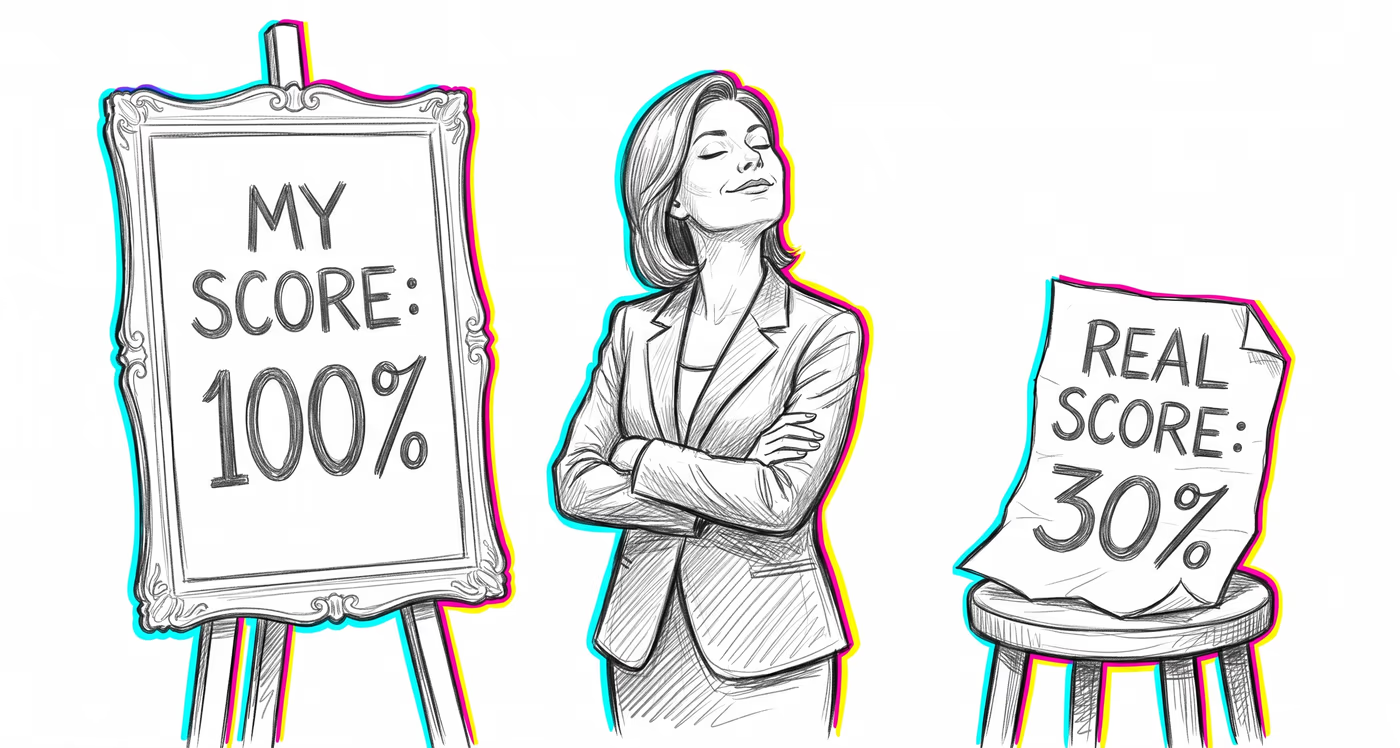
Overestimating your own role and importance in shared events, recalling things primarily from your own perspective.

WHAT IT IS

The glitch, explained plainly.

Imagine you and your friends build a sandcastle together. When you think about it later, you mostly remember the parts you built — the towers, the moat — because you were right there doing them. You kind of forget how much your friends helped. So when someone asks who built most of it, you honestly feel like you did more than everyone else. And your friends each feel the same way about themselves!

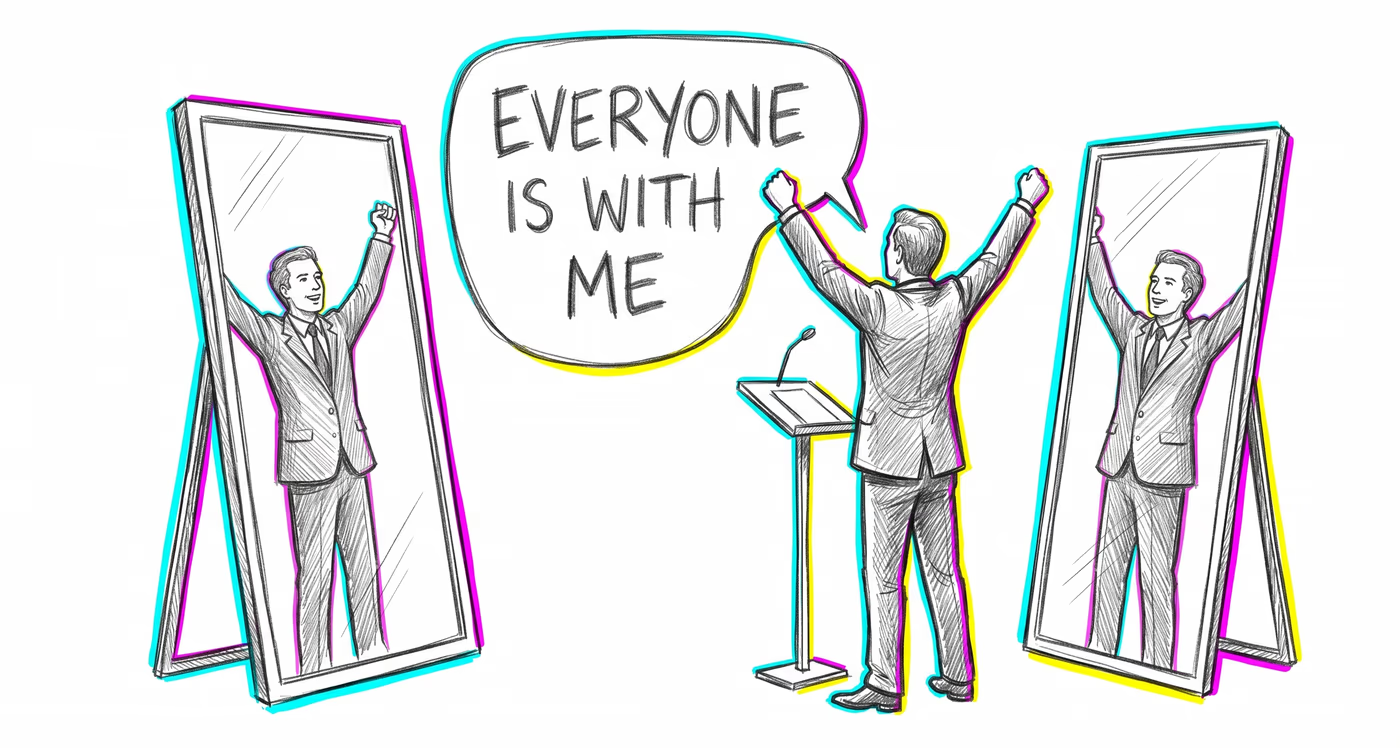
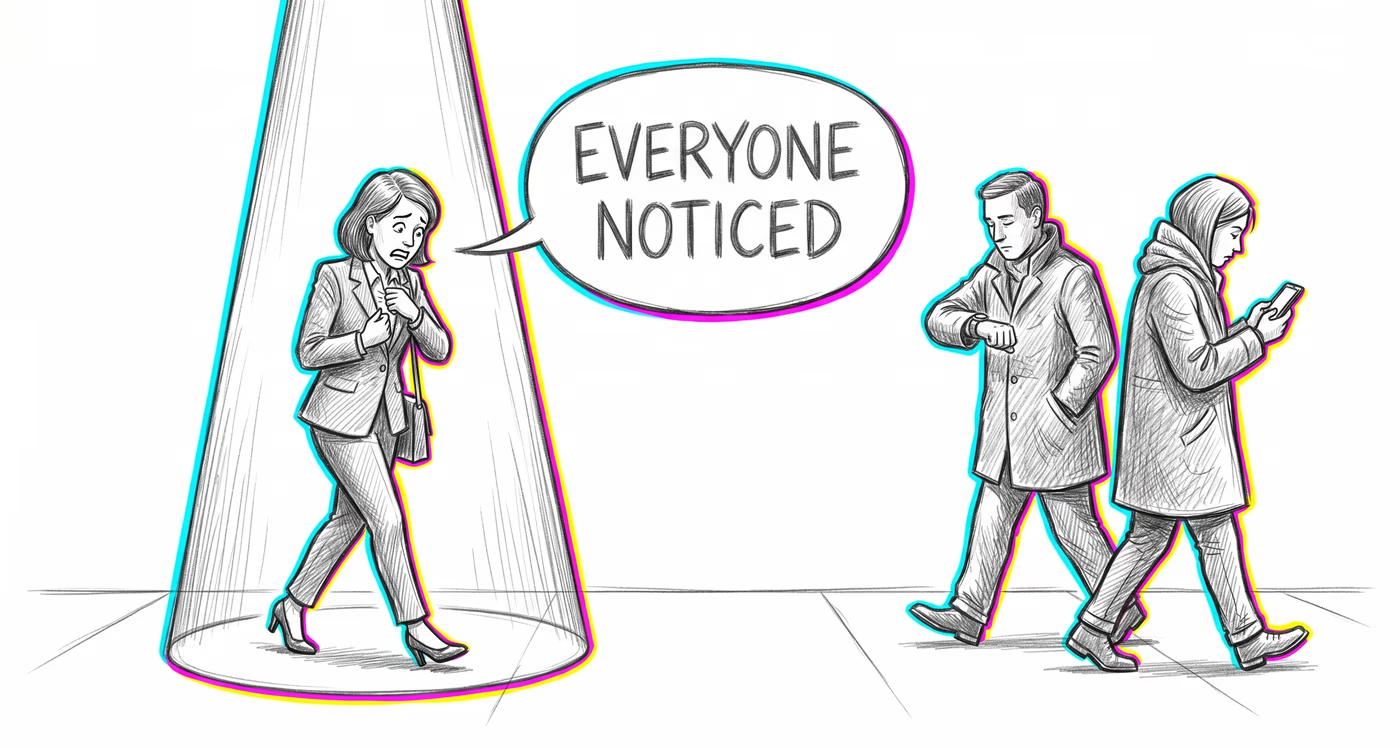
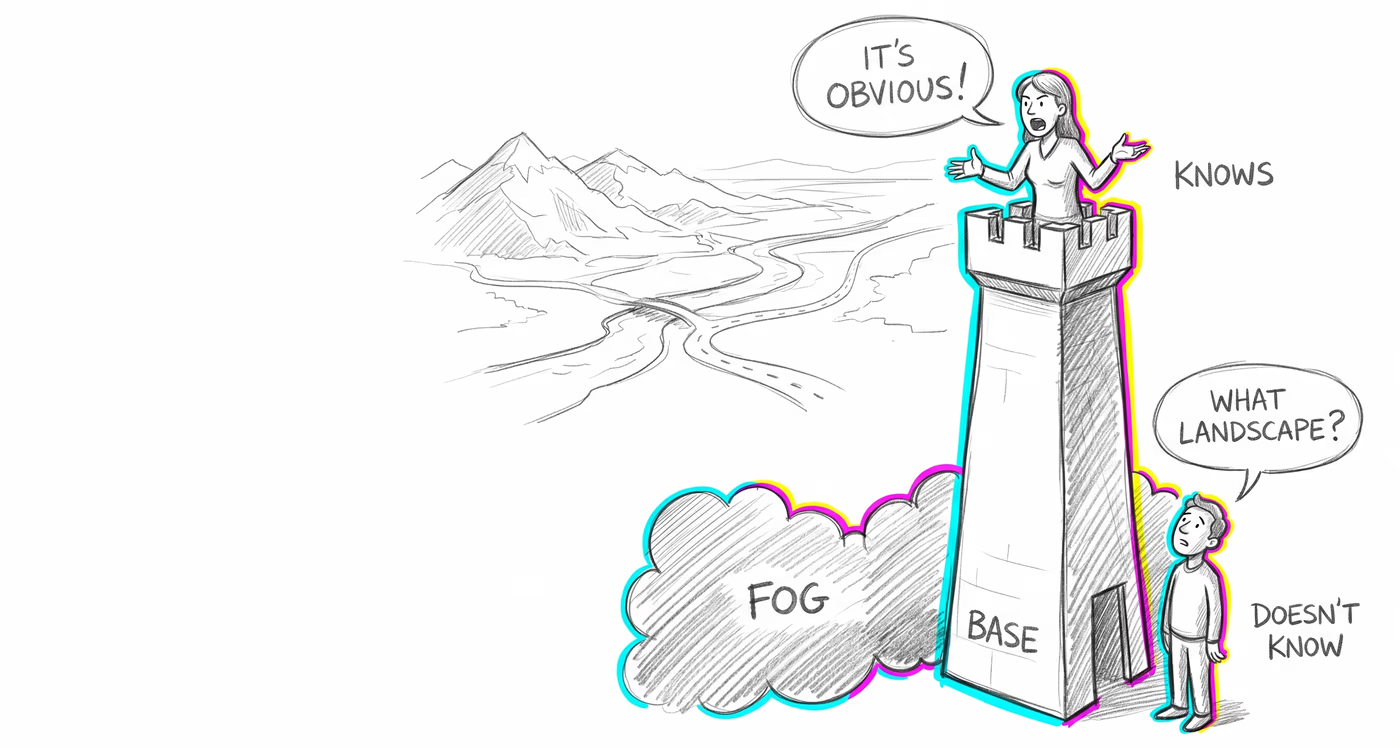
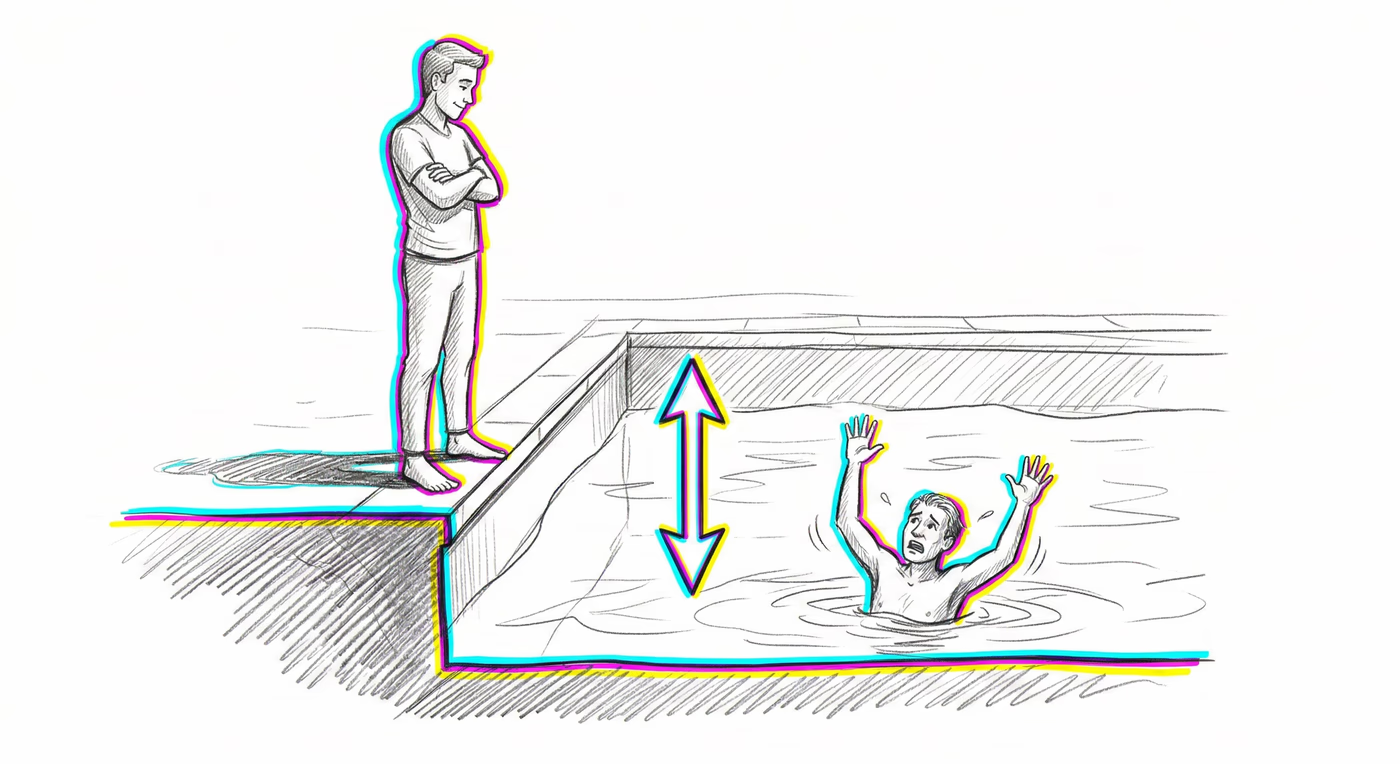
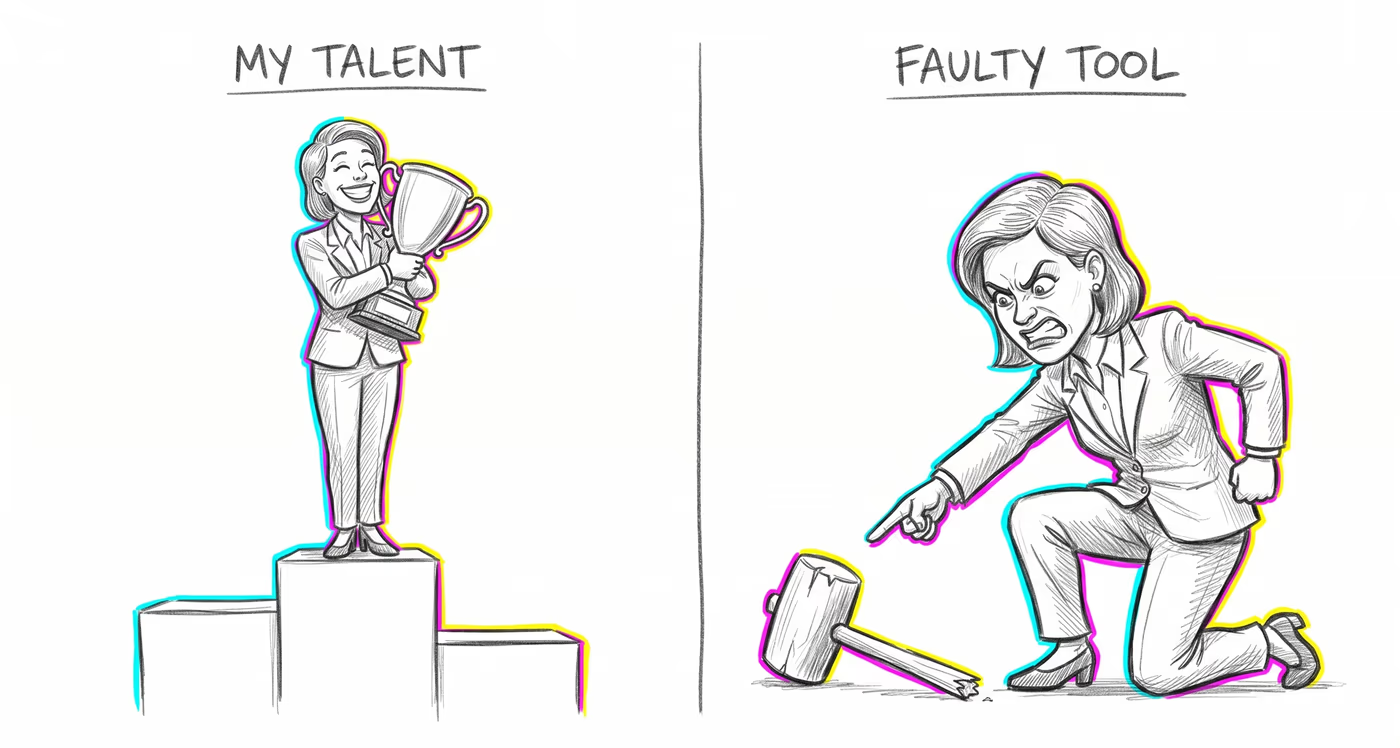
Egocentric bias causes individuals to view and recall events primarily through a self-referential lens, leading them to overestimate their own contributions to joint endeavors, project their beliefs and emotions onto others, and assume that their perspective is more widely shared than it actually is. This distortion operates across both positive and negative domains — people overclaim responsibility not only for group successes but also for group failures, suggesting the mechanism is cognitive rather than purely motivational. The bias manifests in memory encoding and retrieval, where self-relevant information is stored more richly and accessed more fluently, creating a skewed internal narrative in which one's own role is the most vivid and detailed thread. It serves as an umbrella construct underlying several more specific biases, including the spotlight effect, the illusion of transparency, and the false consensus effect.

SOUND FAMILIAR?

Where it shows up.

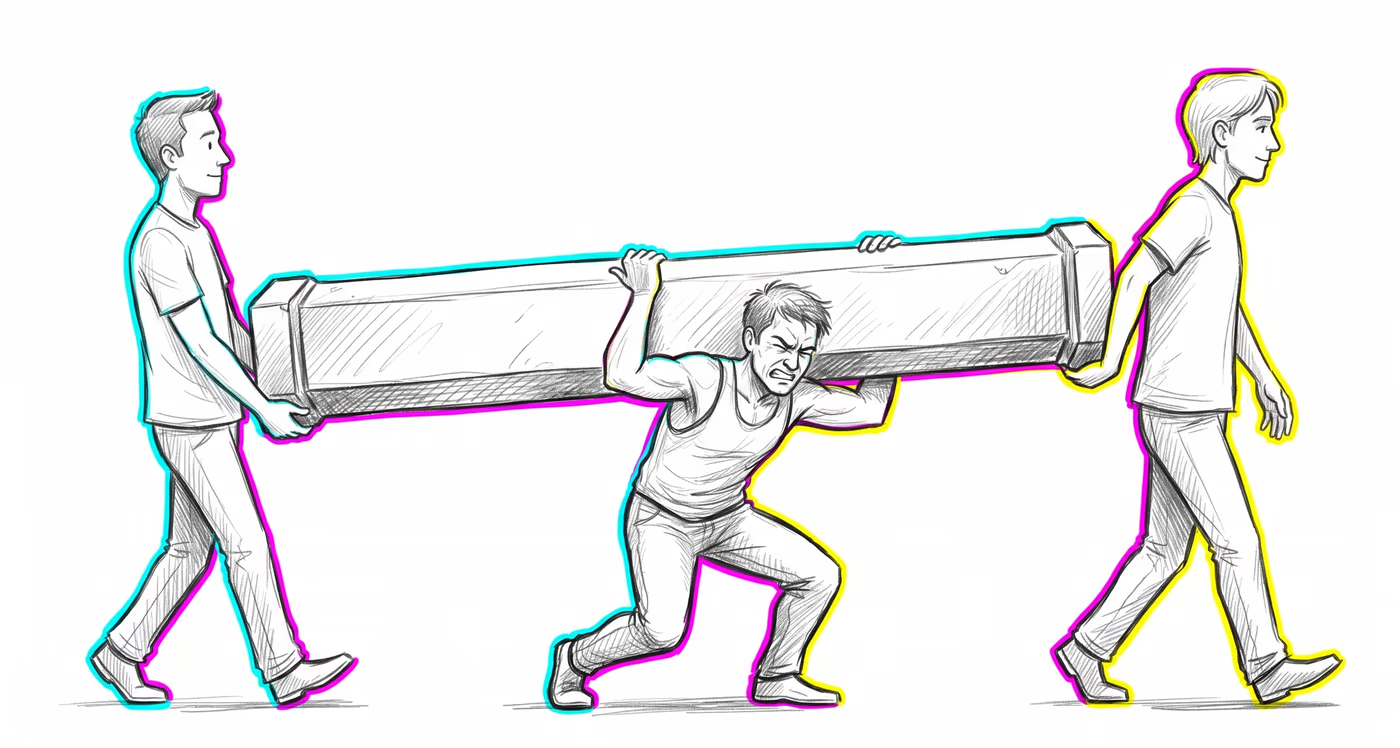
  1. 01 After a successful product launch, a four-person team meets to debrief. When the manager asks each member to privately write down what percentage of the work they did, the four estimates add up to 190%. No one is lying — each person vividly remembers their own late nights and key decisions but only vaguely recalls their teammates' efforts.
  2. 02 A married couple argues about household responsibilities. Each spouse independently claims to do about 70% of the chores. When a counselor asks them to list specific tasks, both can quickly generate long lists of their own contributions but struggle to name more than a few things their partner does regularly.
  3. 03 During a strategy meeting, a consultant presents a plan she considers obvious and straightforward. She's frustrated that the client team keeps asking basic clarifying questions, thinking they're not paying attention. In reality, the plan's logic is only obvious to her because she spent weeks developing it and unconsciously assumes others can follow her mental steps.
  4. 04 A songwriter in a band insists on receiving 50% of the royalties for a collaboratively written album, pointing to the melodies and hooks he contributed. The drummer and bassist each feel the same way about their rhythm sections and bass lines. All three genuinely believe their contributions were the most essential element, because each one's own creative process is the most salient in their memory.
  5. 05 A researcher reviewing a co-authored paper privately believes she deserves first authorship because she recalls designing the study, running the analyses, and writing the key sections. Her colleague recalls the same project as primarily his — he conceptualized the hypothesis, secured funding, and revised multiple drafts. Neither is fabricating; each has richer, more detailed memories of their own work than of the other's behind-the-scenes efforts.
IN DIFFERENT DOMAINS

Where it shows up at work.

The same glitch looks different depending on the terrain. Finance, medicine, a relationship, a team — same mechanism, different costume.

Finance & investing

Investors tend to overestimate the degree to which their personal analysis and skill drove successful trades, while underweighting the role of market conditions, advisors, or luck. In group investment clubs, members each believe they identified the winning picks, leading to disputes over strategy credit.

Medicine & diagnosis

In multidisciplinary care teams, individual clinicians may overestimate their personal contribution to a patient's recovery — the surgeon credits the operation, the therapist credits rehabilitation, the nurse credits bedside care — leading to coordination friction and undervaluation of other specialists' roles.
Education & grading

In group projects, students consistently claim to have done more than their fair share of the work, generating grading disputes. Teachers may also overestimate their personal influence on student outcomes relative to other factors like home environment or peer support.

Relationships

Partners in romantic relationships systematically overestimate their own contributions to shared tasks like housework, childcare, and emotional labor, creating recurring conflicts about fairness that stem not from dishonesty but from asymmetric access to memories of one's own effort.

Tech & product

Product managers and engineers in cross-functional teams each tend to view the product's success as primarily driven by their own function — design thinks it's the UX, engineering thinks it's the architecture — leading to territorial conflicts over product direction and resource allocation.

Workplace & hiring

In performance reviews, employees rate their own contributions higher than managers or peers do. In team retrospectives, each member independently recalls their own critical interventions most vividly, creating friction when recognition or bonuses are distributed.

Politics Media

Voters and activists overestimate the commonality of their political views, assuming the 'silent majority' agrees with them. Political leaders may overestimate their personal role in legislative achievements while undervaluing the coalition-building done by allies.

HOW TO SPOT IT

Ask yourself…

  • Am I estimating my contribution to this project based on how easily I can recall my own work, rather than systematically accounting for what others did?
  • Am I assuming others share my opinion or perspective without actually asking them?
  • If I add up what I think I contributed with what everyone else likely thinks they contributed, would it exceed 100%?
HOW TO DEFEND AGAINST IT

The playbook.

  • Before estimating your contribution to a shared outcome, first write down everything you can remember that each other person did, then estimate percentages.
  • Use the 'percentage sanity check': if your claimed share plus reasonable estimates for others exceeds 100%, adjust downward.
  • Actively solicit others' accounts of shared events before forming your own narrative — hearing their perspective counteracts the availability asymmetry.
  • Use self-distancing language (referring to yourself by name or 'you' instead of 'I') when reflecting on shared accomplishments to reduce ego-anchoring.
  • In team settings, implement shared contribution logs or project management tools that make everyone's work visible in real time.
FAMOUS CASES

In history.

  • Research on married couples by Ross and Sicoly (1979) found that both spouses claimed responsibility for over 50% of household activities — including negative ones like causing arguments — demonstrating egocentric overclaiming even for undesirable outcomes.
  • Post-war memoirs of political leaders consistently show each participant claiming outsized personal credit for diplomatic successes, reflecting egocentric recall of collaborative negotiations.
WHERE IT COMES FROM
Academic origin

Michael Ross and Fiore Sicoly first identified the phenomenon empirically in their 1979 paper 'Egocentric Biases in Availability and Attribution.' The term 'egocentric bias' was formally coined in 1980 by Anthony Greenwald at Ohio State University in his influential paper 'The Totalitarian Ego: Fabrication and Revision of Personal History.'

Evolutionary origin

In small ancestral groups where members shared similar knowledge, beliefs, and experiences, assuming others thought and felt like oneself was a reasonable and efficient default that reduced cognitive load during communication and coordination. This egocentric shortcut saved processing resources and facilitated rapid social decision-making in environments where perspective differences were genuinely minimal.

IN AI SYSTEMS

How the machines inherit it.

Language models trained primarily on first-person narratives and self-referential text may inherit patterns that overweight the narrator's perspective, generating outputs that default to a single-viewpoint framing rather than balanced multi-perspective accounts. Recommender systems built on user self-reports of preferences may amplify egocentric ratings, reinforcing users' inflated sense of their own taste sophistication.

Read more on Wikipedia
FREE FIELD ZINE

10 glitches quietly running your life.

A free field-zine PDF — ten cognitive glitches named, illustrated, with a defense move for each. Plus the weekly Glitch Report on Fridays — one bias named, two spotted in the wild, one defense move. Unsubscribe any time.

EXPLORE MORE

Related glitches.

LAUNCH PRICE

Train against your blindspots.

50 cards are free to preview. Buyers unlock the rest of the deck plus the interactive training — Spot-the-Bias Quiz unlimited, Swipe Deck with spaced repetition, My Blindspots, Decision Pre-Flight, the Printable Deck + Cheat Sheets, and the Field Guide e-book. $29.50$59.

Unlock the full deck

Everything below — yours forever. Pay once, use across every device.

Half-off launch — limited to the first 100 readers. Auto-applied at checkout.
$59 $29.50
one-time payment · lifetime access
  • All interactive digital cards — search, filter, flip, shuffle on any device
  • Five training modes — Spot-the-Bias Quiz, Swipe Deck, Pre-Flight, Blindspots, Journal
  • Curated Lenses + Decision Templates + Defense Playbook
  • Printable Deck PDFs + Field Guide e-book + Cheat Sheets + Anki Export
  • Every future improvement, included
Unlock  $29.50

30-day refund · no questions asked

Unlock the full deck

Everything below — yours forever. Pay once, use across every device.

Half-off launch — limited to the first 100 readers. Auto-applied at checkout.
$59 $29.50
one-time payment · lifetime access
  • All interactive digital cards — search, filter, flip, shuffle on any device
  • Five training modes — Spot-the-Bias Quiz, Swipe Deck, Pre-Flight, Blindspots, Journal
  • Curated Lenses + Decision Templates + Defense Playbook
  • Printable Deck PDFs + Field Guide e-book + Cheat Sheets + Anki Export
  • Every future improvement, included
Unlock  $29.50

30-day refund · no questions asked