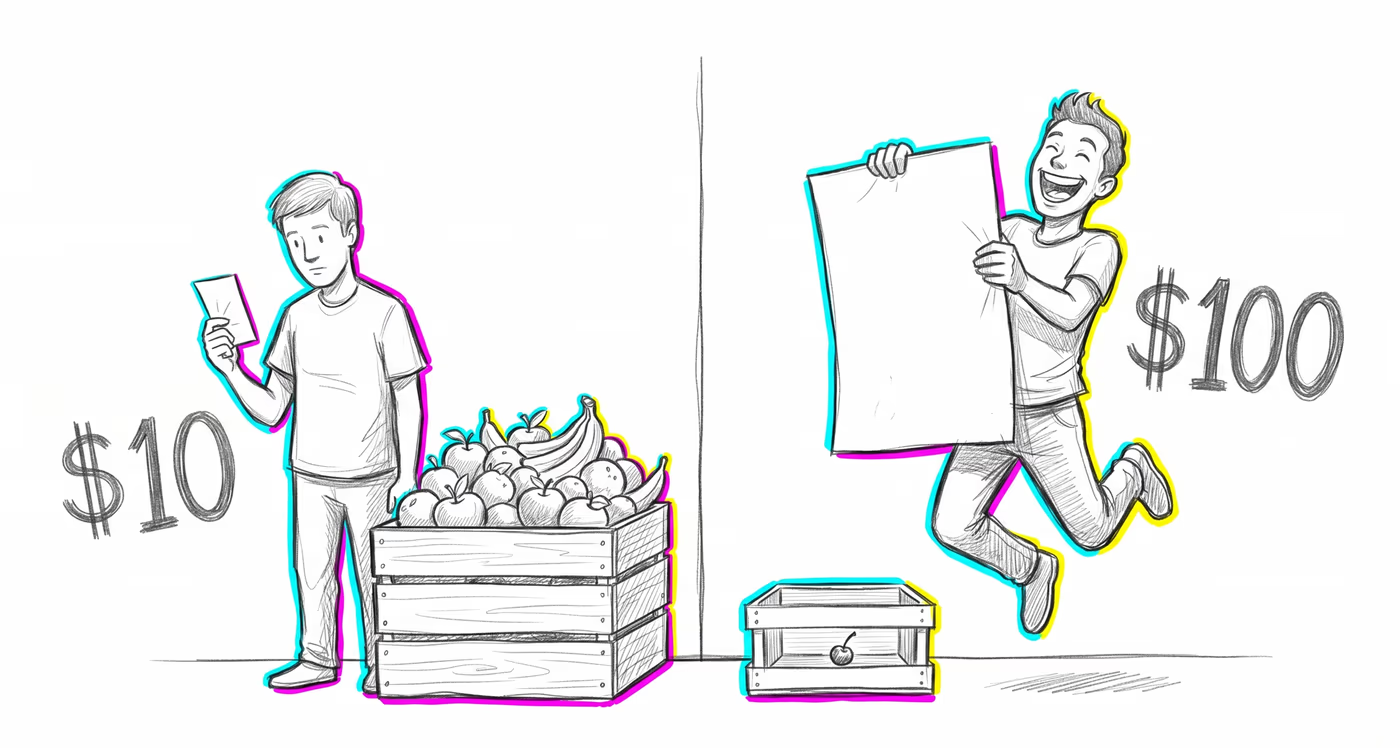
The same glitch looks different depending on the terrain. Finance, medicine, a
relationship, a team — same mechanism, different costume.
Finance & investing
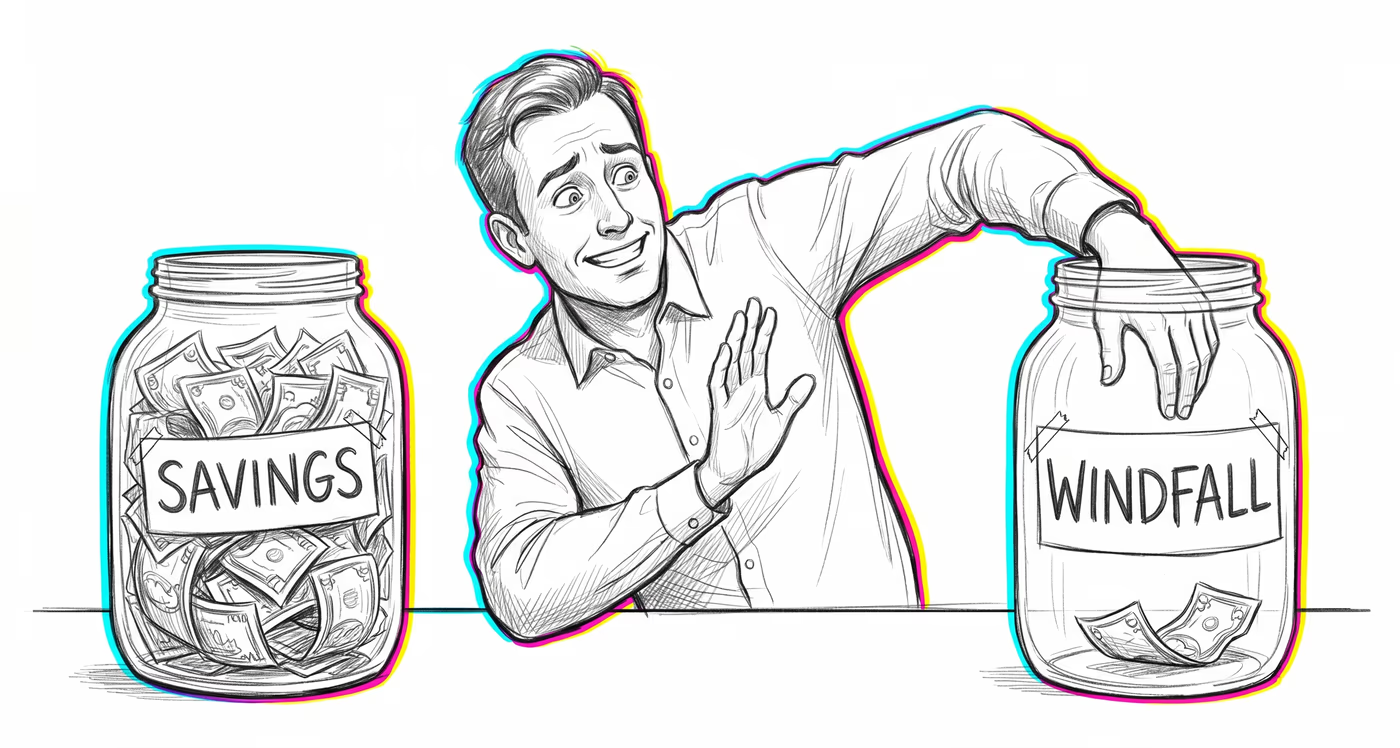
Investors often segregate portfolios into 'safe money' and 'play money' buckets, taking excessive risks with gains or windfalls while being overly conservative with principal. This leads to suboptimal asset allocation because risk and return are evaluated per-account rather than across the total portfolio.
Medicine & diagnosis
Patients may mentally separate 'health spending' into sub-accounts — willing to pay out of pocket for supplements they categorize as 'wellness' while refusing to fill a prescription they categorize as 'sick care,' even when the prescription is more medically beneficial per dollar spent.
Education & grading
Students who receive a scholarship earmarked for 'educational expenses' may spend it more carefully than an equivalent unrestricted cash grant, even though both could be optimally used the same way. Conversely, students may splurge financial aid refunds that feel like 'extra money.'
Relationships
Partners may maintain rigidly separate 'his money' and 'her money' accounts, leading to conflict when one partner's category runs low while the other's has surplus — even though both contribute to shared household welfare and the money is functionally pooled.
Tech & product
Subscription services exploit mental accounting by charging small monthly fees across many separate 'accounts' (streaming, music, cloud storage) that individually feel trivial but collectively represent significant spending that users never aggregate. Gift cards and in-app currencies further decouple spending from the pain of paying.
Workplace & hiring
Departments hoard year-end budgets or rush to spend remaining funds before a fiscal deadline rather than allowing surplus to be reallocated to departments with greater need, because each department treats its budget as a separate non-transferable account.
Politics Media
Taxpayers evaluate government spending program-by-program rather than as a unified budget, supporting individually popular programs while opposing the total spending required to fund them. Earmarked taxes (e.g., gas taxes for roads) gain more support than equivalent general-fund allocations.