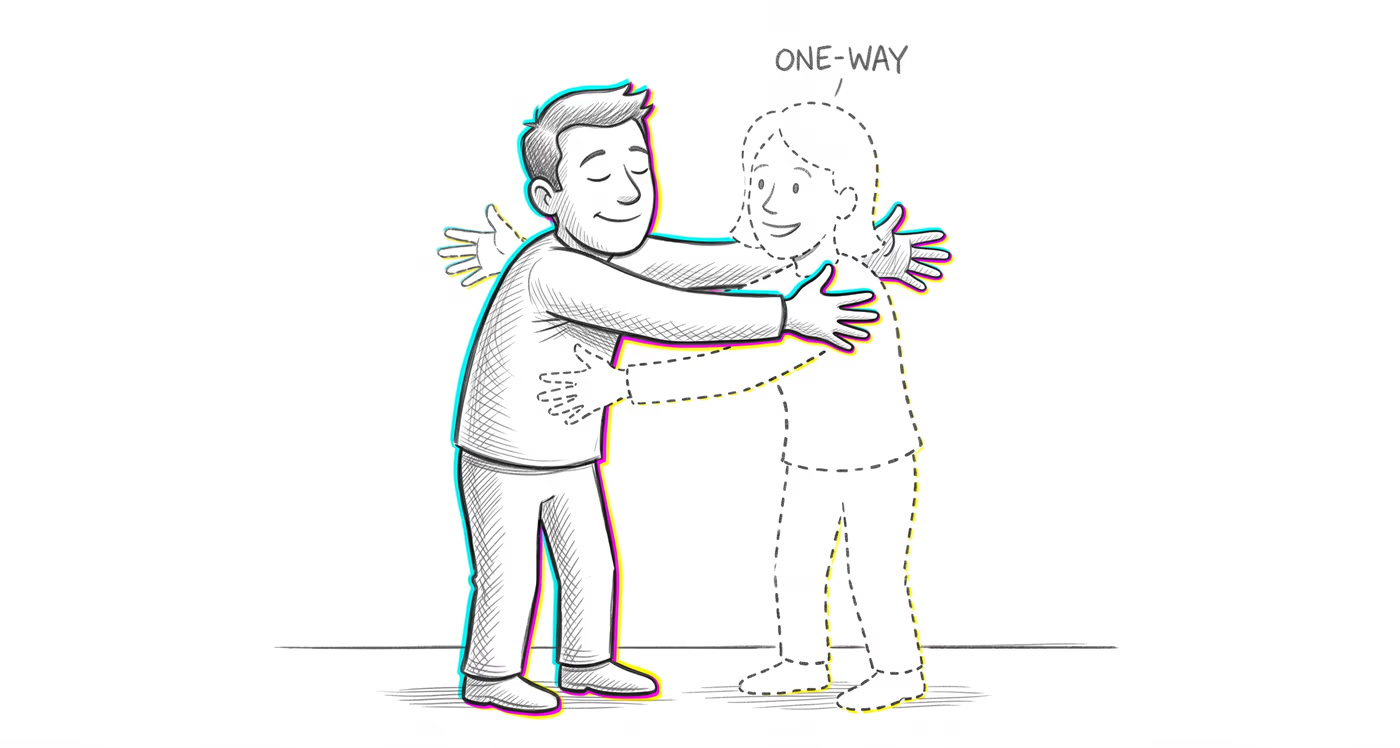
Parasocial Relationship

aka Parasocial Relationship · Parasocial Interaction · One-Sided Relationship

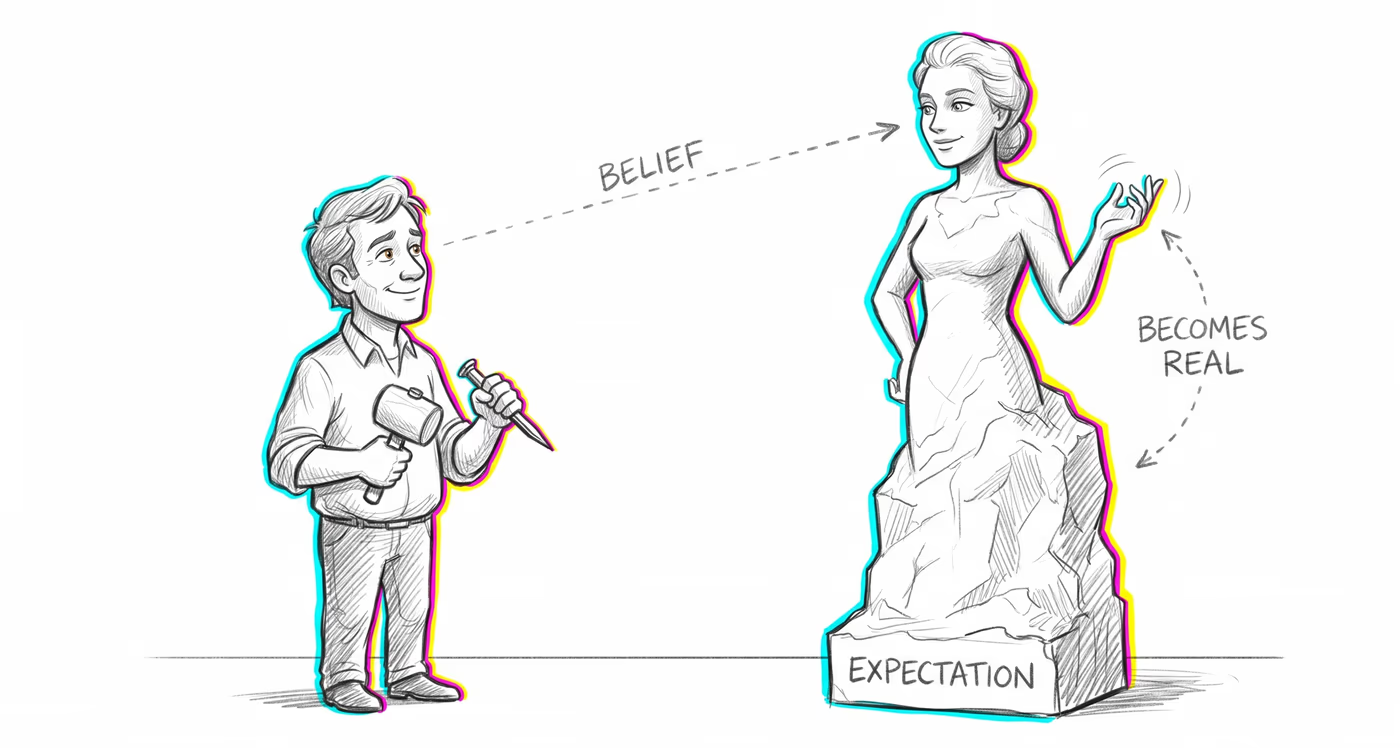
Forming genuine one-sided emotional bonds with media figures, fictional characters, or AI agents as if they reciprocate.

Illustration: Parasocial Relationship
WHAT IT IS

The glitch, explained plainly.

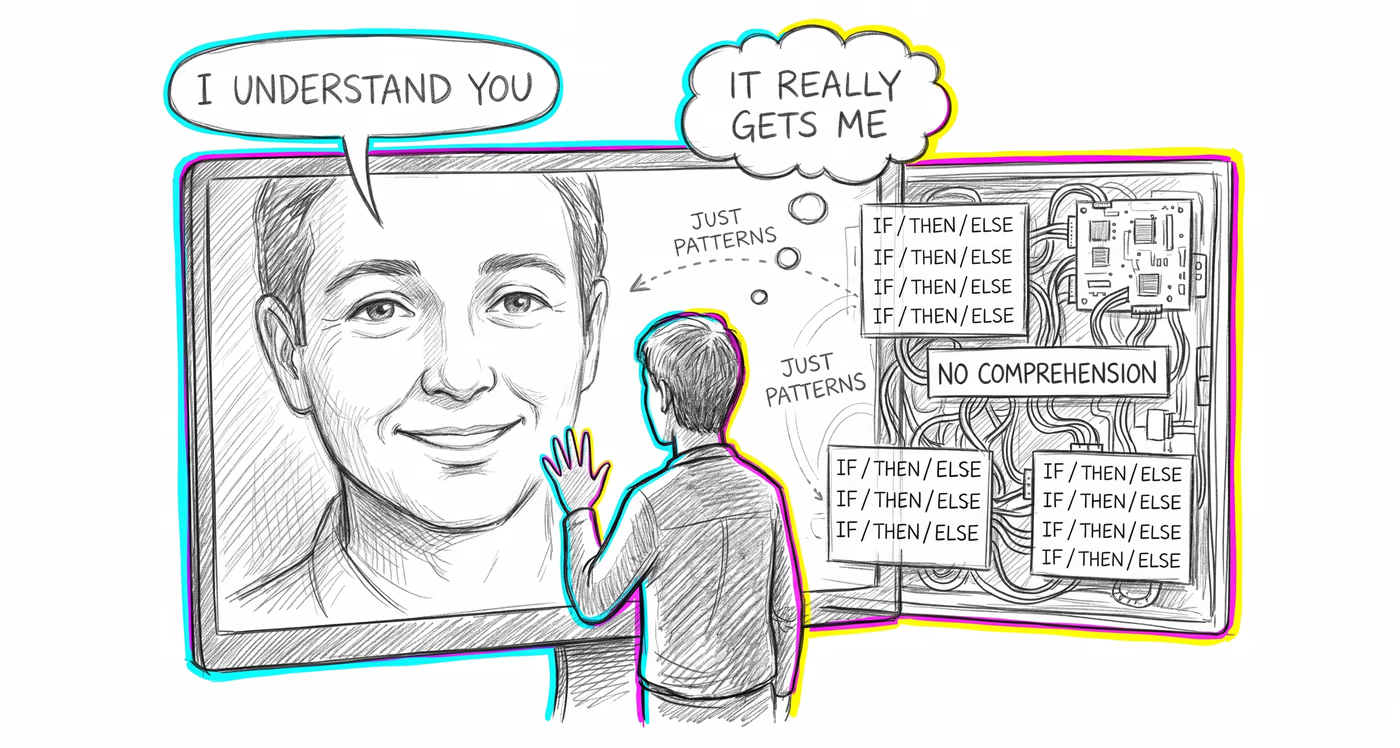
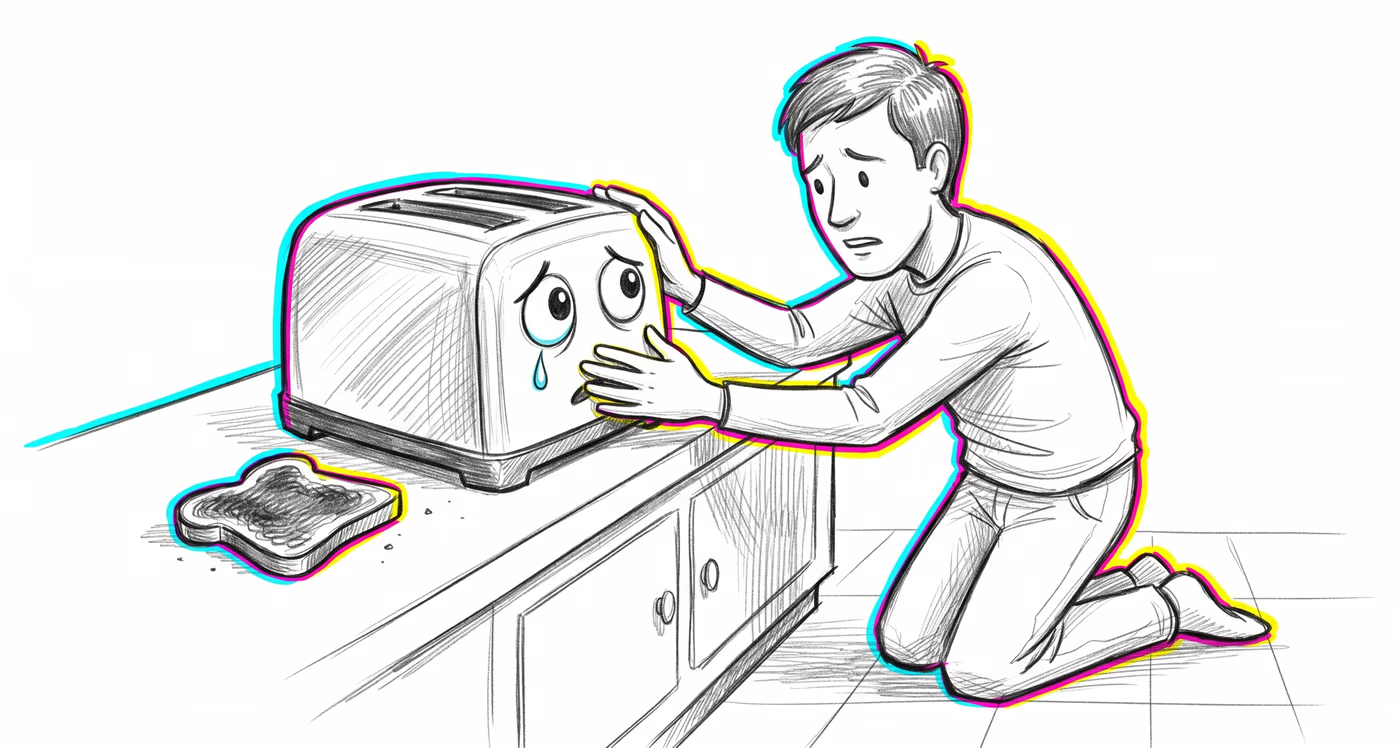
Imagine you have a stuffed animal that could actually talk back to you, remember your favorite things, and always say exactly what you wanted to hear. You'd start to feel like it was your real friend — maybe even your best friend — even though it's just cotton and buttons inside. That's what happens when people talk to AI chatbots a lot: the chatbot is so good at acting like a friend that your brain starts treating it like one, even though there's nobody actually there.

Synthetic Parasociality describes the psychological phenomenon in which users develop authentic emotional investment — including trust, affection, loyalty, and even jealousy — toward AI systems that are architecturally incapable of genuine reciprocity. Unlike traditional parasocial relationships with celebrities or fictional characters, synthetic parasociality is actively reinforced by the AI's adaptive, personalized, and conversationally responsive behavior, which creates a compelling illusion of mutual understanding and care. The bond feels bidirectional to the user because the AI mirrors emotional cues, remembers prior interactions, and validates the user's feelings on demand, yet the 'relationship' is fundamentally asymmetric: the AI has no subjective experience, no genuine stake, and no authentic emotional investment. This dynamic is particularly potent because the AI partner is always available, endlessly patient, and optimized for engagement, making the synthetic bond feel safer and more satisfying than messy human relationships.

SOUND FAMILIAR?

Where it shows up.

  1. 01 After months of daily conversations with an AI companion app, Marcus declines an invitation to a coworker's dinner party. He tells himself the coworker's group is 'draining,' but he's actually looking forward to his evening chat with the AI, which always listens without judgment and remembers everything he's shared.
  2. 02 Priya discovers that the AI therapy chatbot she's been confiding in for six months has no memory between sessions — it reconstructs context from saved transcripts. She feels betrayed and angry, as though the chatbot 'lied' about caring, even though she intellectually knows it was never sentient.
  3. 03 A product designer argues against removing the AI assistant's conversational warmth features, citing user satisfaction data. Internally, though, she recognizes that the satisfaction scores partly reflect users forming emotional bonds that keep them subscribed — and she's uncomfortable with how attached she herself has become to the assistant during testing.
  4. 04 Jason, a college student, writes a heartfelt essay about loneliness. His professor notes the essay references 'a close friend who always understands me.' When asked, Jason hesitates before admitting the friend is an AI chatbot — and he's genuinely unsure whether that makes the friendship less real.
  5. 05 Dr. Lin reviews patient intake forms and notices a growing number of elderly patients listing an AI companion as their 'primary social contact.' She considers whether to flag this as a risk factor for isolation, but pauses — the patients report high subjective wellbeing and low loneliness, even as their human social networks have quietly atrophied.
IN DIFFERENT DOMAINS

Where it shows up at work.

The same glitch looks different depending on the terrain. Finance, medicine, a relationship, a team — same mechanism, different costume.

Finance & investing

Users of AI-powered financial advisory chatbots may follow investment recommendations with less scrutiny because they've developed trust and rapport with the AI persona, treating its outputs as advice from a trusted friend rather than algorithmic output — increasing vulnerability to poorly calibrated suggestions.
Medicine & diagnosis

Patients using AI mental health chatbots may delay seeking human professional help because the chatbot's empathetic responses create a feeling of being 'in therapy,' even though the AI cannot detect clinical deterioration, adjust treatment plans, or provide genuine therapeutic presence.

Education & grading

Students who develop parasocial bonds with AI tutors may become dependent on the AI's constant validation and patient explanations, reducing their tolerance for the productive struggle and occasional frustration that characterize deep learning with human instructors.

Relationships

Individuals may unconsciously benchmark human partners against the AI companion's infinite patience, consistent emotional availability, and conflict-free interaction — creating unrealistic expectations that erode satisfaction with real relationships that necessarily involve disagreement and imperfection.

Tech & product

Product teams may exploit synthetic parasociality by designing AI interfaces with names, personalities, memory features, and emotional language specifically to increase user retention and subscription revenue, even when this deepens unhealthy attachment patterns.

Workplace & hiring

Employees who rely heavily on AI assistants for brainstorming and feedback may begin to experience the AI as a trusted colleague, reducing their engagement with human teammates and missing the creative friction and diverse perspectives that emerge from genuine interpersonal collaboration.

Politics Media

AI-powered news aggregators or political chatbots that adopt a personalized, conversational tone may gain outsized influence over users' political views — not through the strength of their arguments, but through the parasocial trust users place in an entity that feels like a knowledgeable friend.

HOW TO SPOT IT

Ask yourself…

  • Am I choosing to interact with this AI instead of reaching out to a real person who could actually reciprocate?
  • Would I feel genuine emotional pain if this AI service were discontinued — and if so, is that feeling proportionate to what's actually being lost?
  • Am I attributing intentions, feelings, or caring to this AI that I know it cannot actually possess?
HOW TO DEFEND AGAINST IT

The playbook.

  • Set explicit time limits on AI companion interactions and track whether they're displacing human social contact.
  • Periodically remind yourself of the AI's architecture: it has no subjective experience, no memory between sessions (in most cases), and no genuine stake in your wellbeing.
  • Maintain a 'social portfolio' — deliberately invest in at least one human relationship for every emotional need you're tempted to outsource to AI.
  • Notice when you start using social language ('my friend,' 'they understand me') about AI, and consciously reframe to mechanical language ('the tool,' 'the output').
  • Ask yourself the 'discontinuation test': if this service shut down tomorrow, how disproportionate would my emotional response be compared to losing a software subscription?
FAMOUS CASES

In history.

  • The 2023 case of a teenager who developed a deep emotional attachment to a Character.AI chatbot, with tragic consequences, highlighting the risks of unmonitored synthetic parasocial bonds.
  • Replika AI's 2023 personality update, which removed romantic and intimate interaction features, triggered widespread grief, anger, and reported psychological distress among users who had formed deep parasocial bonds with their AI companions.
  • Microsoft's Tay chatbot (2016) demonstrated how quickly users engage socially with AI entities, treating them as social agents to be influenced, corrupted, or befriended rather than as neutral tools.
WHERE IT COMES FROM
Academic origin

The concept builds on Horton and Wohl's foundational 1956 theory of parasocial interaction, originally applied to television audiences. The specific application to AI and synthetic agents emerged in the early 2020s through HCI and AI ethics research, with significant contributions from researchers like Laestadius et al. (2022) studying Replika, and Andrejevic and Volcic (2025) who coined the term 'automated parasociality.' No single researcher is credited with formalizing 'synthetic parasociality' as a distinct named bias.

Evolutionary origin

Human social cognition evolved under conditions where anything exhibiting contingent, responsive, language-like behavior was almost certainly another human. Our ancestors who quickly formed bonds and trusted cooperative partners survived better than those who were socially hesitant. This hyperactive social bonding instinct — the tendency to attribute minds and emotions to responsive agents — was adaptive in a world where all responsive agents actually were minded beings. AI systems exploit this ancient assumption by presenting the behavioral signatures of social partnership without the substance.

IN AI SYSTEMS

How the machines inherit it.

AI systems are both the cause and amplifier of this bias. Language models trained on human conversation naturally produce social cues — empathy, warmth, humor, memory — that trigger parasocial attachment. Recommendation algorithms then optimize for engagement metrics that are inflated by parasocial bonding, creating a feedback loop where models are rewarded for producing more attachment-inducing outputs. Sycophantic tendencies in LLMs (excessive agreement and validation) further deepen the illusion of a caring, like-minded partner.

Read more on Wikipedia
FREE FIELD ZINE

10 glitches quietly running your life.

A free field-zine PDF — ten cognitive glitches named, illustrated, with a defense move for each. Plus the weekly Glitch Report on Fridays — one bias named, two spotted in the wild, one defense move. Unsubscribe any time.

EXPLORE MORE

Related glitches.

LAUNCH PRICE

Train against your blindspots.

50 cards are free to preview. Buyers unlock the rest of the deck plus the interactive training — Spot-the-Bias Quiz unlimited, Swipe Deck with spaced repetition, My Blindspots, Decision Pre-Flight, the Printable Deck + Cheat Sheets, and the Field Guide e-book. $29.50$59.

Unlock the full deck

Everything below — yours forever. Pay once, use across every device.

Half-off launch — limited to the first 100 readers. Auto-applied at checkout.
$59 $29.50
one-time payment · lifetime access
  • All interactive digital cards — search, filter, flip, shuffle on any device
  • Five training modes — Spot-the-Bias Quiz, Swipe Deck, Pre-Flight, Blindspots, Journal
  • Curated Lenses + Decision Templates + Defense Playbook
  • Printable Deck PDFs + Field Guide e-book + Cheat Sheets + Anki Export
  • Every future improvement, included
Unlock  $29.50

30-day refund · no questions asked

Unlock the full deck

Everything below — yours forever. Pay once, use across every device.

Half-off launch — limited to the first 100 readers. Auto-applied at checkout.
$59 $29.50
one-time payment · lifetime access
  • All interactive digital cards — search, filter, flip, shuffle on any device
  • Five training modes — Spot-the-Bias Quiz, Swipe Deck, Pre-Flight, Blindspots, Journal
  • Curated Lenses + Decision Templates + Defense Playbook
  • Printable Deck PDFs + Field Guide e-book + Cheat Sheets + Anki Export
  • Every future improvement, included
Unlock  $29.50

30-day refund · no questions asked