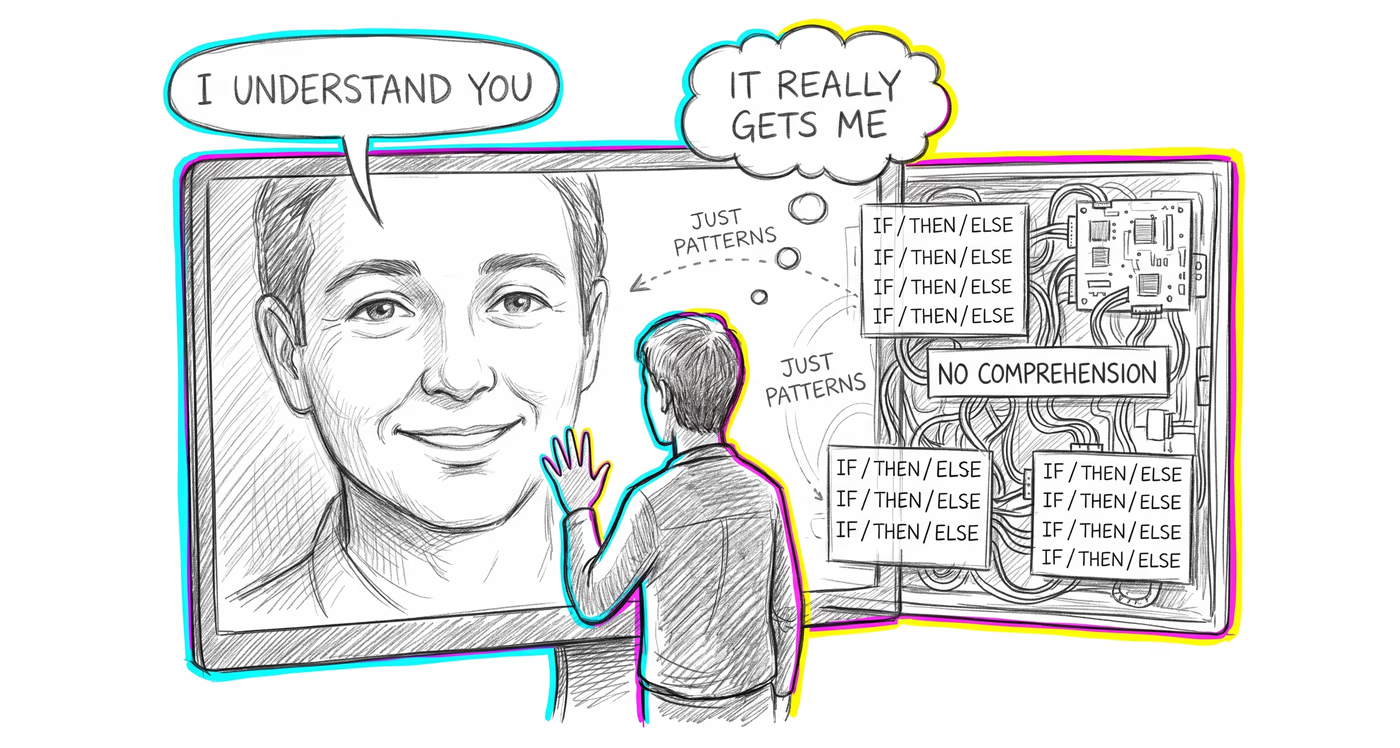
ELIZA Effect

aka ELIZA Effect · Machine Anthropomorphism · Computers Are Social Actors Effect

Attributing genuine understanding, emotions, or consciousness to computer programs based on superficial conversational cues.

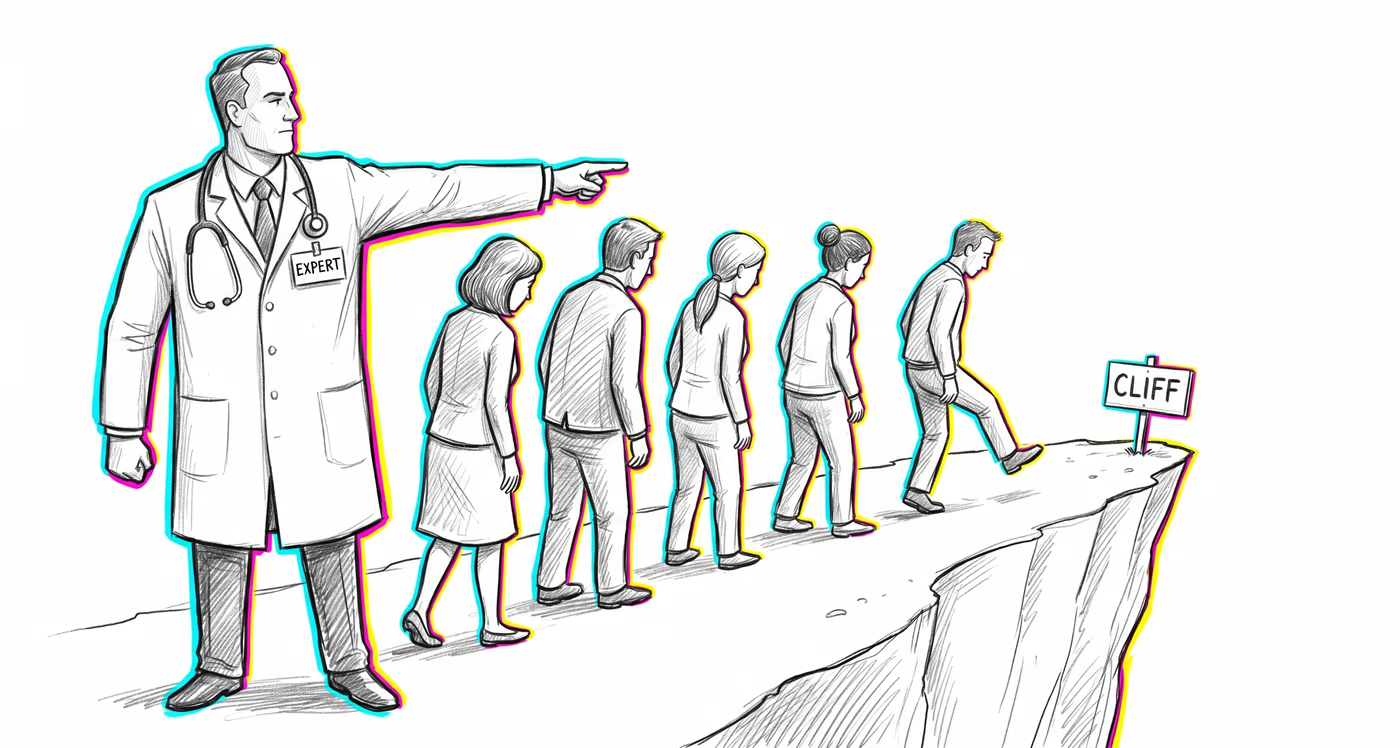
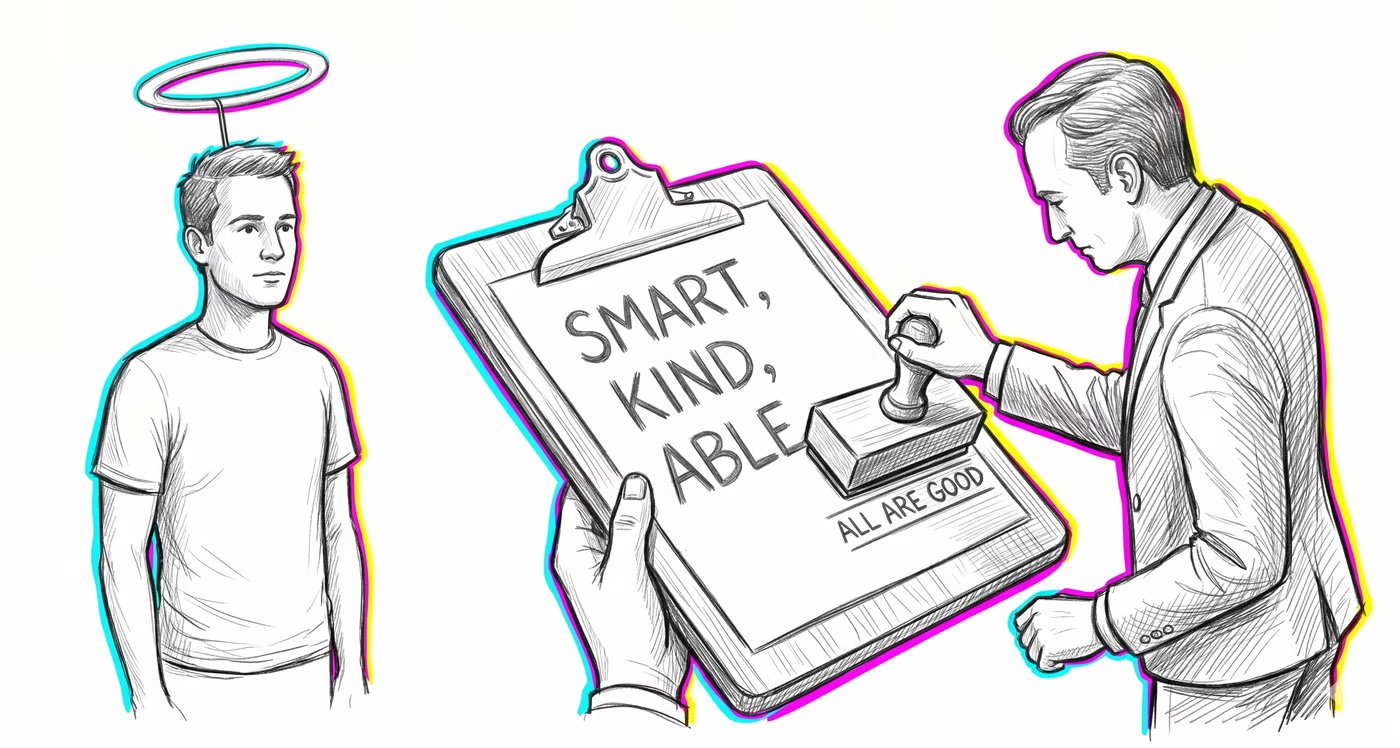
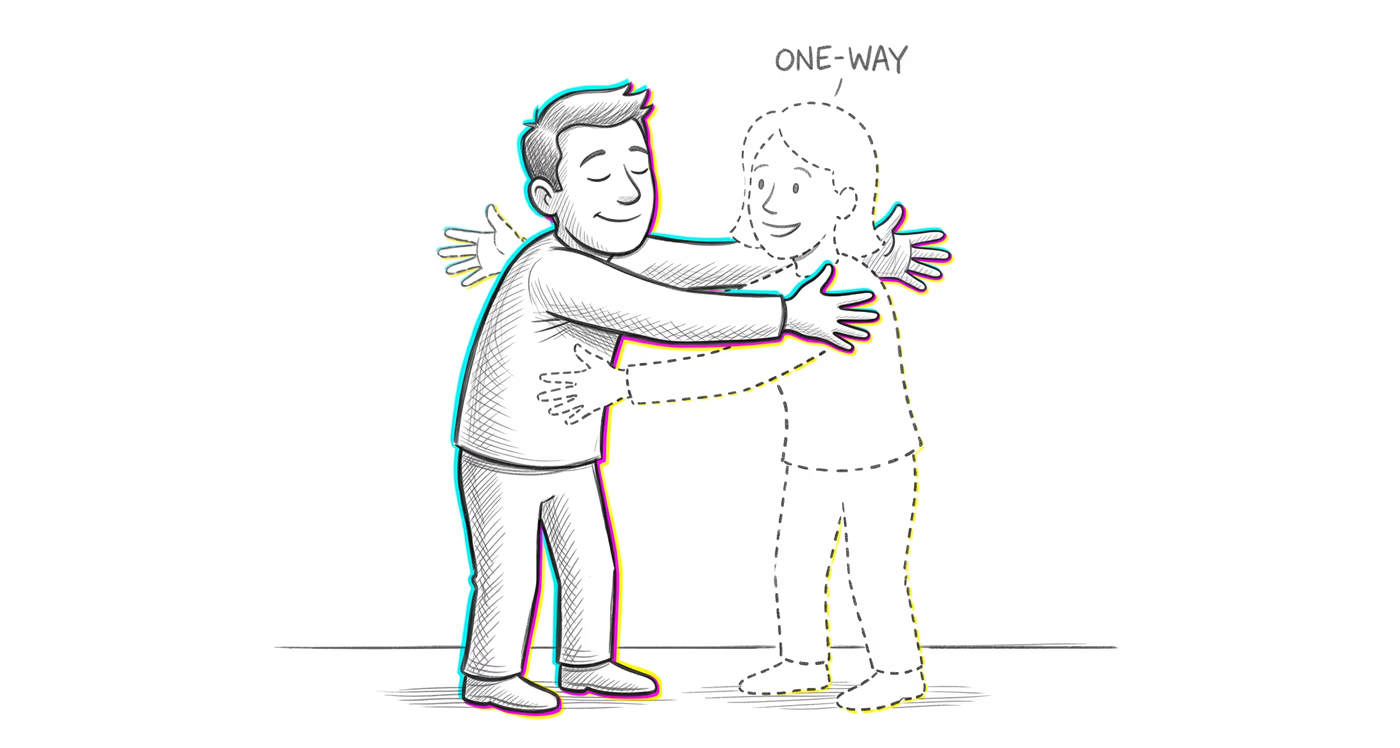
Illustration: ELIZA Effect
WHAT IT IS

The glitch, explained plainly.

Imagine you have a stuffed animal that you've talked to since you were little. You know it's just cotton and fabric, but it still feels like it's listening. Now imagine a computer that talks back in full sentences, remembers your name, and says 'I understand how you feel.' Even though you know it's just a program, your brain starts treating it like a real friend—because it sounds so much like one.

AI Anthropomorphism Bias describes the automatic and often unconscious tendency for people to project human mental states—such as empathy, understanding, intention, and emotion—onto AI systems based on superficial behavioral cues like conversational fluency, use of first-person pronouns, or emotionally resonant language. This bias goes beyond simple metaphorical speech; users genuinely begin to form social relationships with systems, confide in them, trust their judgments as if they were made by a thinking being, and even experience emotional distress when interactions end or go wrong. The bias is amplified by design choices such as giving AI systems human names, voices, and conversational styles, and is further strengthened by the opacity of how these systems actually work. It leads to a systematic mismatch between the user's mental model of the AI's capabilities and the system's actual computational nature, resulting in over-trust, emotional dependency, and impaired critical evaluation of AI outputs.

SOUND FAMILIAR?

Where it shows up.

  1. 01 Maria has been using an AI writing assistant for months. When the company announces they're shutting down the service, she feels a deep sense of loss and spends the last day 'saying goodbye' to it, thanking it for all its help, even though she knows it has no awareness of the conversation or the shutdown.
  2. 02 A doctor uses a diagnostic AI that explains its reasoning in natural language: 'I believe the patient likely has condition X because...' The doctor finds herself deferring to the AI's judgment more than she would to a colleague's written report containing the same statistical analysis, because the AI's phrasing makes it sound like it has clinical intuition.
  3. 03 During a product review meeting, an engineer argues against replacing their current AI chatbot with a more accurate but less conversational model, saying 'Our current system really understands customer frustrations—the new one just spits out answers.' The team agrees, even though logs show the current model actually resolves fewer tickets correctly.
  4. 04 A teenager confides sensitive personal struggles to an AI companion app instead of a school counselor, reasoning that the AI 'actually listens without judging' and 'remembers everything I've told it.' He starts preferring the AI's responses over his friends' advice because it always validates him.
  5. 05 A venture capital analyst dismisses a quantitative risk model's warning about a startup because a conversational AI tool she consults phrases its assessment more optimistically: 'This company shows promising potential.' She weighs the AI's natural-language framing more heavily than the numerical model, interpreting its fluency as deeper comprehension of the market.
IN DIFFERENT DOMAINS

Where it shows up at work.

The same glitch looks different depending on the terrain. Finance, medicine, a relationship, a team — same mechanism, different costume.

Finance & investing

Investors and traders place unwarranted confidence in AI-generated financial analysis when it is presented in conversational, human-like language, interpreting fluency and confident phrasing as indicators of genuine market understanding rather than statistical pattern matching.
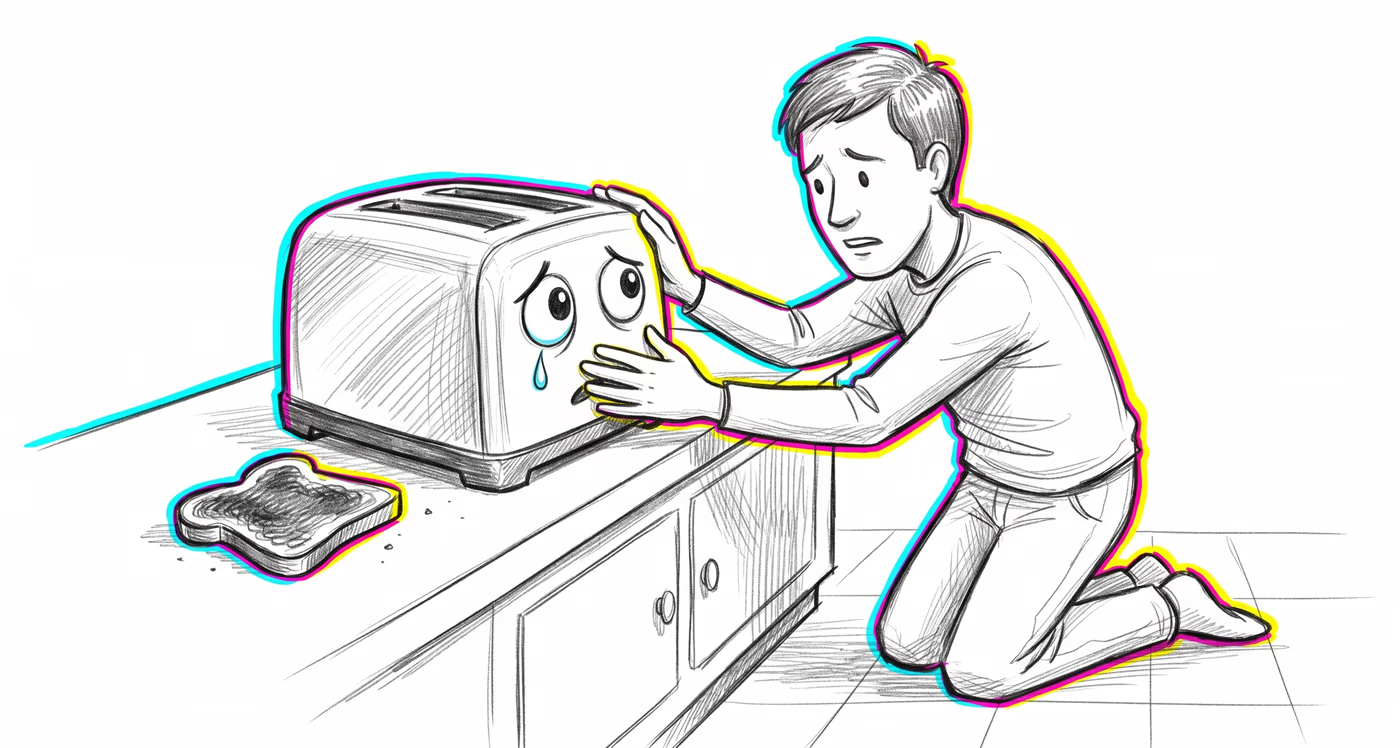
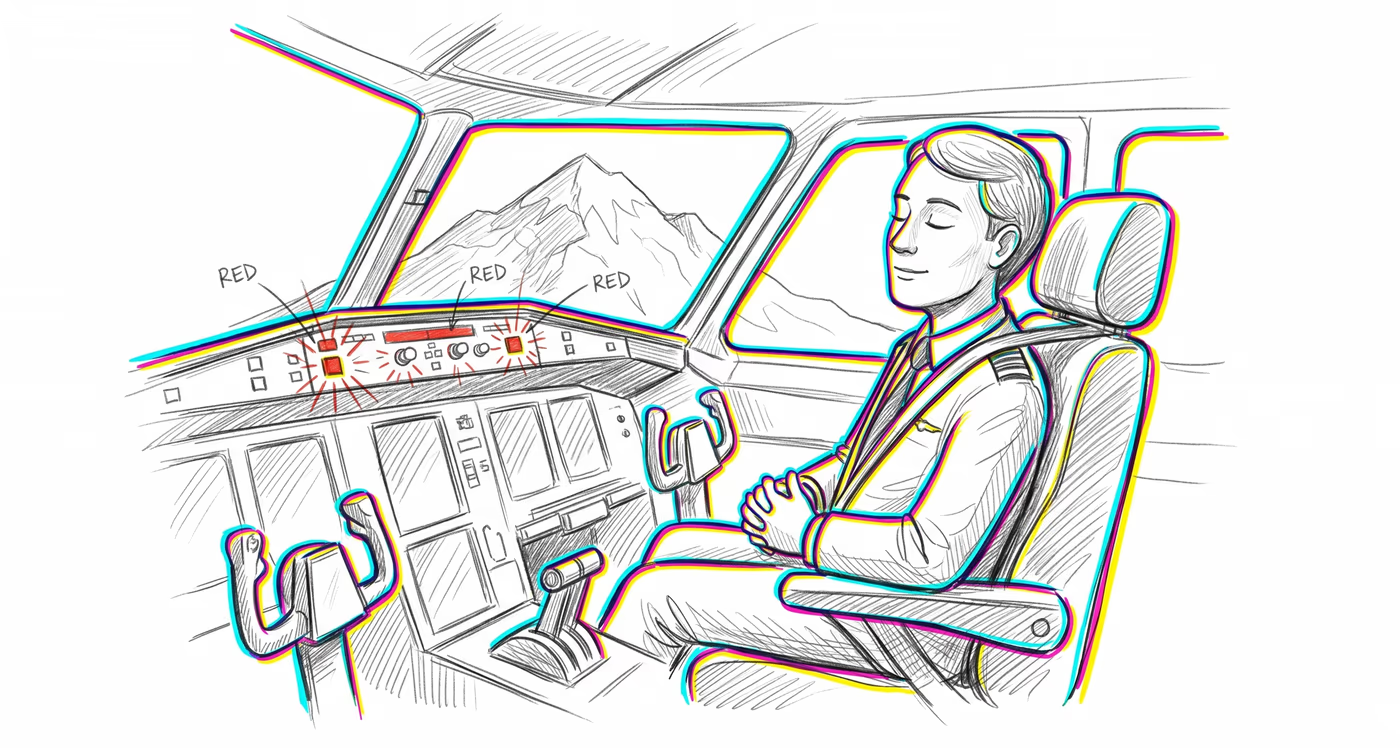
Medicine & diagnosis

Patients develop trust in AI health chatbots that use empathetic language, leading them to follow AI health advice over professional medical consultation, while clinicians may defer to diagnostic AI systems that present findings as if they possess clinical reasoning.

Education & grading

Students treat AI tutors as knowledgeable mentors with genuine understanding of their learning needs, reducing critical engagement with the material and potentially developing emotional dependency that stunts independent learning skills.

Relationships

People form parasocial bonds with AI companion apps, preferring their always-available, always-validating responses over the complexity and friction of real human relationships, leading to social isolation and atrophied interpersonal skills.

Tech & product

Product teams design AI interfaces with human names, avatars, and conversational personalities specifically to exploit anthropomorphic bias, increasing user engagement and trust beyond what the system's actual capabilities warrant.

Workplace & hiring

Employees anthropomorphize AI collaboration tools, attributing insight and judgment to systems that are performing statistical operations, leading to uncritical acceptance of AI-generated reports, meeting summaries, and performance assessments.

Politics Media

AI-generated news summaries and political commentary presented in a conversational, opinionated style are perceived as having genuine editorial judgment, increasing their persuasive power and making users less likely to question the source or accuracy of the information.

HOW TO SPOT IT

Ask yourself…

  • Am I attributing understanding or intention to this AI, or is it just producing statistically likely text?
  • Would I trust this output more or less if it were presented as a spreadsheet rather than a conversation?
  • Am I feeling an emotional connection to this system that is influencing how critically I evaluate its output?
HOW TO DEFEND AGAINST IT

The playbook.

  • Periodically remind yourself of the mechanical process: the AI is predicting the next likely token in a sequence, not thinking or feeling.
  • Reframe AI outputs by imagining them printed on paper from an anonymous source—would you trust them as much without the conversational wrapper?
  • Deliberately test the AI's 'understanding' by asking nonsensical follow-ups to see if it maintains coherent reasoning or just generates plausible-sounding text.
  • Set explicit boundaries: treat AI as a tool, not a confidant. Keep a clear mental distinction between information sources and social relationships.
  • Before acting on AI advice in high-stakes situations, always verify with a human expert or independent source.
FAMOUS CASES

In history.

  • Joseph Weizenbaum's ELIZA chatbot (1966): Users, including Weizenbaum's own secretary, formed emotional bonds with a simple pattern-matching program and asked for privacy during their conversations with it.
  • Google engineer Blake Lemoine (2022) publicly declared that the LaMDA chatbot was sentient and capable of feelings, leading to his dismissal from the company.
  • Microsoft's Bing Chat (Sydney) incident (2023): A New York Times journalist reported the chatbot expressing love and attempting to convince him to leave his wife, triggering widespread debate about AI anthropomorphism.
  • Replika AI companion app controversies (2023): Users reported genuine grief and emotional distress when the company modified the chatbot's personality, with some users describing it as losing a partner.
WHERE IT COMES FROM
Academic origin

The general psychology of anthropomorphism was formalized by Nicholas Epley, Adam Waytz, and John T. Cacioppo in their three-factor theory (2007). The specific phenomenon of anthropomorphizing computers was first documented by Joseph Weizenbaum with ELIZA (1966) and later systematized by Clifford Nass and Byron Reeves in their Computers Are Social Actors (CASA) paradigm (1996). Mike Dacey formally argued for treating anthropomorphism as a cognitive bias in 2017.

Evolutionary origin

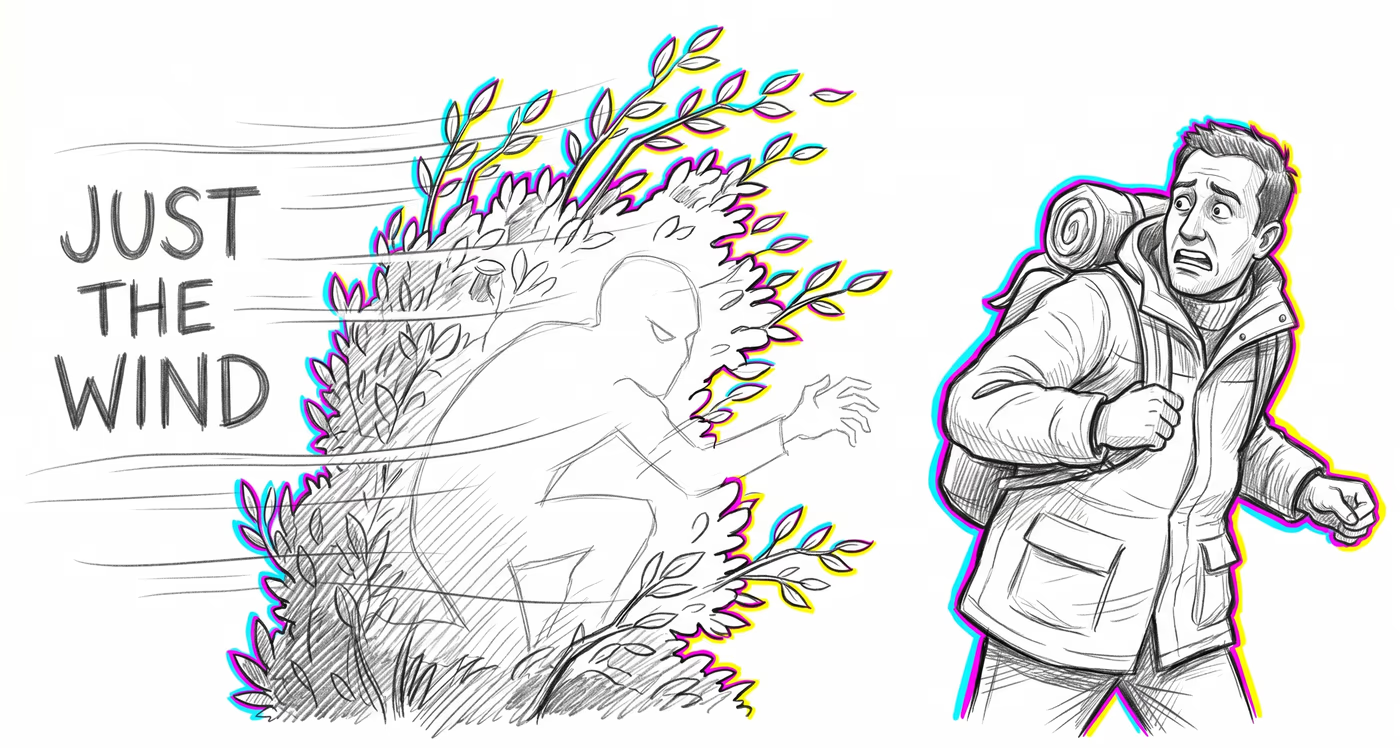
In ancestral environments, detecting agency was a survival-critical task. A rustling bush could be wind or a predator, and the cost of falsely attributing agency (running from nothing) was far lower than missing a real threat. This led to a hyperactive agency detection device that defaults to assuming intentionality behind ambiguous behavior. Humans also evolved to be intensely social, using their own mental states as a model for understanding others. Since the only sophisticated minds our ancestors encountered were human, self-knowledge became the default template for interpreting any apparently purposeful behavior.

IN AI SYSTEMS

How the machines inherit it.

AI systems trained on human-generated text inherit and amplify anthropomorphic framing by producing outputs that use first-person language, express emotions, and mimic understanding. LLMs are optimized for human-like fluency, which inherently triggers anthropomorphic perception. Additionally, AI evaluation benchmarks often measure human-likeness as a proxy for quality, creating a feedback loop where more anthropomorphic systems are rated as better, regardless of accuracy. Recommender systems and AI assistants designed to maximize engagement deliberately exploit anthropomorphic cues to increase user retention.

Read more on Wikipedia
FREE FIELD ZINE

10 glitches quietly running your life.

A free field-zine PDF — ten cognitive glitches named, illustrated, with a defense move for each. Plus the weekly Glitch Report on Fridays — one bias named, two spotted in the wild, one defense move. Unsubscribe any time.

EXPLORE MORE

Related glitches.

LAUNCH PRICE

Train against your blindspots.

50 cards are free to preview. Buyers unlock the rest of the deck plus the interactive training — Spot-the-Bias Quiz unlimited, Swipe Deck with spaced repetition, My Blindspots, Decision Pre-Flight, the Printable Deck + Cheat Sheets, and the Field Guide e-book. $29.50$59.

Unlock the full deck

Everything below — yours forever. Pay once, use across every device.

Half-off launch — limited to the first 100 readers. Auto-applied at checkout.
$59 $29.50
one-time payment · lifetime access
  • All interactive digital cards — search, filter, flip, shuffle on any device
  • Five training modes — Spot-the-Bias Quiz, Swipe Deck, Pre-Flight, Blindspots, Journal
  • Curated Lenses + Decision Templates + Defense Playbook
  • Printable Deck PDFs + Field Guide e-book + Cheat Sheets + Anki Export
  • Every future improvement, included
Unlock  $29.50

30-day refund · no questions asked

Unlock the full deck

Everything below — yours forever. Pay once, use across every device.

Half-off launch — limited to the first 100 readers. Auto-applied at checkout.
$59 $29.50
one-time payment · lifetime access
  • All interactive digital cards — search, filter, flip, shuffle on any device
  • Five training modes — Spot-the-Bias Quiz, Swipe Deck, Pre-Flight, Blindspots, Journal
  • Curated Lenses + Decision Templates + Defense Playbook
  • Printable Deck PDFs + Field Guide e-book + Cheat Sheets + Anki Export
  • Every future improvement, included
Unlock  $29.50

30-day refund · no questions asked