Peltzman Effect

aka Risk Compensation · Risk Compensation Bias · Offsetting Behavior

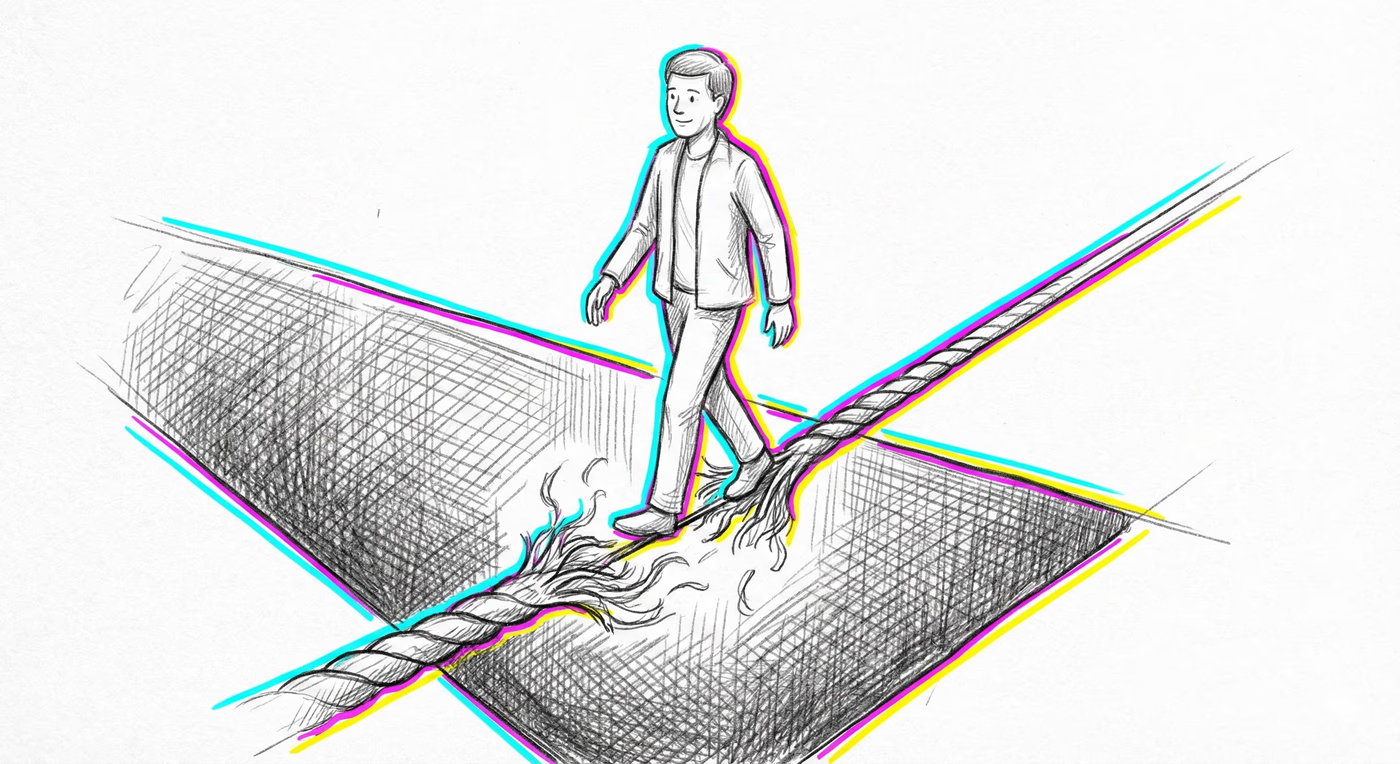
Behaving more recklessly when safety measures are in place, because feeling protected reduces perceived risk.

WHAT IT IS

The glitch, explained plainly.

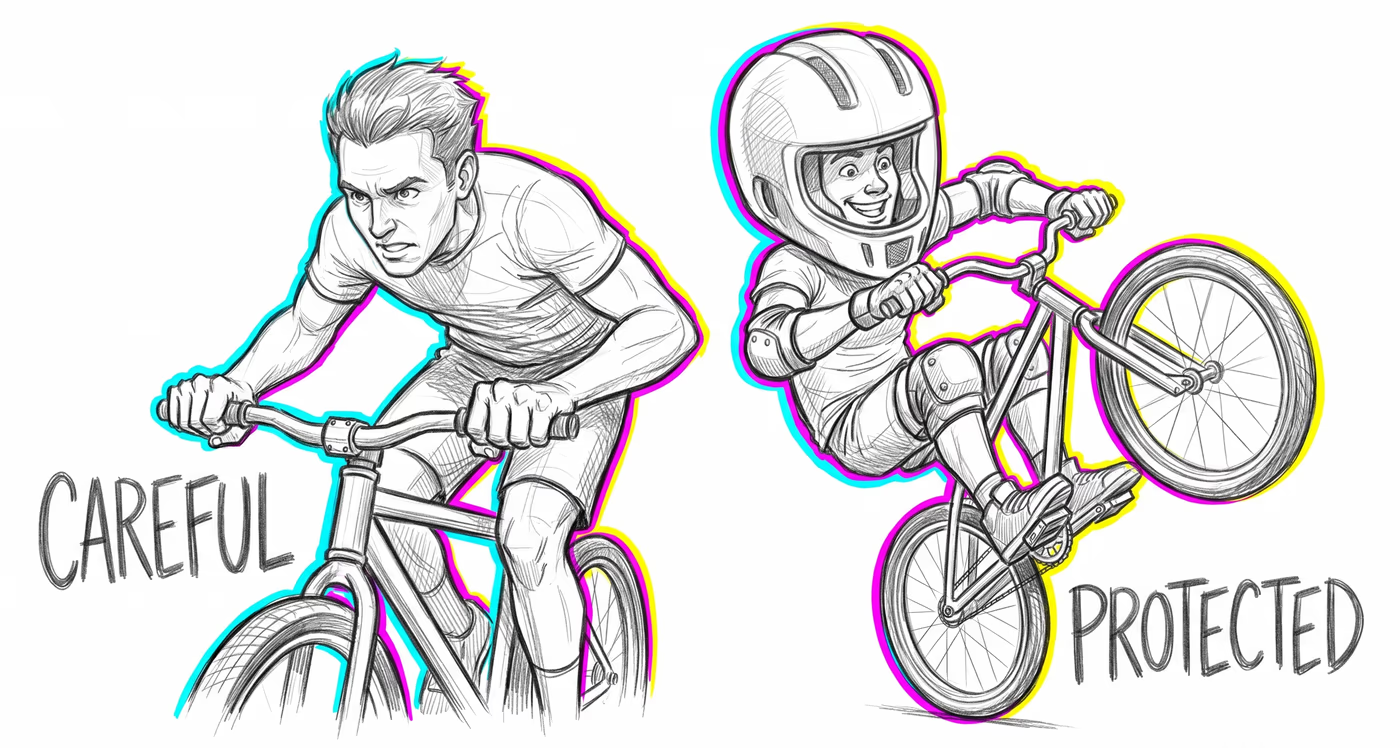
Imagine you're riding your bike really carefully on a bumpy road. Then someone gives you a big, cushy helmet and knee pads. Now you feel so safe that you start going faster and trying to jump off curbs — and you end up falling just as much as before, except now you might crash into someone else too. The safety gear made you braver, not safer.

The Peltzman Effect describes a counterintuitive pattern in which the introduction of safety measures leads individuals to partially or fully offset those safety gains by behaving more recklessly. When people perceive their environment as safer — through regulations, protective equipment, or technological safeguards — they unconsciously recalibrate their behavior to accept a higher level of risk, maintaining something close to their preferred personal 'risk budget.' This behavioral adaptation means that safety interventions often deliver significantly less benefit than engineering models predict, and in some cases can redistribute harm onto third parties, such as pedestrians or bystanders who did not benefit from the safety measure. The effect is not about conscious recklessness; rather, it operates through a subtle shift in vigilance and caution that accompanies the feeling of being protected.

SOUND FAMILIAR?

Where it shows up.

  1. 01 After a company installs state-of-the-art fire suppression systems throughout its warehouse, the safety manager notices that workers have gradually stopped following the protocol of keeping flammable materials in designated zones. When questioned, workers say they feel the new systems will handle any fire that breaks out.
  2. 02 A hospital introduces a new AI-powered drug interaction checker into its pharmacy workflow. Over the following months, pharmacists begin spending less time manually reviewing prescriptions, and near-miss medication errors actually increase slightly despite the new technology.
  3. 03 A city installs bright LED street lighting and high-definition security cameras along a previously dark park pathway. Crime statistics show a modest reduction in muggings, but jogging injuries after midnight triple, as residents now feel comfortable running alone through the park at hours they previously avoided entirely.
  4. 04 After receiving a COVID-19 vaccine, Marcus begins attending large indoor gatherings without masking and stops washing his hands as frequently, reasoning that vaccination has made these precautions unnecessary — even though breakthrough infections remain possible and he lives with an immunocompromised family member.
  5. 05 A financial firm implements rigorous automated compliance checks on all trades. Over the next quarter, individual traders begin making increasingly leveraged bets, telling themselves that the system will flag anything truly dangerous before it goes through. The firm's aggregate risk exposure climbs steadily even as each individual trade passes the automated screen.
IN DIFFERENT DOMAINS

Where it shows up at work.

The same glitch looks different depending on the terrain. Finance, medicine, a relationship, a team — same mechanism, different costume.

Finance & investing

Investors and traders increase leverage and take larger positions when they believe risk-management tools (stop-losses, hedging algorithms, compliance filters) are protecting them, leading to aggregate portfolio risk that exceeds what existed before those tools were implemented.
Medicine & diagnosis

Patients who receive preventive treatments or screenings may adopt less healthy lifestyles — such as continuing to smoke after receiving a statin prescription — because the medical intervention creates a false sense of comprehensive protection against the underlying disease.

Education & grading

Students provided with extensive safety nets — unlimited retakes, lenient grading policies, or AI-assisted tutoring — may reduce their study effort and preparation, resulting in less deep learning than the support systems were designed to produce.

Relationships

Partners who feel emotionally secure in a committed relationship may put less effort into maintaining kindness, communication, and attentiveness, assuming the relationship's stability will absorb neglectful behavior.

Tech & product

Users with auto-save and version-control features take less care with their work, making careless edits or deletions they would never risk on systems without undo capability; similarly, password managers may lead users to reuse weak master passwords.

Workplace & hiring

Employees provided with comprehensive safety gear (harnesses, goggles, steel-toed boots) may take shortcuts on procedural safety protocols, reasoning that their equipment will protect them from consequences of noncompliance.

Politics Media

After governments enact sweeping safety regulations (e.g., pandemic mandates, environmental protections), public compliance with individual precautionary behaviors may decline, as citizens assume institutional safeguards have eliminated personal responsibility for risk management.

HOW TO SPOT IT

Ask yourself…

  • Am I behaving differently — less carefully, more aggressively — specifically because a safety measure is in place?
  • If this protection suddenly disappeared, would I still be comfortable with the level of risk I am currently taking?
  • Am I treating a partial safeguard as if it provides complete protection?
HOW TO DEFEND AGAINST IT

The playbook.

  • Perform a 'naked baseline' test: mentally remove the safety measure and ask whether you would still engage in this behavior at this intensity level.
  • Track your behavioral changes after any new safety system is introduced — keep a log of how your habits shift in the first weeks.
  • Treat safety measures as reducing consequences, not eliminating risk: mentally reframe protective equipment as 'reduces harm by 40%' rather than 'makes me safe.'
  • Use pre-commitment rules: set behavioral boundaries before the safety measure is in place, and commit to maintaining them afterward.
  • Ask who else bears the risk of your increased boldness — the Peltzman Effect often redistributes harm to unprotected third parties.
FAMOUS CASES

In history.

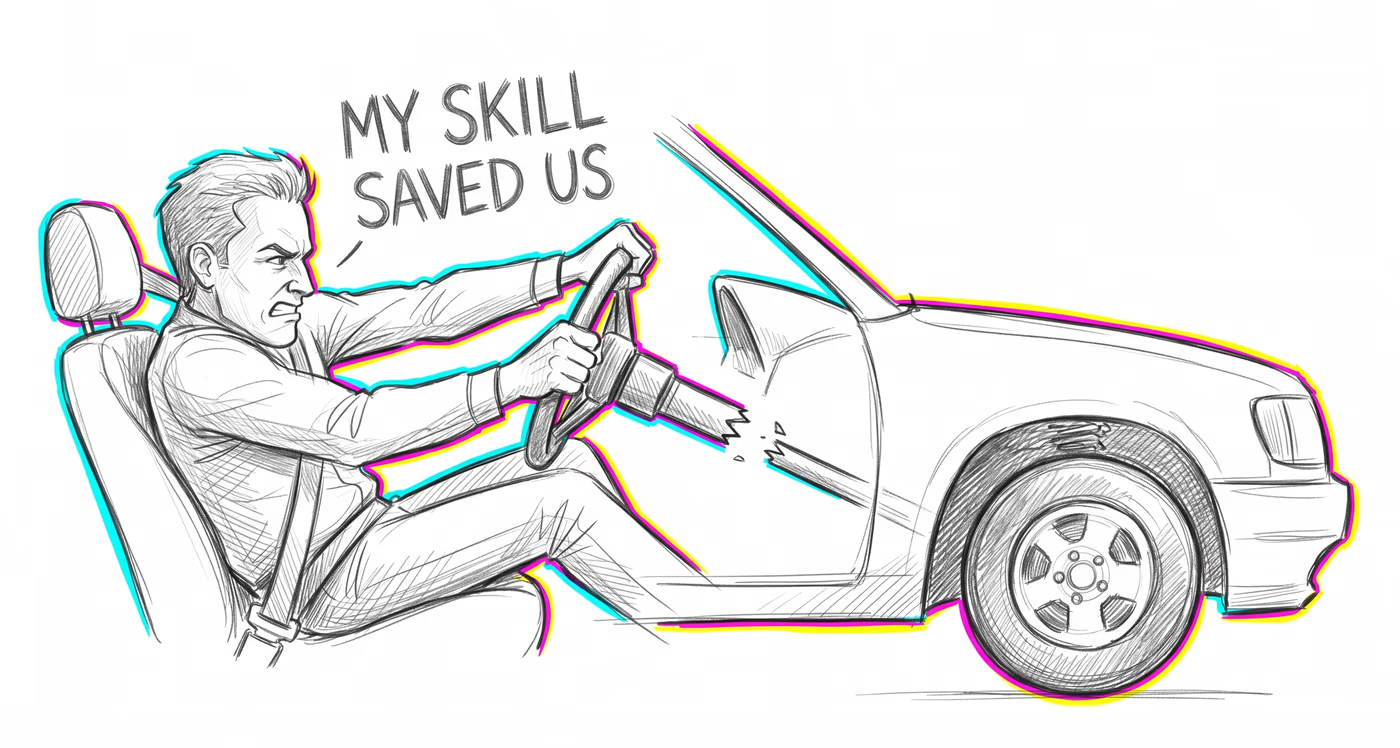
  • After the 1966 U.S. National Traffic and Motor Vehicle Safety Act mandated seatbelts and safety features, Peltzman's analysis suggested occupant deaths decreased but pedestrian and cyclist deaths increased, partially offsetting the gains.
  • A 2010 study of NASCAR found that mandated head-and-neck restraint systems virtually eliminated serious driver injuries but simultaneously increased the number of accidents per race.
  • The Munich taxicab study found that cabs equipped with anti-lock brakes had slightly higher crash rates than conventional cabs, as ABS-equipped drivers drove more aggressively.
  • During the COVID-19 pandemic, studies in Germany showed that compliance with safety behaviors decreased after stricter government regulations were introduced, consistent with the Peltzman Effect.
WHERE IT COMES FROM
Academic origin

Sam Peltzman, 1975. Published 'The Effects of Automobile Safety Regulation' in the Journal of Political Economy (Vol. 83, No. 4, pp. 677–725). Gerald J.S. Wilde extended the concept as 'Risk Homeostasis Theory' in 1982 in Risk Analysis.

Evolutionary origin

In ancestral environments, accurately calibrating effort and caution to actual threat levels was critical for resource acquisition. An organism that remained maximally cautious when danger was objectively low would miss foraging, mating, and territorial opportunities. The tendency to relax vigilance when the environment signals safety — and to ramp it up under threat — was an efficient energy-management strategy that maximized reproductive fitness across variable risk landscapes.

IN AI SYSTEMS

How the machines inherit it.

AI safety guardrails and content filters can induce a Peltzman-like effect in users and developers: when people trust that an AI system has robust safety mechanisms, they may provide it with riskier prompts, deploy it in higher-stakes contexts with less human oversight, or reduce manual review of AI outputs — increasing the probability of harmful outcomes slipping through edge cases the guardrails were not designed to catch.

Read more on Wikipedia
FREE FIELD ZINE

10 glitches quietly running your life.

A free field-zine PDF — ten cognitive glitches named, illustrated, with a defense move for each. Plus the weekly Glitch Report on Fridays — one bias named, two spotted in the wild, one defense move. Unsubscribe any time.

EXPLORE MORE

Related glitches.

LAUNCH PRICE

Train against your blindspots.

50 cards are free to preview. Buyers unlock the rest of the deck plus the interactive training — Spot-the-Bias Quiz unlimited, Swipe Deck with spaced repetition, My Blindspots, Decision Pre-Flight, the Printable Deck + Cheat Sheets, and the Field Guide e-book. $29.50$59.

Unlock the full deck

Everything below — yours forever. Pay once, use across every device.

Half-off launch — limited to the first 100 readers. Auto-applied at checkout.
$59 $29.50
one-time payment · lifetime access
  • All interactive digital cards — search, filter, flip, shuffle on any device
  • Five training modes — Spot-the-Bias Quiz, Swipe Deck, Pre-Flight, Blindspots, Journal
  • Curated Lenses + Decision Templates + Defense Playbook
  • Printable Deck PDFs + Field Guide e-book + Cheat Sheets + Anki Export
  • Every future improvement, included
Unlock  $29.50

30-day refund · no questions asked

Unlock the full deck

Everything below — yours forever. Pay once, use across every device.

Half-off launch — limited to the first 100 readers. Auto-applied at checkout.
$59 $29.50
one-time payment · lifetime access
  • All interactive digital cards — search, filter, flip, shuffle on any device
  • Five training modes — Spot-the-Bias Quiz, Swipe Deck, Pre-Flight, Blindspots, Journal
  • Curated Lenses + Decision Templates + Defense Playbook
  • Printable Deck PDFs + Field Guide e-book + Cheat Sheets + Anki Export
  • Every future improvement, included
Unlock  $29.50

30-day refund · no questions asked