Illusion of Control

aka Control Illusion · Illusory Control

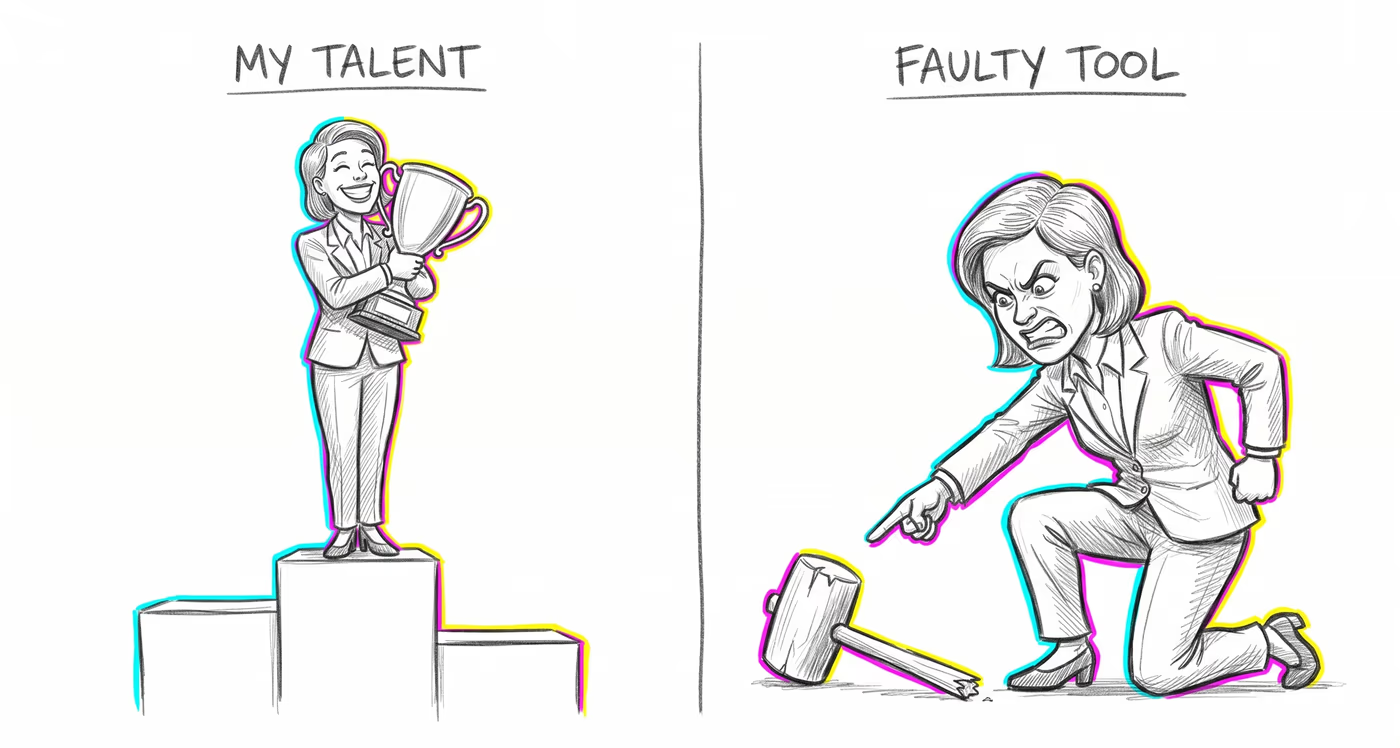
Overestimating your ability to influence outcomes that are actually determined by chance or factors beyond your control.

WHAT IT IS

The glitch, explained plainly.

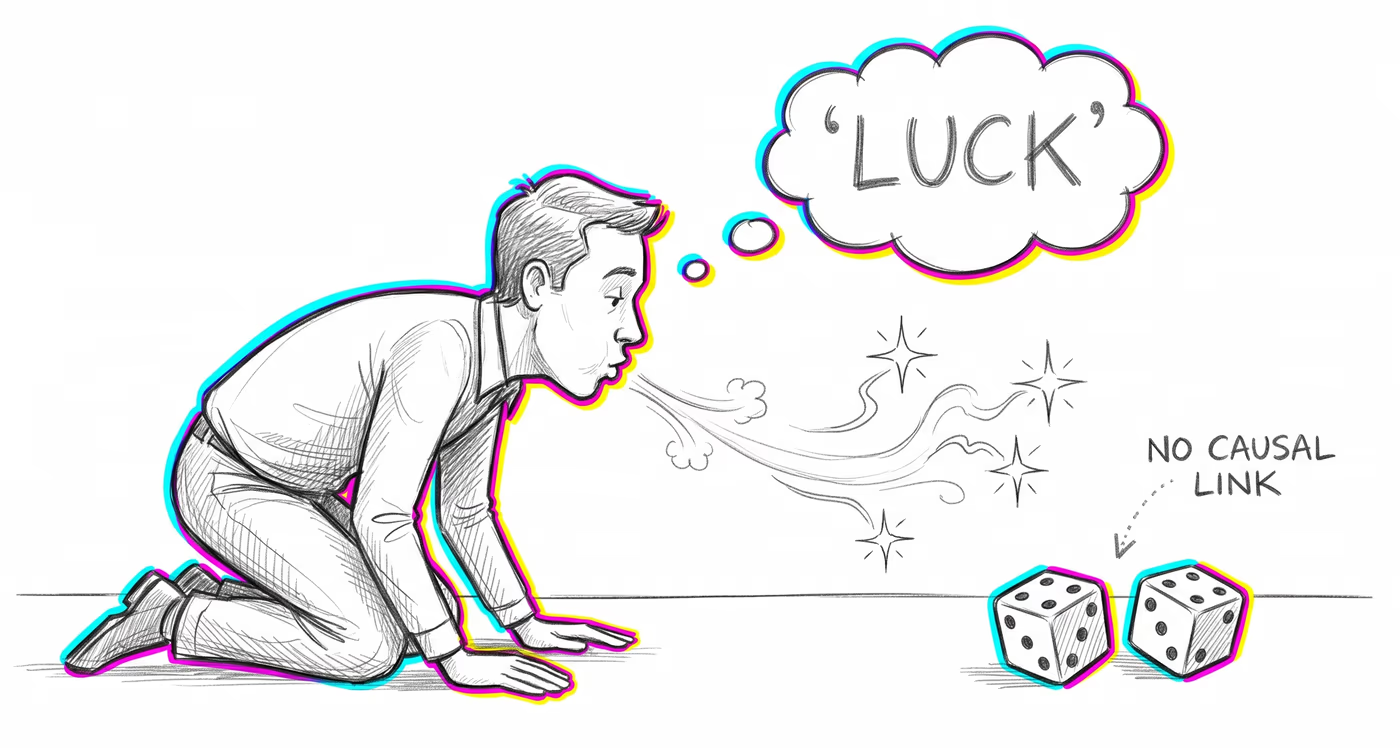
Imagine you're playing a board game where you roll dice. You blow on the dice before throwing them, and when you get a good number, you think your blowing helped. But blowing on dice doesn't change what number comes up — it's totally random. Your brain just tricks you into thinking you had something to do with it because you did something right before it happened.

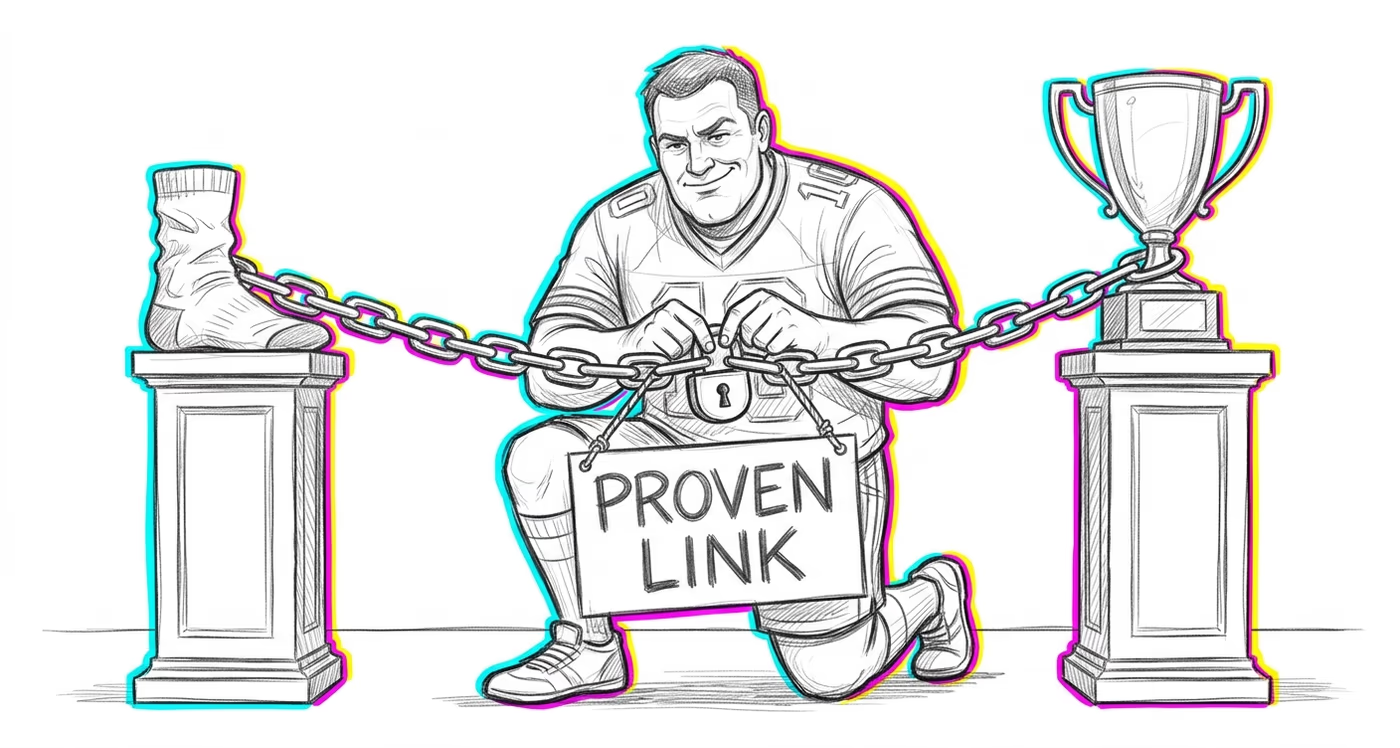
The Illusion of Control emerges when people behave as though they can influence outcomes that are objectively determined by chance, randomness, or forces entirely outside their sphere of influence. This bias is amplified by the presence of 'skill cues' — features of a situation normally associated with skill-based tasks, such as personal choice, competition, familiarity, and active involvement — which trick the mind into treating a chance event as a controllable one. Critically, the illusion is not simply about feeling optimistic; it is a systematic confusion between causation and coincidence, where people perceive contingency between their actions and outcomes even when none exists. The bias is considered a 'positive illusion' associated with normal mental health, yet it can lead to catastrophic overconfidence in domains like gambling, investing, and corporate strategy.

SOUND FAMILIAR?

Where it shows up.

  1. 01 Marcus, an amateur day trader, spends hours each morning analyzing chart patterns and executing trades. After three months of modest gains that roughly track the broader market's rise, he tells friends he has 'cracked the code' to stock picking and plans to quit his job to trade full-time.
  2. 02 During a craps game, Sandra insists on being the one to roll the dice herself rather than letting anyone else throw them. She has a specific ritual of shaking them three times and whispering before each toss, and she genuinely believes her technique improves her results.
  3. 03 A startup CEO, after spending weeks preparing detailed strategic plans, feels confident the company will hit all its growth targets. When a competitor unexpectedly launches a rival product and market conditions shift, she is blindsided — she had planned extensively for internal execution but never seriously considered that uncontrollable external factors could derail everything.
  4. 04 During a raffle at a company event, Raj is offered either a pre-assigned ticket or the chance to pick his own from a bowl. He insists on picking his own, and when asked why, he says he 'has a better feeling about choosing.' He later offers to sell his ticket for twice the face value, even though every ticket has the same odds.
  5. 05 A hospital administrator implements a new scheduling protocol and monitors patient satisfaction scores closely. When scores improve slightly — a change within normal statistical fluctuation — she attributes it to the protocol and rolls it out hospital-wide. She doesn't consider that seasonal trends, staffing changes, and measurement noise could account for the shift.
IN DIFFERENT DOMAINS

Where it shows up at work.

The same glitch looks different depending on the terrain. Finance, medicine, a relationship, a team — same mechanism, different costume.

Finance & investing

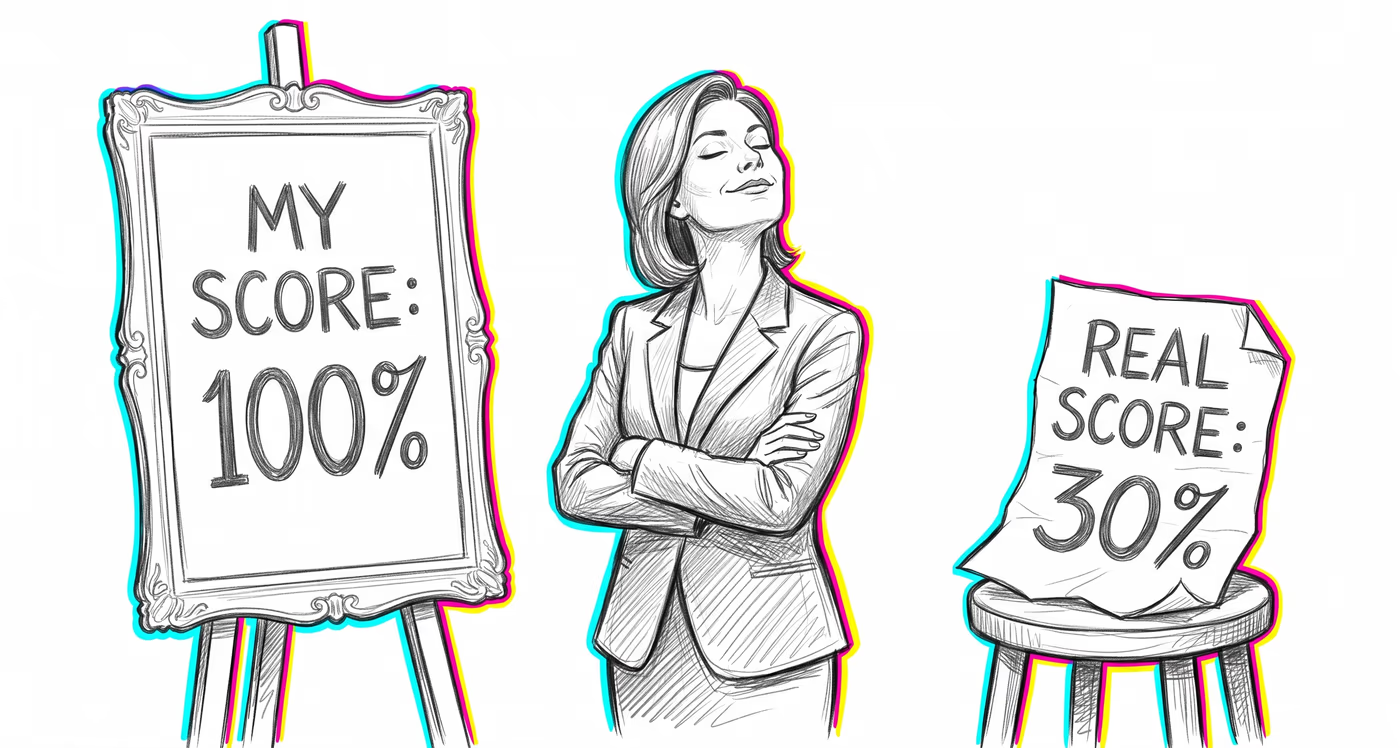
Investors who actively pick individual stocks and frequently trade tend to believe their research and decision-making skills give them an edge over the market, leading to over-trading, under-diversification, and concentrated positions that often underperform passive index strategies. The bias also manifests in traders who use limit orders and technical analysis as though these tools provide deterministic control over inherently probabilistic market movements.

Medicine & diagnosis

Patients may believe that strictly following alternative health rituals or specific supplement regimens gives them control over disease outcomes that are largely determined by biology and chance, potentially delaying evidence-based treatment. Clinicians can fall prey to the illusion when they attribute patient recovery to their specific treatment decisions while underweighting the role of natural disease progression or placebo effects.

Education & grading

Teachers who implement new classroom strategies may attribute subsequent improvements in student performance to their specific interventions, without accounting for regression to the mean, maturation effects, or other confounding variables. Students may also develop rituals around studying — using a specific pen, sitting in a particular seat — believing these habits influence exam outcomes beyond their actual preparation.

Relationships

People often believe they can control their partner's emotions or the trajectory of a relationship through specific behaviors or strategies, leading to frustration and self-blame when the partner's responses don't align with expectations. Parents frequently overestimate their control over their children's outcomes, attributing behavioral problems to personal parenting failures rather than recognizing the role of temperament, peer influence, and developmental factors.

Tech & product

Product managers may over-attribute changes in user metrics to their specific feature decisions while ignoring seasonal trends, competitor actions, or algorithm changes. Users given more customization options in an interface often report higher satisfaction and perceived quality, even when the customization has no objective effect on performance — a pattern designers can exploit or inadvertently reinforce.

Workplace & hiring

Managers who micromanage projects often believe their close involvement is responsible for team success, failing to recognize that outcomes depend on broader organizational factors, market conditions, and employee autonomy. Corporate strategic planning processes can become ritualistic — detailed plans create a sense of control over unpredictable market dynamics, even when the plans have minimal bearing on actual outcomes.

Politics Media

Voters who engage in extensive political activism — canvassing, posting on social media, attending rallies — may overestimate their personal impact on election outcomes, leading to shock and disillusionment when results diverge from expectations. Political leaders and policymakers may attribute economic trends or social changes to their specific policies while underweighting global forces, demographic shifts, and cyclical patterns.

HOW TO SPOT IT

Ask yourself…

  • Am I assuming that my personal involvement in this outcome gives me more influence than the evidence supports?
  • If I removed myself from this situation entirely, would the outcome probabilities actually change?
  • Am I confusing a ritual or habit with an actual causal mechanism — could this be pure coincidence?
HOW TO DEFEND AGAINST IT

The playbook.

  • Before attributing an outcome to your actions, ask: 'What is the base rate of this outcome happening regardless of anyone's intervention?'
  • Run a pre-mortem: imagine the outcome failed despite your best efforts, and list all the uncontrollable factors that could cause that failure.
  • Track outcomes systematically over time rather than relying on selective memory of successes.
  • Seek cognitive diversity — invite people with different perspectives to challenge your assumptions about what you can control.
  • Replace the question 'How can I control this?' with 'What is my actual sphere of influence here, and what falls outside it?'
FAMOUS CASES

In history.

  • The 2008 financial crisis was partly fueled by traders and executives at major banks who believed their complex financial models gave them control over risk in mortgage-backed securities markets, drastically underestimating the role of systemic, uncontrollable market forces.
  • NASA's pre-Challenger launch culture exhibited elements of illusion of control, where engineers and managers believed rigorous procedures could fully mitigate the risk of O-ring failure in cold temperatures, leading to an underestimation of uncontrollable environmental variables.
  • The Deepwater Horizon oil spill in 2010 was preceded by BP executives' confidence that their safety protocols and technology gave them sufficient control over deep-water drilling risks, despite the inherently unpredictable nature of subsea conditions.
WHERE IT COMES FROM
Academic origin

Ellen J. Langer, 1975. Formalized in her paper 'The illusion of control' published in the Journal of Personality and Social Psychology, 32(2), 311–328.

Evolutionary origin

In ancestral environments, a bias toward assuming personal agency over outcomes was adaptive because it motivated persistent action and exploration. An early human who believed their hunting technique or foraging route mattered was more likely to keep trying, refining, and surviving than one who perceived outcomes as purely random. This bias toward perceived control also reduces anxiety and helplessness, both of which could be paralyzing in life-threatening environments where quick, confident action was essential.

IN AI SYSTEMS

How the machines inherit it.

Machine learning systems trained on historical data can exhibit an algorithmic form of illusory control when they overfit to noise in training data, treating random fluctuations as meaningful patterns they can predict and control. Recommendation algorithms may also give users an inflated sense of control through excessive customization options that have negligible impact on actual outcomes. Additionally, AI-powered trading systems may be deployed with overconfidence in their predictive accuracy, ignoring that past data patterns do not guarantee future controllability of market outcomes.

Read more on Wikipedia
FREE FIELD ZINE

10 glitches quietly running your life.

A free field-zine PDF — ten cognitive glitches named, illustrated, with a defense move for each. Plus the weekly Glitch Report on Fridays — one bias named, two spotted in the wild, one defense move. Unsubscribe any time.

EXPLORE MORE

Related glitches.

LAUNCH PRICE

Train against your blindspots.

50 cards are free to preview. Buyers unlock the rest of the deck plus the interactive training — Spot-the-Bias Quiz unlimited, Swipe Deck with spaced repetition, My Blindspots, Decision Pre-Flight, the Printable Deck + Cheat Sheets, and the Field Guide e-book. $29.50$59.

Unlock the full deck

Everything below — yours forever. Pay once, use across every device.

Half-off launch — limited to the first 100 readers. Auto-applied at checkout.
$59 $29.50
one-time payment · lifetime access
  • All interactive digital cards — search, filter, flip, shuffle on any device
  • Five training modes — Spot-the-Bias Quiz, Swipe Deck, Pre-Flight, Blindspots, Journal
  • Curated Lenses + Decision Templates + Defense Playbook
  • Printable Deck PDFs + Field Guide e-book + Cheat Sheets + Anki Export
  • Every future improvement, included
Unlock  $29.50

30-day refund · no questions asked

Unlock the full deck

Everything below — yours forever. Pay once, use across every device.

Half-off launch — limited to the first 100 readers. Auto-applied at checkout.
$59 $29.50
one-time payment · lifetime access
  • All interactive digital cards — search, filter, flip, shuffle on any device
  • Five training modes — Spot-the-Bias Quiz, Swipe Deck, Pre-Flight, Blindspots, Journal
  • Curated Lenses + Decision Templates + Defense Playbook
  • Printable Deck PDFs + Field Guide e-book + Cheat Sheets + Anki Export
  • Every future improvement, included
Unlock  $29.50

30-day refund · no questions asked