The same glitch looks different depending on the terrain. Finance, medicine, a
relationship, a team — same mechanism, different costume.
Finance & investing
Fraud detection systems flag transactions based on patterns that match known fraud, but because fraudulent transactions are rare compared to legitimate ones, the vast majority of flagged transactions are false positives. Investigators who treat every flag as near-certain fraud waste resources and may freeze innocent accounts, confusing the probability of matching a fraud pattern given innocence with the probability of fraud given a match.
Medicine & diagnosis
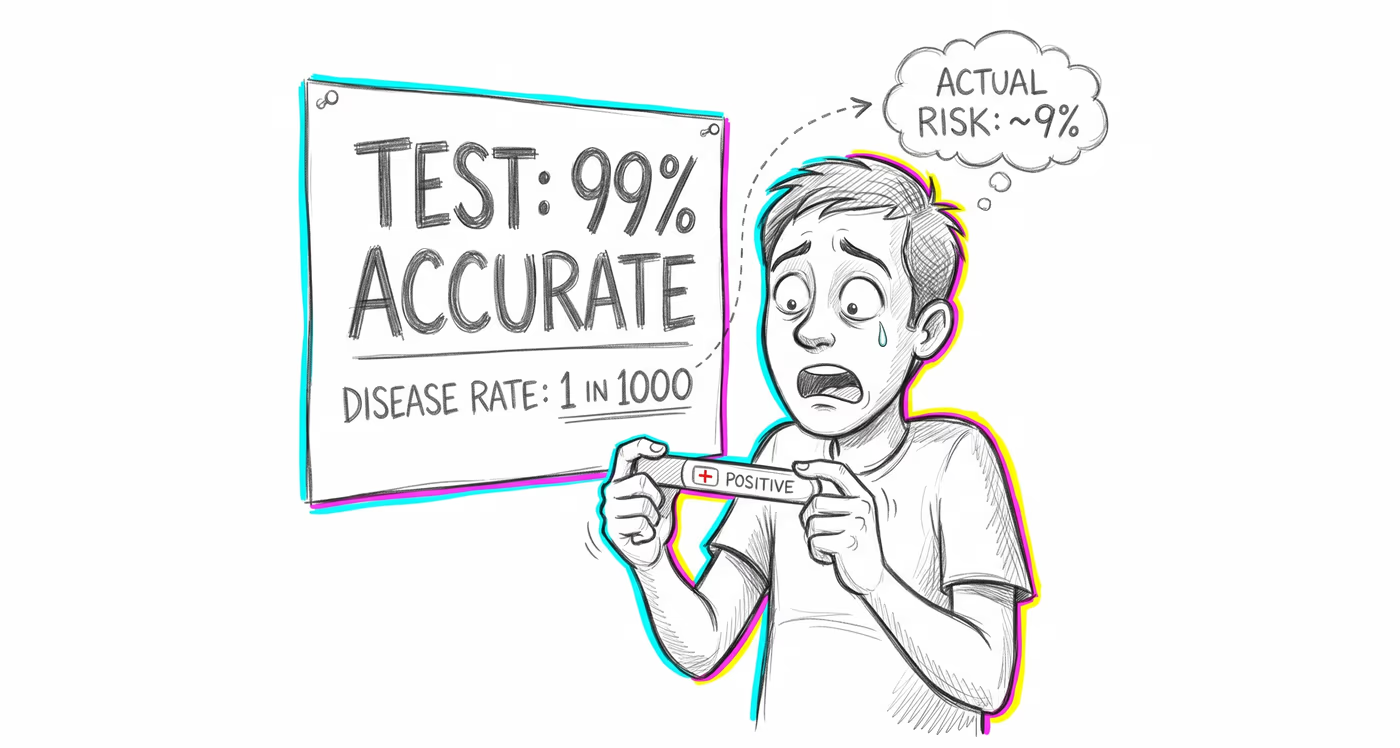
Clinicians and patients frequently misinterpret positive screening results for rare conditions, assuming a positive test means near-certain disease. Because the base rate of many screened conditions is very low, even highly accurate tests produce far more false positives than true positives in the general population, leading to unnecessary anxiety, invasive follow-up procedures, and overtreatment.
Education & grading
When standardized tests identify students as 'gifted' or 'at-risk' based on score thresholds, educators sometimes treat the classification as definitive. They confuse the test's sensitivity (how well it detects the trait if present) with the predictive value (how likely the trait is present given the score), leading to misplacement of students, especially in large or diverse populations where base rates vary.
Relationships
People invert conditional probabilities in interpreting social signals — for example, assuming that because distant behavior is common when someone is upset, any distant behavior must mean that person is upset. This ignores the many other explanations for the behavior and the low base rate of actual conflict, creating unnecessary anxiety and accusations.
Tech & product
Machine learning classifiers are often evaluated by accuracy or recall, but when deployed to detect rare events (spam, malware, anomalous behavior), even small false-positive rates generate floods of false alerts. Teams that focus on the model's accuracy rate without considering the base rate of the target event can grossly overestimate the reliability of positive predictions, leading to alert fatigue and wasted engineering effort.
Workplace & hiring
HR analytics that flag employees as flight risks based on behavioral patterns may confuse the probability of matching the pattern given an employee stays with the probability of leaving given a match. Because most employees stay, flagging systems can overwhelm managers with false alarms, damaging trust and wasting retention resources.
Politics Media
Media coverage of rare but dramatic events (terrorism, mass shootings) can lead the public to commit this fallacy: because nearly all such events involve a certain profile, people assume that anyone matching the profile is dangerous, ignoring that the overwhelming majority of people fitting the profile are harmless. This drives discriminatory profiling policies and disproportionate fear.