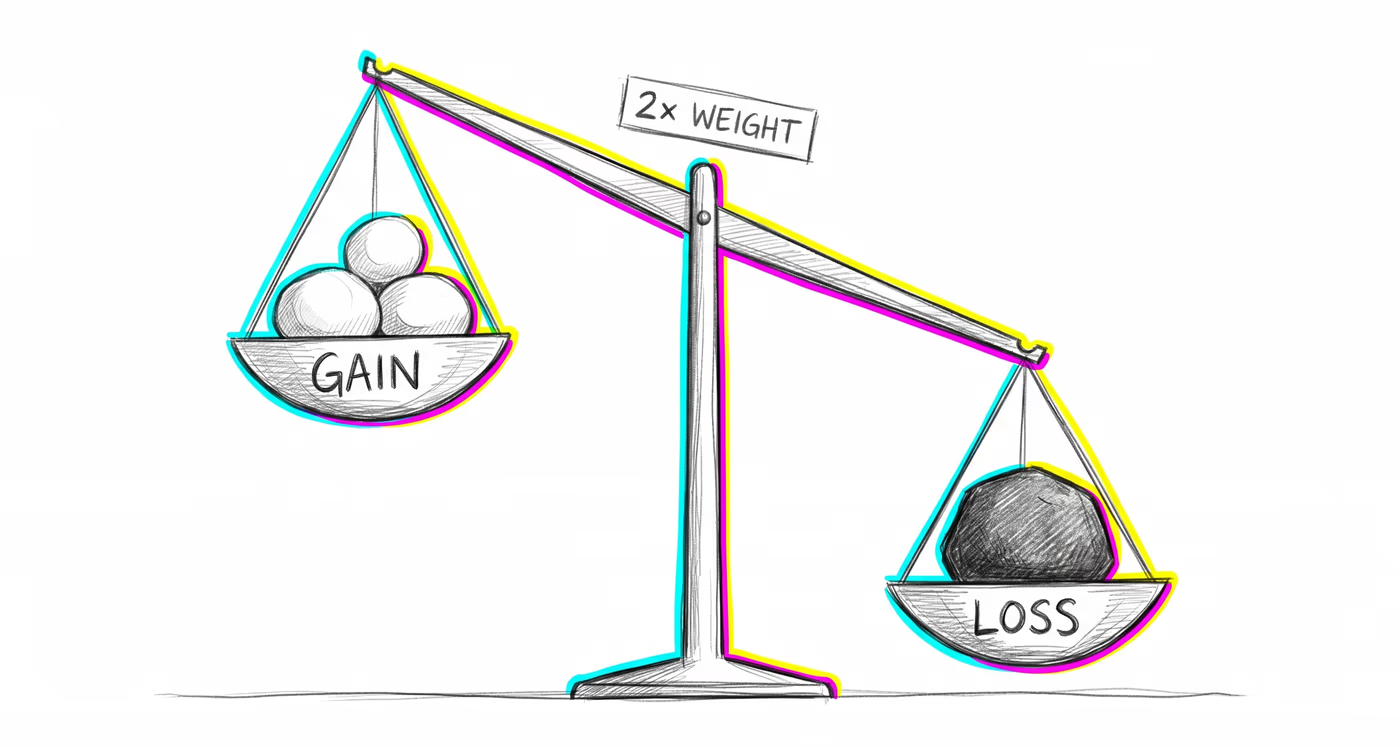
The same glitch looks different depending on the terrain. Finance, medicine, a
relationship, a team — same mechanism, different costume.
Finance & investing
Investors favor structured financial products that promise a 'guaranteed return' conditional on the underlying asset not defaulting, without adequately weighing the probability of default itself. This leads to overpaying for products with illusory safety that frame risk across sequential stages.
Medicine & diagnosis
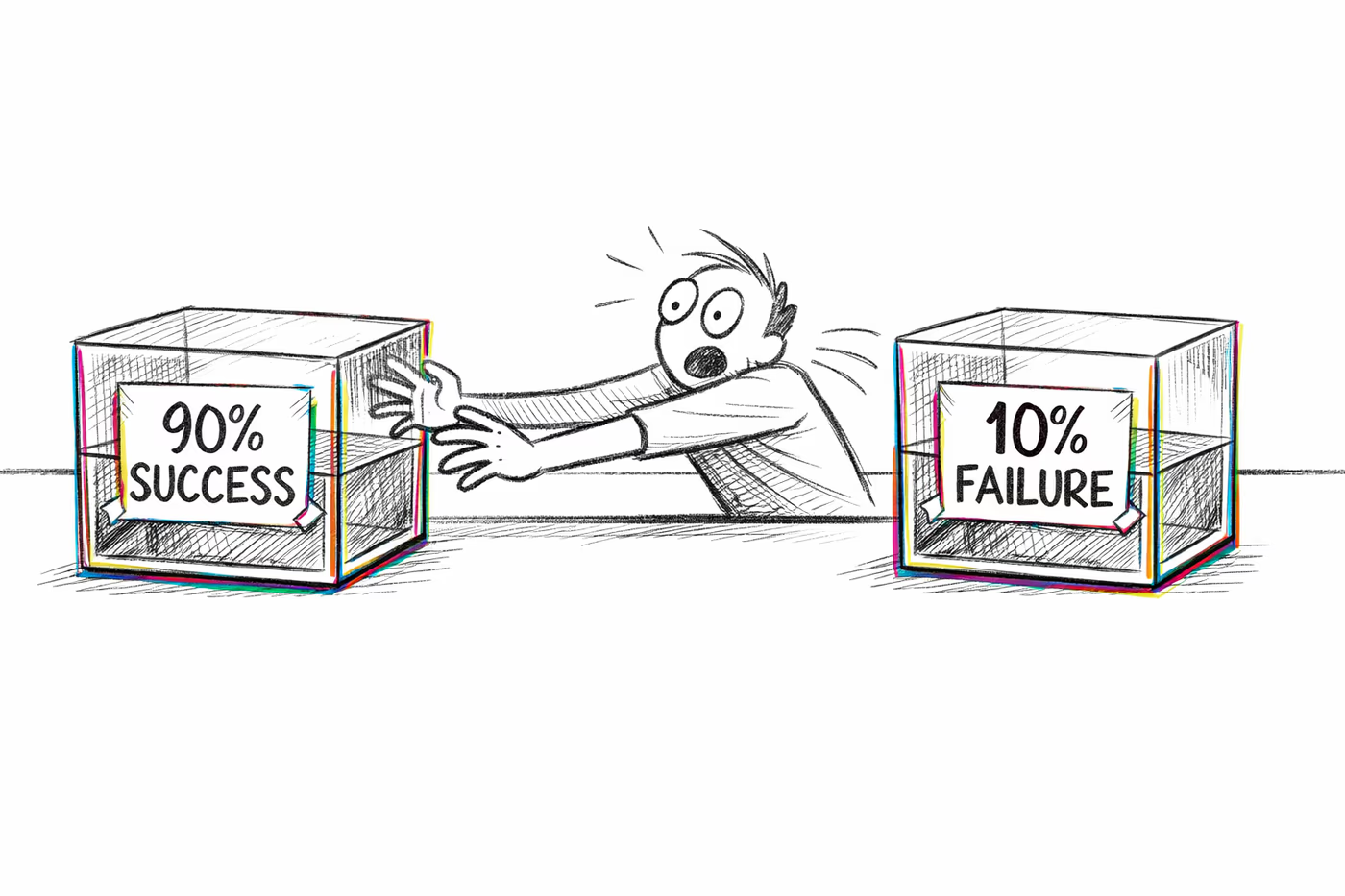
Patients and clinicians prefer treatments described as 'certain to cure if the diagnosis is correct,' mentally discounting the diagnostic uncertainty. This leads to under-investigation of diagnostic accuracy and overconfidence in conditional treatment outcomes.
Education & grading
Students choose study strategies that guarantee mastery of material 'once they understand the prerequisites,' without honestly assessing whether they've actually mastered those prerequisites. This creates false confidence about exam readiness.
Relationships
People commit to long-term plans — moving cities, marriage — based on the certainty of the final outcome ('we'll be happy once we're together') while ignoring uncertain preconditions like career stability or compatibility under stress.
Tech & product
Subscription services and SaaS products use multi-stage onboarding (free trial → paid plan) where users fixate on the value of the free stage and treat the transition to paid as a distant, abstract risk rather than a near-certain cost.
Workplace & hiring
Managers approve multi-phase projects by evaluating each phase independently, treating the final deliverable as certain once the project is 'approved,' while neglecting the compounding probability of delays, budget overruns, or cancellation at each earlier phase.
Politics Media
Policy proposals are framed as delivering guaranteed benefits 'once implemented,' causing voters to ignore the substantial uncertainty of whether the policy will actually pass, be funded, or be enforced as described.