Regret Aversion

aka Regret Theory · Anticipated Regret Bias · Regret Avoidance

Avoiding decisions or choosing safe options to escape the painful emotion of later regretting a 'wrong' choice.

WHAT IT IS

The glitch, explained plainly.

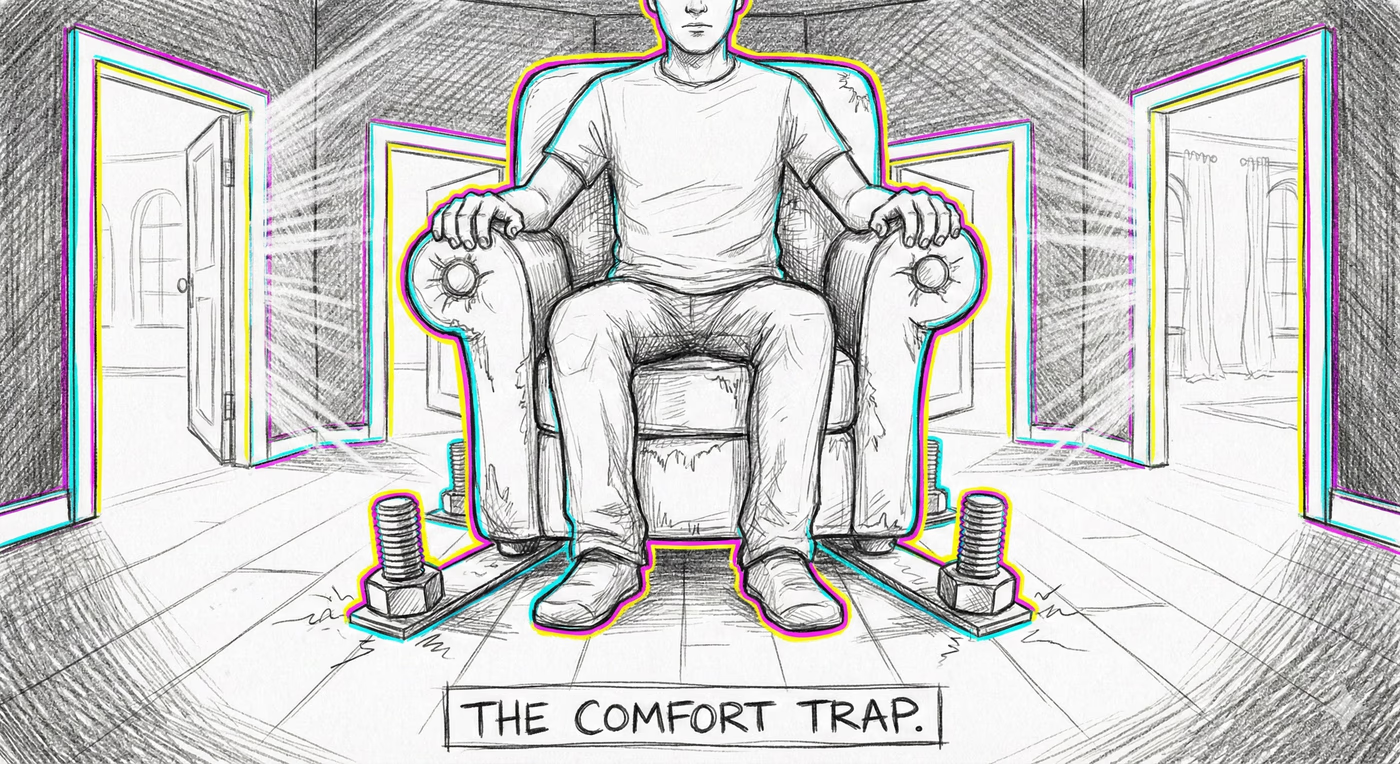
Imagine you have two doors. Behind one is a prize, behind the other is nothing. You're so scared of picking the wrong door and feeling bad about it that you don't pick any door at all — even though not picking guarantees you get nothing. That fear of feeling 'I should have picked the other one' is regret aversion.

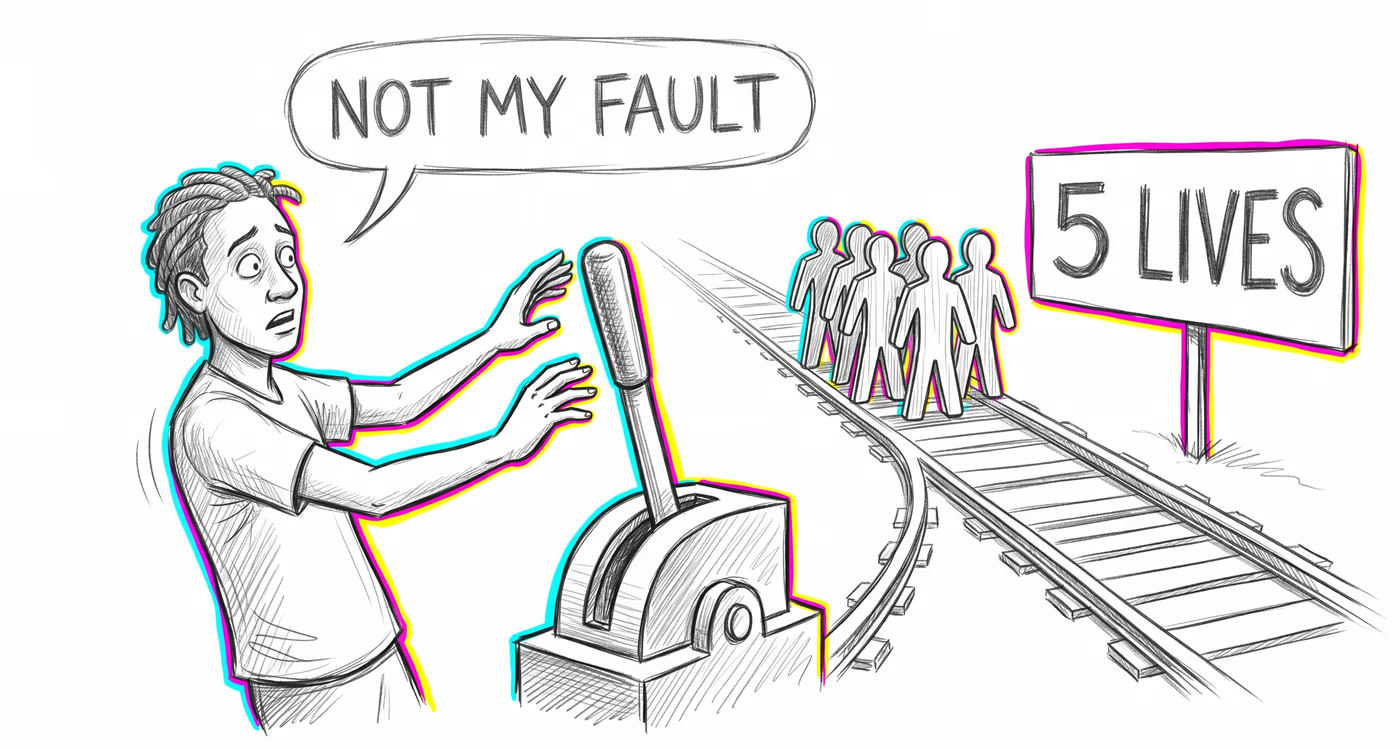
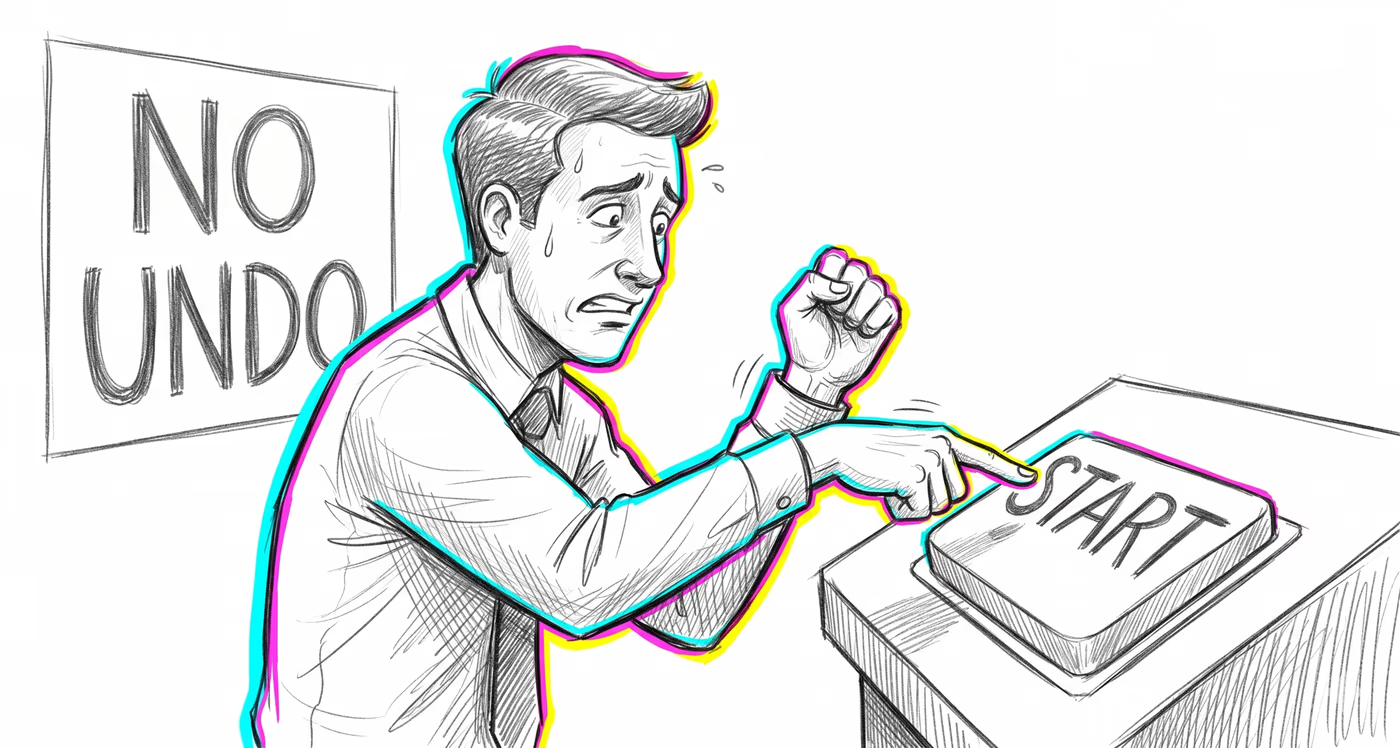
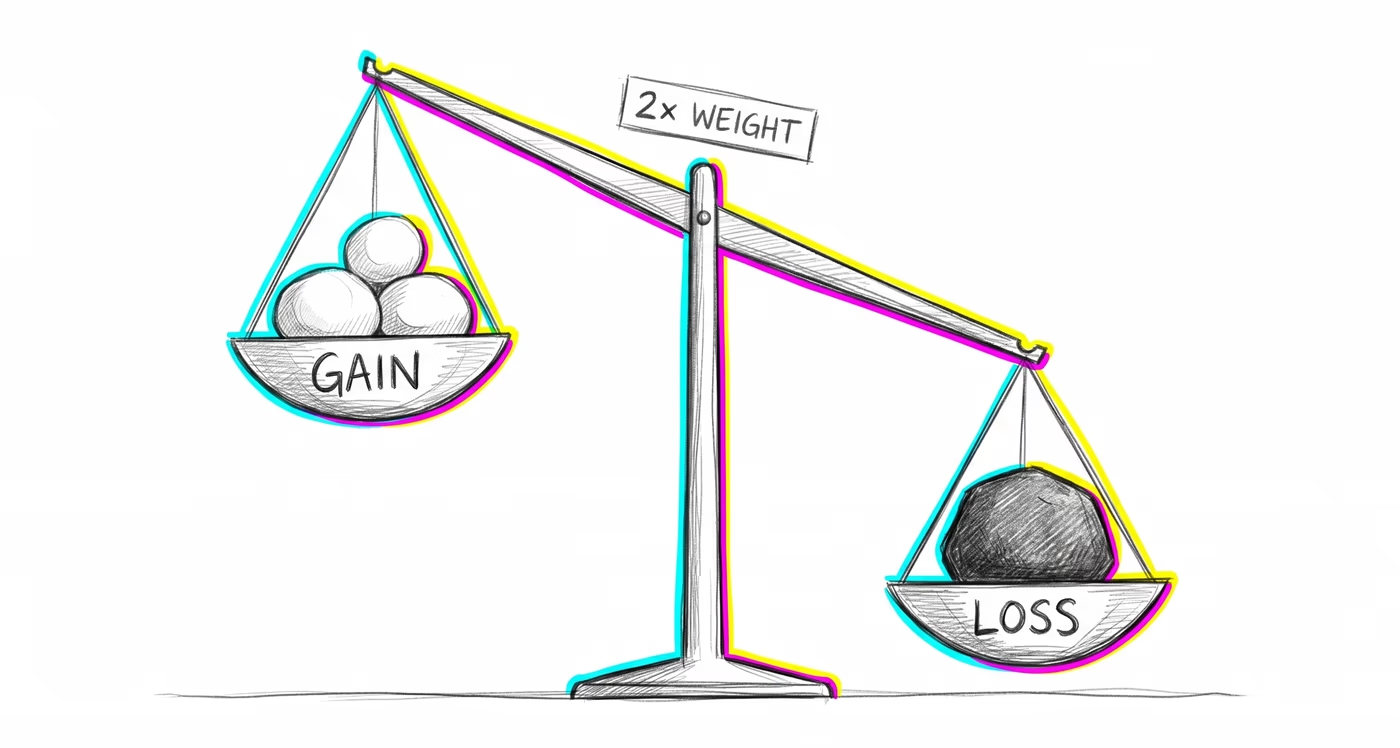
Regret aversion describes the pattern in which people anticipate the painful self-blame they would feel if a decision turned out poorly, and then let that anticipated emotion override a rational cost-benefit analysis of their options. This can manifest in two opposing ways: as decision paralysis (refusing to act because any action might be regretted) or as impulsive action (rushing to seize an opportunity to avoid the regret of missing out). The bias affects both errors of commission — dreading the consequences of an active choice gone wrong — and errors of omission — dreading the consequences of failing to act when one should have. Because people tend to overestimate the intensity and duration of future regret, the bias systematically distorts choices toward overly conservative, status-quo-preserving behavior, even when bolder action would be statistically superior.

SOUND FAMILIAR?

Where it shows up.

  1. 01 Marcus has thoroughly researched two mutual funds. Fund A has consistently outperformed Fund B over the past decade and is recommended by his financial advisor. Yet Marcus splits his money 50/50 between them, reasoning that if Fund A suddenly underperforms, he'd feel terrible having put everything in it — and if Fund B surges, he'd feel terrible having left it out entirely.
  2. 02 Elena knows her company's health insurance open enrollment ends tomorrow. She has compared plans and identified one that would save her $200/month. But she keeps her current plan unchanged, telling herself she'd rather not risk switching to something that might not cover an unforeseen medical issue — even though the new plan has identical coverage terms.
  3. 03 A venture capital partner reviews a startup pitch that scores well on every metric. She decides to pass, not because the data suggests it will fail, but because she mentally simulates the board meeting where she'd have to explain a failed investment. She never simulates the board meeting where she'd have to explain passing on a unicorn.
  4. 04 Raj receives an offer to trade his lottery ticket for a different one from the same draw plus a $5 bonus. Despite the fact that both tickets are statistically identical and the trade is strictly better, he refuses — because he imagines how he'd feel if his original number won after he traded it away.
  5. 05 A hospital committee is evaluating whether to adopt a new surgical protocol that clinical trials show reduces complications by 15%. The committee delays the decision for another quarter of review, not because they need more data, but because each member privately dreads being the one who championed a change if a single patient has a bad outcome under the new protocol — even though more patients are harmed under the status quo during the delay.
IN DIFFERENT DOMAINS

Where it shows up at work.

The same glitch looks different depending on the terrain. Finance, medicine, a relationship, a team — same mechanism, different costume.

Finance & investing

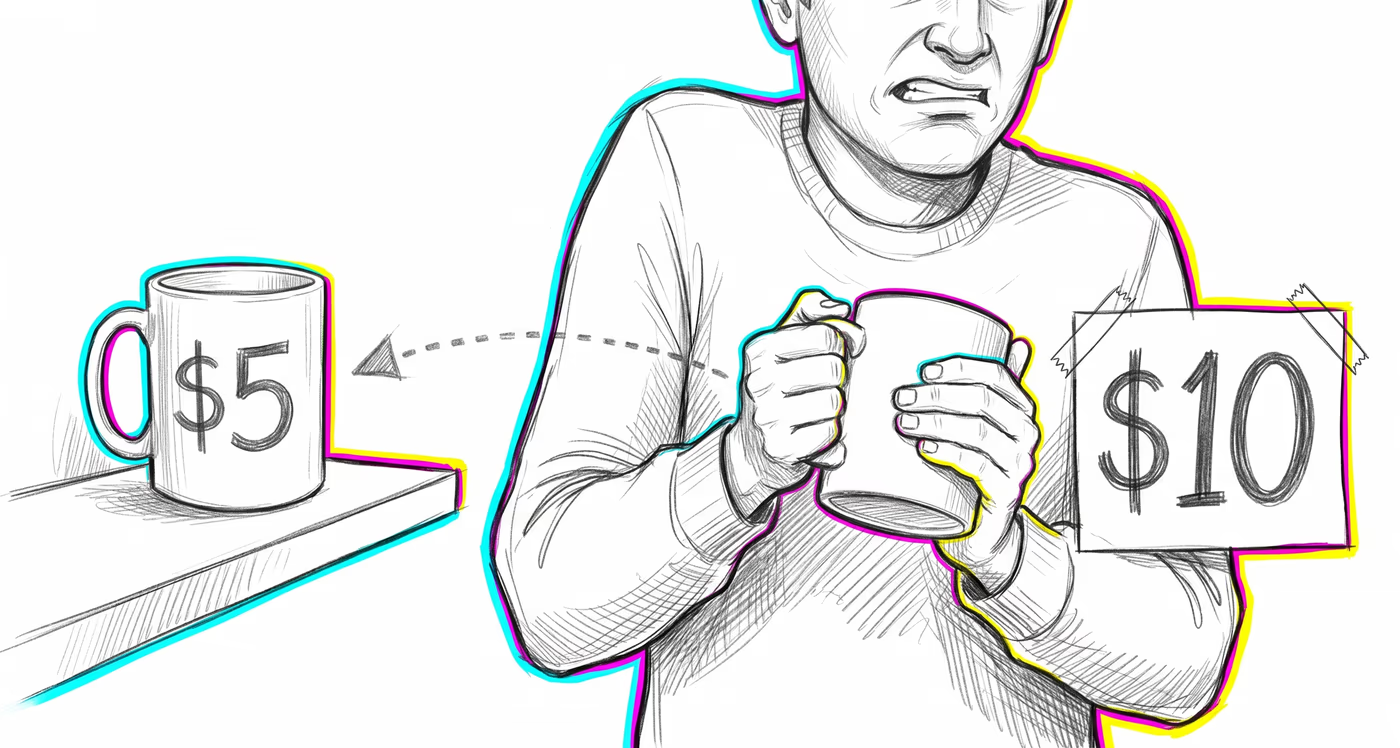
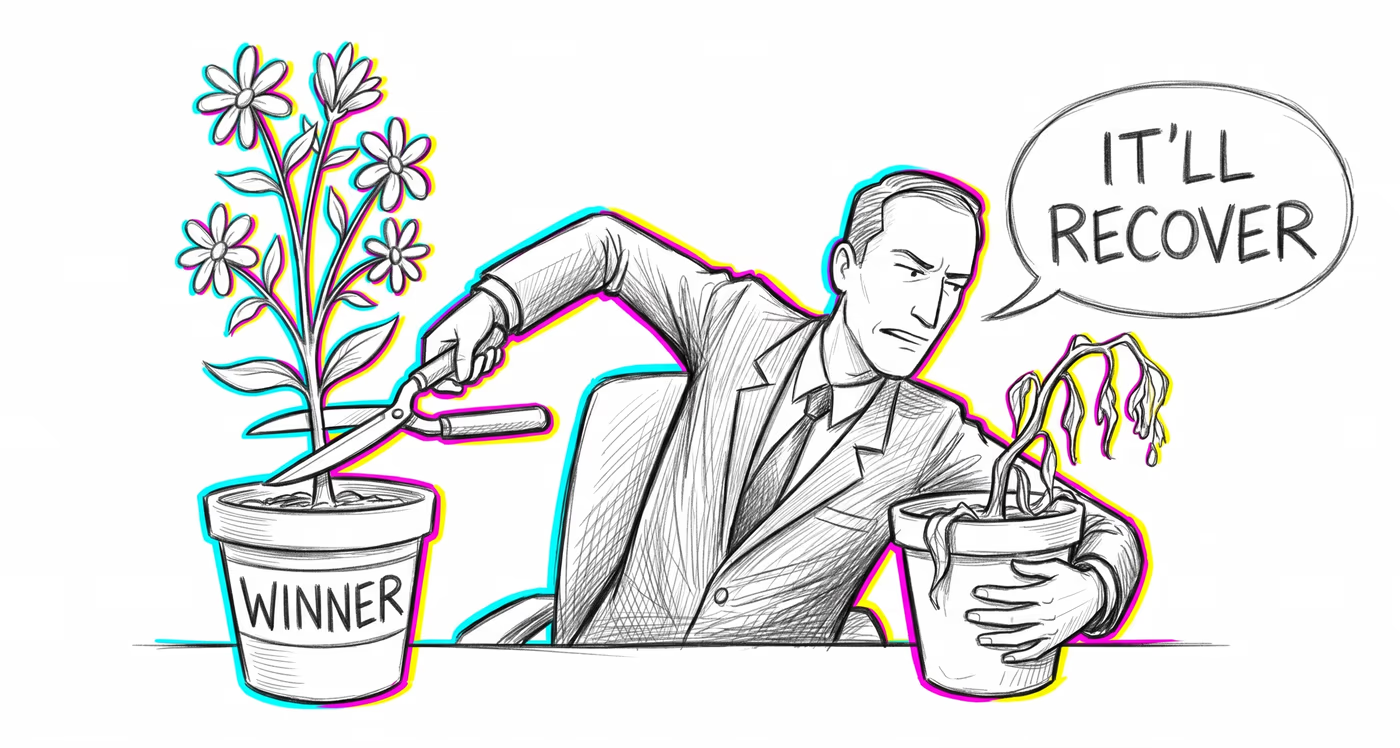
Investors hold losing positions too long and sell winning positions too early because they dread the emotional pain of locking in a loss or missing further gains. This also drives excessive cash holdings and reluctance to rebalance portfolios after downturns, causing systematic underperformance relative to passive benchmarks.
Medicine & diagnosis

Patients may decline recommended preventive screenings or surgeries because they fear regretting a complication from the procedure more than they fear the disease itself. Physicians may over-order diagnostic tests not for clinical value but to preemptively avoid the regret of a missed diagnosis.

Education & grading

Students avoid selecting challenging courses or declaring ambitious majors because they anticipate regretting a poor grade more than they value the learning opportunity. Teachers may avoid experimenting with new pedagogical methods for fear of regretting a decline in student performance.

Relationships

People stay in unsatisfying relationships because they fear regretting a breakup more than they dislike the status quo. They may also avoid confessing romantic interest because the anticipated regret of rejection outweighs the potential reward of reciprocation.

Tech & product

Product teams avoid shipping bold redesigns because they anticipate regretting a drop in engagement metrics more than they value potential improvement. Limited-time offer banners and countdown timers in e-commerce exploit users' fear of regretting a missed deal.

Workplace & hiring

Managers avoid making difficult personnel decisions — firing underperformers or reorganizing teams — because they anticipate regretting the disruption if things get worse. Employees stay in unfulfilling roles rather than risk regretting a job change.

Politics Media

Voters stick with incumbents not out of approval but out of fear they'd regret supporting an untested challenger who fails. Politicians avoid proposing bold policy reforms because they anticipate regretting the political fallout more than they value the potential benefit.

HOW TO SPOT IT

Ask yourself…

  • Am I avoiding this decision because the options are genuinely bad, or because I'm imagining how I'd feel if the choice goes wrong?
  • Am I giving more mental weight to the scenario where I act and fail than to the scenario where I don't act and miss out?
  • If I imagine a friend in my exact situation, would I advise them to decide differently than I'm about to decide?
HOW TO DEFEND AGAINST IT

The playbook.

  • Apply a 'Regret Minimization Framework': project yourself to age 80 and ask which choice you'd regret more — acting or not acting — to counterbalance the asymmetric salience of commission regret.
  • Pre-commit to decision rules and criteria before evaluating options, so that the choice follows from the framework rather than from emotional simulation.
  • Conduct a 'reversal test': explicitly imagine and write down the regret you'd feel from inaction, not just from action, to correct the imbalance.
  • Set deadlines for decisions to prevent indefinite postponement disguised as information-gathering.
  • Use expected value calculations to override emotional forecasting — write down the probabilities and payoffs rather than relying on how each scenario feels.
FAMOUS CASES

In history.

  • During the 2020 COVID-19 market crash, many investors sold at the bottom and then remained in cash, missing the subsequent 18%+ annual rebound, driven by the anticipated regret of staying invested during further declines.
  • The Dutch Postcode Lottery exploited regret aversion by structuring prizes around postcodes, so non-participants in winning areas would learn they could have won — dramatically increasing participation rates compared to traditional lotteries.
  • Harry Markowitz, the father of Modern Portfolio Theory, admitted he split his retirement contributions 50/50 between bonds and equities not based on optimization but to minimize his future regret regardless of which direction the market moved.
WHERE IT COMES FROM
Academic origin

Formalized independently in 1982 by Graham Loomes and Robert Sugden, David E. Bell, and Peter C. Fishburn. Loomes and Sugden's paper 'Regret Theory: An Alternative Theory of Rational Choice Under Uncertainty' in The Economic Journal (1982) is the most widely cited foundational work.

Evolutionary origin

In ancestral environments with high stakes and limited information, avoiding actions whose outcomes could not be undone (such as entering dangerous territory or consuming unfamiliar food) was often safer than bold exploration. The capacity to mentally simulate regret before committing to an irreversible action served as an emotional brake, preventing reckless risk-taking in environments where a single mistake could be fatal.

IN AI SYSTEMS

How the machines inherit it.

Recommendation systems trained on user engagement data can learn to present only safe, familiar options because users who click on novel recommendations and dislike them generate strong negative feedback signals (analogous to regret), while the opportunity cost of never surfacing novel content is invisible in the training data. This creates a conservative loop where the algorithm mirrors human regret aversion, suppressing exploration and serendipity.

Read more on Wikipedia
FREE FIELD ZINE

10 glitches quietly running your life.

A free field-zine PDF — ten cognitive glitches named, illustrated, with a defense move for each. Plus the weekly Glitch Report on Fridays — one bias named, two spotted in the wild, one defense move. Unsubscribe any time.

EXPLORE MORE

Related glitches.

LAUNCH PRICE

Train against your blindspots.

50 cards are free to preview. Buyers unlock the rest of the deck plus the interactive training — Spot-the-Bias Quiz unlimited, Swipe Deck with spaced repetition, My Blindspots, Decision Pre-Flight, the Printable Deck + Cheat Sheets, and the Field Guide e-book. $29.50$59.

Unlock the full deck

Everything below — yours forever. Pay once, use across every device.

Half-off launch — limited to the first 100 readers. Auto-applied at checkout.
$59 $29.50
one-time payment · lifetime access
  • All interactive digital cards — search, filter, flip, shuffle on any device
  • Five training modes — Spot-the-Bias Quiz, Swipe Deck, Pre-Flight, Blindspots, Journal
  • Curated Lenses + Decision Templates + Defense Playbook
  • Printable Deck PDFs + Field Guide e-book + Cheat Sheets + Anki Export
  • Every future improvement, included
Unlock  $29.50

30-day refund · no questions asked

Unlock the full deck

Everything below — yours forever. Pay once, use across every device.

Half-off launch — limited to the first 100 readers. Auto-applied at checkout.
$59 $29.50
one-time payment · lifetime access
  • All interactive digital cards — search, filter, flip, shuffle on any device
  • Five training modes — Spot-the-Bias Quiz, Swipe Deck, Pre-Flight, Blindspots, Journal
  • Curated Lenses + Decision Templates + Defense Playbook
  • Printable Deck PDFs + Field Guide e-book + Cheat Sheets + Anki Export
  • Every future improvement, included
Unlock  $29.50

30-day refund · no questions asked