Impact Bias

aka Durability Bias · Affective Forecasting Bias · Intensity Bias

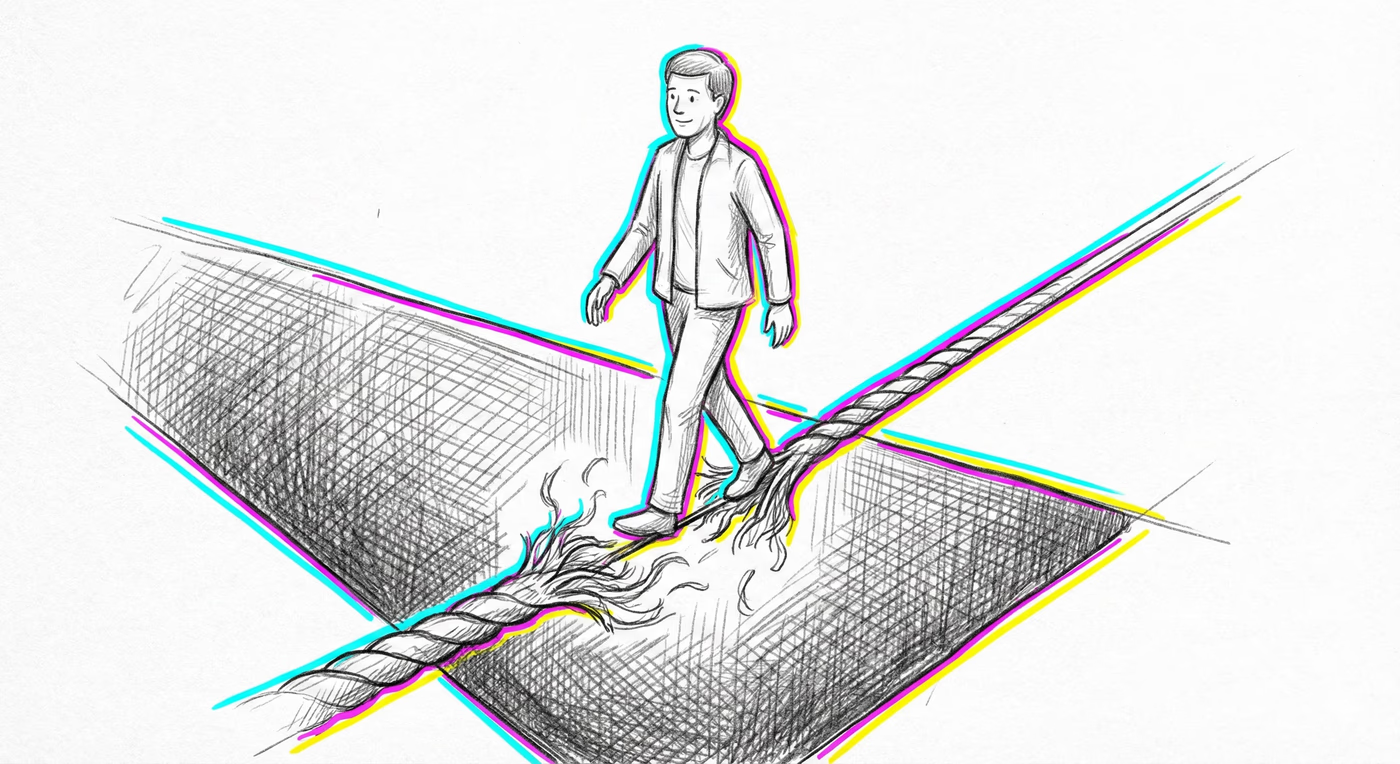
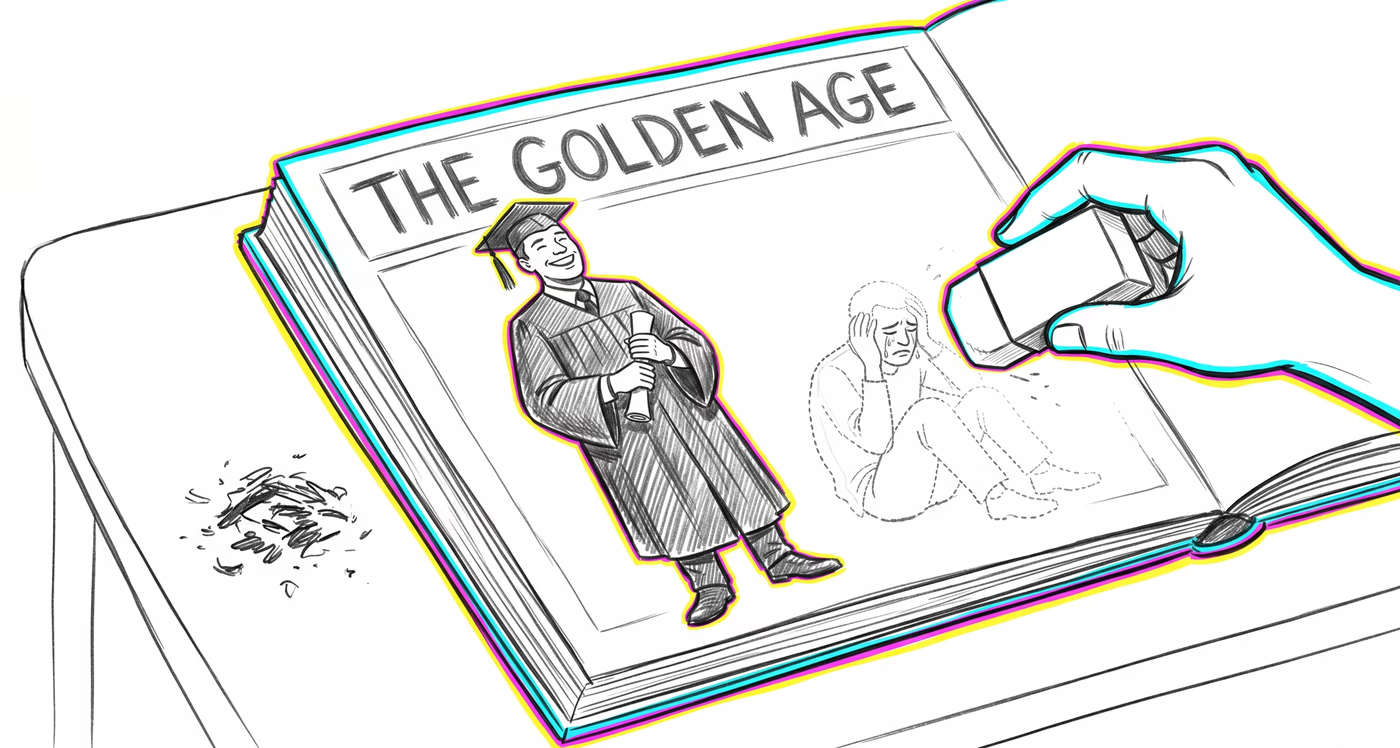
Overestimating how intensely and how long you'll feel about future events, both good and bad.

WHAT IT IS

The glitch, explained plainly.

Imagine you think getting a new puppy will make you the happiest person in the world forever, or that dropping your ice cream will ruin your whole day. But actually, you get used to the puppy pretty quickly, and after crying about the ice cream for a minute, you go play on the swings and feel fine. We always think things will feel way bigger and last way longer than they really do.

Impact bias describes people's systematic tendency to overpredict both how intensely and how long they will feel emotions in response to future events. Whether imagining winning the lottery or enduring a painful breakup, individuals consistently forecast more extreme and more prolonged emotional states than they actually experience. This occurs because people focus narrowly on the focal event (focalism) while neglecting the buffering influence of other life activities and their own psychological coping mechanisms (immune neglect). The bias distorts decision-making because people choose between options based on these inflated emotional predictions, leading them to overvalue or over-avoid outcomes whose true emotional footprint is far smaller than anticipated.

SOUND FAMILIAR?

Where it shows up.

  1. 01 Maria agonizes for weeks over whether to end a two-year relationship, convinced she will be devastated for the rest of the year if she breaks up. She finally does it, and although the first few days are painful, within three weeks she is socializing normally and feeling hopeful. Her pre-breakup prediction of prolonged misery was vastly inflated.
  2. 02 James turns down a relocation to a new city for a better-paying role because he predicts he would be deeply unhappy leaving his current friends behind. He doesn't consider that he would quickly build new routines, meet new people, and that his existing friendships could continue remotely. His decision is based on an exaggerated emotional forecast.
  3. 03 A product team decides not to sunset a popular feature because they predict users will be furious and abandon the platform permanently. When a competitor removes a similar feature, user backlash is intense for one week and then engagement metrics fully recover. The team's forecasted user devastation far exceeded reality.
  4. 04 A patient refuses a knee replacement surgery because she imagines that the six-week recovery period will be unbearably miserable, and she will never feel the same joy in life afterward. She fails to account for her own psychological resilience, pain adaptation, and the many aspects of her daily life that will continue normally during recovery.
  5. 05 An investor holds off on selling a declining stock, not because of sunk cost reasoning, but because he vividly imagines how terrible he would feel if the stock later recovered after he sold it. He overestimates how intensely and how long that specific regret would actually torment him, and this inflated emotional forecast paralyzes his decision.
IN DIFFERENT DOMAINS

Where it shows up at work.

The same glitch looks different depending on the terrain. Finance, medicine, a relationship, a team — same mechanism, different costume.

Finance & investing

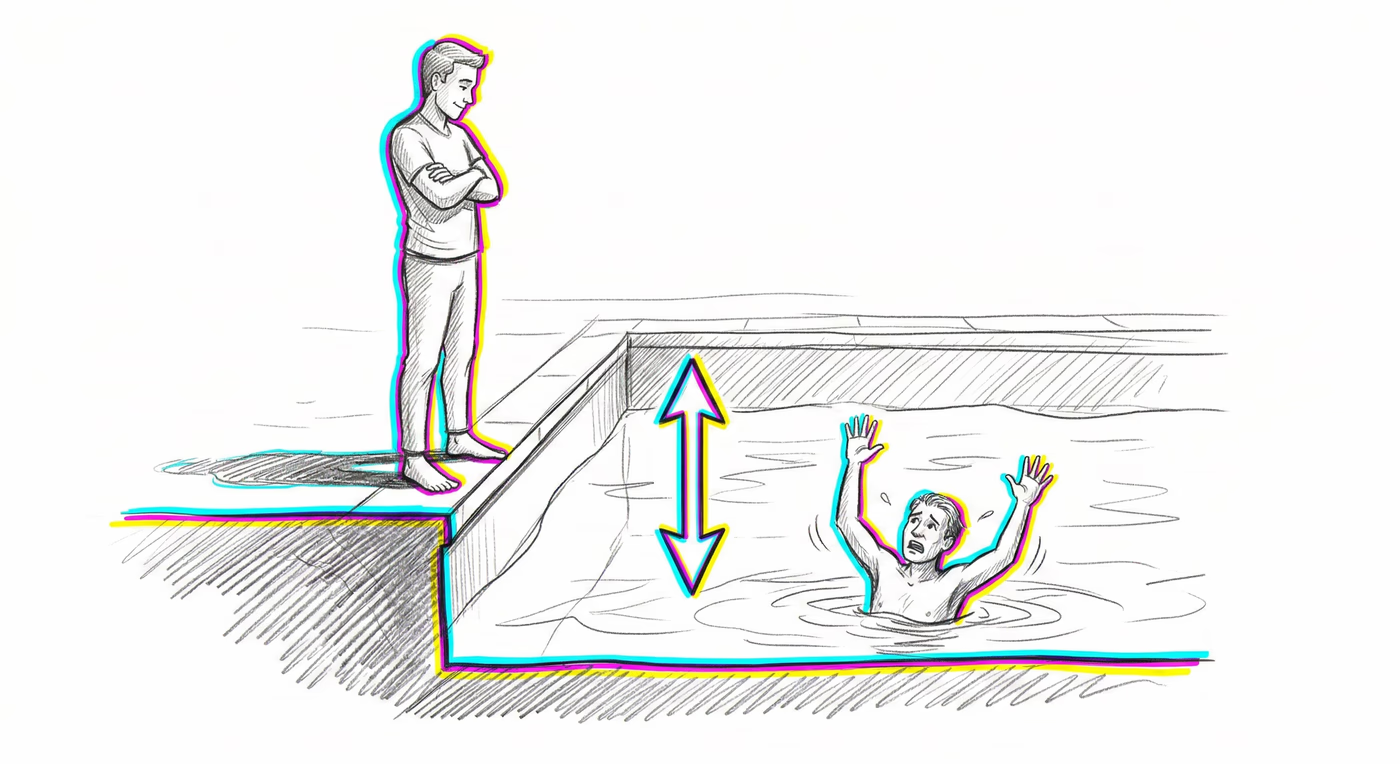
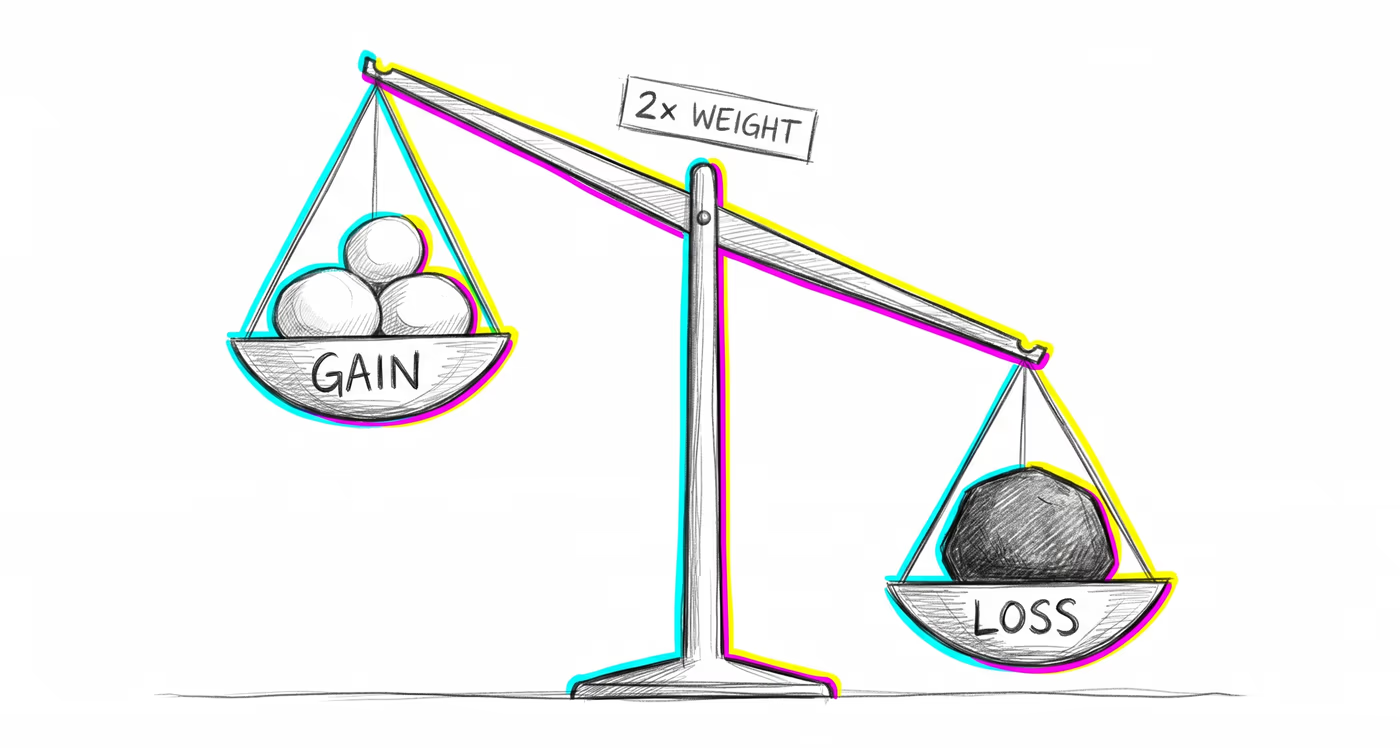
Investors overestimate how happy large gains will make them and how devastated they will feel from losses, leading to excessive risk aversion or impulsive profit-taking driven by inflated emotional predictions rather than rational expected-value calculations.
Medicine & diagnosis

Patients refuse treatments like amputations or ostomies because they overestimate how miserable they will feel living with the outcome, failing to account for their own psychological adaptation. Clinicians similarly overestimate patient suffering when making compensation or quality-of-life judgments.

Education & grading

Students overpredict how devastated they will be by a poor exam grade, leading to procrastination fueled by avoidance, or conversely overpredict how happy a top grade will make them, which distorts how much effort feels 'worth it.'

Relationships

People stay in unfulfilling relationships because they overestimate the emotional devastation of a breakup, or they rush into new relationships expecting lasting euphoria that fades rapidly after the novelty period.

Tech & product

Product teams overestimate negative user reactions to design changes or feature removals, leading to feature bloat and reluctance to iterate. Users themselves overestimate how much a new device or app upgrade will improve their daily satisfaction.

Workplace & hiring

Employees avoid job changes or difficult conversations because they overpredict how bad rejection, conflict, or adjustment periods will feel, resulting in career stagnation driven by emotionally inflated forecasts rather than actual risks.

Politics Media

Voters overestimate how happy or devastated they will feel after an election outcome, which inflates the perceived stakes of political events and can drive polarization, panic, or euphoria that dissipates far faster than predicted.

HOW TO SPOT IT

Ask yourself…

  • Am I imagining only this one event when I predict how I'll feel, or am I considering everything else that will be happening in my life at that time?
  • Am I assuming this feeling will last indefinitely, forgetting how quickly I've recovered from similar emotional events in the past?
  • Am I making a decision right now primarily based on how intensely I imagine I will feel, rather than on the objective facts of the situation?
HOW TO DEFEND AGAINST IT

The playbook.

  • Practice 'defocusing': Before making a decision based on an emotional prediction, list 10 other things you will be doing and thinking about in the days following the event.
  • Recall your personal track record: Think of three past events where your emotional forecast turned out to be exaggerated, and note how quickly you actually recovered or adapted.
  • Use the 10-10-10 rule: Ask how you will feel about this event 10 minutes, 10 months, and 10 years from now to calibrate your emotional forecast across time horizons.
  • Seek testimony from others who have already experienced the event, as surrogation (using others' actual reports) consistently outperforms personal mental simulation.
  • Introduce a deliberate pause between the emotional forecast and the decision, allowing the initial vivid simulation to cool before committing.
FAMOUS CASES

In history.

  • Studies of lottery winners and accident victims by Brickman, Coates, and Janoff-Bulman (1978) found that both groups returned closer to baseline happiness than people predicted, providing early evidence consistent with impact bias.
  • Research on the 2000 and 2004 U.S. Presidential elections showed that supporters of both winning and losing candidates vastly overestimated how long the outcome would affect their happiness.
WHERE IT COMES FROM
Academic origin

Timothy D. Wilson, Thalia Wheatley, Jonathan M. Meyers, Daniel T. Gilbert, and Danny Axsom formally named the impact bias in 2000 in their paper 'Focalism: A Source of Durability Bias in Affective Forecasting' (Journal of Personality and Social Psychology). Gilbert, Pinel, Wilson, Blumberg, and Wheatley laid key groundwork in 1998 with their research on immune neglect.

Evolutionary origin

Overestimating the emotional consequences of future threats and rewards likely served as a motivational amplifier. Ancestors who vividly imagined the pain of a predator attack or the joy of a successful hunt were more motivated to avoid danger and pursue resources. The exaggerated emotional signal functioned as an internal alarm system that biased behavior toward caution and effort, even though the actual experienced emotion was less extreme than predicted.

IN AI SYSTEMS

How the machines inherit it.

Recommendation systems and predictive models trained on user-reported anticipated preferences (e.g., 'How much would you enjoy this?') may inherit impact bias from training data, systematically overweighting items users predicted would make them very happy or very unhappy, rather than items that actually sustained satisfaction. Sentiment analysis models may also overweight the intensity of predicted emotional reactions in reviews or surveys.

Read more on Wikipedia
FREE FIELD ZINE

10 glitches quietly running your life.

A free field-zine PDF — ten cognitive glitches named, illustrated, with a defense move for each. Plus the weekly Glitch Report on Fridays — one bias named, two spotted in the wild, one defense move. Unsubscribe any time.

EXPLORE MORE

Related glitches.

LAUNCH PRICE

Train against your blindspots.

50 cards are free to preview. Buyers unlock the rest of the deck plus the interactive training — Spot-the-Bias Quiz unlimited, Swipe Deck with spaced repetition, My Blindspots, Decision Pre-Flight, the Printable Deck + Cheat Sheets, and the Field Guide e-book. $29.50$59.

Unlock the full deck

Everything below — yours forever. Pay once, use across every device.

Half-off launch — limited to the first 100 readers. Auto-applied at checkout.
$59 $29.50
one-time payment · lifetime access
  • All interactive digital cards — search, filter, flip, shuffle on any device
  • Five training modes — Spot-the-Bias Quiz, Swipe Deck, Pre-Flight, Blindspots, Journal
  • Curated Lenses + Decision Templates + Defense Playbook
  • Printable Deck PDFs + Field Guide e-book + Cheat Sheets + Anki Export
  • Every future improvement, included
Unlock  $29.50

30-day refund · no questions asked

Unlock the full deck

Everything below — yours forever. Pay once, use across every device.

Half-off launch — limited to the first 100 readers. Auto-applied at checkout.
$59 $29.50
one-time payment · lifetime access
  • All interactive digital cards — search, filter, flip, shuffle on any device
  • Five training modes — Spot-the-Bias Quiz, Swipe Deck, Pre-Flight, Blindspots, Journal
  • Curated Lenses + Decision Templates + Defense Playbook
  • Printable Deck PDFs + Field Guide e-book + Cheat Sheets + Anki Export
  • Every future improvement, included
Unlock  $29.50

30-day refund · no questions asked