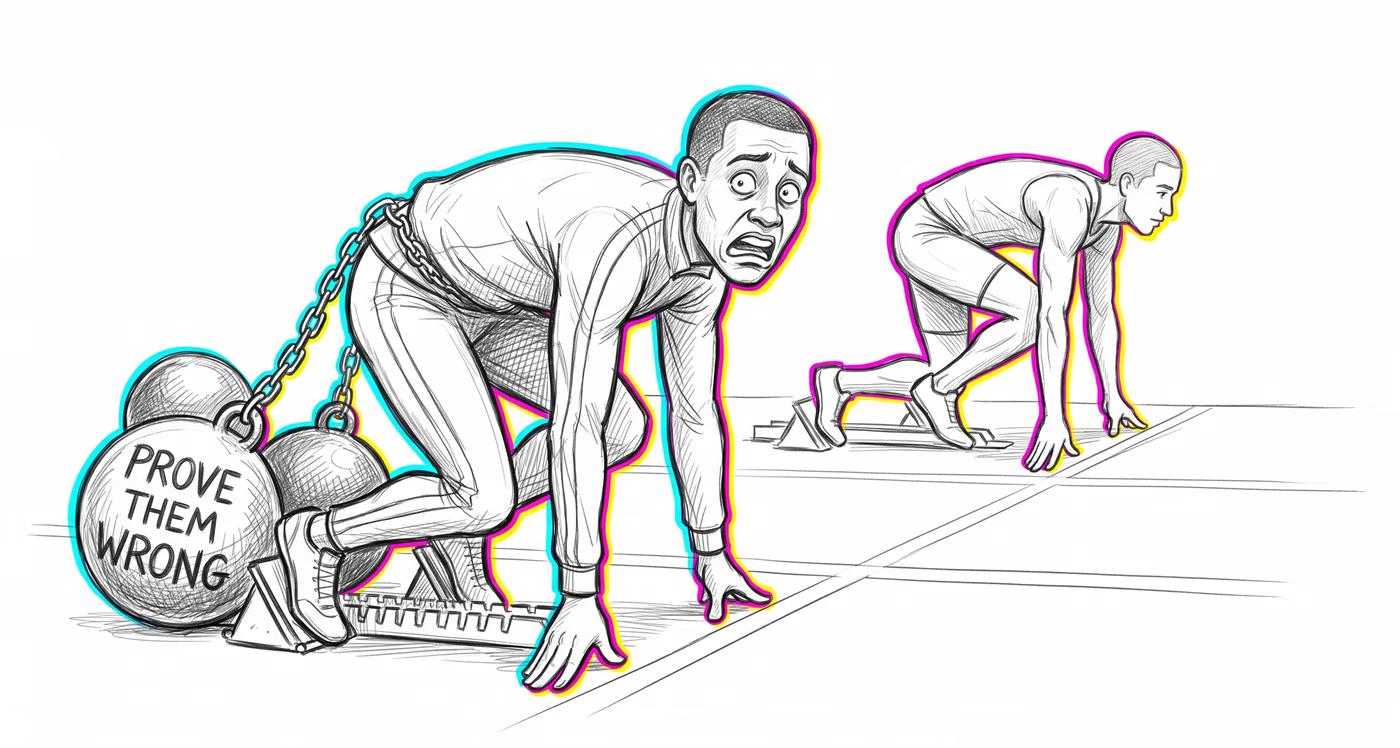
The same glitch looks different depending on the terrain. Finance, medicine, a
relationship, a team — same mechanism, different costume.
Finance & investing
Women and minority financial professionals may exhibit more conservative trading strategies or second-guess analytical decisions in high-stakes environments where they are aware of stereotypes about their group's quantitative abilities, potentially leading to suboptimal portfolio performance despite equivalent training.
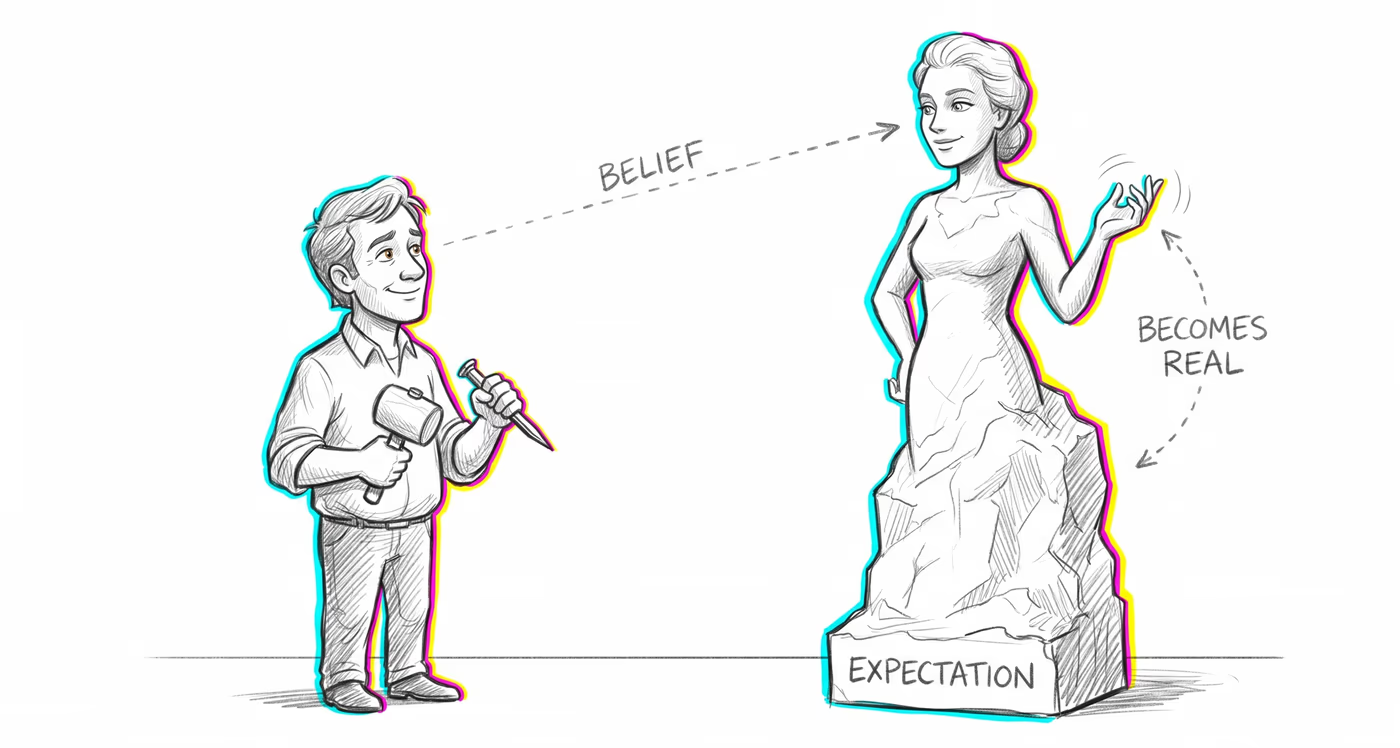
Medicine & diagnosis
Patients from stigmatized groups may underperform on cognitive screening tests (e.g., for dementia) when the evaluative nature of the assessment is emphasized, leading to potential misdiagnosis. Additionally, minority medical students may experience performance decrements during high-pressure clinical examinations when their minority status is salient.
Education & grading
When tests are framed as diagnostic of intellectual ability, students from negatively stereotyped groups tend to underperform relative to their actual competence. Simply removing demographic questions from the top of standardized tests or framing the test as non-diagnostic has been shown to reduce performance gaps.
Relationships
Individuals who belong to negatively stereotyped groups may avoid situations where their competence could be evaluated by romantic partners or in-laws, leading to withdrawal from activities they would otherwise enjoy. This avoidance can create relationship strain and reinforce the false impression that the stereotype is accurate.
Tech & product
Women and underrepresented minorities in tech may disengage from collaborative coding environments, hackathons, or technical interviews when cues in the environment (all-male panels, 'brogrammer' culture, competitive framing) heighten awareness of group stereotypes, contributing to pipeline attrition independent of actual skill level.
Workplace & hiring
Solo-status employees—those who are the only member of their demographic group in a team—report heightened stereotype threat, leading to suboptimal feedback-seeking behavior, reluctance to volunteer for stretch assignments, and discounting of performance evaluations from superiors.
Politics Media
Media coverage that repeatedly frames certain demographic groups as intellectually or professionally inferior can prime stereotype threat across entire populations, depressing standardized test performance and reinforcing the very gaps that the coverage reports on, creating a self-perpetuating cycle.