Consistency Bias

aka Consistency Bias · Commitment Bias · Consistency Memory Bias

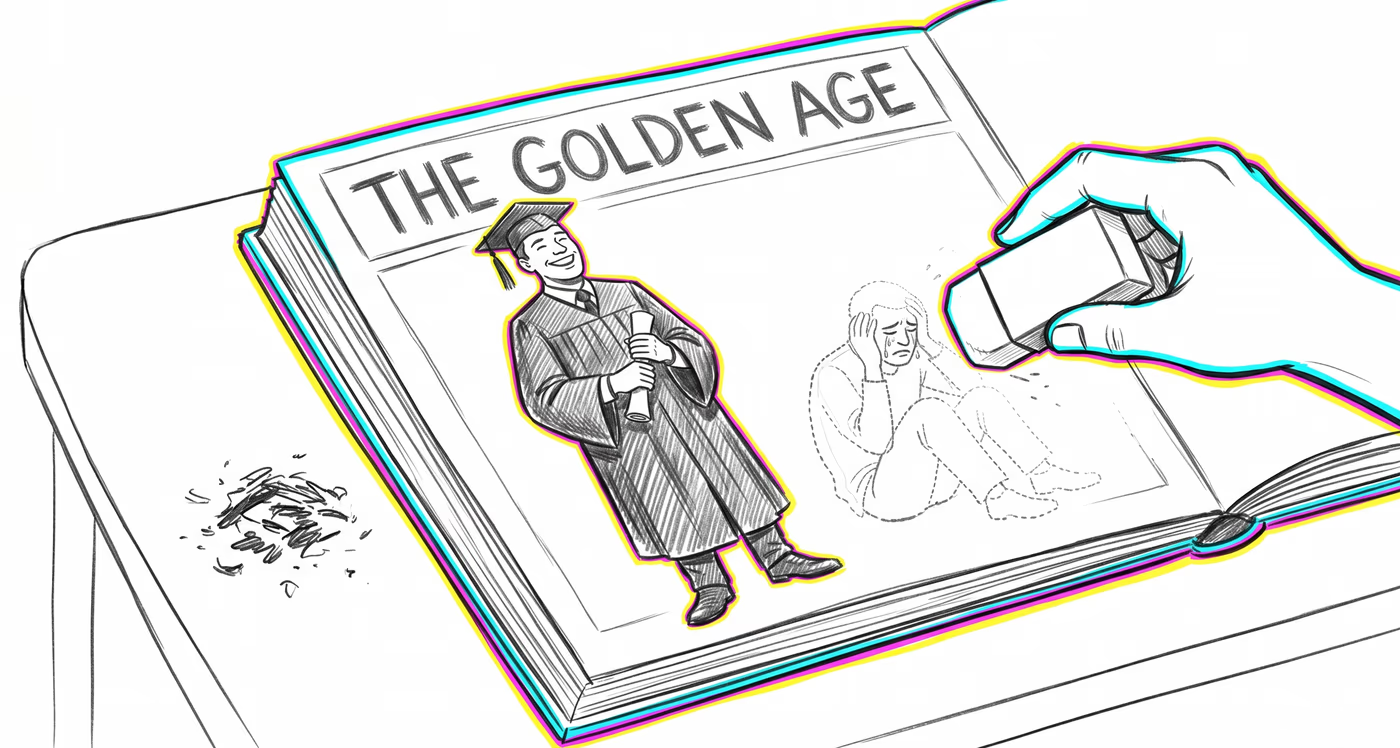
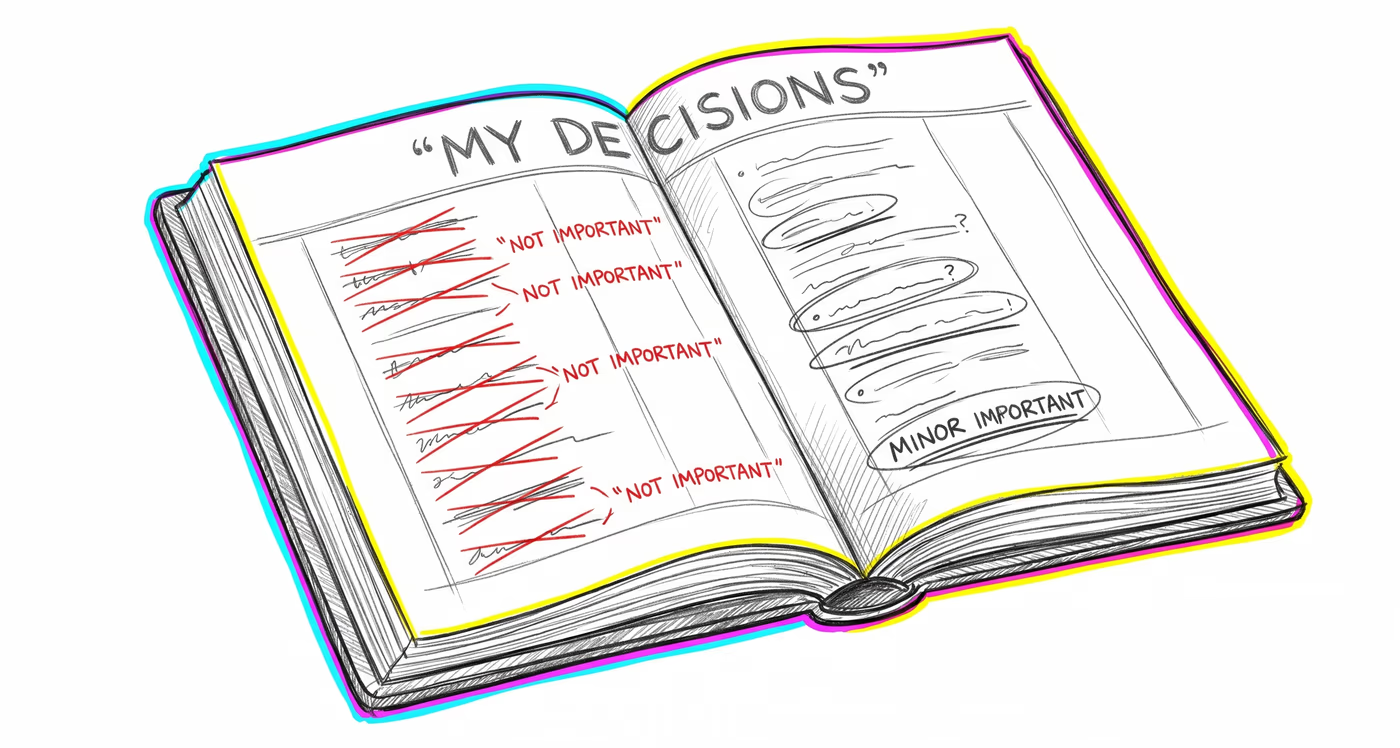
Incorrectly remembering past beliefs and attitudes as being more similar to current ones than they actually were.

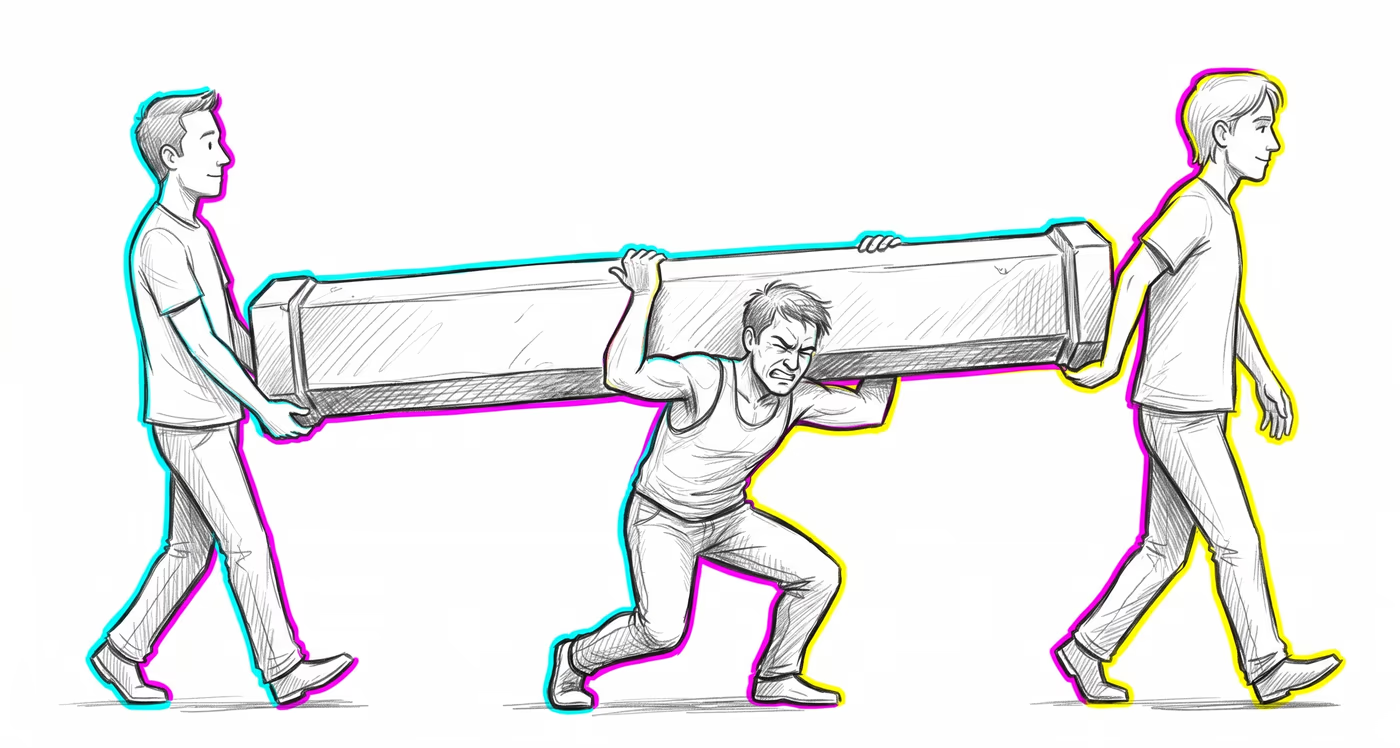
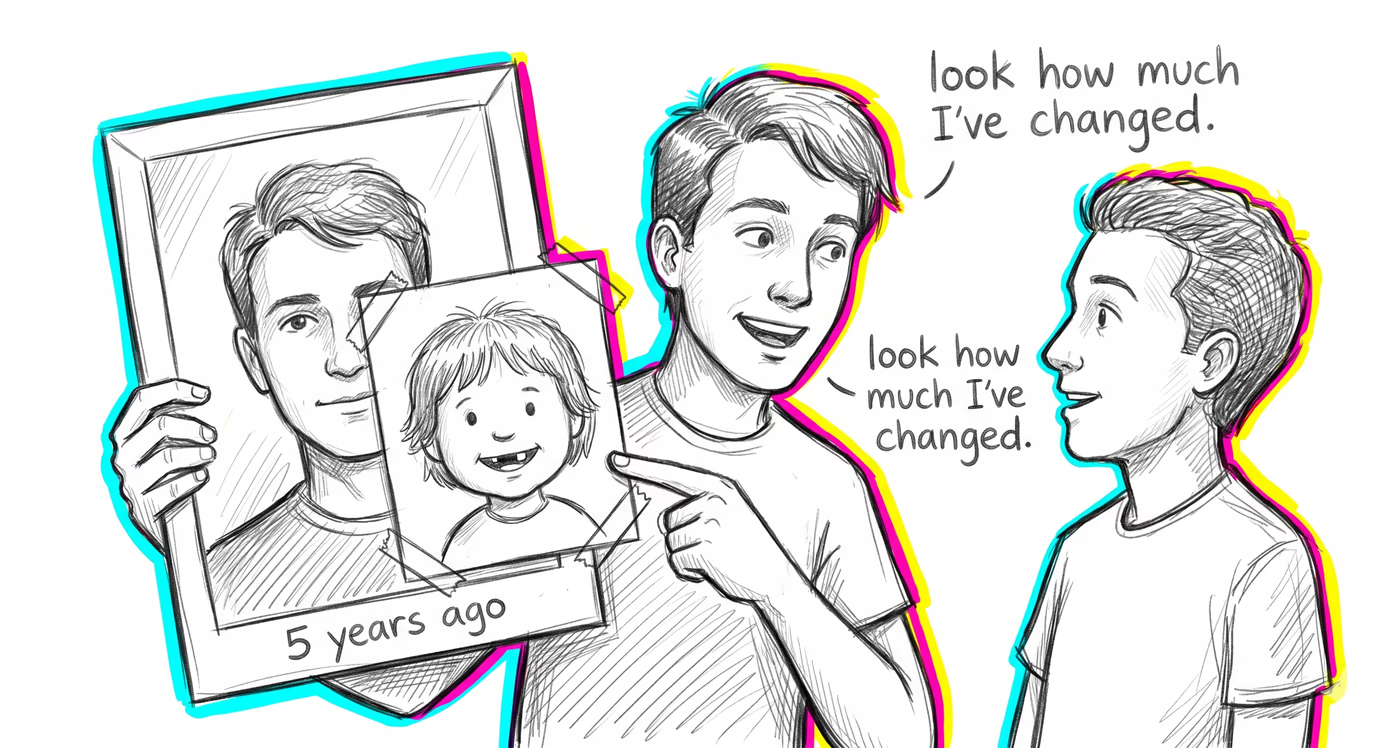
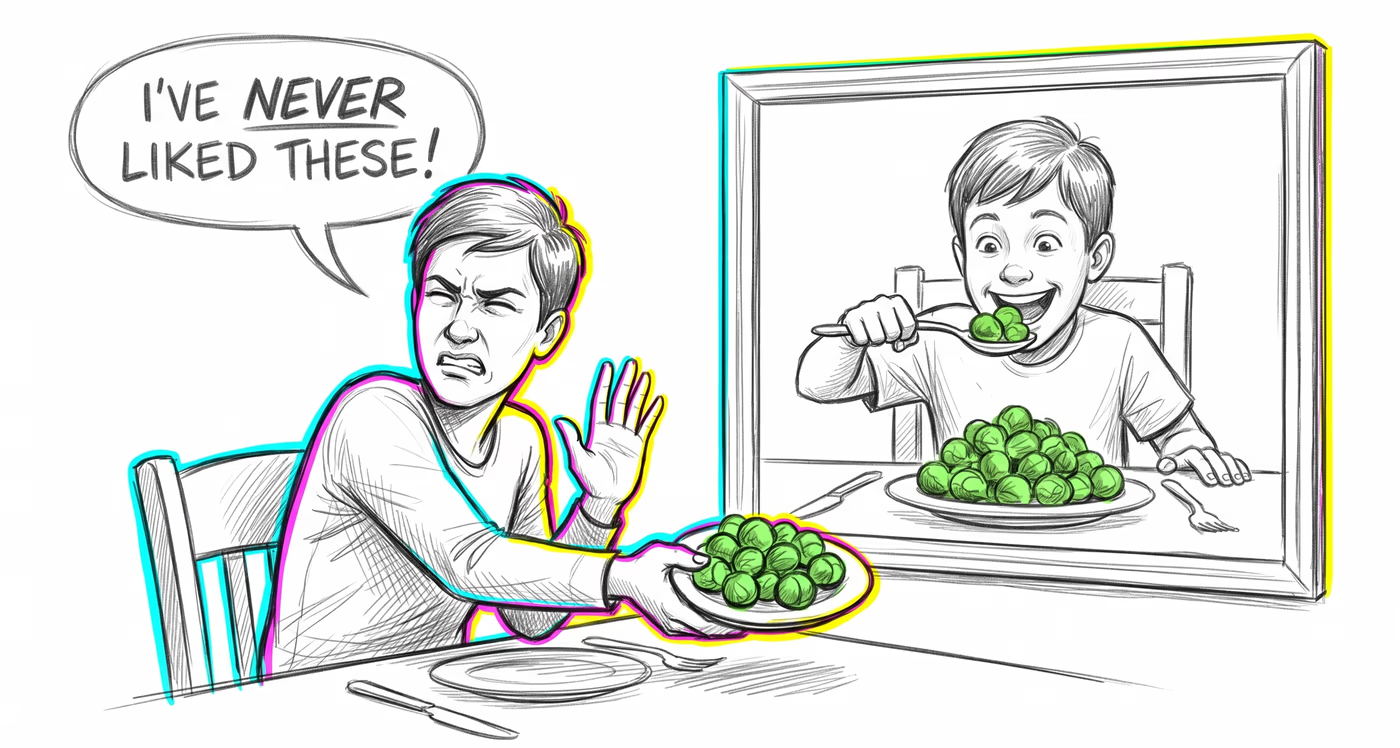
Illustration: Consistency Bias
WHAT IT IS

The glitch, explained plainly.

Imagine you have a coloring book you colored in last year. Now you like blue instead of red. When someone asks what color you used last year, your brain sneaks in and says 'blue!' even though you actually colored everything red. Your brain wants everything to match what you like right now, so it quietly changes the memory of what you liked before.

Self-consistency bias is a memory-level distortion in which people reconstruct their past opinions, feelings, and behaviors to align with their present self-concept, creating the illusion of attitudinal stability over time. Rather than accurately retrieving what they once believed, individuals unconsciously edit their autobiographical memories so that earlier positions appear congruent with current ones. This bias is driven by the deep psychological need to maintain a coherent, unified self-narrative and to avoid the discomfort of recognizing that one's views have shifted. The result is that people systematically underestimate how much they have changed, leading them to perceive themselves as more principled and consistent than they truly are.

SOUND FAMILIAR?

Where it shows up.

  1. 01 Insisting on always having disliked a particular food, but family reminding you it was eaten happily as a teenager.
  2. 02 After a breakup, remembering always having had doubts about the relationship, even though it was genuinely happy at the time.
IN DIFFERENT DOMAINS

Where it shows up at work.

The same glitch looks different depending on the terrain. Finance, medicine, a relationship, a team — same mechanism, different costume.

Finance & investing

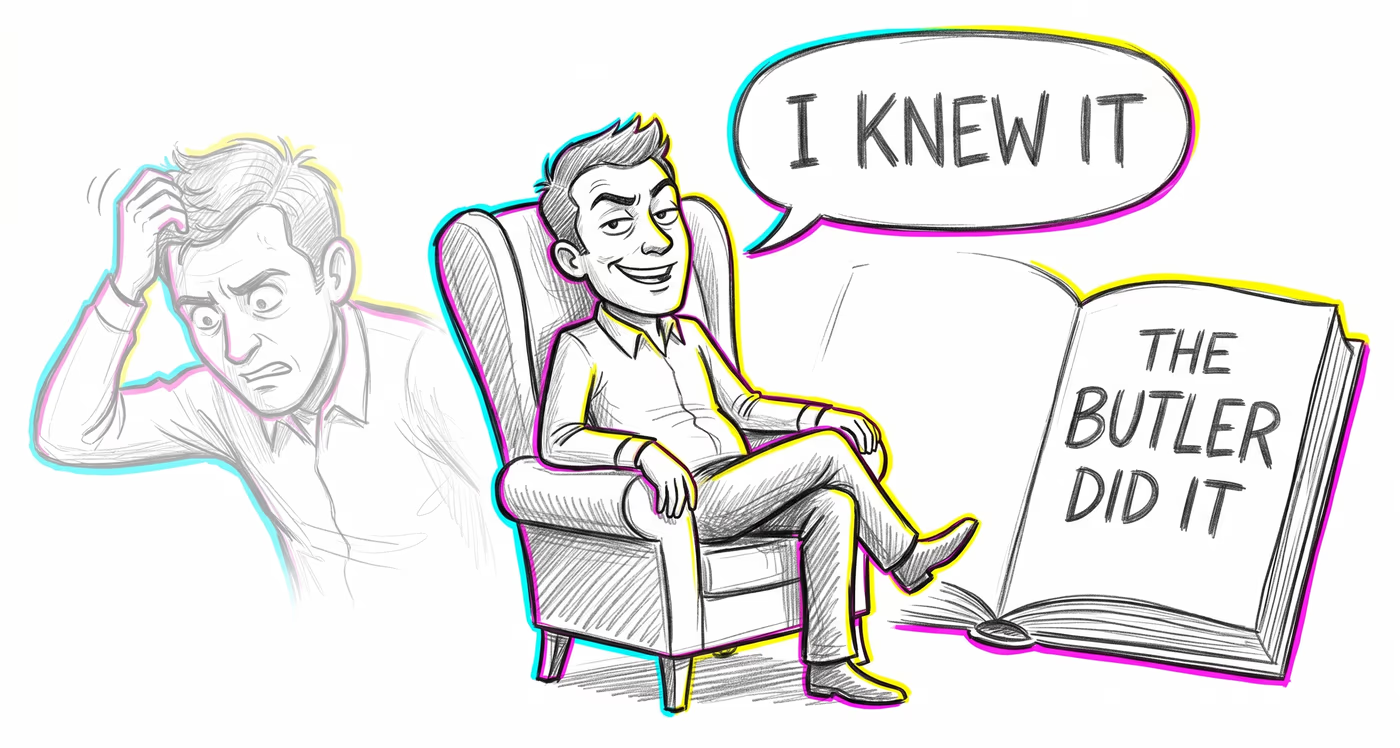
Investors who have shifted strategies over time tend to recall their earlier investment philosophy as being closer to their current approach, making it difficult to honestly assess what prompted past losses or changes in strategy.
Medicine & diagnosis

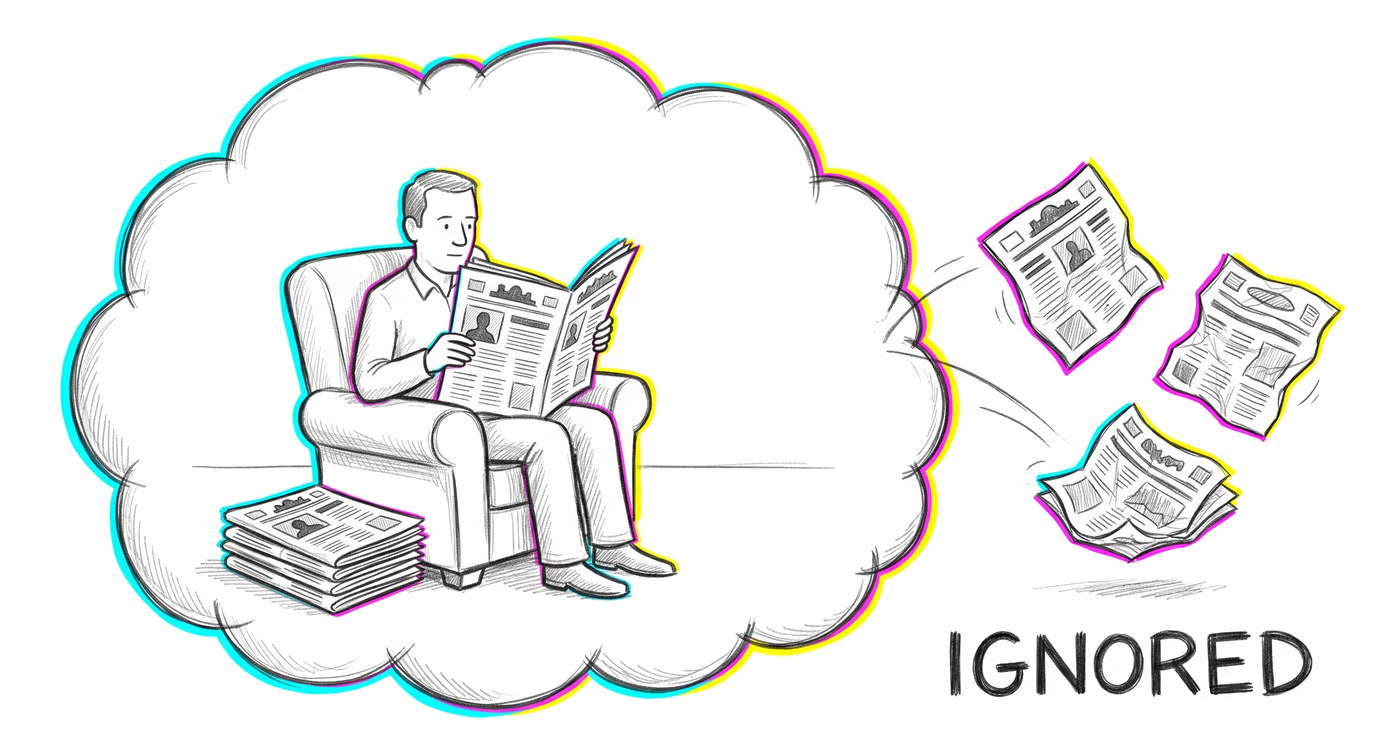
Patients recalling pre-treatment symptoms or pre-diagnosis health behaviors tend to reconstruct them in line with their current health status, which can distort clinical assessments of treatment effectiveness and complicate longitudinal health tracking.

HOW TO SPOT IT

Ask yourself…

  • Am I claiming I've 'always' felt this way, or could my views have genuinely changed over time?
  • If I check old journals, emails, or messages, would they match what I remember believing back then?
HOW TO DEFEND AGAINST IT

The playbook.

  • Keep a dated journal or record of your opinions on important topics so you have an objective baseline to compare against later.
  • When you catch yourself saying 'I've always thought...' treat it as a red flag and actively search for counterevidence in old messages, posts, or conversations.
FAMOUS CASES

In history.

  • Markus (1986) found that when US respondents were re-surveyed after 9 years, they recalled their earlier political opinions as being far more similar to their current views than the original recorded data showed, even fabricating explanations for attitude changes they didn't recognize.
  • Post-reunification surveys in Germany found that East Germans retrospectively adjusted their recalled attitudes toward democracy and market economics to be more consistent with their post-reunification views.
WHERE IT COMES FROM
Academic origin

The concept was formalized as part of Daniel Schacter's 'Seven Sins of Memory' framework (1999, 2001), building on earlier work by Gregory Markus (1986) on political attitude recall and Leon Festinger's cognitive dissonance theory (1957). The term 'consistency bias' in interpersonal self-judgment was further explored by Sadler & Woody (2003).

Evolutionary origin

A stable sense of self was critical for maintaining group trust and social predictability in ancestral environments. Individuals who appeared consistent in their commitments were seen as reliable alliance partners, so the brain evolved mechanisms to reinforce a perception of personal continuity, even at the cost of memorial accuracy.

IN AI SYSTEMS

How the machines inherit it.

Language models trained on user interaction data may reinforce self-consistency bias by generating responses that reflect a user's most recent stated preferences while ignoring or downweighting earlier, contradictory inputs, effectively helping users construct a more consistent narrative than the data supports.

Read more on Wikipedia
FREE FIELD ZINE

10 glitches quietly running your life.

A free field-zine PDF — ten cognitive glitches named, illustrated, with a defense move for each. Plus the weekly Glitch Report on Fridays — one bias named, two spotted in the wild, one defense move. Unsubscribe any time.

EXPLORE MORE

Related glitches.

LAUNCH PRICE

You read about it. Now drill it.

This page taught you the name. The deck turns the name into reflex. 1,100+ swipeable scenarios, 1,100+ defenses, 650+ detection prompts — spaced-repetition Swipe Deck, unlimited Spot-the-Bias Quiz, Defense Playbook, Pre-Flight, My Blindspots, Cheat Sheets, Field Guide e-book. $39.53$59.

Unlock the full kit

Everything below — yours forever. Pay once, use across every device.

Launch price — first 100 readers, $20 off. Auto-applied at checkout.
$59 $39.53
one-time payment · lifetime access
  • All interactive digital cards — search, filter, flip, shuffle on any device
  • Five training modes — Spot-the-Bias Quiz, Swipe Deck, Pre-Flight, Diagnose, Blindspots
  • Curated Lenses + Decision Templates + Defense Playbook
  • Printable Deck PDFs + Field Guide e-book + Cheat Sheets + Anki Export
  • Every future improvement, included
Get the full kit  $39.53

30-day refund · no questions asked

Unlock the full kit

Everything below — yours forever. Pay once, use across every device.

Launch price — first 100 readers, $20 off. Auto-applied at checkout.
$59 $39.53
one-time payment · lifetime access
  • All interactive digital cards — search, filter, flip, shuffle on any device
  • Five training modes — Spot-the-Bias Quiz, Swipe Deck, Pre-Flight, Diagnose, Blindspots
  • Curated Lenses + Decision Templates + Defense Playbook
  • Printable Deck PDFs + Field Guide e-book + Cheat Sheets + Anki Export
  • Every future improvement, included
Get the full kit  $39.53

30-day refund · no questions asked