Defensive Attribution

aka Defensive Attribution Hypothesis · Defensive Attribution Bias · Self-Defensive Attribution

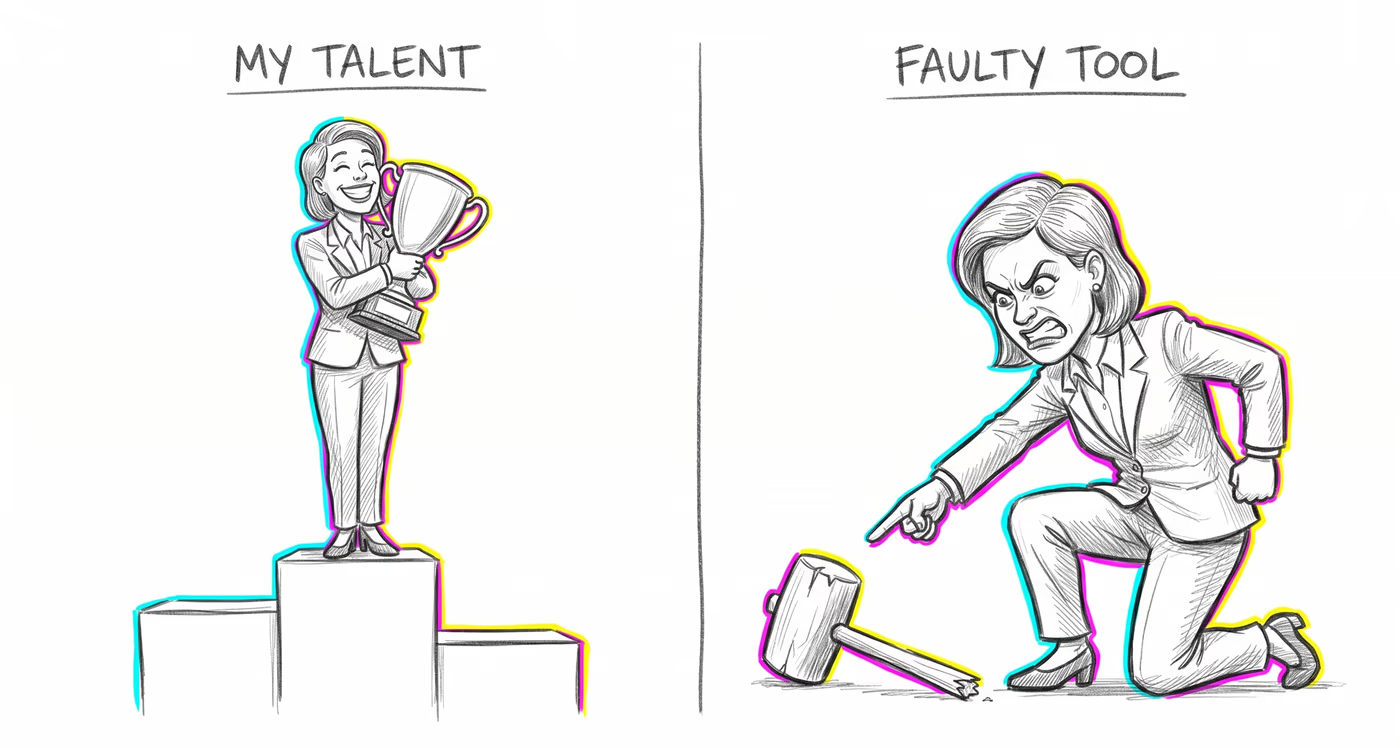
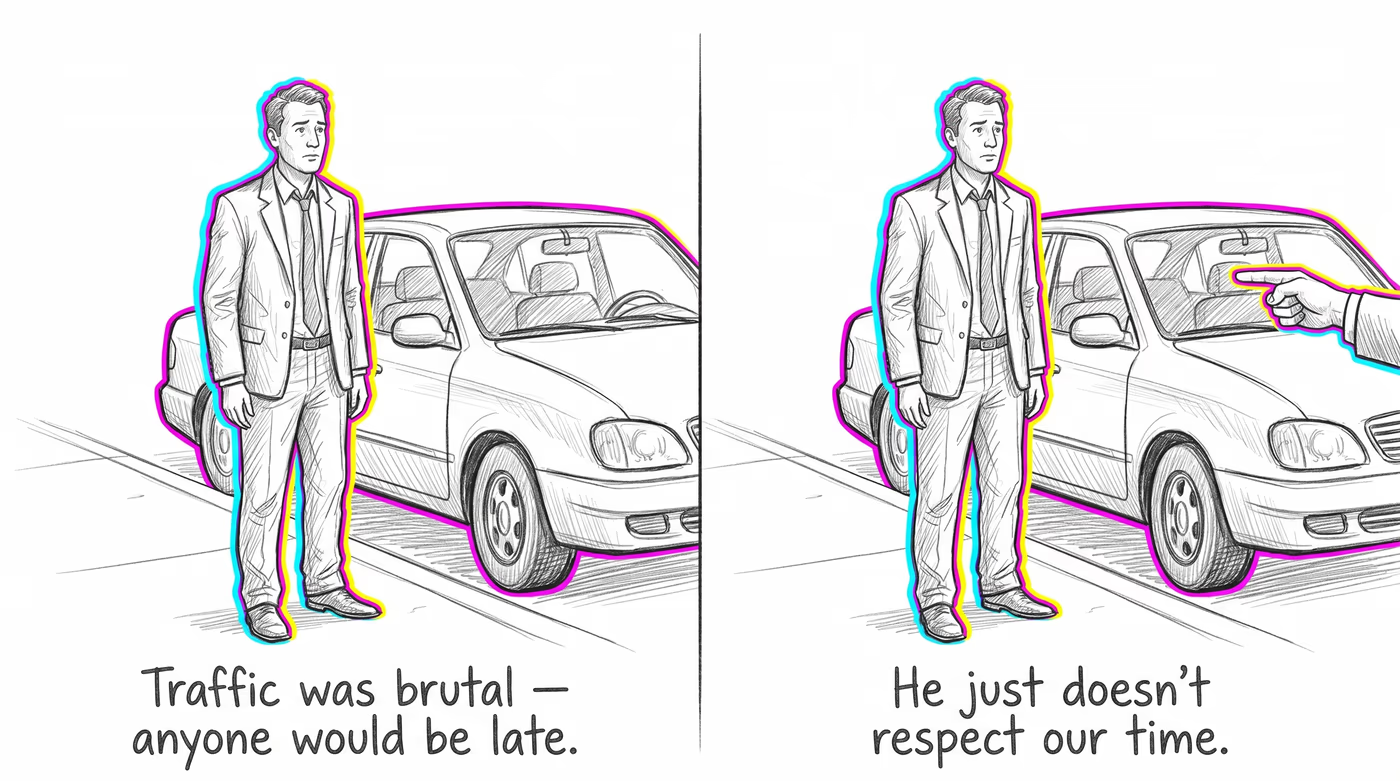
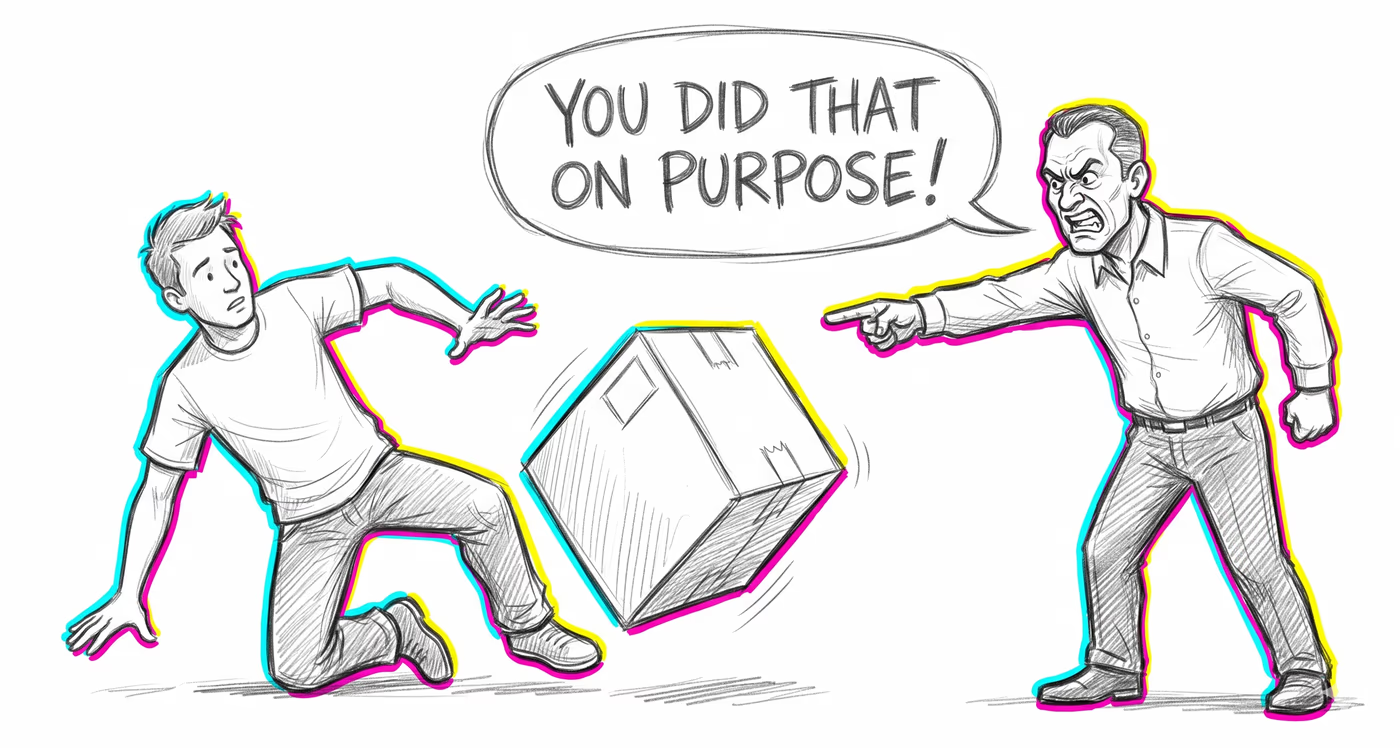
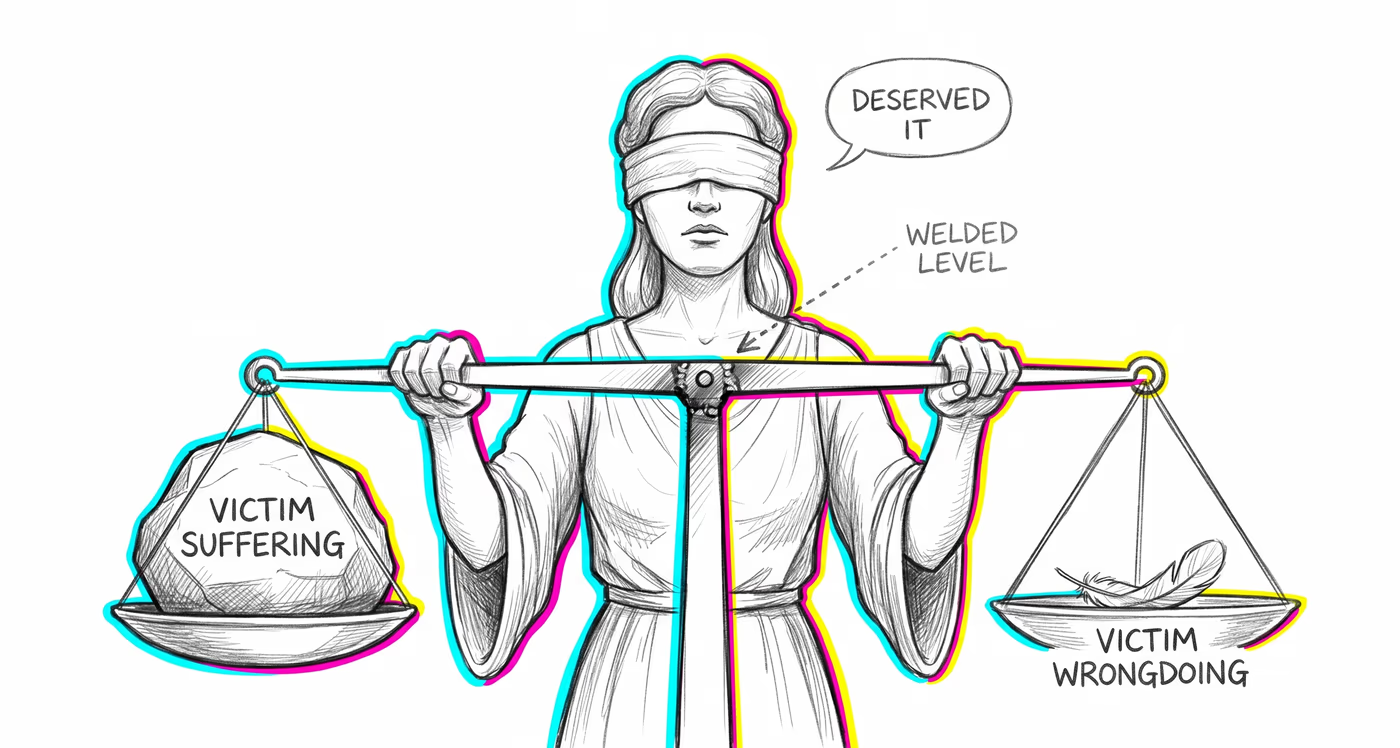
Blaming victims for their misfortune in ways that protect your sense that it couldn't happen to you.

WHAT IT IS

The glitch, explained plainly.

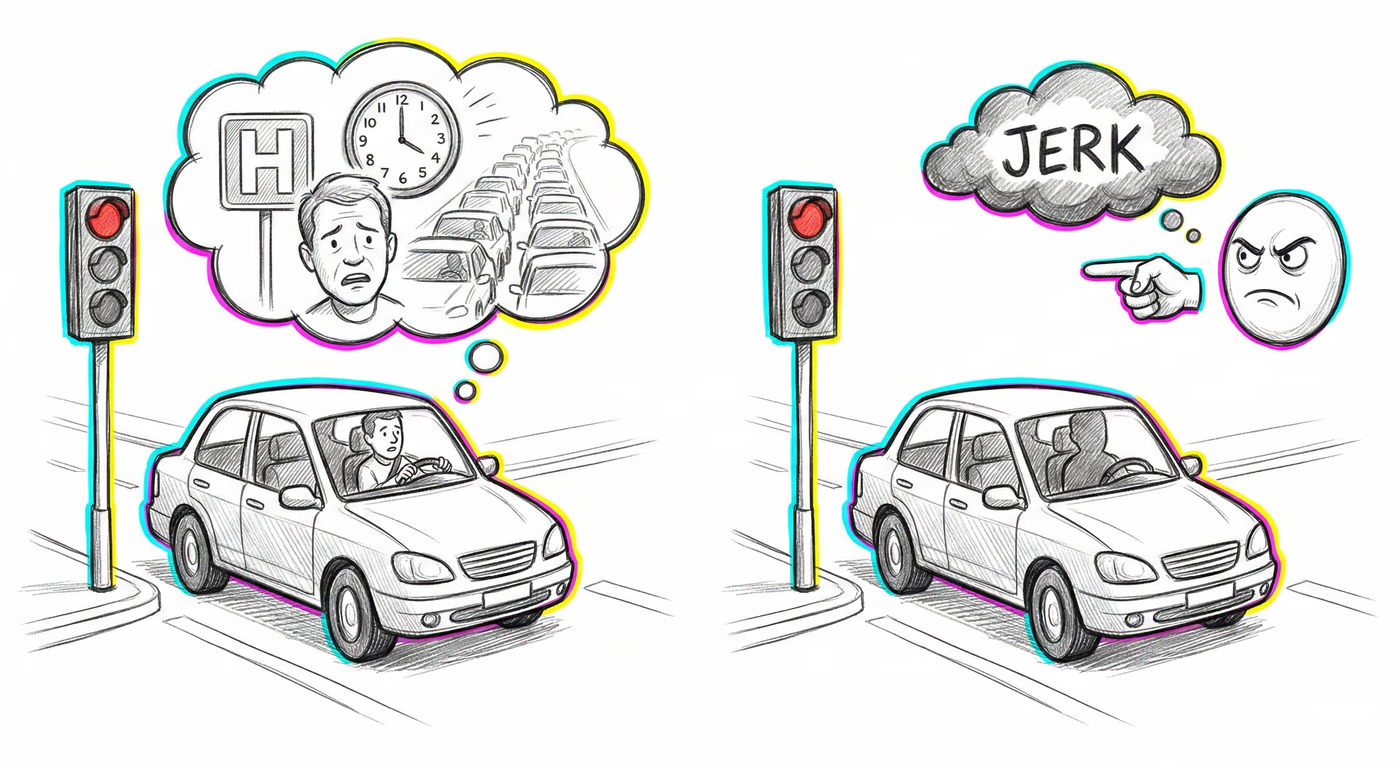
Imagine your friend trips and falls on the playground. If they're really different from you — maybe they're always running around being wild — you say 'Well, they shouldn't have been running so fast!' But if your best friend who is just like you trips in the exact same spot, you say 'Oh no, that ground was really slippery!' You blame the kid who is different from you because it makes you feel safe — like it could never happen to you.

Defensive attribution describes the systematic distortion of blame assignments driven by an observer's psychological need to feel safe from similar misfortune. When witnessing or hearing about a negative event, people who perceive themselves as dissimilar to the victim tend to attribute greater responsibility to the victim, reasoning that the victim's own choices or character caused the outcome. Conversely, when observers identify closely with the victim — sharing similar demographics, circumstances, or life situations — they attribute less blame to the victim and more to external or situational factors. This pattern serves a dual ego-protective function: it preserves the illusion that bad events are controllable and preventable, and it shields the observer's self-esteem by ensuring that if a similar event were to happen to them, they could deflect personal responsibility.

SOUND FAMILIAR?

Where it shows up.

  1. 01 After reading about a hiker who got lost in the mountains and needed rescue, Maria — who has never hiked — comments that the hiker was reckless and unprepared. When her avid hiker friend points out that even experienced hikers can get lost due to sudden weather changes, Maria insists the hiker must have ignored warning signs.
  2. 02 A jury member reviewing a workplace injury case finds herself more sympathetic to the injured construction worker after learning they share the same hometown and age. She attributes the accident to faulty equipment rather than worker negligence, though earlier in deliberation she was inclined to blame a different, younger worker in a similar case for not following safety protocols.
  3. 03 During a team meeting about a data breach at a competitor, a senior engineer who uses the same tech stack as the breached company argues it was a sophisticated, unavoidable attack. Meanwhile, she attributes a similar breach at a company using an entirely different platform to poor security practices and negligent leadership.
  4. 04 When Tom, a 60-year-old retiree, reads about an elderly man losing his savings to a phone scam, he blames the telecom company and calls the scam sophisticated. But when he reads about a 25-year-old losing money to a similar scam, he says the young person should have known better and been more careful.
  5. 05 A financial analyst dismisses a colleague's investment losses as the result of poor research and emotional decision-making. Six months later, when his own portfolio drops due to a similar market downturn, he attributes it entirely to unpredictable macroeconomic conditions beyond anyone's control.
IN DIFFERENT DOMAINS

Where it shows up at work.

The same glitch looks different depending on the terrain. Finance, medicine, a relationship, a team — same mechanism, different costume.

Finance & investing

Investors tend to blame others who suffer losses on poor judgment or greed while attributing their own similar losses to unforeseeable market conditions, with the disparity in blame increasing as the losing investor seems less demographically similar to the observer.
Medicine & diagnosis

Healthcare providers may unconsciously attribute a patient's illness to lifestyle choices (diet, exercise, substance use) more readily when the patient is demographically dissimilar to them, while showing greater empathy and citing environmental or genetic factors for patients who resemble them in background.

Education & grading

Teachers may attribute a student's academic failure to laziness or lack of talent when the student's background differs from their own, while offering more situational explanations — such as family difficulties or learning disabilities — for students whose circumstances mirror their own past.

Relationships

When a friend's relationship ends badly, people often attribute blame to the friend's choices or character flaws to preserve their own sense of security. But when someone in a very similar relationship situation experiences the same outcome, the blame shifts to the partner or to circumstances.

Tech & product

When reviewing post-mortems for system outages, engineering teams tend to assign more personal blame to operators or developers they perceive as less experienced or from different teams, while interpreting failures by similar or in-group engineers as systemic or tooling issues.

Workplace & hiring

In performance reviews, managers tend to attribute poor results of dissimilar employees to effort and ability, while attributing similar poor outcomes for employees who share their background or career trajectory to external obstacles like insufficient resources or unreasonable deadlines.

Politics Media

When communities are struck by natural disasters, observers who are demographically distant tend to blame victims for not evacuating or preparing, while communities similar to their own receive more sympathetic coverage emphasizing the unpredictability of the disaster and systemic failures in response.

HOW TO SPOT IT

Ask yourself…

  • Am I explaining this person's misfortune by what they did wrong, rather than what happened to them?
  • Would I assign the same level of blame if the person involved were more like me in age, background, or situation?
  • Am I motivated to find a reason this couldn't happen to me, rather than genuinely analyzing the cause?
HOW TO DEFEND AGAINST IT

The playbook.

  • Before assigning blame, ask: 'What situational or systemic factors could have contributed to this outcome that have nothing to do with the person's character?'
  • Practice the 'swap test': mentally replace the victim with yourself or someone you love, and notice whether your attribution of blame changes.
  • Actively seek out the victim's perspective or first-person accounts before forming a judgment about responsibility.
  • Recognize the emotional relief that comes with blaming a victim as a signal that your attribution may be defensively motivated rather than accurate.
  • When evaluating negative events, deliberately generate at least two external explanations for every internal one you form.
FAMOUS CASES

In history.

  • Widespread public tendency to blame Hurricane Katrina victims in New Orleans for not evacuating, despite many lacking the financial means or transportation to do so.
  • The persistent pattern of victim blaming in high-profile sexual assault cases, where observers attribute responsibility to victims based on clothing, behavior, or location.
WHERE IT COMES FROM
Academic origin

Elaine Walster (1966) first proposed the concept in 'Assignment of Responsibility for an Accident' (JPSP). Keith G. Shaver (1970) formalized the defensive attribution hypothesis, introducing the critical similarity variable. Jerry M. Burger (1981) published a critical review in Psychological Bulletin confirming the hypothesis.

Evolutionary origin

In ancestral environments, quickly assessing who was responsible for group mishaps — and distancing oneself from those deemed careless or incompetent — helped maintain social standing and avoid being associated with liability. Attributing misfortune to controllable causes also promoted a functional illusion of environmental predictability, motivating adaptive behavior rather than learned helplessness in the face of genuine randomness.

IN AI SYSTEMS

How the machines inherit it.

Machine learning models trained on historical judicial or insurance data can encode defensive attribution patterns, systematically assigning higher fault or risk to claimants from demographics that differ from the majority represented in training data, while being more lenient toward demographically similar profiles.

Read more on Wikipedia
FREE FIELD ZINE

10 glitches quietly running your life.

A free field-zine PDF — ten cognitive glitches named, illustrated, with a defense move for each. Plus the weekly Glitch Report on Fridays — one bias named, two spotted in the wild, one defense move. Unsubscribe any time.

EXPLORE MORE

Related glitches.

LAUNCH PRICE

Train against your blindspots.

50 cards are free to preview. Buyers unlock the rest of the deck plus the interactive training — Spot-the-Bias Quiz unlimited, Swipe Deck with spaced repetition, My Blindspots, Decision Pre-Flight, the Printable Deck + Cheat Sheets, and the Field Guide e-book. $29.50$59.

Unlock the full deck

Everything below — yours forever. Pay once, use across every device.

Half-off launch — limited to the first 100 readers. Auto-applied at checkout.
$59 $29.50
one-time payment · lifetime access
  • All interactive digital cards — search, filter, flip, shuffle on any device
  • Five training modes — Spot-the-Bias Quiz, Swipe Deck, Pre-Flight, Blindspots, Journal
  • Curated Lenses + Decision Templates + Defense Playbook
  • Printable Deck PDFs + Field Guide e-book + Cheat Sheets + Anki Export
  • Every future improvement, included
Unlock  $29.50

30-day refund · no questions asked

Unlock the full deck

Everything below — yours forever. Pay once, use across every device.

Half-off launch — limited to the first 100 readers. Auto-applied at checkout.
$59 $29.50
one-time payment · lifetime access
  • All interactive digital cards — search, filter, flip, shuffle on any device
  • Five training modes — Spot-the-Bias Quiz, Swipe Deck, Pre-Flight, Blindspots, Journal
  • Curated Lenses + Decision Templates + Defense Playbook
  • Printable Deck PDFs + Field Guide e-book + Cheat Sheets + Anki Export
  • Every future improvement, included
Unlock  $29.50

30-day refund · no questions asked