Empathy Gap

aka Hot-Cold Empathy Gap · Hot-Cold Empathy Bias

Underestimating how much emotions and physical states influence decisions — especially when you're in a different state right now.

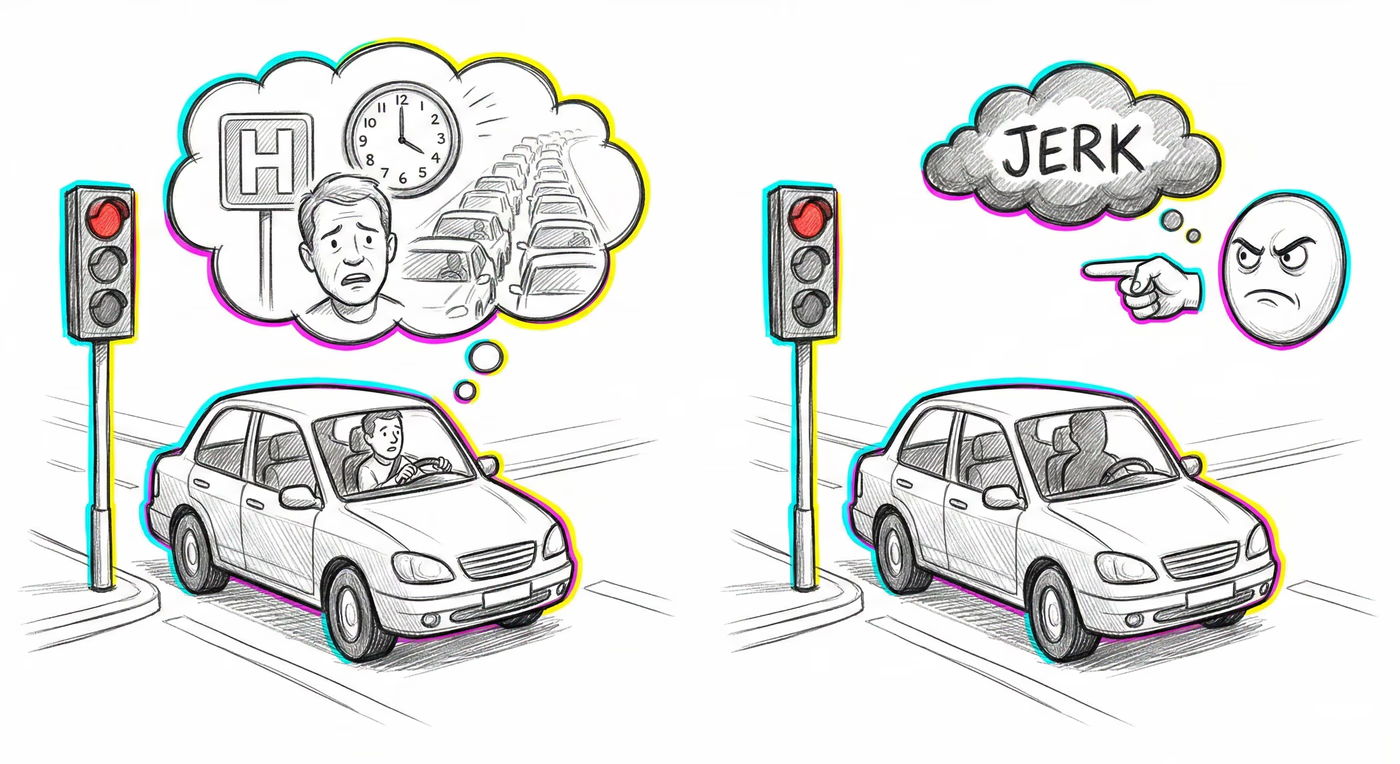
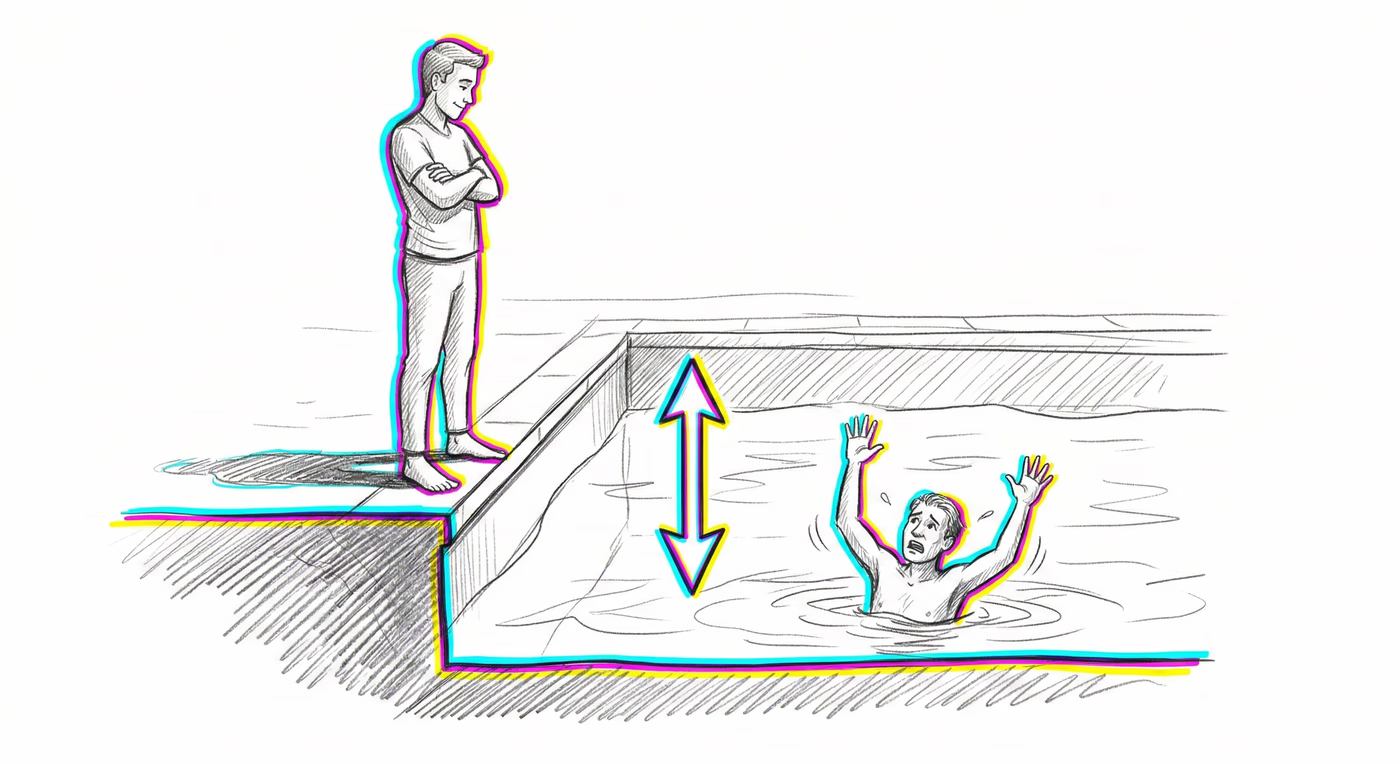
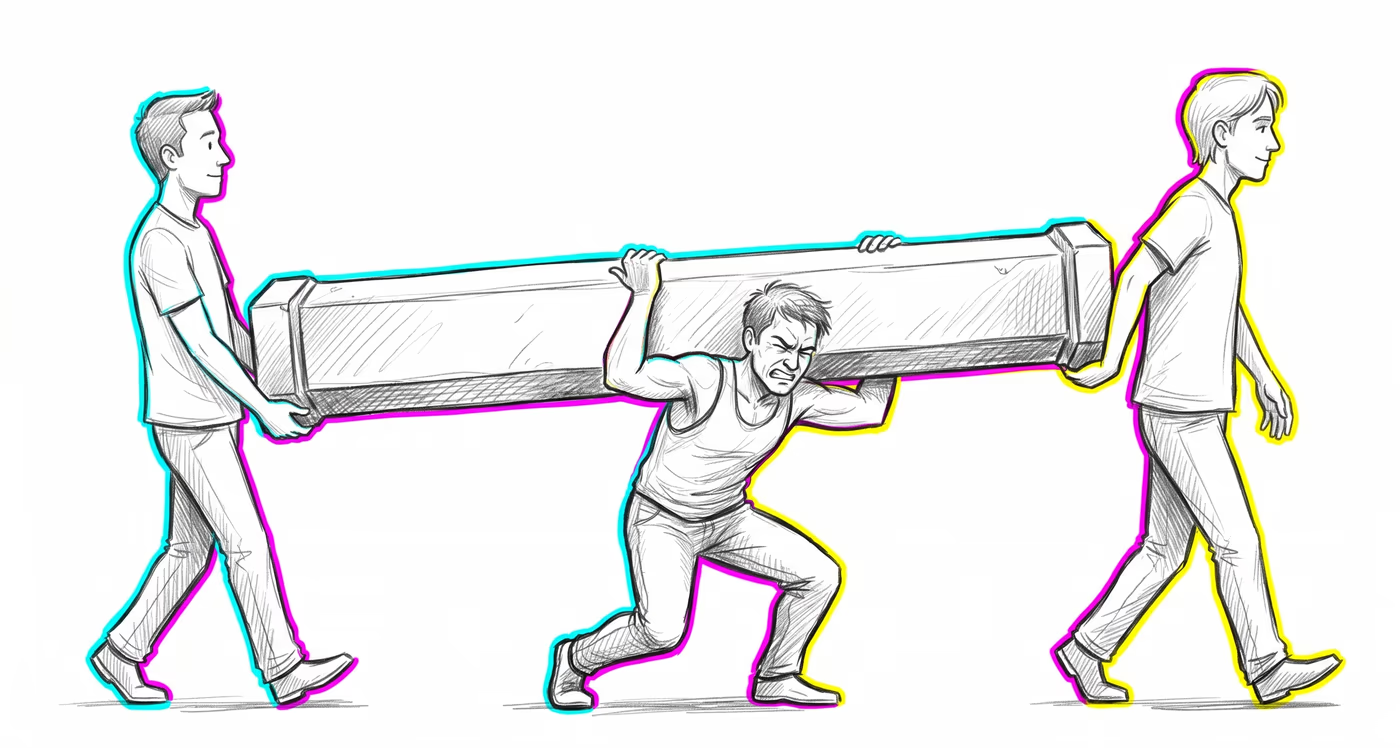
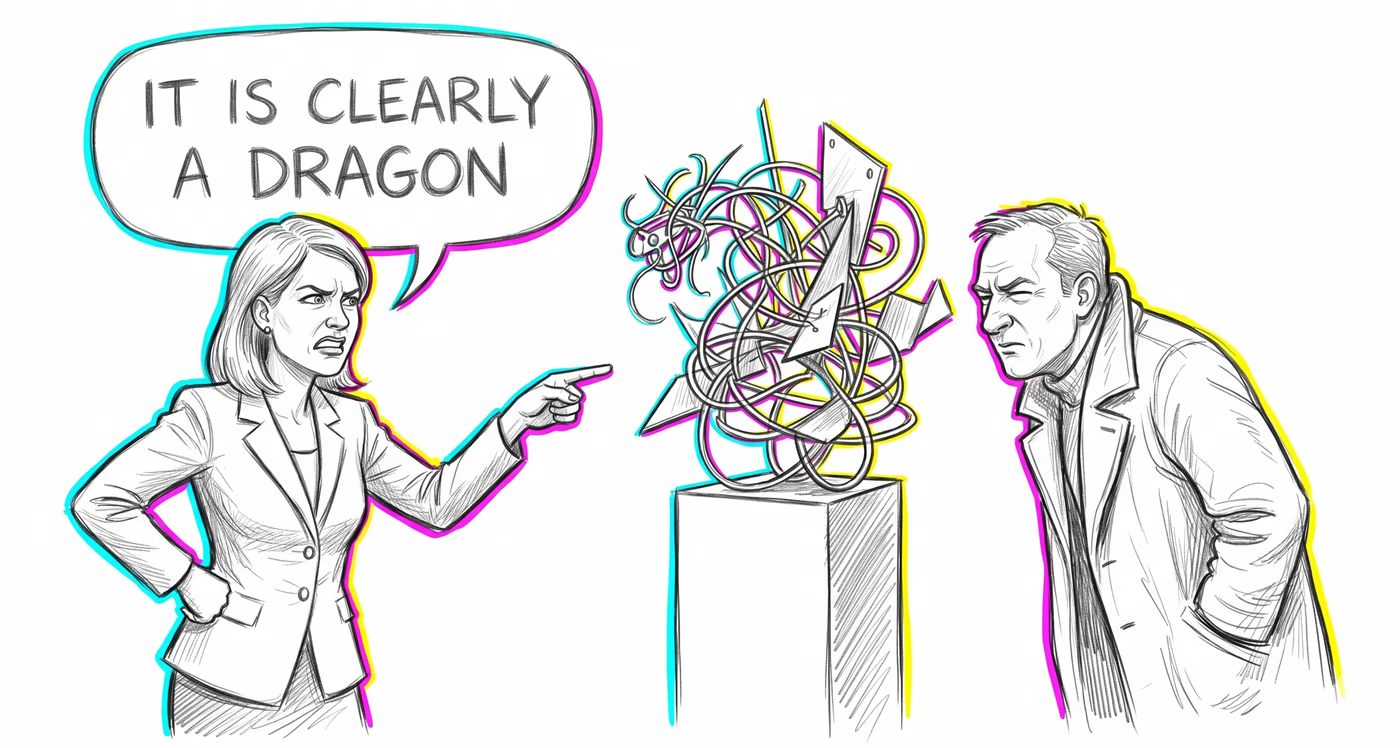
Illustration: Empathy Gap
WHAT IT IS

The glitch, explained plainly.

Imagine you just ate a huge lunch and you're totally full. Your mom asks you to pick snacks for tomorrow's road trip. You pick barely anything because right now food sounds gross. But tomorrow, when you're starving in the car, you'll wish you had way more snacks. That's because 'full you' can't really feel what 'hungry you' will want.

The Empathy Gap describes systematic failures in emotional perspective-taking that occur because human cognition is fundamentally state-dependent: our current mental and physical state profoundly shapes how we process information, evaluate options, and predict behavior. When in a 'cold' (calm, rational) state, people consistently underestimate how powerful 'hot' states — anger, hunger, pain, fear, craving, sexual arousal — will be in shaping their own or others' decisions. Conversely, when in a 'hot' state, people overestimate the permanence of their current feelings and fail to appreciate how different they will think and act once the emotional storm passes. This bias operates both intrapersonally (misjudging one's own future or past self) and interpersonally (misjudging others), and can flow in either temporal direction — prospectively (predicting future states) or retrospectively (recalling past states).

SOUND FAMILIAR?

Where it shows up.

  1. 01 After quitting smoking for three weeks during a calm vacation, Marcus confidently tells his wife he won't need the nicotine patches anymore because the cravings feel completely manageable. On his first stressful day back at work, he buys a pack before lunch.
  2. 02 A corporate wellness director, who exercises every morning without fail, designs a mandatory 6 AM fitness program for warehouse workers, genuinely puzzled when participation is near zero. She cannot understand why people would skip something that feels so obviously beneficial.
  3. 03 Dr. Patel reviews a patient's chart noting chronic back pain rated at 8/10. Having never experienced chronic pain herself and feeling healthy today, she prescribes a conservative treatment plan and suggests the patient try 'pushing through it with gentle stretching,' not appreciating how the pain's intensity might make even basic movement feel impossible.
  4. 04 A negotiator prepares for a high-stakes salary discussion while feeling confident and relaxed at home. She plans to firmly hold her ground on compensation. In the actual meeting, facing her intimidating boss and feeling anxious, she quickly accepts the first offer, later confused about why she folded so easily.
  5. 05 A jury deliberates over a case where a father broke into a pharmacy to get insulin for his dying child. Several jurors who have never faced a life-threatening family emergency cannot fathom why he didn't simply call another hospital or wait for morning, concluding he must have had criminal intent.
IN DIFFERENT DOMAINS

Where it shows up at work.

The same glitch looks different depending on the terrain. Finance, medicine, a relationship, a team — same mechanism, different costume.

Finance & investing

Investors in calm markets create aggressive risk-tolerance profiles, underestimating how panic during a crash will override their stated long-term commitment to staying invested. Conversely, after a market downturn, investors sell at lows because they cannot imagine the fear subsiding and confidence returning.
Medicine & diagnosis

Physicians in comfortable, pain-free states tend to underestimate patients' reported pain levels, leading to under-treatment. Healthy individuals making advance healthcare directives consistently underestimate their desire for life-prolonging treatment, preferences that often reverse dramatically when they actually face a serious diagnosis.

Education & grading

Teachers who find a subject intuitive struggle to understand why students are anxious or confused, leading to pacing that is too fast and explanations that skip foundational steps. Students studying while calm underestimate how test anxiety will impair their recall and performance under pressure.

Relationships

Partners who have resolved their anger after an argument dismiss the other person's lingering hurt as an overreaction. People who have overcome grief or heartbreak become less sympathetic to friends going through similar losses, having lost visceral access to the intensity of the emotional state.

Tech & product

Product teams designing interfaces in calm office settings fail to account for users operating under stress, time pressure, or emotional distress, resulting in workflows that are usable in testing but break down in real-world crisis scenarios. Error messages designed by engineers who know the system feel cryptic and anxiety-inducing to confused users.

Workplace & hiring

Managers who are not currently overworked assign unrealistic deadlines, unable to fully appreciate how cognitive fatigue and stress degrade their team's output. HR professionals designing bereavement policies while emotionally neutral may underestimate the duration and intensity of employees' grief.

Politics Media

Policymakers who have never experienced poverty design welfare systems with rational compliance requirements that presuppose calm, organized decision-making — conditions often absent in the lives of people under severe economic stress. Comfortable citizens judge desperate migrants harshly, unable to simulate the visceral fear and desperation driving their choices.

HOW TO SPOT IT

Ask yourself…

  • Am I making a prediction about my future behavior or someone else's while in a very different emotional or physical state than the one I'm predicting about?
  • Am I dismissing someone's reaction as 'irrational' simply because I don't currently feel what they feel?
  • Am I making a commitment or plan right now that assumes I'll feel exactly as calm, motivated, or indifferent as I do at this moment?
HOW TO DEFEND AGAINST IT

The playbook.

  • Use your past behavior, not your current feelings, as the best predictor of future actions — ask 'What did I actually do last time I was in that state?' rather than 'What do I feel like I would do?'
  • Before judging someone's decision, actively try to recall a time when you were in a similar visceral state — hunger, pain, fear, anger — and how it warped your own judgment.
  • Build 'hot-state' contingency plans while you are in a cold state: pre-commit to specific actions (e.g., automatic savings withdrawals, pre-portioned meals) that don't rely on willpower in the moment.
  • When designing products, policies, or instructions for others, test them with users who are actually in the emotional or physical state the design must serve, not just calm lab participants.
  • Practice the 'opposite state' thought experiment: explicitly ask 'If I were exhausted / in pain / furious right now, would this plan / judgment / expectation still make sense?'
FAMOUS CASES

In history.

  • Post-9/11 U.S. interrogation policy debates, where officials in safe environments designed 'enhanced interrogation' techniques while underestimating their severity, a phenomenon directly studied by Nordgren, McDonnell, and Loewenstein (2011).
  • The persistent undertreating of pain in medical settings, documented across decades, where physicians who are not in pain systematically under-prescribe analgesics for patients who are.
WHERE IT COMES FROM
Academic origin

George Loewenstein, Carnegie Mellon University, formalized the concept in 1996 in his paper 'Out of Control: Visceral Influences on Behavior' (Organizational Behavior and Human Decision Processes), and elaborated the hot-cold empathy gap framework in subsequent work (2005). Leaf Van Boven and colleagues extended the concept to interpersonal empathy gaps in the early 2000s.

Evolutionary origin

In ancestral environments, immediate visceral signals — pain, hunger, fear — required urgent behavioral responses. A bias toward prioritizing the current affective state over imagined future states kept organisms focused on present survival threats rather than spending costly cognitive resources simulating hypothetical scenarios. Additionally, projecting one's own current state onto nearby group members (social projection) was often accurate when group members shared the same environment, making the shortcut adaptive in small, homogeneous bands.

IN AI SYSTEMS

How the machines inherit it.

AI models trained on text generated primarily in reflective, analytical contexts may systematically underrepresent the decision patterns of users in high-arousal emotional states. Recommendation systems optimized for 'rational' user behavior fail to predict impulsive choices driven by hunger, boredom, or frustration, leading to poor personalization during visceral states. Sentiment analysis models may also underweight the intensity of expressed emotions if their training data skews toward measured, editorial language rather than raw emotional expression.

Read more on Wikipedia
FREE FIELD ZINE

10 glitches quietly running your life.

A free field-zine PDF — ten cognitive glitches named, illustrated, with a defense move for each. Plus the weekly Glitch Report on Fridays — one bias named, two spotted in the wild, one defense move. Unsubscribe any time.

EXPLORE MORE

Related glitches.

LAUNCH PRICE

Train against your blindspots.

50 cards are free to preview. Buyers unlock the rest of the deck plus the interactive training — Spot-the-Bias Quiz unlimited, Swipe Deck with spaced repetition, My Blindspots, Decision Pre-Flight, the Printable Deck + Cheat Sheets, and the Field Guide e-book. $29.50$59.

Unlock the full deck

Everything below — yours forever. Pay once, use across every device.

Half-off launch — limited to the first 100 readers. Auto-applied at checkout.
$59 $29.50
one-time payment · lifetime access
  • All interactive digital cards — search, filter, flip, shuffle on any device
  • Five training modes — Spot-the-Bias Quiz, Swipe Deck, Pre-Flight, Blindspots, Journal
  • Curated Lenses + Decision Templates + Defense Playbook
  • Printable Deck PDFs + Field Guide e-book + Cheat Sheets + Anki Export
  • Every future improvement, included
Unlock  $29.50

30-day refund · no questions asked

Unlock the full deck

Everything below — yours forever. Pay once, use across every device.

Half-off launch — limited to the first 100 readers. Auto-applied at checkout.
$59 $29.50
one-time payment · lifetime access
  • All interactive digital cards — search, filter, flip, shuffle on any device
  • Five training modes — Spot-the-Bias Quiz, Swipe Deck, Pre-Flight, Blindspots, Journal
  • Curated Lenses + Decision Templates + Defense Playbook
  • Printable Deck PDFs + Field Guide e-book + Cheat Sheets + Anki Export
  • Every future improvement, included
Unlock  $29.50

30-day refund · no questions asked