Fading Affect Bias

aka FAB · Positivity Bias in Autobiographical Memory

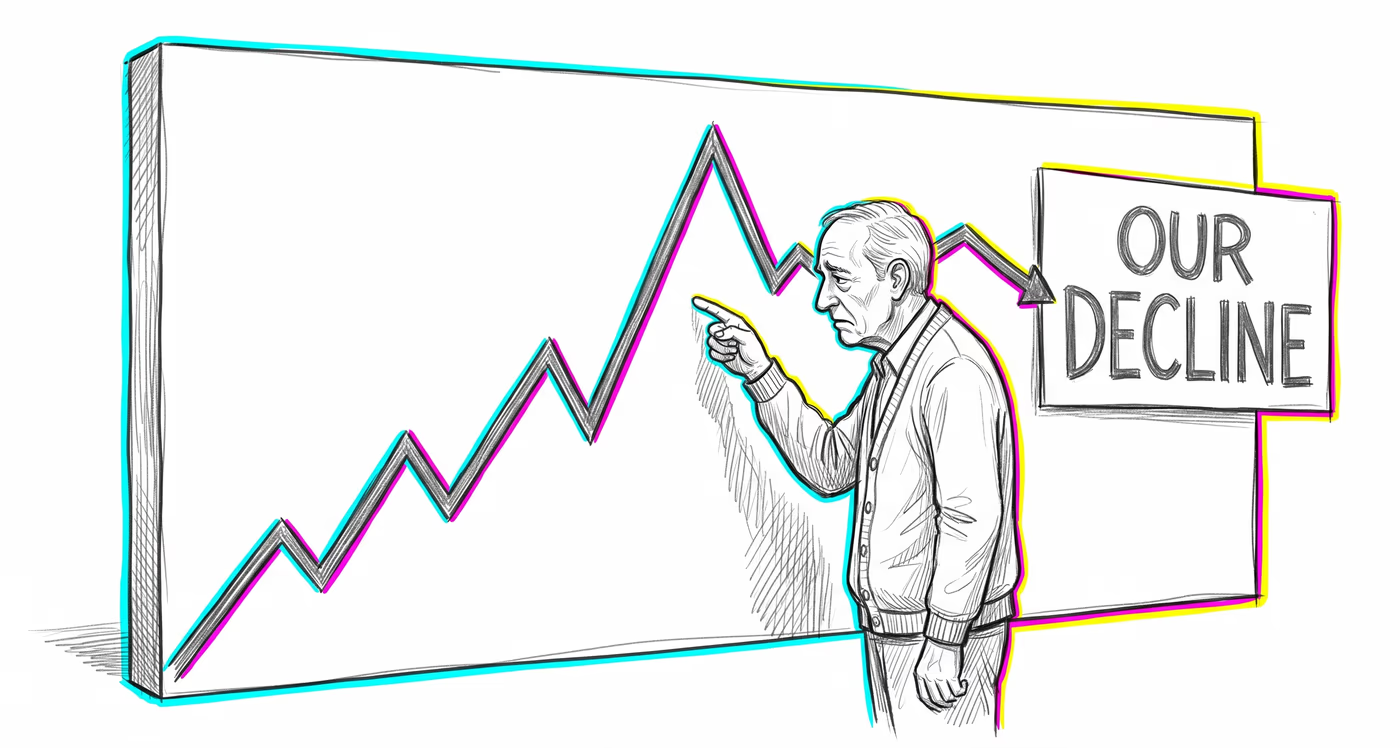
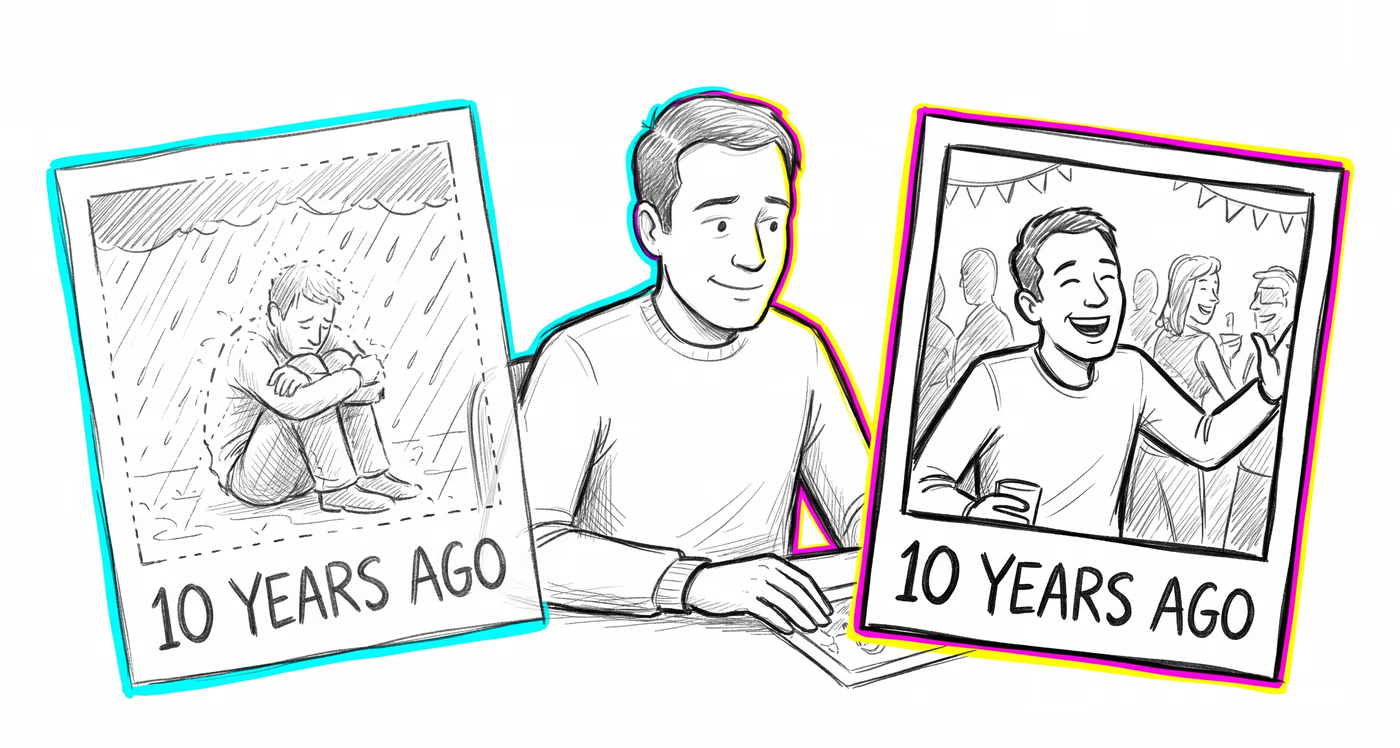
Negative emotions from memories fading faster over time than positive emotions, making the past seem rosier.

WHAT IT IS

The glitch, explained plainly.

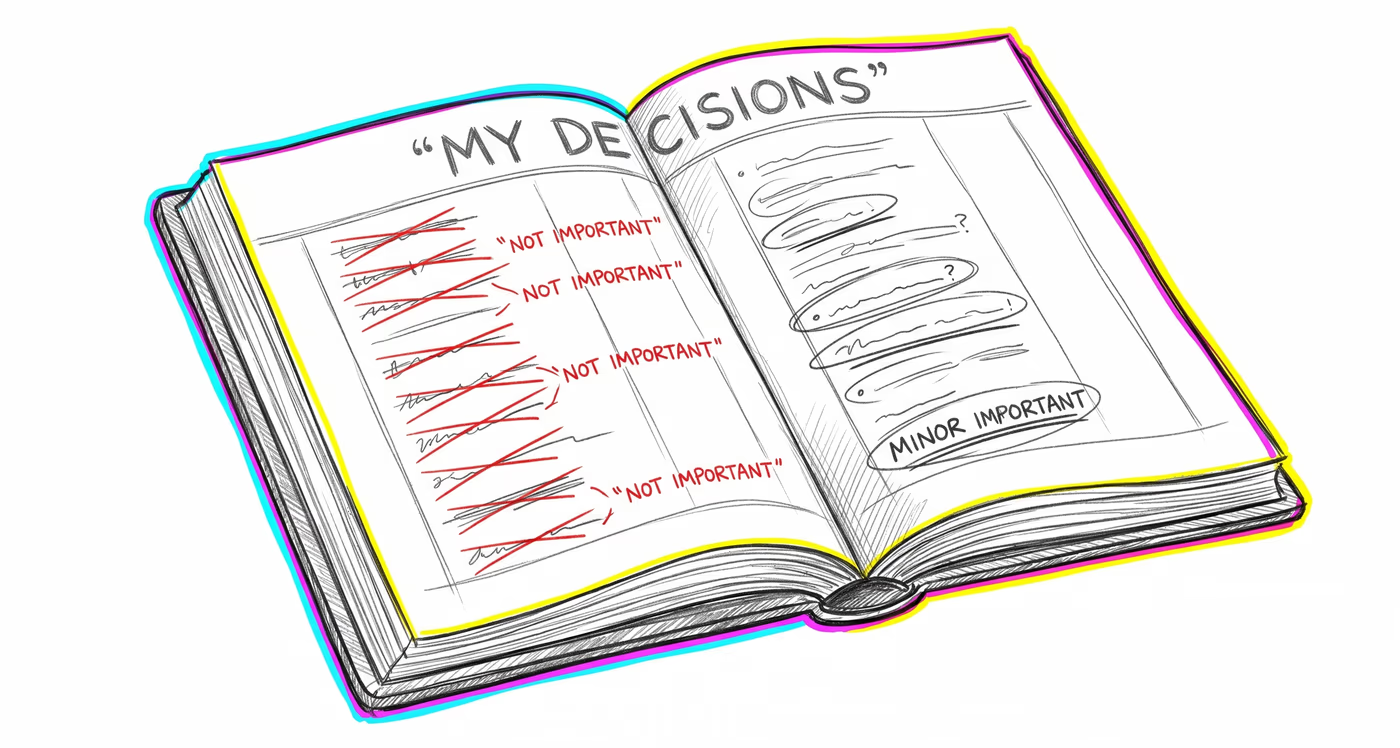
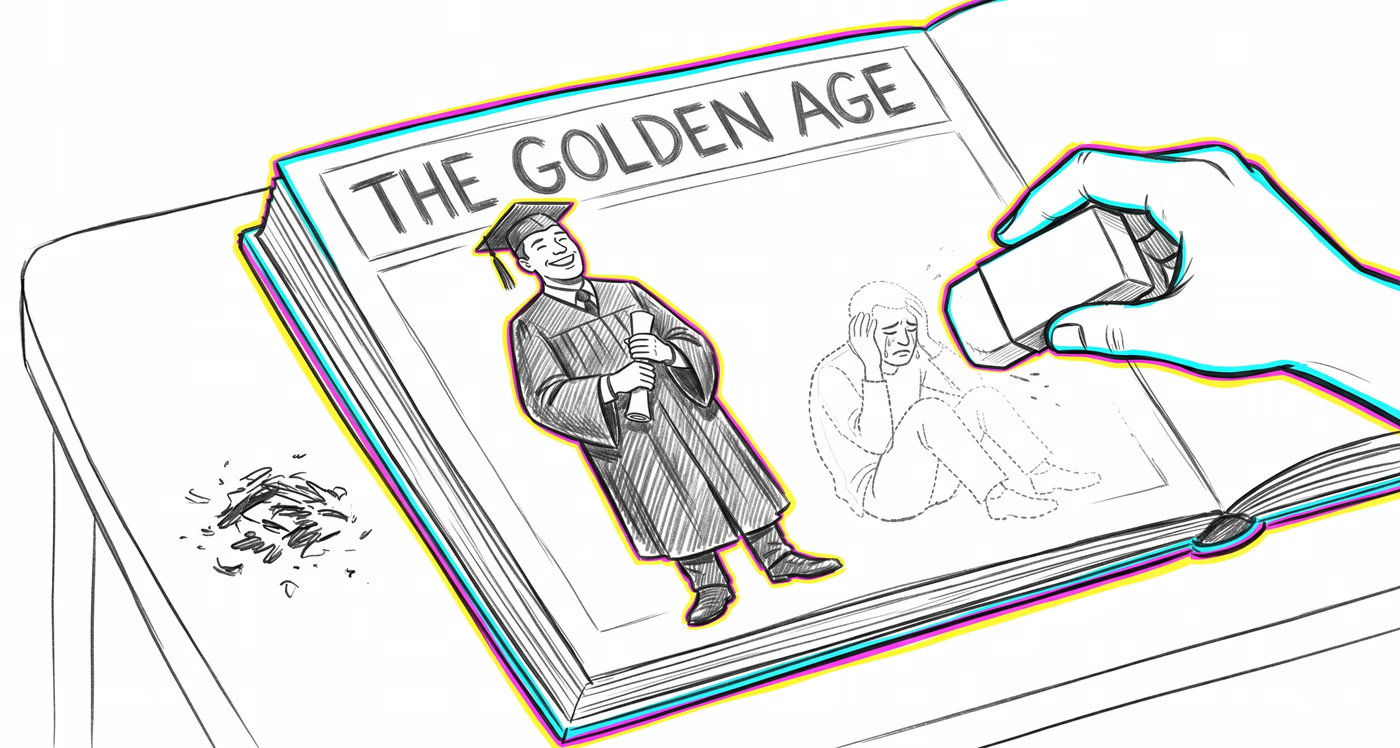
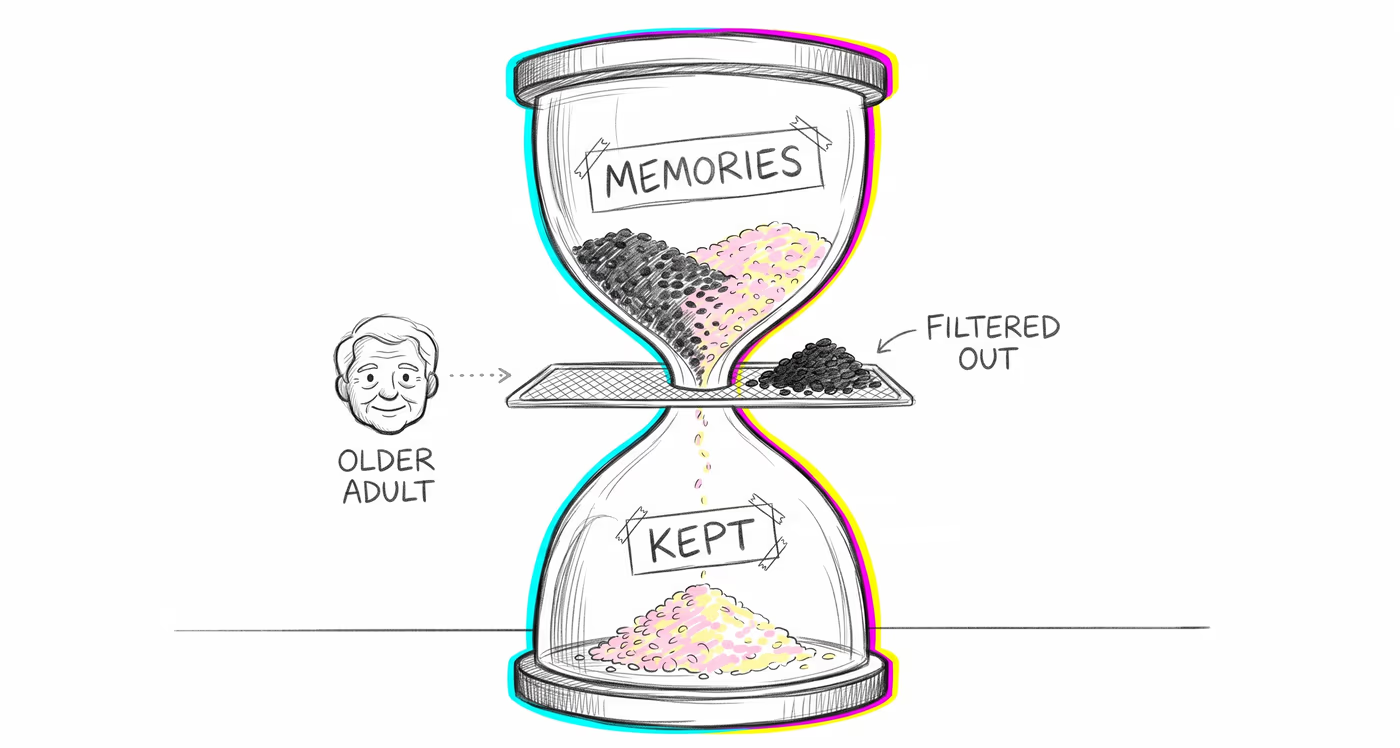
Imagine your brain has two different erasers — one for bad feelings and one for good feelings. The eraser for bad feelings works really fast and scrubs away most of the sting, but the eraser for good feelings barely works at all, so the happy memories stay bright and colorful. That's why last year's embarrassing moment doesn't hurt as much anymore, but your birthday party still makes you smile.

The Fading Affect Bias describes a robust asymmetry in how emotional memories lose their intensity over time: negative feelings attached to unpleasant events diminish significantly faster than positive feelings attached to pleasant events. This effect begins within hours of an event and strengthens over months and years, producing an increasingly rosy perception of one's personal past. The bias is not about forgetting the factual content of negative events but specifically about the emotional charge weakening, and in some cases originally negative events are eventually recalled with neutral or even positive affect. FAB is considered a form of automatic emotion regulation that supports psychological resilience, self-esteem, and openness to future experiences.

SOUND FAMILIAR?

Where it shows up.

  1. 01 Maria moved cities two years ago and remembers mostly the excitement of exploring a new neighborhood and making friends. When a colleague asks if the move was hard, she says 'Not really,' forgetting the months of loneliness, lost belongings, and bureaucratic nightmares she documented in her journal at the time.
  2. 02 Tom keeps going back to the same crowded, overpriced music festival each year. His friends point out that he complained bitterly about the mud, long lines, and terrible food every time, but Tom insists it's always a blast — his memories of the headliners and campfire nights feel emotionally intense while the misery has quietly faded.
  3. 03 A manager reviews the past year and concludes the team's morale was generally high, despite exit interviews showing several employees left due to burnout and conflict. The manager's emotional recall of team successes has remained vivid while the sting of each departure has softened considerably over the months.
  4. 04 After a difficult pregnancy with severe complications, a mother tells her sister she'd happily do it again because 'it really wasn't that bad.' Her medical records tell a different story, but the joy associated with her child's birth has retained its full intensity while the fear and pain have substantially diminished in her memory.
  5. 05 A venture capitalist consistently overallocates to high-risk startups. When reviewing his track record, his emotional memory of the exciting wins still produces a rush, while the gut-wrenching losses from the same period feel emotionally muted. He concludes the risk profile 'feels right' even though objective returns suggest otherwise.
IN DIFFERENT DOMAINS

Where it shows up at work.

The same glitch looks different depending on the terrain. Finance, medicine, a relationship, a team — same mechanism, different costume.

Finance & investing

Investors recall the emotional thrill of winning trades more vividly than the sting of losing ones, leading to overconfidence in risky strategies because past losses feel less painful in retrospect than they actually were at the time.
Medicine & diagnosis

Patients underreport the severity of past symptoms or treatment side effects during follow-up visits because the negative affect associated with those experiences has faded disproportionately, potentially leading to understated medical histories and misaligned treatment plans.

Education & grading

Students remember the satisfaction of completing a difficult course more than the misery of studying for it, which can lead them to underestimate the effort required for future academic challenges and poorly calibrate their study planning.

Relationships

People in on-again-off-again relationships tend to recall the good times more vividly than the painful conflicts, making reconciliation seem more appealing than the full emotional record would warrant.

Tech & product

Users evaluating a product they used in the past tend to remember positive interactions more intensely than frustrating bugs or confusing interfaces, inflating satisfaction scores in retrospective surveys compared to real-time experience sampling.

Workplace & hiring

Employees reminiscing about previous jobs tend to remember camaraderie and achievements while the daily frustrations and interpersonal conflicts fade emotionally, leading to 'grass was greener' thinking that distorts career decisions.

Politics Media

Voters recall past political eras with disproportionate warmth because the negative emotions from scandals, economic downturns, and social conflicts of those periods have faded faster, fueling declinism and the belief that things used to be better.

HOW TO SPOT IT

Ask yourself…

  • Am I remembering this past experience as less painful or stressful than it actually felt at the time?
  • Would my journal entry, texts, or social media posts from that period tell a different emotional story than what I'm feeling now about it?
  • Am I using my softened memory of a negative outcome to justify repeating a decision that didn't work out well?
HOW TO DEFEND AGAINST IT

The playbook.

  • Keep a journal or diary with real-time emotional ratings so you have a factual record to compare against your retrospective feelings.
  • Before making a decision based on past experience (e.g., 'that wasn't so bad, I'll do it again'), deliberately try to recall specific negative details and consult contemporaneous records.
  • Use the 'pre-mortem' technique: before repeating a past choice, list concrete negative consequences you experienced last time, even if they no longer feel emotionally significant.
  • Ask others who were present during negative events to share their recollections, as external perspectives can counterbalance your emotionally faded memory.
  • When evaluating whether to repeat something, weight objective outcomes (data, records, feedback) more heavily than your emotional memory of the experience.
FAMOUS CASES

In history.

  • Research on East and West Germans' memories of the fall of the Berlin Wall (Bohn & Berntsen, 2007) showed that those who initially viewed it negatively had significantly reduced negative affect at recall, while those who viewed it positively retained their emotional intensity — a direct demonstration of FAB in flashbulb memories of a historical event.
  • Studies during the COVID-19 pandemic found that lockdown restrictions disrupted normal social rehearsal patterns, which in turn weakened the typical FAB effect, showing how societal disruption can interfere with this normally robust memory process.
WHERE IT COMES FROM
Academic origin

Early evidence from Cason (1932); formally established and named by W. Richard Walker, R. J. Vogl, and Charles P. Thompson in 1997; extensively developed by Walker, John J. Skowronski, Jeffrey A. Gibbons, and collaborators (the 'FAB collective') from 1997 onward.

Evolutionary origin

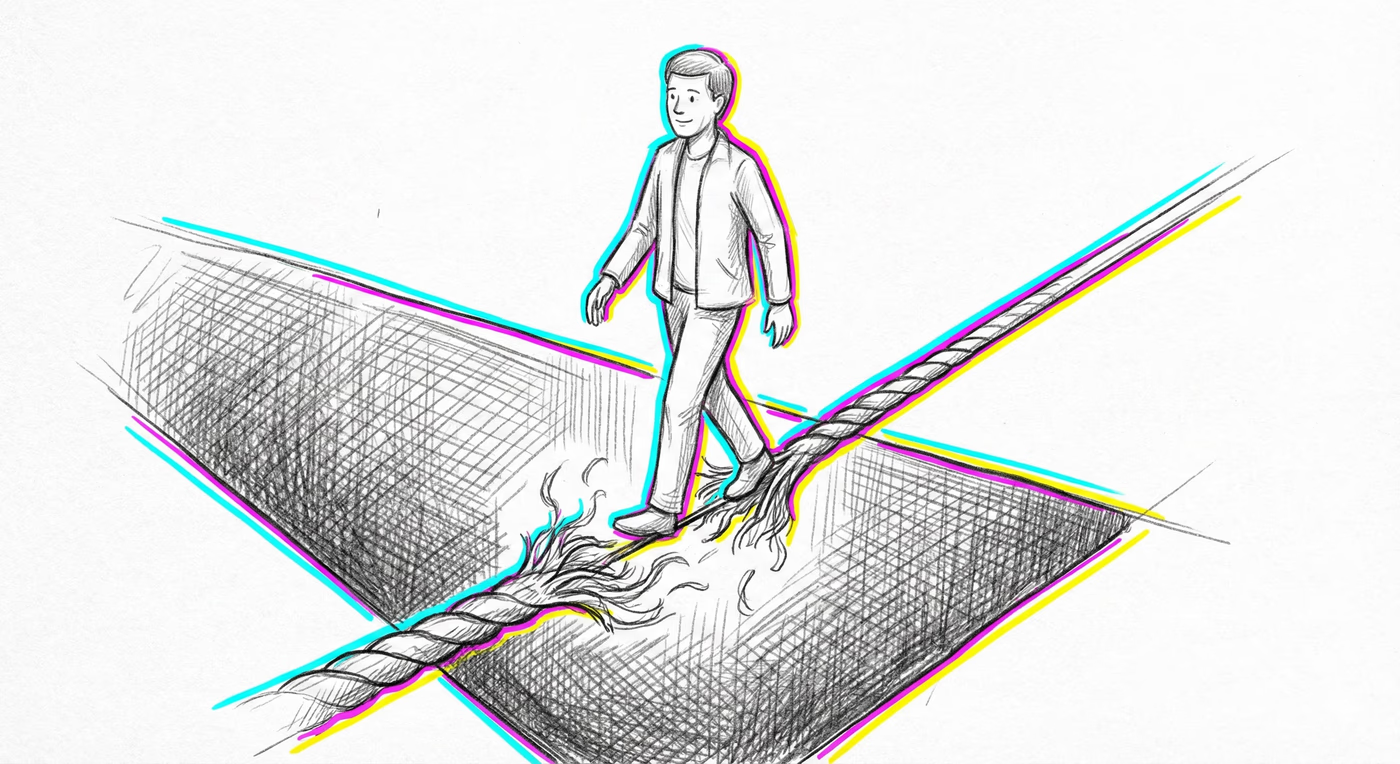
Organisms that could recover emotionally from setbacks — failed hunts, social conflicts, resource losses — and remain motivated to pursue new opportunities would have had a survival advantage over those paralyzed by persistent negative affect. The bias likely evolved as a resilience mechanism that preserves the informational value of negative experiences (you remember what happened) while releasing the emotional burden, thereby encouraging continued exploration, social engagement, and risk-taking necessary for survival and reproduction.

IN AI SYSTEMS

How the machines inherit it.

Sentiment analysis models trained on retrospective user reviews or autobiographical text may systematically underestimate the negativity of past experiences, since the training data itself reflects the fading affect bias — people's written recollections skew more positive than their actual experiences were. Recommendation systems that rely on retrospective ratings may therefore overweight positively biased recall data.

Read more on Wikipedia
FREE FIELD ZINE

10 glitches quietly running your life.

A free field-zine PDF — ten cognitive glitches named, illustrated, with a defense move for each. Plus the weekly Glitch Report on Fridays — one bias named, two spotted in the wild, one defense move. Unsubscribe any time.

EXPLORE MORE

Related glitches.

LAUNCH PRICE

Train against your blindspots.

50 cards are free to preview. Buyers unlock the rest of the deck plus the interactive training — Spot-the-Bias Quiz unlimited, Swipe Deck with spaced repetition, My Blindspots, Decision Pre-Flight, the Printable Deck + Cheat Sheets, and the Field Guide e-book. $29.50$59.

Unlock the full deck

Everything below — yours forever. Pay once, use across every device.

Half-off launch — limited to the first 100 readers. Auto-applied at checkout.
$59 $29.50
one-time payment · lifetime access
  • All interactive digital cards — search, filter, flip, shuffle on any device
  • Five training modes — Spot-the-Bias Quiz, Swipe Deck, Pre-Flight, Blindspots, Journal
  • Curated Lenses + Decision Templates + Defense Playbook
  • Printable Deck PDFs + Field Guide e-book + Cheat Sheets + Anki Export
  • Every future improvement, included
Unlock  $29.50

30-day refund · no questions asked

Unlock the full deck

Everything below — yours forever. Pay once, use across every device.

Half-off launch — limited to the first 100 readers. Auto-applied at checkout.
$59 $29.50
one-time payment · lifetime access
  • All interactive digital cards — search, filter, flip, shuffle on any device
  • Five training modes — Spot-the-Bias Quiz, Swipe Deck, Pre-Flight, Blindspots, Journal
  • Curated Lenses + Decision Templates + Defense Playbook
  • Printable Deck PDFs + Field Guide e-book + Cheat Sheets + Anki Export
  • Every future improvement, included
Unlock  $29.50

30-day refund · no questions asked