Intergroup Empathy Bias

aka Intergroup Empathy Bias · Ingroup Empathy Bias · Parochial Empathy

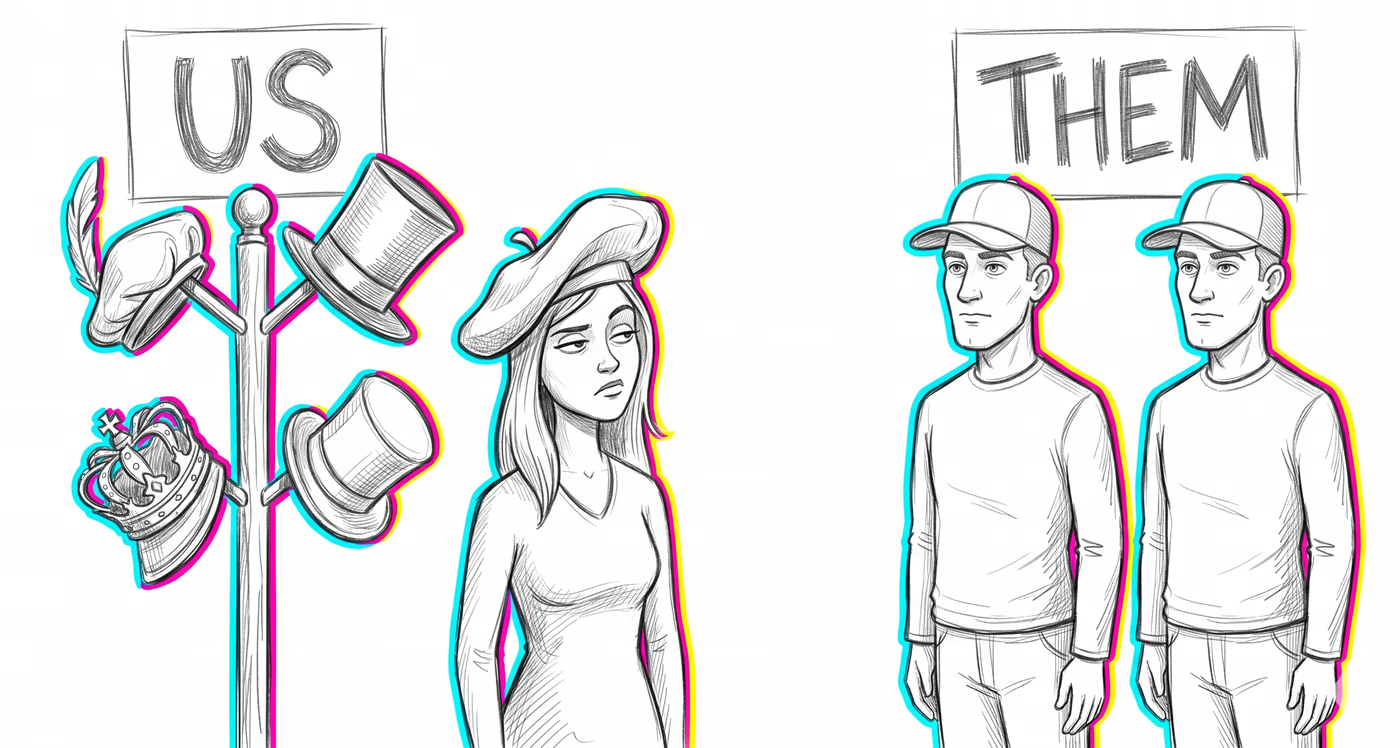
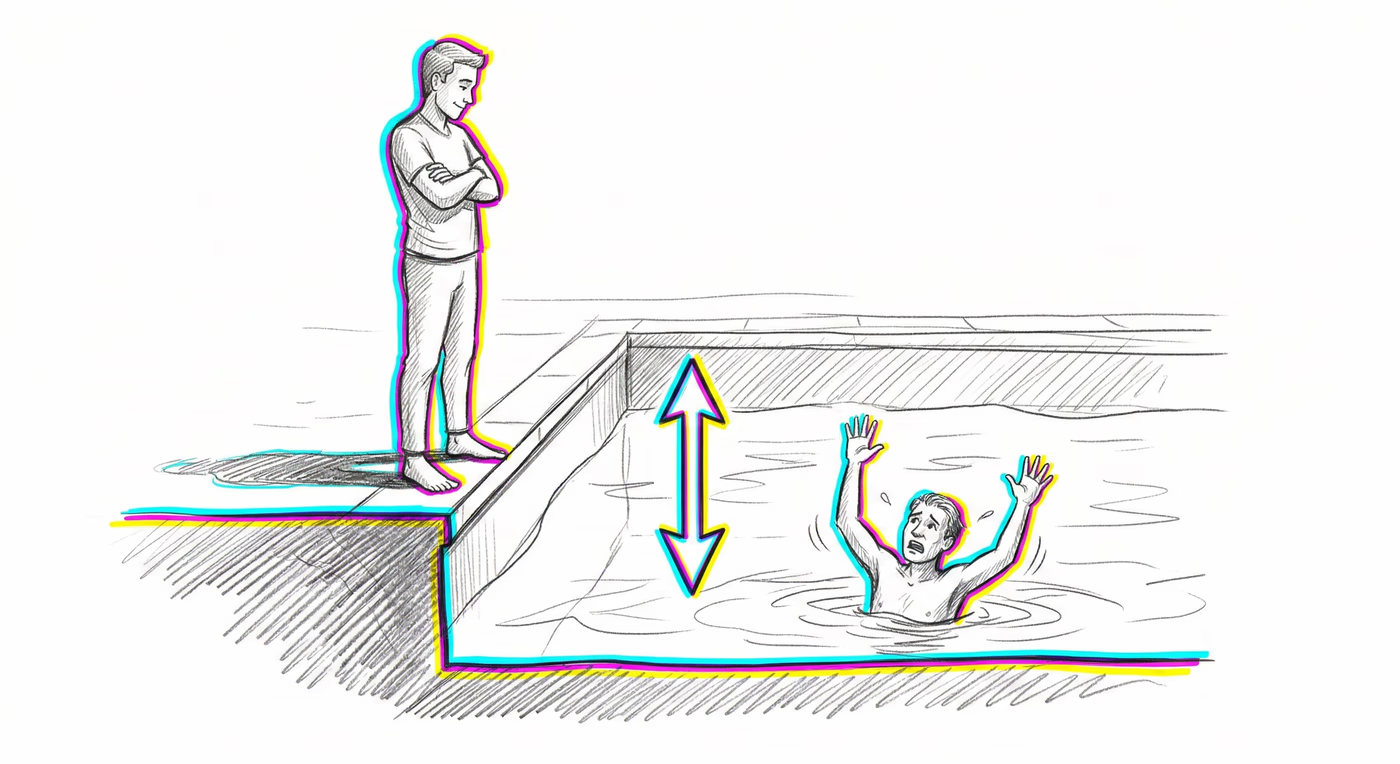
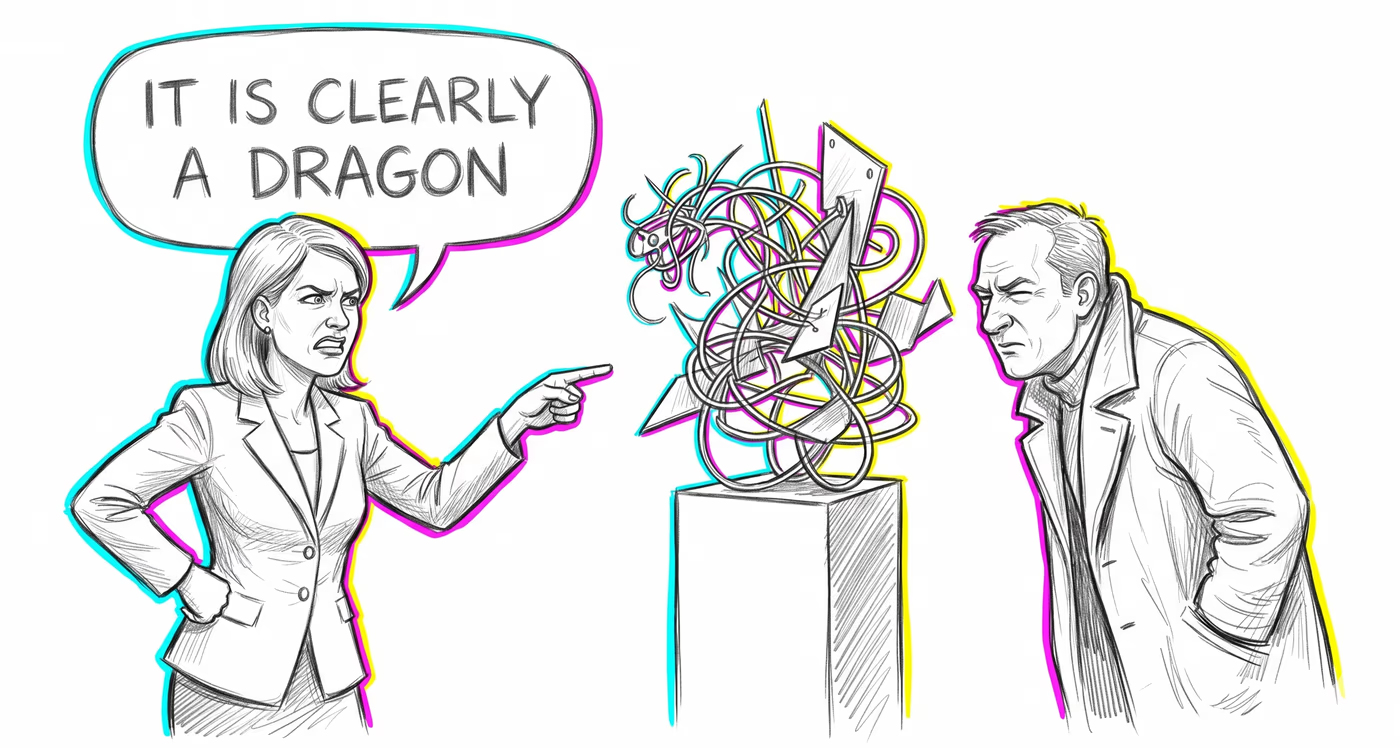
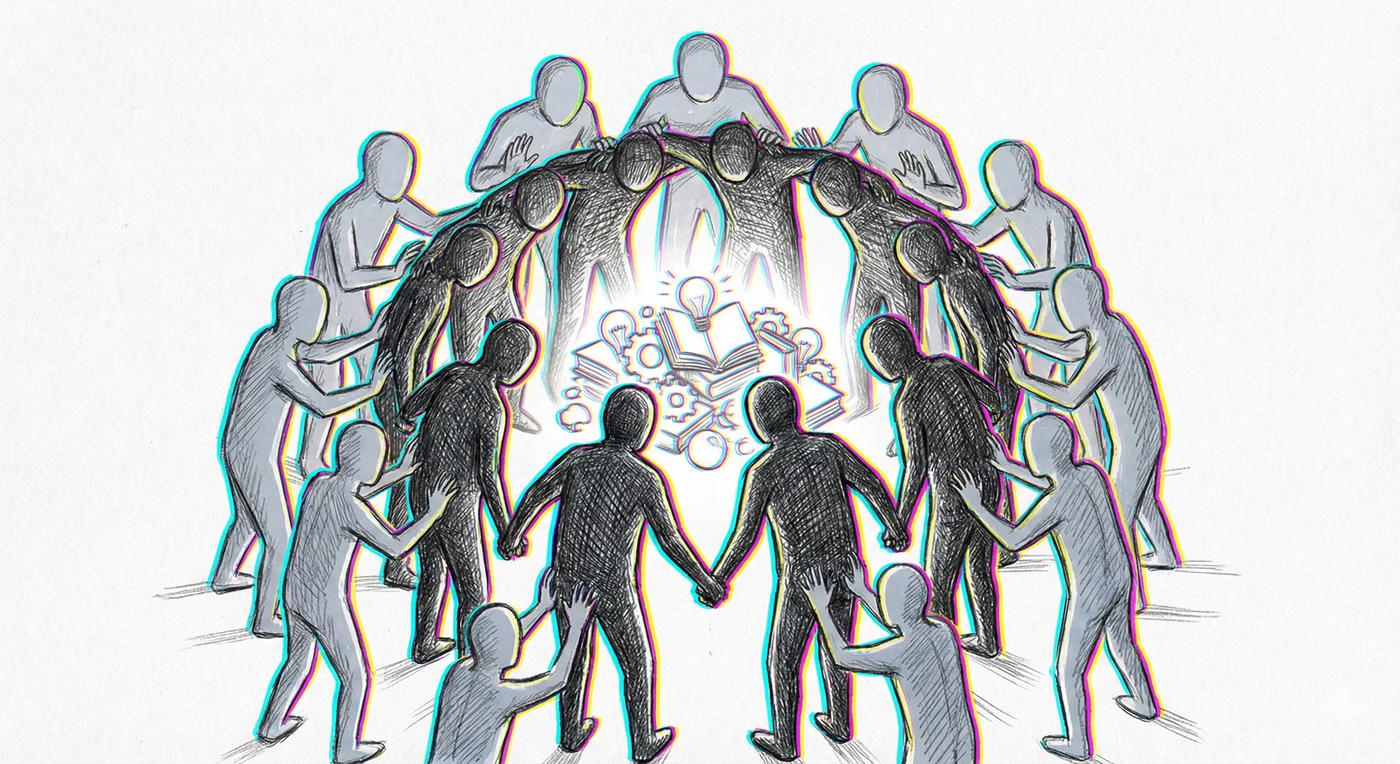
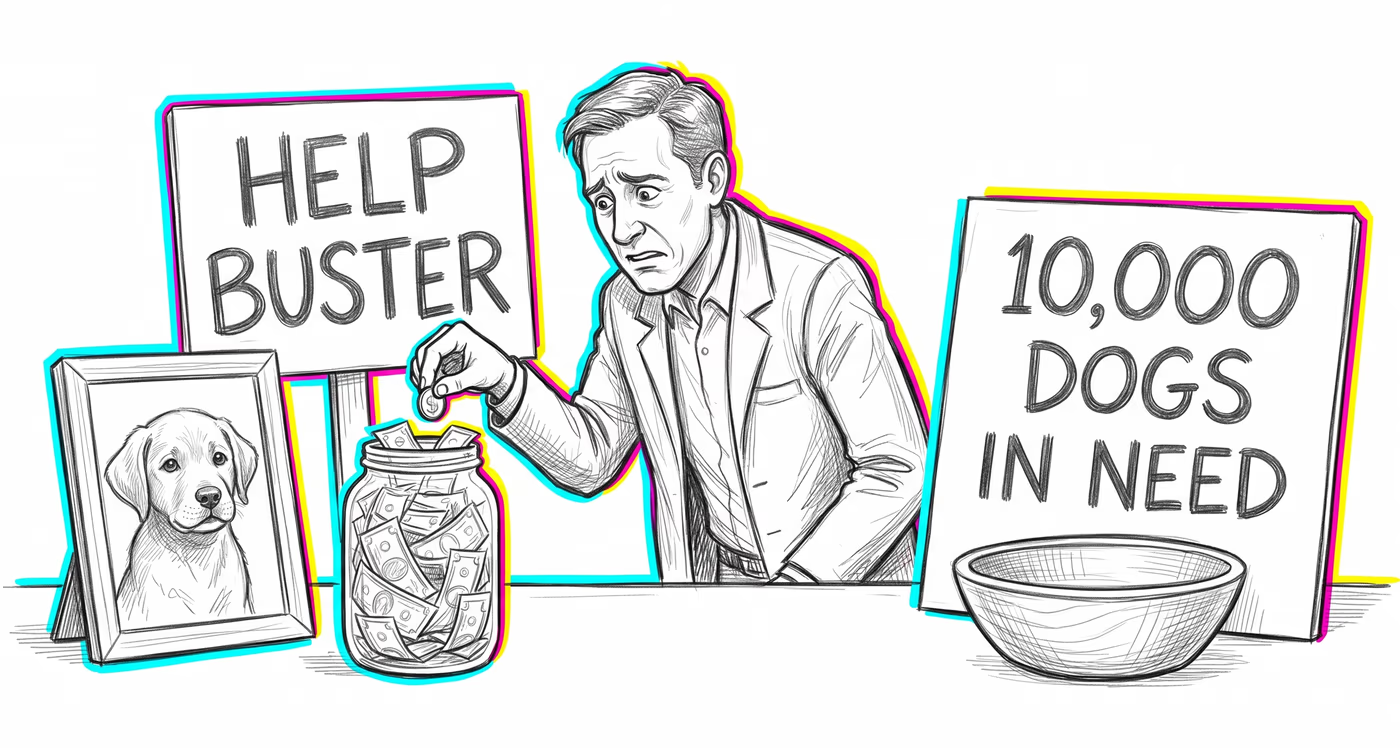
Feeling much more empathy for people who are similar to you or in your group, and less for those who aren't.

WHAT IT IS

The glitch, explained plainly.

Imagine you have a favorite stuffed animal and your friend has one too. If your stuffed animal falls on the ground, you feel really sad. But if your friend's stuffed animal falls, you don't feel as sad — even though it's the exact same thing happening. Your brain cares more about things and people that feel like 'yours' and less about things that feel like 'theirs.'

Empathy Bias describes the systematic tendency for people to empathize more strongly with individuals who share their group identity — whether based on race, nationality, political affiliation, fandom, or any other social category — while experiencing reduced or even absent empathic responses toward out-group members. This bias extends beyond mere preference: neuroimaging studies show that brain regions associated with pain processing and emotional resonance (such as the anterior cingulate cortex and anterior insula) activate more robustly when observing in-group members suffer compared to out-group members. The bias can even invert into counter-empathy, where people experience pleasure (schadenfreude) at an out-group member's misfortune. Because empathy is often treated as inherently virtuous, this parochial quality frequently goes unexamined, leading people to believe their selective compassion represents genuine moral sensitivity rather than tribal favoritism.

SOUND FAMILIAR?

Where it shows up.

  1. 01 Feeling deeply upset watching a news story about a family in your own city losing their home, but scrolling past a similar story about a family in a distant country without much feeling.
  2. 02 At a sports event, wincing when a player on your team gets injured but feeling little concern — or even quiet satisfaction — when an opposing player goes down.
IN DIFFERENT DOMAINS

Where it shows up at work.

The same glitch looks different depending on the terrain. Finance, medicine, a relationship, a team — same mechanism, different costume.

Finance & investing

Investors and fund managers tend to allocate more generously to humanitarian or social-impact funds when the beneficiaries are demographically similar to them, while statistically equivalent suffering in dissimilar populations attracts less philanthropic or ESG investment attention.
Medicine & diagnosis

Healthcare providers have been shown to prescribe lower doses of pain medication and spend less time on emotional reassurance for patients from racial or ethnic out-groups, driven by reduced empathic resonance rather than conscious prejudice. This contributes to documented racial disparities in pain management.

HOW TO SPOT IT

Ask yourself…

  • Am I feeling more emotionally moved by this person's suffering because they remind me of someone I know or resemble me?
  • Would I react with the same urgency and compassion if the person affected were from a completely different background?
HOW TO DEFEND AGAINST IT

The playbook.

  • Practice deliberate perspective-taking by imagining out-group members as specific individuals with names, families, and histories rather than abstract statistics.
  • Use the 'swap test': mentally replace the person in need with someone from your in-group and notice whether your emotional response changes — if it does, your empathy is biased.
FAMOUS CASES

In history.

  • Disparities in global humanitarian response: the 2004 Indian Ocean tsunami received vastly more Western donations and media attention than comparable or worse African crises occurring in the same period, partly attributed to differences in perceived cultural proximity.
  • Racial disparities in pain treatment in U.S. healthcare documented across multiple studies from the 2000s–2020s, where Black patients received systematically less pain medication than White patients with identical conditions.
  • The differential public response to the Sandy Hook shooting (2012) versus daily urban gun violence in American cities — Paul Bloom cited this as a canonical example of how empathy is directed toward identifiable, relatable victims while statistical suffering is ignored.
WHERE IT COMES FROM
Academic origin

The concept of intergroup empathy bias has roots in multiple research traditions. C. Daniel Batson's empathy-altruism hypothesis (1980s–1990s) documented how empathy is selectively elicited. Xu, Zuo, Wang, and Han (2009) provided landmark neuroimaging evidence of racial empathy bias. Paul Bloom's 'Against Empathy' (2016) popularized the concept of parochial empathy bias. The broader empathy gap concept was formalized by George Loewenstein (1996, 2005) in behavioral economics.

Evolutionary origin

In ancestral environments, survival depended on tight-knit cooperative groups. Selectively directing empathy and helping behavior toward in-group members maximized the return on costly prosocial investment — you protected those who were likely to reciprocate. Wasting empathic resources on out-group members, who might be competitors or threats, would have been maladaptive. This preferential empathic wiring promoted group cohesion, mutual aid, and coordinated defense against rival groups.

IN AI SYSTEMS

How the machines inherit it.

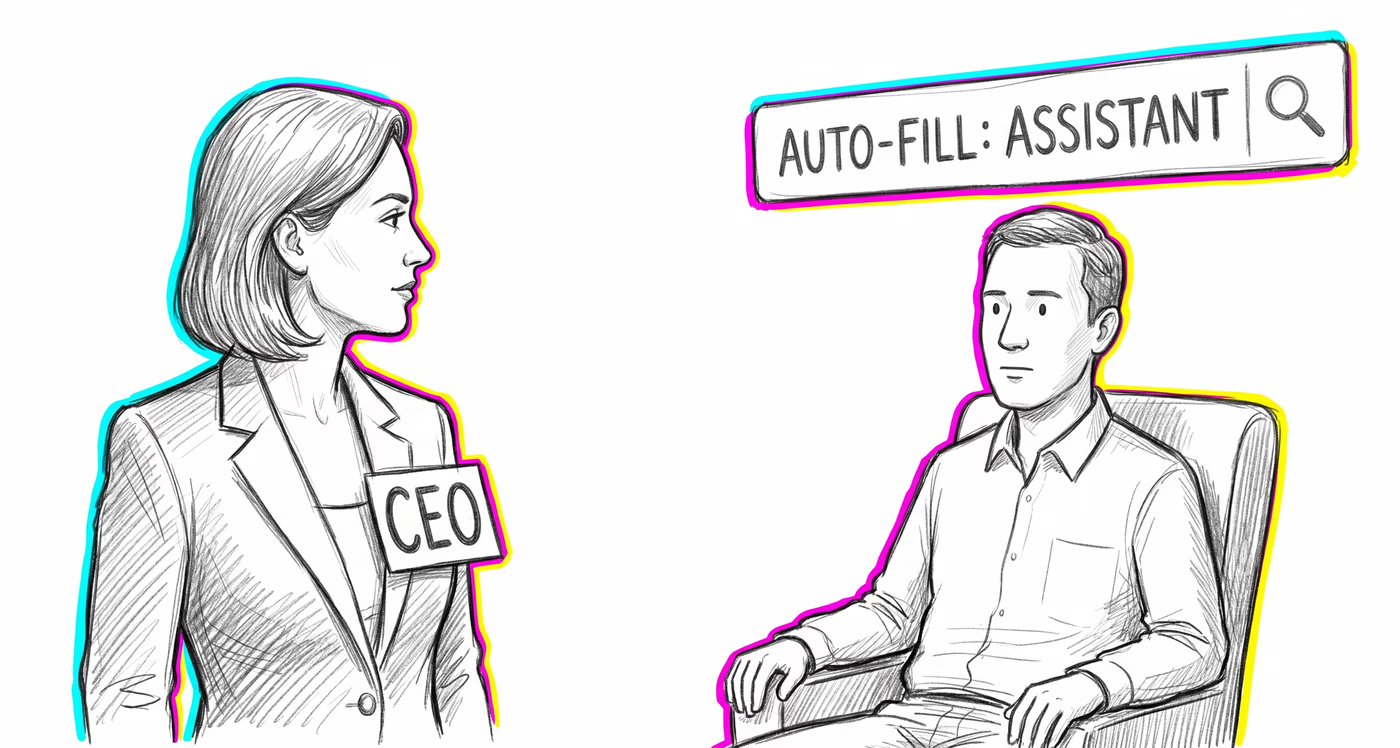
Language models and recommendation algorithms trained on data reflecting empathy bias may generate more emotionally nuanced and compassionate responses for culturally dominant groups while producing flatter, less empathic outputs for underrepresented groups. Sentiment analysis systems can also misread emotional expression from non-dominant cultures, leading to lower empathy scores assigned to communications that express distress in culturally unfamiliar ways.

FREE FIELD ZINE

10 glitches quietly running your life.

A free field-zine PDF — ten cognitive glitches named, illustrated, with a defense move for each. Plus the weekly Glitch Report on Fridays — one bias named, two spotted in the wild, one defense move. Unsubscribe any time.

EXPLORE MORE

Related glitches.

LAUNCH PRICE

You read about it. Now drill it.

This page taught you the name. The deck turns the name into reflex. 1,100+ swipeable scenarios, 1,100+ defenses, 650+ detection prompts — spaced-repetition Swipe Deck, unlimited Spot-the-Bias Quiz, Defense Playbook, Pre-Flight, My Blindspots, Cheat Sheets, Field Guide e-book. $39.53$59.

Unlock the full kit

Everything below — yours forever. Pay once, use across every device.

Launch price — first 100 readers, $20 off. Auto-applied at checkout.
$59 $39.53
one-time payment · lifetime access
  • All interactive digital cards — search, filter, flip, shuffle on any device
  • Five training modes — Spot-the-Bias Quiz, Swipe Deck, Pre-Flight, Diagnose, Blindspots
  • Curated Lenses + Decision Templates + Defense Playbook
  • Printable Deck PDFs + Field Guide e-book + Cheat Sheets + Anki Export
  • Every future improvement, included
Get the full kit  $39.53

30-day refund · no questions asked

Unlock the full kit

Everything below — yours forever. Pay once, use across every device.

Launch price — first 100 readers, $20 off. Auto-applied at checkout.
$59 $39.53
one-time payment · lifetime access
  • All interactive digital cards — search, filter, flip, shuffle on any device
  • Five training modes — Spot-the-Bias Quiz, Swipe Deck, Pre-Flight, Diagnose, Blindspots
  • Curated Lenses + Decision Templates + Defense Playbook
  • Printable Deck PDFs + Field Guide e-book + Cheat Sheets + Anki Export
  • Every future improvement, included
Get the full kit  $39.53

30-day refund · no questions asked