Memory Conjunction Error

aka Conjunction Error · Memory Conjunction Fallacy · Feature Recombination Error

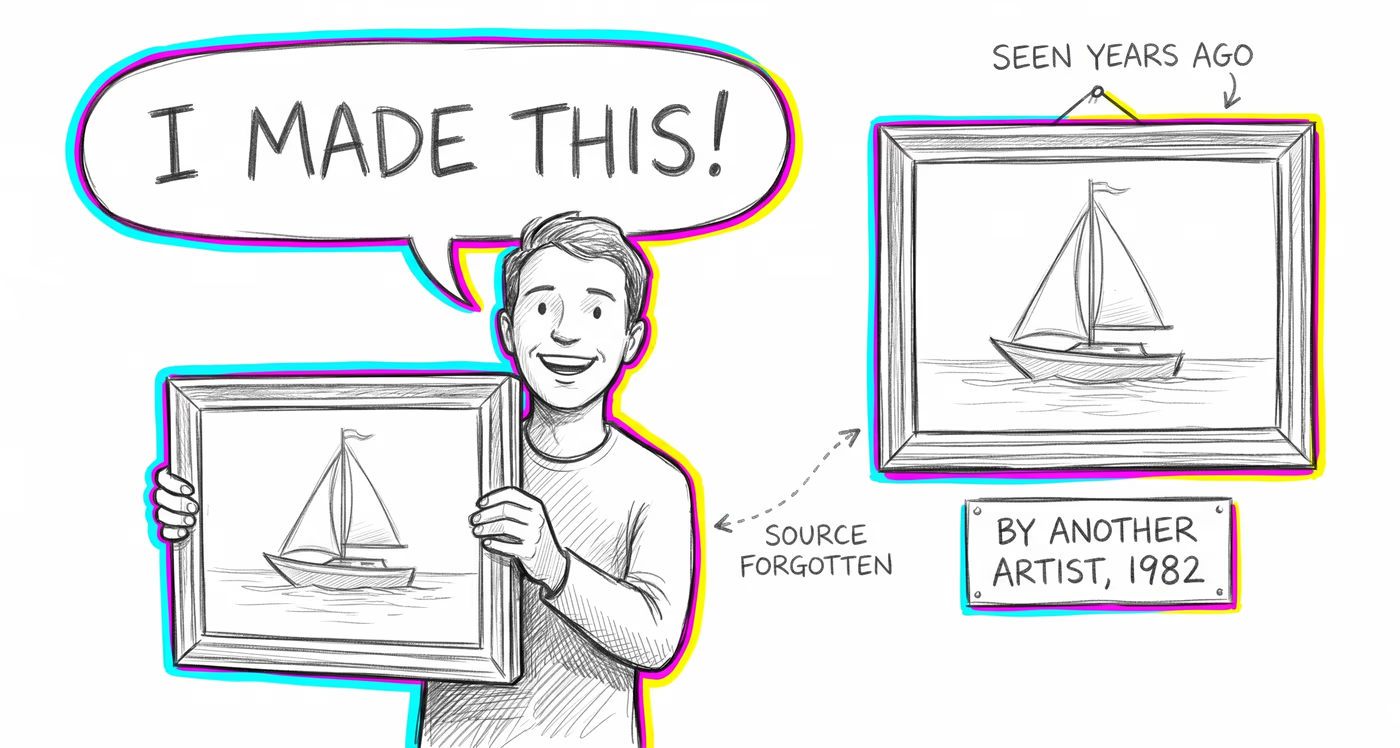
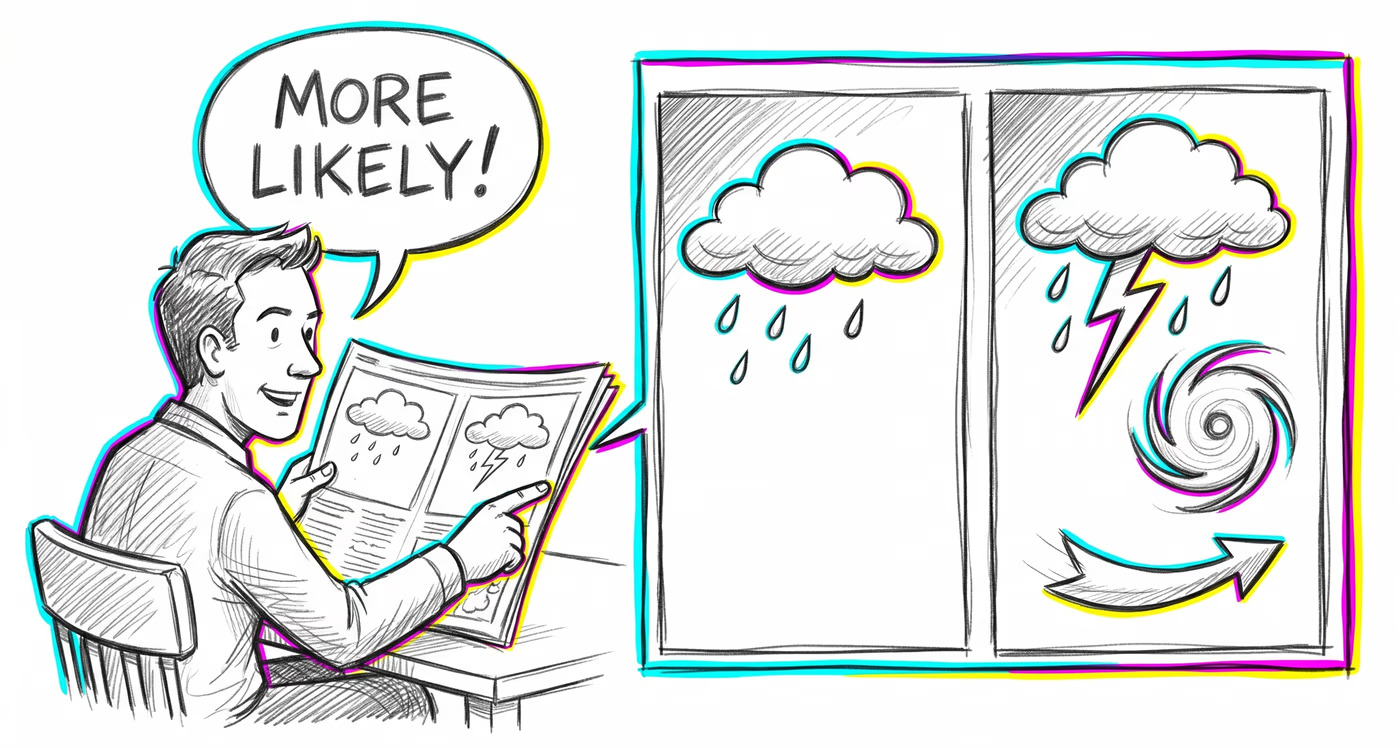
Falsely remembering something by accidentally combining features from separate real memories into one.

WHAT IT IS

The glitch, explained plainly.

Imagine you played with a red truck and a blue car yesterday. Today, someone asks if you played with a red car. You might say yes, because you really did see something red and you really did see a car — your brain just mixed up which color went with which toy.

Memory conjunction errors occur when the brain stores individual features of experienced stimuli somewhat independently, and upon retrieval, incorrectly reassembles features from separate experiences into a composite that was never actually encountered. For example, after seeing the words 'blackmail' and 'jailbird,' a person may later falsely recognize 'blackbird' as having been seen, because both constituent syllables are genuinely familiar. This type of error is particularly insidious because the component elements are authentic — only their combination is false — which makes these fabricated memories feel highly convincing and are often endorsed with strong confidence. The phenomenon extends beyond words to faces, sentences, and even autobiographical events, revealing that episodic memory is fundamentally constructive rather than reproductive.

SOUND FAMILIAR?

Where it shows up.

  1. 01 After attending three job interviews in one week, Maria confidently tells her partner that the company offering the highest salary also had the open-plan office with floor-to-ceiling windows. In reality, the high salary was offered by one company and the impressive office belonged to another. Each detail is accurate, but they came from separate interviews.
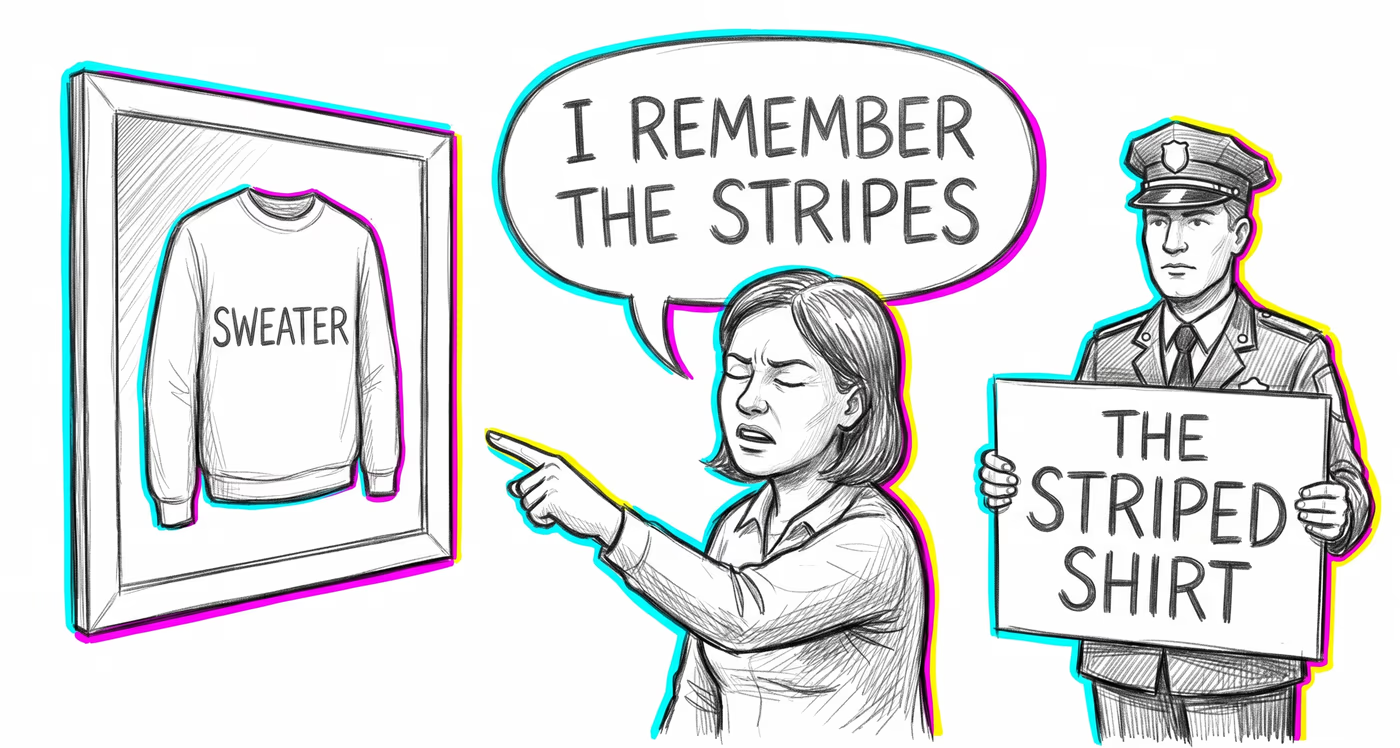
  2. 02 A detective shows a witness photos of three suspects. The witness later identifies a fourth person — who was never shown — as the perpetrator. The identified person happens to have the nose of suspect #1 and the jawline of suspect #3. The witness is highly confident because every facial feature genuinely feels familiar.
  3. 03 A medical student studies two case reports on the same evening: one about a 45-year-old diabetic with retinopathy and another about a 60-year-old hypertensive with kidney failure. On the exam, she writes about a 45-year-old diabetic with kidney failure, blending specific clinical details from the two separate cases without realizing it.
  4. 04 During a team debrief, a project manager insists that the client specifically requested both a dashboard redesign and an API migration during last Thursday's call. A recording reveals the dashboard request came from that call, but the API migration was discussed in a separate email thread two days earlier. The manager genuinely remembers both requests as part of the same conversation.
  5. 05 A historian writes that a particular treaty was signed at a specific location during a particular summit, citing it from memory with high confidence. Fact-checking reveals the treaty was indeed signed, and the summit did occur at that location, but these were two separate events a year apart. The historian had unconsciously merged authentic details from distinct historical moments into one coherent but false narrative.
IN DIFFERENT DOMAINS

Where it shows up at work.

The same glitch looks different depending on the terrain. Finance, medicine, a relationship, a team — same mechanism, different costume.

Finance & investing

Investors may misattribute performance characteristics from one fund to another, recombining a strong return figure from one quarter with a different fund's risk profile, leading to distorted portfolio assessments based on composite memories that blend separate data points.
Medicine & diagnosis

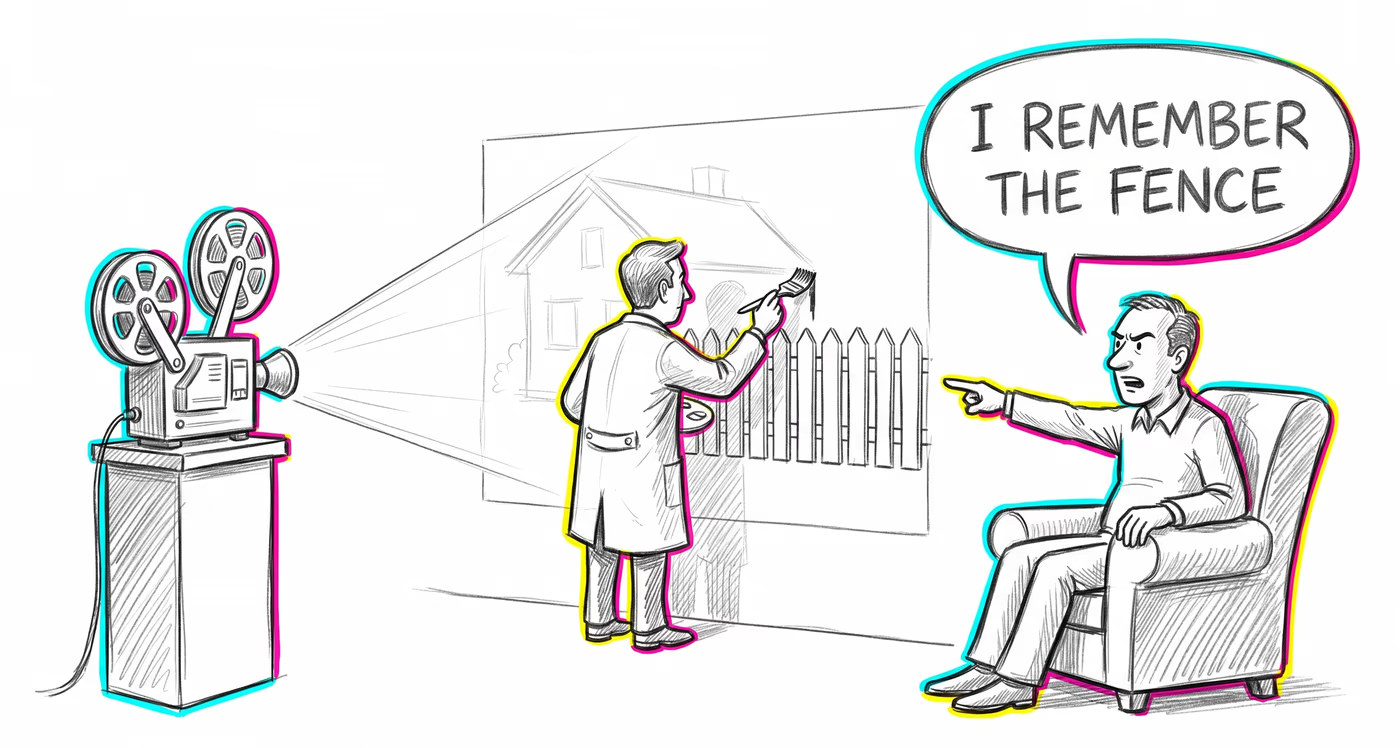
Clinicians who see many patients in sequence may inadvertently transfer a symptom reported by one patient into their memory of another patient's case, creating a hybrid clinical picture that leads to incorrect diagnoses or treatment plans.

Education & grading

Students studying multiple topics in rapid succession may blend facts across subjects — attributing a date from one historical event to another, or mixing up which theory belongs to which theorist — producing confident but incorrect answers on exams.

Relationships

People in long-term relationships may merge details from different arguments or conversations, insisting their partner said something that actually combines statements from separate occasions, fueling conflicts over what was 'really said.'

Tech & product

Users testing multiple product prototypes may give feedback that inadvertently blends features from different versions, reporting that they liked a specific combination of interface elements that never actually appeared together in any single prototype.

Workplace & hiring

During performance reviews, managers may construct a composite memory of an employee's behavior that merges positive actions from one quarter with negative incidents from another, creating a blended narrative that doesn't accurately represent any specific time period.

Politics Media

Consumers of news may merge details from separate stories — attributing a quote from one politician to another, or combining the location of one event with the casualties of a different one — creating confidently held but factually hybrid accounts of current events.

HOW TO SPOT IT

Ask yourself…

  • Am I certain this specific combination of details came from the same source, event, or conversation — or could I be merging elements from separate experiences?
  • If I try to recall the exact moment I encountered this information, can I place all these details in a single coherent scene, or do they feel like they come from different contexts?
  • Would I still be this confident if someone told me these details actually came from two different events?
HOW TO DEFEND AGAINST IT

The playbook.

  • When recalling details that will matter (meetings, witness accounts, studying), write down specifics immediately and tag them with their source context.
  • Ask yourself the 'single scene' test: can you place every detail into one unbroken mental scene, or do elements feel like they float in from elsewhere?
  • Cross-reference your memory against external records (notes, emails, timestamps) before acting on composite recollections.
  • When studying or learning, space out dissimilar topics to reduce cross-contamination of features between adjacent memories.
  • Practice source monitoring: for each detail you recall, actively try to remember where and when you first encountered it.
FAMOUS CASES

In history.

  • Eyewitness misidentification cases documented by the Innocence Project, where witnesses constructed composite faces from features of multiple individuals they had encountered, contributing to wrongful convictions later overturned by DNA evidence.
WHERE IT COMES FROM
Academic origin

Mark Tippens Reinitz, William J. Lammers, and Barbara Pitts Cochran, 1992 — formalized the memory conjunction error paradigm in their paper 'Memory-conjunction errors: Miscombination of stored stimulus features can produce illusions of memory' published in Memory & Cognition.

Evolutionary origin

A constructive, flexible memory system that stores and recombines features was adaptive because it enabled generalization from past experiences, creative problem-solving, and future simulation. The ability to extract patterns and recombine elements helped ancestors anticipate novel threats and opportunities rather than being limited to exact replays of prior experience.

IN AI SYSTEMS

How the machines inherit it.

Retrieval-augmented generation (RAG) systems and large language models can produce conjunction-like errors by blending factual details from separate training documents or retrieved passages, generating plausible-sounding but factually hybrid statements where each component is grounded in real data but the combination is false — a form of hallucination driven by feature recombination across sources.

FREE FIELD ZINE

10 glitches quietly running your life.

A free field-zine PDF — ten cognitive glitches named, illustrated, with a defense move for each. Plus the weekly Glitch Report on Fridays — one bias named, two spotted in the wild, one defense move. Unsubscribe any time.

EXPLORE MORE

Related glitches.

LAUNCH PRICE

Train against your blindspots.

50 cards are free to preview. Buyers unlock the rest of the deck plus the interactive training — Spot-the-Bias Quiz unlimited, Swipe Deck with spaced repetition, My Blindspots, Decision Pre-Flight, the Printable Deck + Cheat Sheets, and the Field Guide e-book. $29.50$59.

Unlock the full deck

Everything below — yours forever. Pay once, use across every device.

Half-off launch — limited to the first 100 readers. Auto-applied at checkout.
$59 $29.50
one-time payment · lifetime access
  • All interactive digital cards — search, filter, flip, shuffle on any device
  • Five training modes — Spot-the-Bias Quiz, Swipe Deck, Pre-Flight, Blindspots, Journal
  • Curated Lenses + Decision Templates + Defense Playbook
  • Printable Deck PDFs + Field Guide e-book + Cheat Sheets + Anki Export
  • Every future improvement, included
Unlock  $29.50

30-day refund · no questions asked

Unlock the full deck

Everything below — yours forever. Pay once, use across every device.

Half-off launch — limited to the first 100 readers. Auto-applied at checkout.
$59 $29.50
one-time payment · lifetime access
  • All interactive digital cards — search, filter, flip, shuffle on any device
  • Five training modes — Spot-the-Bias Quiz, Swipe Deck, Pre-Flight, Blindspots, Journal
  • Curated Lenses + Decision Templates + Defense Playbook
  • Printable Deck PDFs + Field Guide e-book + Cheat Sheets + Anki Export
  • Every future improvement, included
Unlock  $29.50

30-day refund · no questions asked