Next-in-Line Effect

aka Next-in-Line Bias · Pre-Performance Memory Deficit

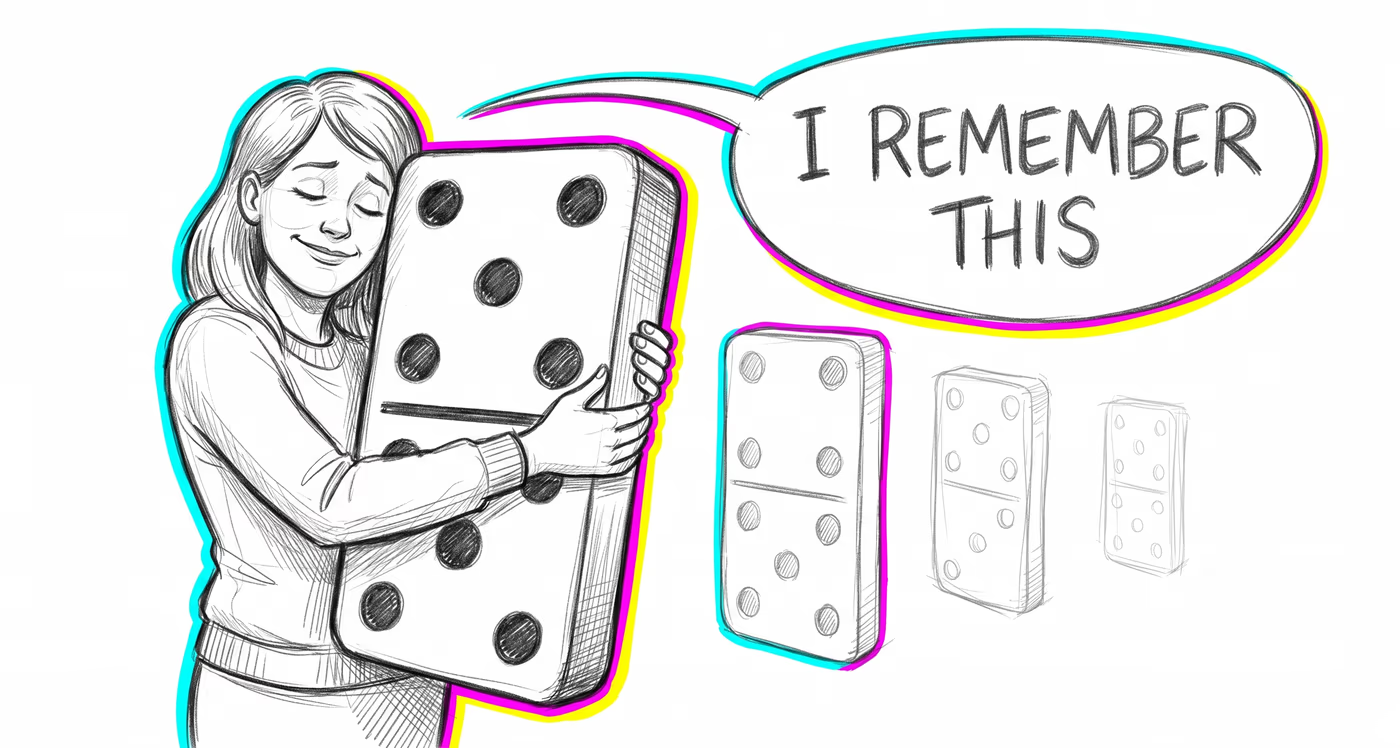
Failing to remember what was said right before your own turn to speak, because mental resources were consumed by rehearsal.

WHAT IT IS

The glitch, explained plainly.

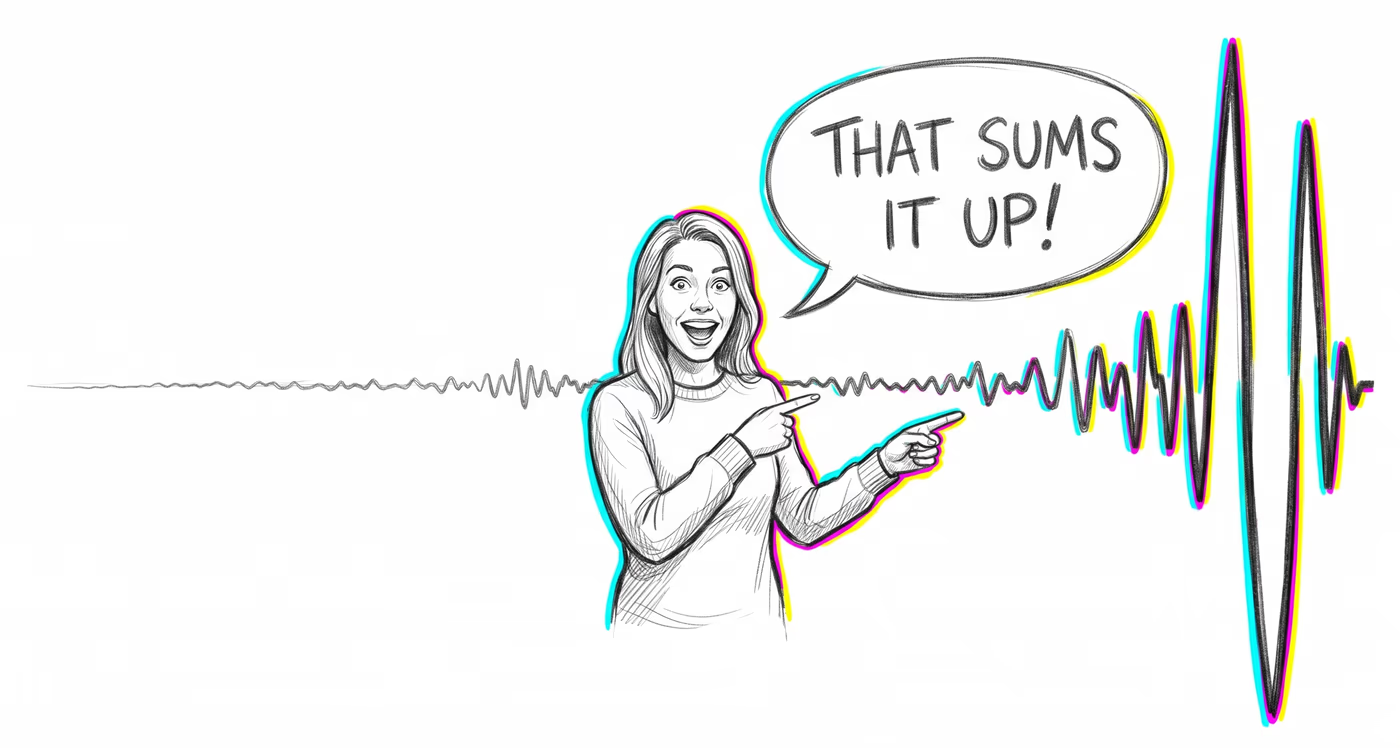
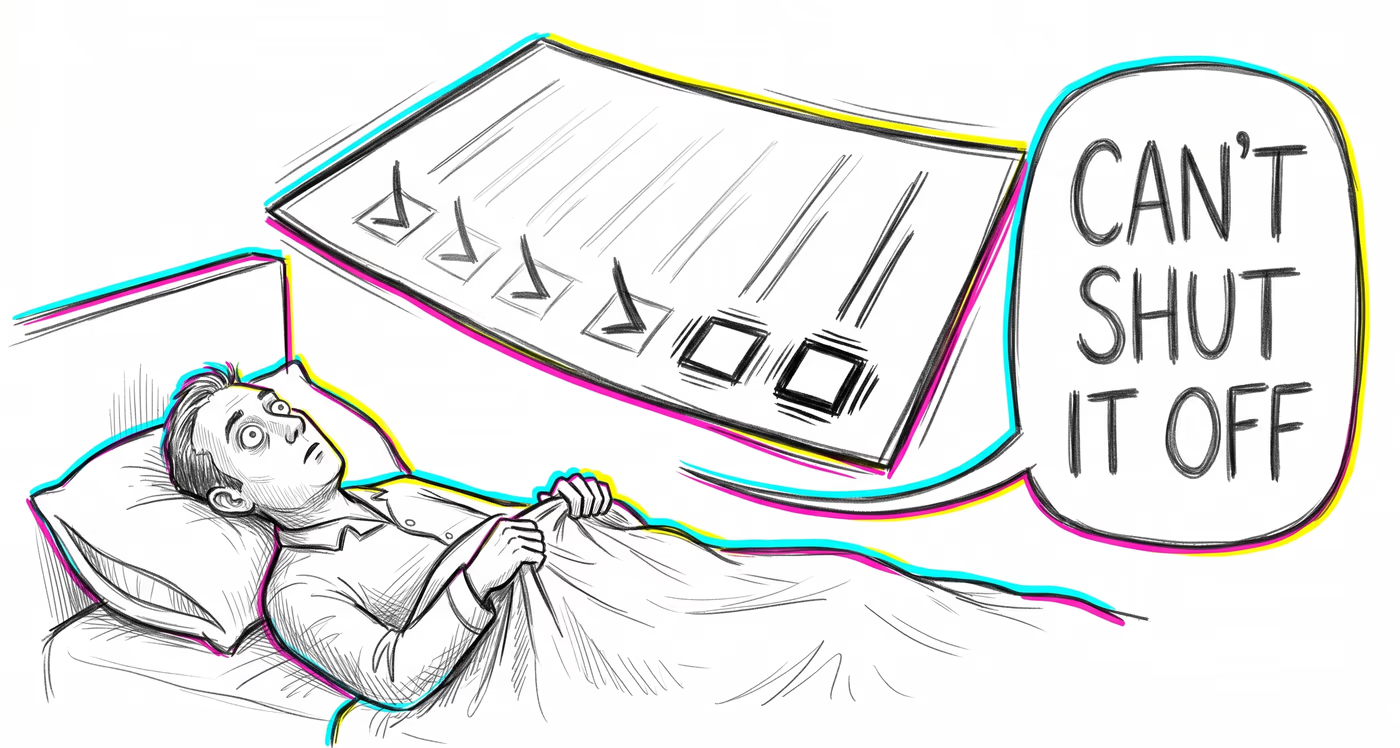
Imagine you're in a circle and everyone is saying their name. Right before it's your turn, you're so busy thinking about saying YOUR name that you completely miss what the person right before you said. Your brain was too busy rehearsing to listen.

The Next-in-Line Effect describes a reliable memory gap that occurs in sequential turn-taking situations: people consistently fail to remember what was said or done by others in the moments just before their own turn to perform. This deficit extends roughly nine seconds before (and sometimes after) the performance window. The effect is robust across different types of material and group sizes, and is amplified by social anxiety, though it occurs even in low-anxiety individuals. Critically, the effect can be substantially reduced or even reversed simply by instructing people beforehand to pay deliberate attention to pre-performance events, confirming that it stems from how attention is allocated rather than from any permanent inability to process the information.

SOUND FAMILIAR?

Where it shows up.

  1. 01 During a team meeting, each member shares a project update going around the table. After Marco finishes his turn, his manager asks him to comment on what Priya (who spoke right before him) just reported. Marco draws a complete blank, even though he was sitting right next to her and appeared to be paying attention. He can easily recall what colleagues earlier in the round said.
  2. 02 In a graduate seminar, students take turns presenting short summaries of assigned readings. After her presentation, Aisha is asked to connect her points to those made by the student who presented immediately before her. She realizes she cannot recall any of that student's key arguments, despite having detailed notes on every other presenter from earlier in the session.
  3. 03 At a poetry open-mic night, Javier performs his piece to enthusiastic applause. Afterward, a friend asks him what he thought of the poem read just before his. Javier admits he has almost no memory of it, even though he was standing at the side of the stage. He vividly remembers the poem from two performers earlier, which struck him as beautiful.
  4. 04 During a medical team handoff, nurses report patient statuses in sequence. Nurse Chen, who is next to report, later fails to act on a critical medication change mentioned by the nurse who spoke immediately before her, though she accurately remembers information from nurses earlier in the round. She insists she was listening carefully and is baffled by the gap.
  5. 05 A debate team practices by having each member deliver a two-minute argument in order. Coach reviews the recording and notices that when members respond to the previous speaker's points, they consistently address arguments from speakers two or three positions back but almost never engage with the argument made by the person who spoke directly before them—even though that argument was the most recent and logically the easiest to recall.
IN DIFFERENT DOMAINS

Where it shows up at work.

The same glitch looks different depending on the terrain. Finance, medicine, a relationship, a team — same mechanism, different costume.

Finance & investing

In sequential earnings call presentations or investment committee round-tables, analysts who present after a colleague frequently miss or fail to integrate the immediately preceding analyst's data points, leading to redundant recommendations or overlooked risk factors.
Medicine & diagnosis

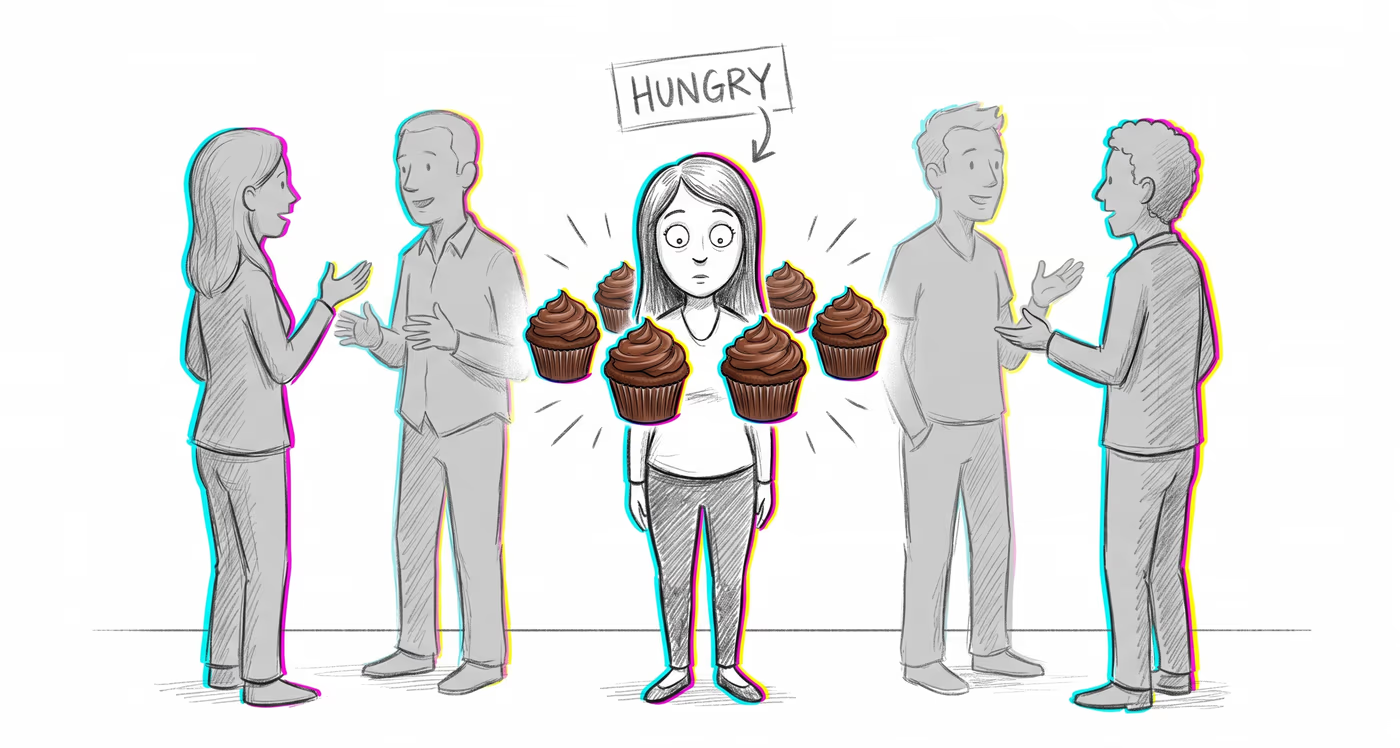
During clinical shift handoffs or surgical team briefings conducted in turn-taking order, practitioners awaiting their turn to report may fail to encode critical patient information shared by the immediately preceding speaker, creating dangerous gaps in continuity of care.

Education & grading

In classrooms where students take turns reading aloud, answering questions, or presenting, students consistently show poorer recall of material presented by the peer immediately before them, leading to repetitive answers and missed learning opportunities.

Relationships

In group conversations where people share personal stories in sequence—such as family dinners or therapy groups—individuals tend to zone out during the person-before-them's contribution, leading others to feel unheard or dismissed.

Tech & product

In agile standup meetings and design critique sessions conducted in sequential order, team members frequently miss the update or feedback given by the person right before them, causing redundant discussion and coordination failures.

Workplace & hiring

In hiring panels where interviewers share assessments in turn, evaluators consistently recall the assessment of the interviewer before them less accurately than others, potentially distorting consensus-building around candidates.

Politics Media

In sequential debate formats or press conferences with round-robin questioning, respondents and audiences alike tend to have diminished recall of the statement made immediately before a given speaker's turn, reducing the quality of direct rebuttals and follow-up coverage.

HOW TO SPOT IT

Ask yourself…

  • Can I actually recall what the person right before me just said, or am I just assuming I heard it?
  • Am I currently rehearsing what I'm about to say instead of listening to the current speaker?
  • Did I miss something important because I was focused on preparing my own contribution?
HOW TO DEFEND AGAINST IT

The playbook.

  • Take brief written notes while others speak, especially the person immediately before you, to force active encoding.
  • If you know the speaking order, deliberately tell yourself: 'I will pay extra attention to the person right before me.'
  • Request that meeting facilitators randomize speaking order or use formats that don't rely on strict sequential turns.
  • After the person before you finishes, mentally summarize their key point in one sentence before beginning your own contribution.
  • Use structured meeting formats (e.g., shared documents, chat threads) so information is captured in writing regardless of individual recall.
WHERE IT COMES FROM
Academic origin

Malcolm Brenner, 1973. Published in the Journal of Verbal Learning and Verbal Behavior. Further key work by Charles F. Bond Jr. in 1985 established the encoding-deficit mechanism.

Evolutionary origin

In ancestral environments, preparing to perform a socially visible action—such as speaking before a group or demonstrating a skill—carried real reputational stakes. Diverting cognitive resources toward preparation and self-monitoring before a public act would have increased performance quality and reduced the risk of social humiliation or status loss, even at the cost of missing some environmental input.

Read more on Wikipedia
FREE FIELD ZINE

10 glitches quietly running your life.

A free field-zine PDF — ten cognitive glitches named, illustrated, with a defense move for each. Plus the weekly Glitch Report on Fridays — one bias named, two spotted in the wild, one defense move. Unsubscribe any time.

EXPLORE MORE

Related glitches.

LAUNCH PRICE

Train against your blindspots.

50 cards are free to preview. Buyers unlock the rest of the deck plus the interactive training — Spot-the-Bias Quiz unlimited, Swipe Deck with spaced repetition, My Blindspots, Decision Pre-Flight, the Printable Deck + Cheat Sheets, and the Field Guide e-book. $29.50$59.

Unlock the full deck

Everything below — yours forever. Pay once, use across every device.

Half-off launch — limited to the first 100 readers. Auto-applied at checkout.
$59 $29.50
one-time payment · lifetime access
  • All interactive digital cards — search, filter, flip, shuffle on any device
  • Five training modes — Spot-the-Bias Quiz, Swipe Deck, Pre-Flight, Blindspots, Journal
  • Curated Lenses + Decision Templates + Defense Playbook
  • Printable Deck PDFs + Field Guide e-book + Cheat Sheets + Anki Export
  • Every future improvement, included
Unlock  $29.50

30-day refund · no questions asked

Unlock the full deck

Everything below — yours forever. Pay once, use across every device.

Half-off launch — limited to the first 100 readers. Auto-applied at checkout.
$59 $29.50
one-time payment · lifetime access
  • All interactive digital cards — search, filter, flip, shuffle on any device
  • Five training modes — Spot-the-Bias Quiz, Swipe Deck, Pre-Flight, Blindspots, Journal
  • Curated Lenses + Decision Templates + Defense Playbook
  • Printable Deck PDFs + Field Guide e-book + Cheat Sheets + Anki Export
  • Every future improvement, included
Unlock  $29.50

30-day refund · no questions asked