The same glitch looks different depending on the terrain. Finance, medicine, a
relationship, a team — same mechanism, different costume.
Finance & investing
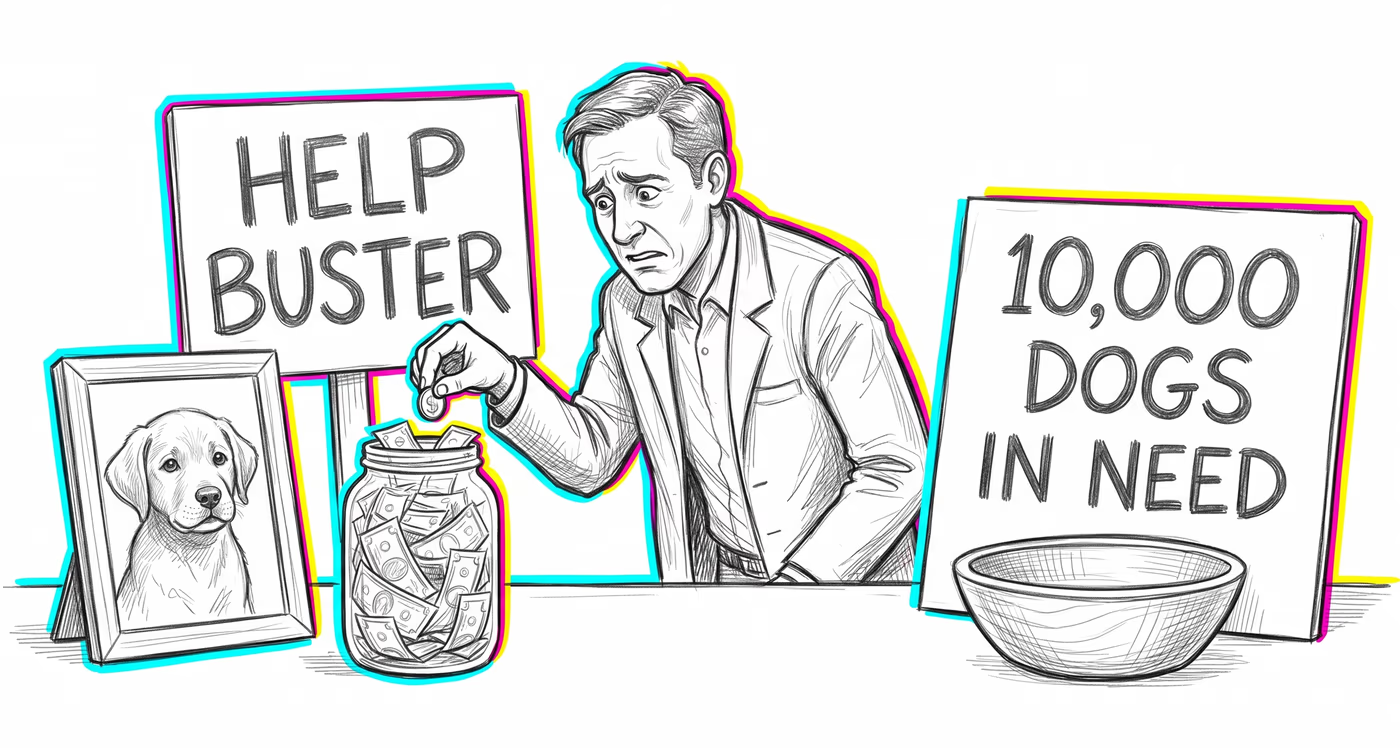
Investors and donors tend to allocate similar amounts to address financial risks or charitable causes regardless of whether the affected population or dollar amount at stake differs by orders of magnitude, leading to systematic underfunding of large-scale problems and overfunding of smaller but more emotionally vivid ones.
Medicine & diagnosis
Public health officials and patients often treat disease risks with similar urgency regardless of whether the condition affects hundreds or hundreds of thousands, leading to disproportionate funding for rare diseases with compelling individual narratives versus common conditions with far greater total burden.
Education & grading
Educators and administrators may invest equal effort and resources addressing learning gaps affecting a handful of students versus those affecting an entire district, treating both as 'an education problem' without proportionally scaling their response to the magnitude of the issue.
Relationships
People may react with similar emotional intensity when a friend describes one personal setback versus a cascade of serious problems, offering the same consolation and support regardless of how much worse the situation actually is.
Tech & product
Product teams may treat a bug affecting 100 users with the same urgency as one affecting 1 million users, particularly when both are represented by a single angry support ticket or prototype user story rather than raw metrics.
Workplace & hiring
Organizations often allocate similar budgets and attention to safety initiatives regardless of whether they protect 50 or 50,000 employees, especially when the initiative is framed around a single compelling accident narrative.
Politics Media
Media coverage and public outrage tend to be disproportionately similar for crises affecting thousands versus millions of people, with coverage volume driven more by the availability of compelling individual stories than by the actual scale of suffering.