Trait Ascription Bias

aka Trait Ascription Asymmetry

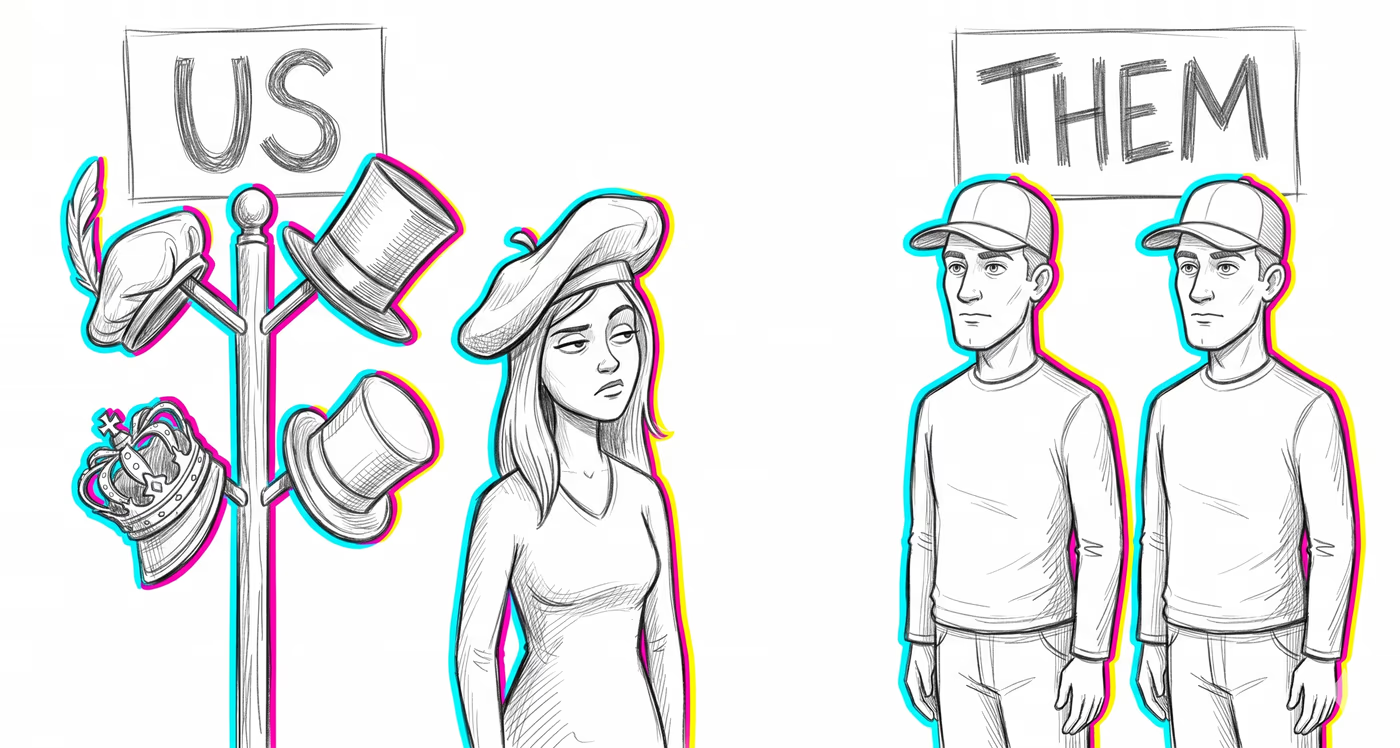
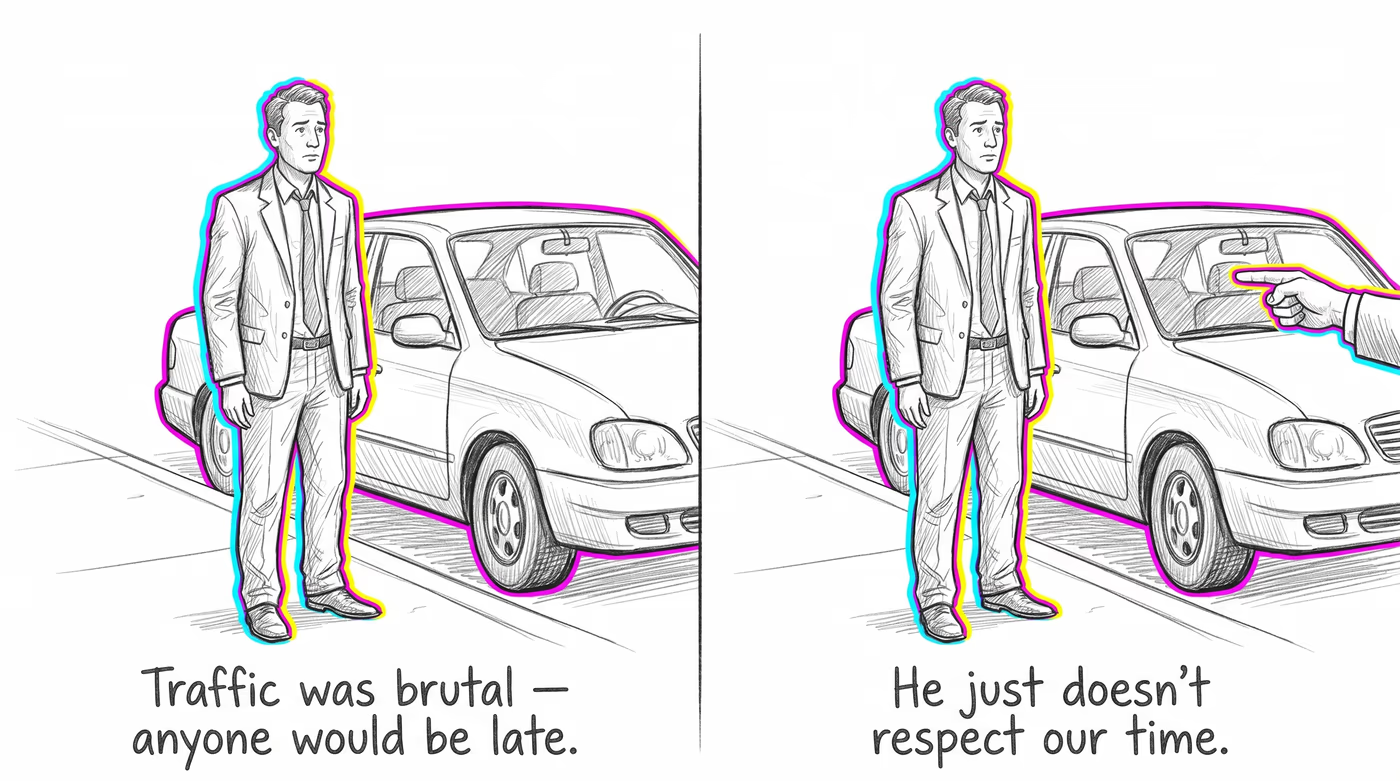
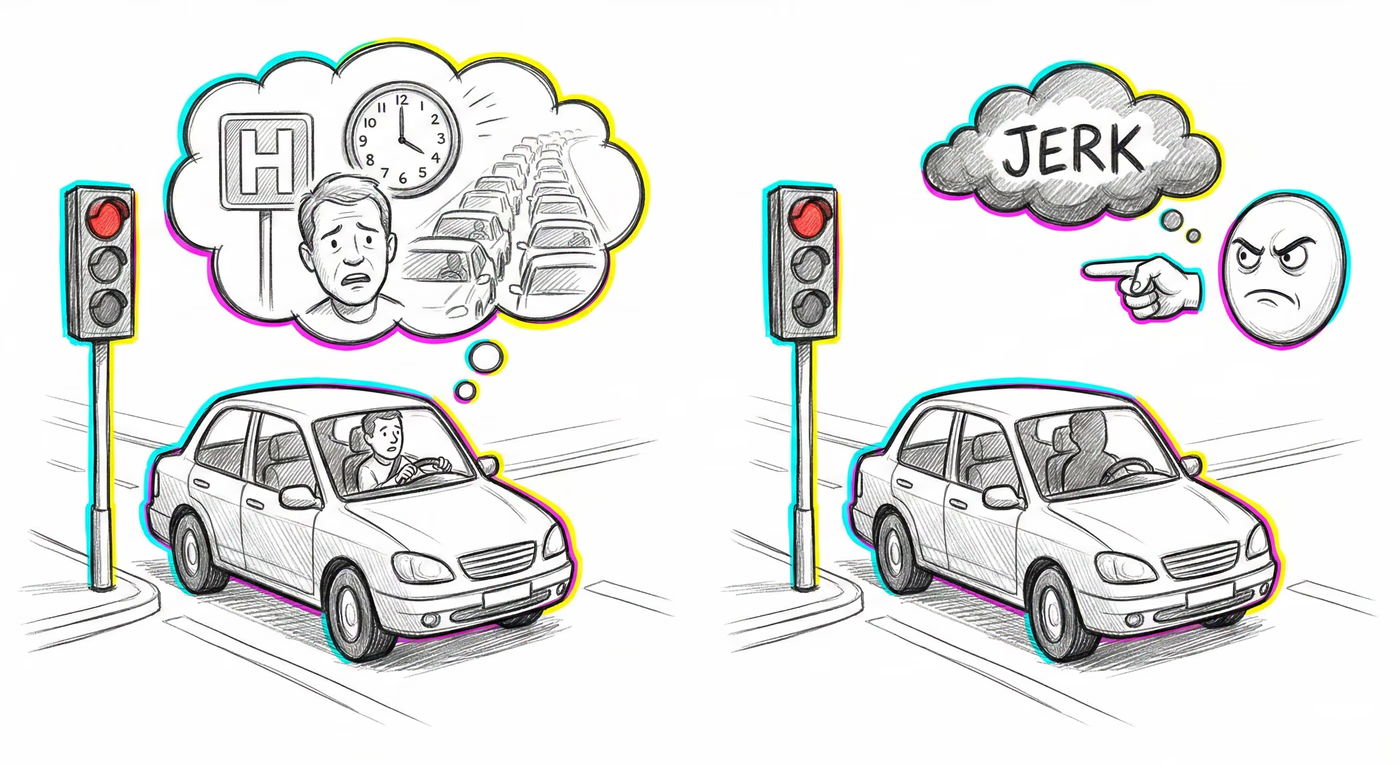
Seeing yourself as complex and variable while viewing others as predictable and defined by fixed personality traits.

WHAT IT IS

The glitch, explained plainly.

Imagine you have a big box of crayons with every color in it — that's how you see yourself, full of different colors depending on the day. But when you look at your friend, you think they only have one crayon. You think, 'Oh, she's the blue one.' But really, she has just as many crayons as you do — you just can't see inside her box.

Trait Ascription Bias describes a systematic asymmetry in how people construct mental models of themselves versus others. Individuals perceive their own personality as multifaceted and context-dependent — kind in one situation, assertive in another, withdrawn in a third — while compressing other people into simple, stable trait labels like 'lazy,' 'shy,' or 'aggressive.' This asymmetry is driven by differential informational access: we have privileged access to our own internal states, competing motivations, and shifting moods, while we observe others only through narrow behavioral samples. The bias contributes directly to stereotyping, empathy deficits, and interpersonal conflict by treating others as psychologically simpler than they actually are.

SOUND FAMILIAR?

Where it shows up.

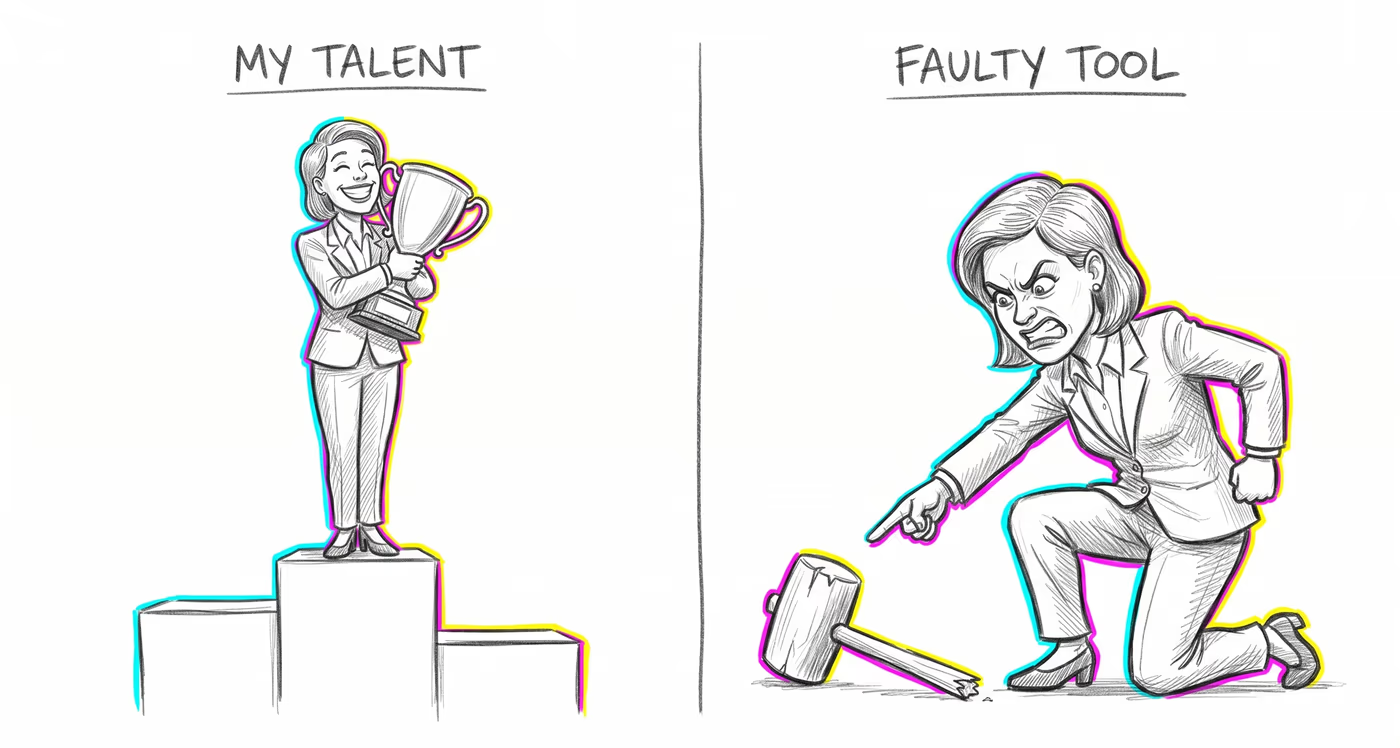
  1. 01 A teacher notices that Marcus performed poorly on this week's math test. Without asking about his circumstances, she concludes he simply isn't a 'math person' and should probably be moved to a lower-level class. Meanwhile, she herself scored poorly on a professional certification exam last month and attributed it entirely to the noisy testing center and her lack of sleep the night before.
  2. 02 During a team retrospective, Priya describes her own inconsistent meeting attendance over the past quarter by listing specific scheduling conflicts, client emergencies, and childcare disruptions. But when reviewing a colleague's equally inconsistent attendance, she summarizes it by saying, 'Raj just isn't committed to the team.'
  3. 03 A couple is discussing their argument styles. Jenna explains that sometimes she raises her voice because she feels unheard, sometimes she goes silent because she needs to process, and sometimes she's perfectly calm — it depends on the situation. But she describes her partner as 'someone who always gets defensive,' despite him showing the same range of responses across different arguments.
  4. 04 A hiring manager reviews two candidates who both had a gap year on their resumes. She readily understands her own career gap as resulting from a complex mix of burnout, family needs, and strategic reflection. But when evaluating the candidates, she unconsciously reads their gaps as signals of low ambition, rating them lower without considering what situational factors might have been at play.
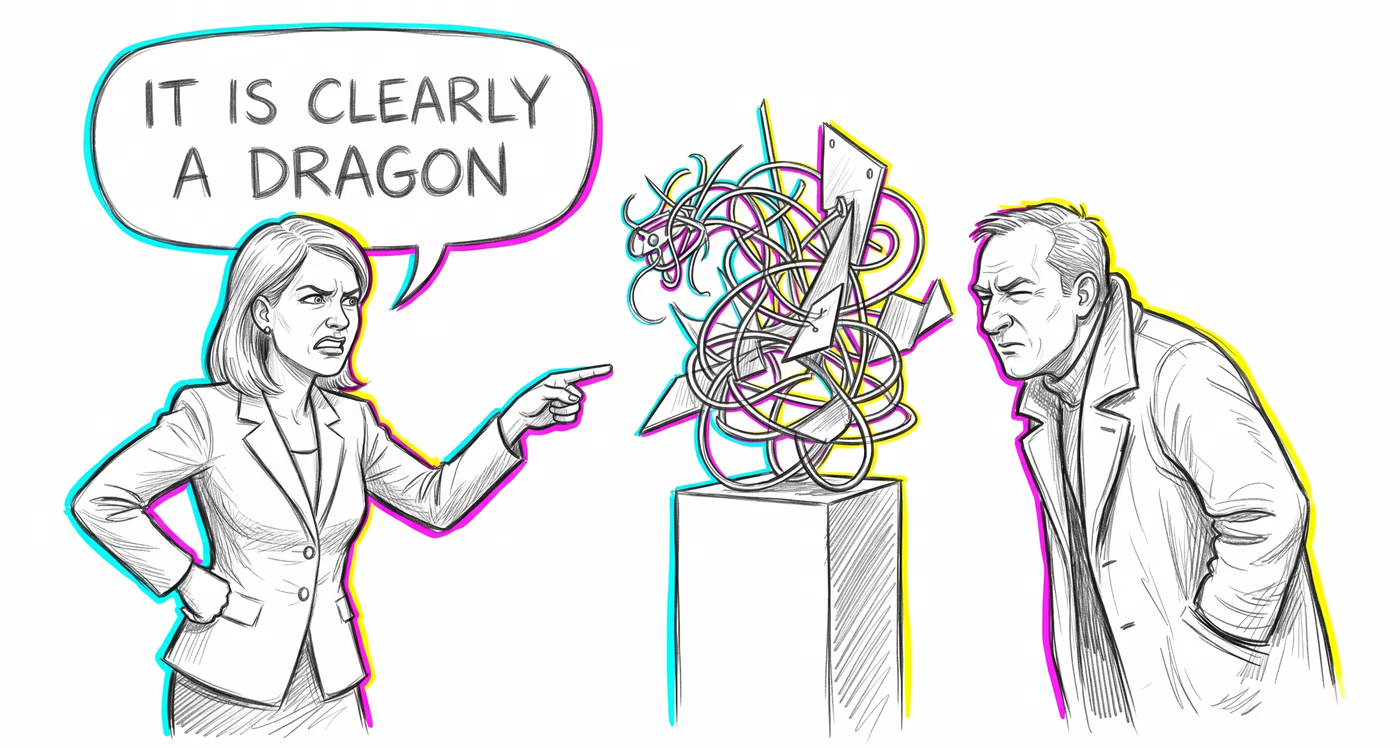
  5. 05 A political commentator writes an op-ed analyzing why voters in a particular region consistently support a certain party, attributing it to their 'fundamentally conservative temperament.' When reflecting on his own voting history, which has shifted across parties over two decades, he frames it as evidence of his thoughtful responsiveness to changing circumstances and policy nuances.
IN DIFFERENT DOMAINS

Where it shows up at work.

The same glitch looks different depending on the terrain. Finance, medicine, a relationship, a team — same mechanism, different costume.

Finance & investing

Investors tend to view their own portfolio changes as rational responses to shifting market conditions while perceiving other investors' trades as reflections of fixed tendencies — labeling them as 'panic sellers' or 'reckless gamblers' — which can lead to overconfidence in one's own flexibility and underestimation of others' strategic reasoning.
Medicine & diagnosis

Clinicians may view a patient's non-adherence to medication as a stable personality trait ('non-compliant patient') rather than exploring situational barriers such as cost, side effects, or misunderstanding of instructions, while readily attributing their own occasional lapses in protocol to workload and systemic pressures.

Education & grading

Teachers may label students with fixed trait descriptions ('lazy,' 'bright,' 'troublemaker') based on limited classroom observations, while perceiving their own teaching quality as situation-dependent — varying with class size, preparation time, and administrative support.

Relationships

Partners routinely explain their own moody or inconsiderate behavior by citing stress, fatigue, or circumstances, while interpreting identical behavior from their partner as evidence of a stable character flaw such as selfishness or emotional unavailability.

Tech & product

Product teams may label users who abandon onboarding flows as 'not tech-savvy' or 'impatient' rather than investigating situational UX friction, while attributing their own struggles with competitor products to poor design rather than personal limitations.

Workplace & hiring

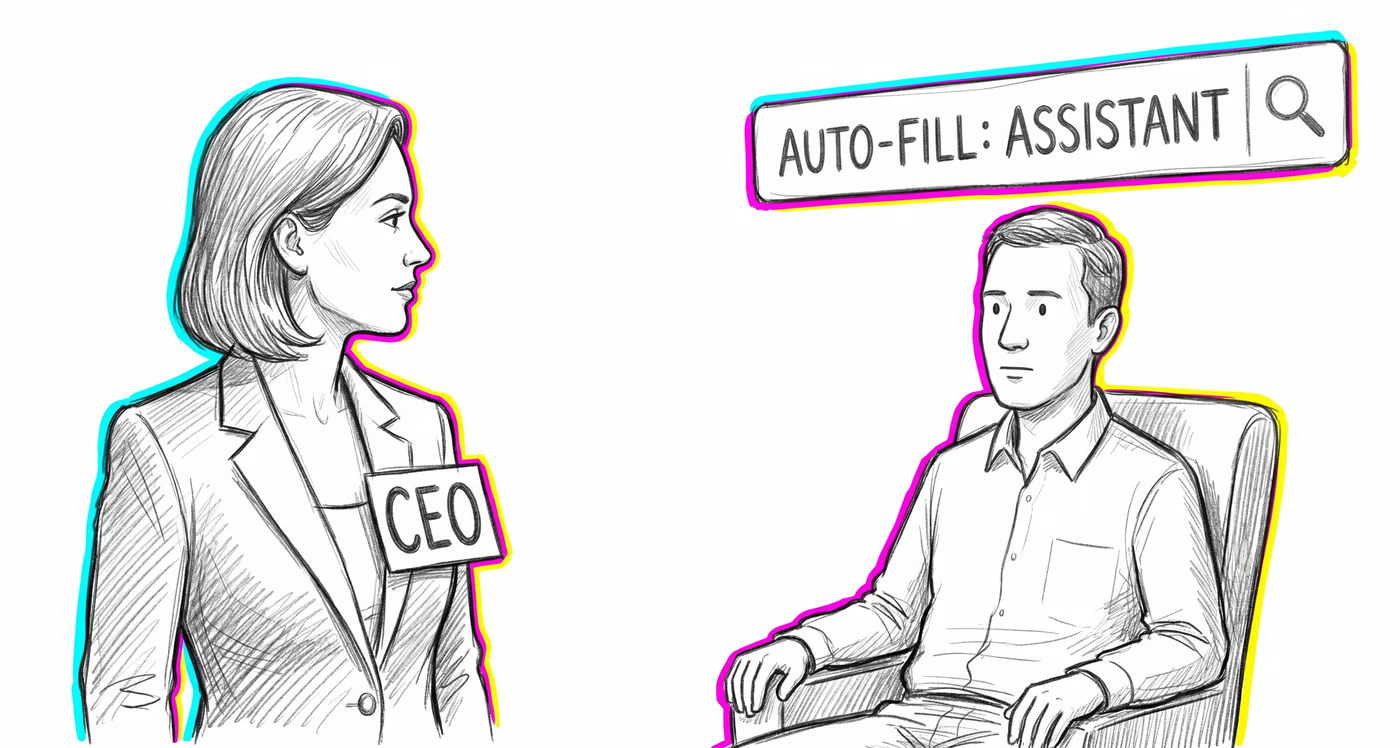
Managers tend to attribute employees' mistakes to stable incompetence or lack of motivation while viewing their own errors as products of unreasonable deadlines, insufficient resources, or organizational dysfunction, leading to punitive rather than supportive interventions.

Politics Media

Commentators and citizens frequently describe voters of opposing parties using fixed trait labels ('ignorant,' 'heartless,' 'naive') while viewing their own political positions as nuanced responses to complex evidence and evolving circumstances.

HOW TO SPOT IT

Ask yourself…

  • Am I summarizing this person with a single trait label ('she's lazy,' 'he's aggressive') rather than considering what situational factors might explain their behavior?
  • Would I give myself the same fixed label if I behaved the same way, or would I think of contextual reasons?
  • Am I assuming this person will always behave this way, even though I know my own behavior varies dramatically across situations?
HOW TO DEFEND AGAINST IT

The playbook.

  • Before labeling someone with a trait, actively generate three plausible situational explanations for their behavior.
  • Apply the 'swap test': ask yourself whether you would accept this same trait label if applied to you for similar behavior.
  • Seek more behavioral data points across different contexts before forming personality judgments about others.
  • Practice perspective-taking by imagining the internal monologue the other person might have been experiencing during the observed behavior.
  • When writing performance reviews or evaluations, explicitly separate behavior descriptions from trait inferences and note situational context.
WHERE IT COMES FROM
Academic origin

Rooted in Edward E. Jones and Richard E. Nisbett's 1971 actor-observer asymmetry hypothesis. Formalized as a distinct concept through Daniele Kammer's 1982 empirical study and David C. Funder's 1980 research on individual differences in trait ascription.

Evolutionary origin

In ancestral environments, rapidly categorizing others by stable traits (e.g., 'this person is aggressive,' 'this person is generous') was essential for making fast social decisions about trust, cooperation, and threat avoidance. The cognitive cost of modeling every individual's full situational complexity would have been prohibitively high, so the brain evolved to simplify others into quick dispositional summaries while maintaining a richer self-model needed for flexible self-regulation and planning.

IN AI SYSTEMS

How the machines inherit it.

AI systems trained on human-generated text can inherit trait ascription patterns by learning to assign fixed personality labels to demographic groups or user profiles based on limited behavioral signals, while the system's own outputs (which vary by prompt, temperature, and context) are treated as contextually appropriate. Recommendation algorithms may also stereotype users into rigid preference profiles rather than modeling the situational variability of human interests.

Read more on Wikipedia
FREE FIELD ZINE

10 glitches quietly running your life.

A free field-zine PDF — ten cognitive glitches named, illustrated, with a defense move for each. Plus the weekly Glitch Report on Fridays — one bias named, two spotted in the wild, one defense move. Unsubscribe any time.

EXPLORE MORE

Related glitches.

LAUNCH PRICE

Train against your blindspots.

50 cards are free to preview. Buyers unlock the rest of the deck plus the interactive training — Spot-the-Bias Quiz unlimited, Swipe Deck with spaced repetition, My Blindspots, Decision Pre-Flight, the Printable Deck + Cheat Sheets, and the Field Guide e-book. $29.50$59.

Unlock the full deck

Everything below — yours forever. Pay once, use across every device.

Half-off launch — limited to the first 100 readers. Auto-applied at checkout.
$59 $29.50
one-time payment · lifetime access
  • All interactive digital cards — search, filter, flip, shuffle on any device
  • Five training modes — Spot-the-Bias Quiz, Swipe Deck, Pre-Flight, Blindspots, Journal
  • Curated Lenses + Decision Templates + Defense Playbook
  • Printable Deck PDFs + Field Guide e-book + Cheat Sheets + Anki Export
  • Every future improvement, included
Unlock  $29.50

30-day refund · no questions asked

Unlock the full deck

Everything below — yours forever. Pay once, use across every device.

Half-off launch — limited to the first 100 readers. Auto-applied at checkout.
$59 $29.50
one-time payment · lifetime access
  • All interactive digital cards — search, filter, flip, shuffle on any device
  • Five training modes — Spot-the-Bias Quiz, Swipe Deck, Pre-Flight, Blindspots, Journal
  • Curated Lenses + Decision Templates + Defense Playbook
  • Printable Deck PDFs + Field Guide e-book + Cheat Sheets + Anki Export
  • Every future improvement, included
Unlock  $29.50

30-day refund · no questions asked