Moral Licensing

aka Moral Licensing · Self-Licensing · Moral Self-Licensing

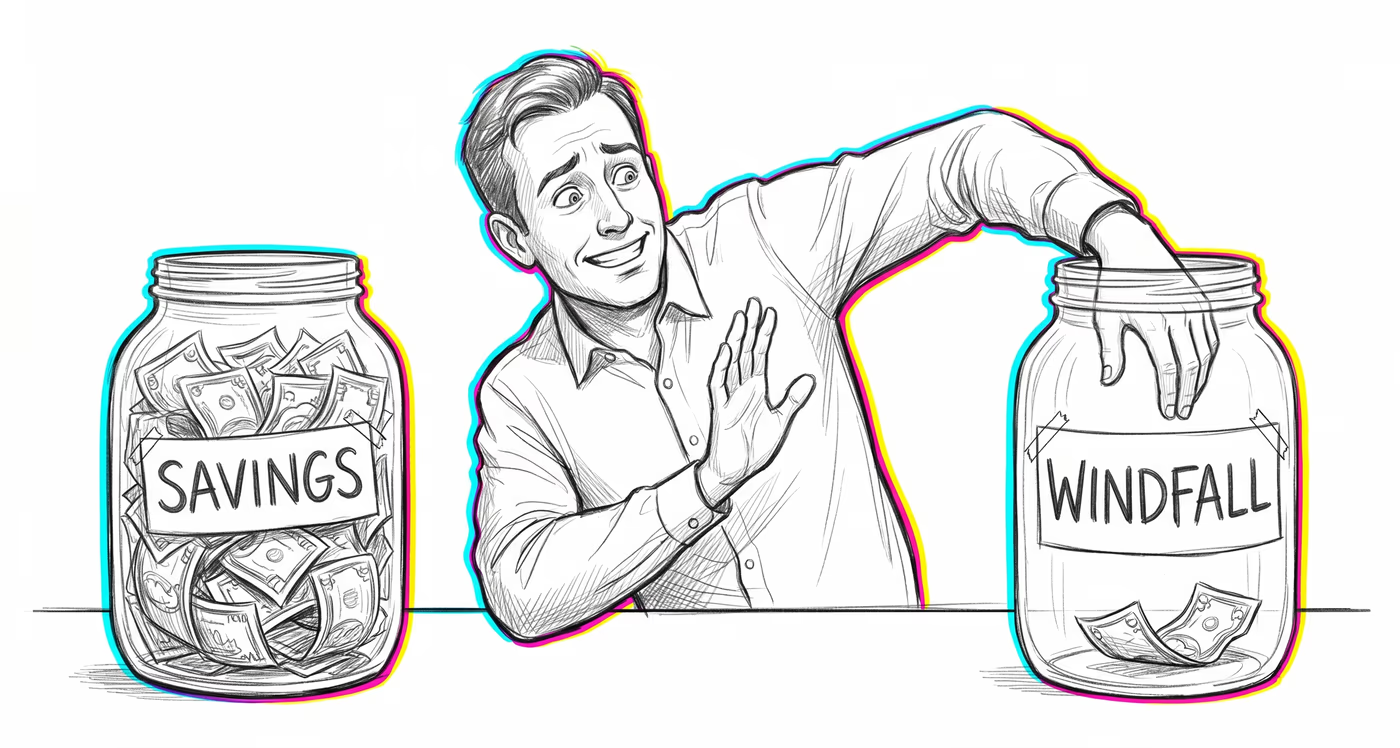
Past good behavior unconsciously licensing worse behavior later, as if moral credit has been banked.

Illustration: Moral Licensing
WHAT IT IS

The glitch, explained plainly.

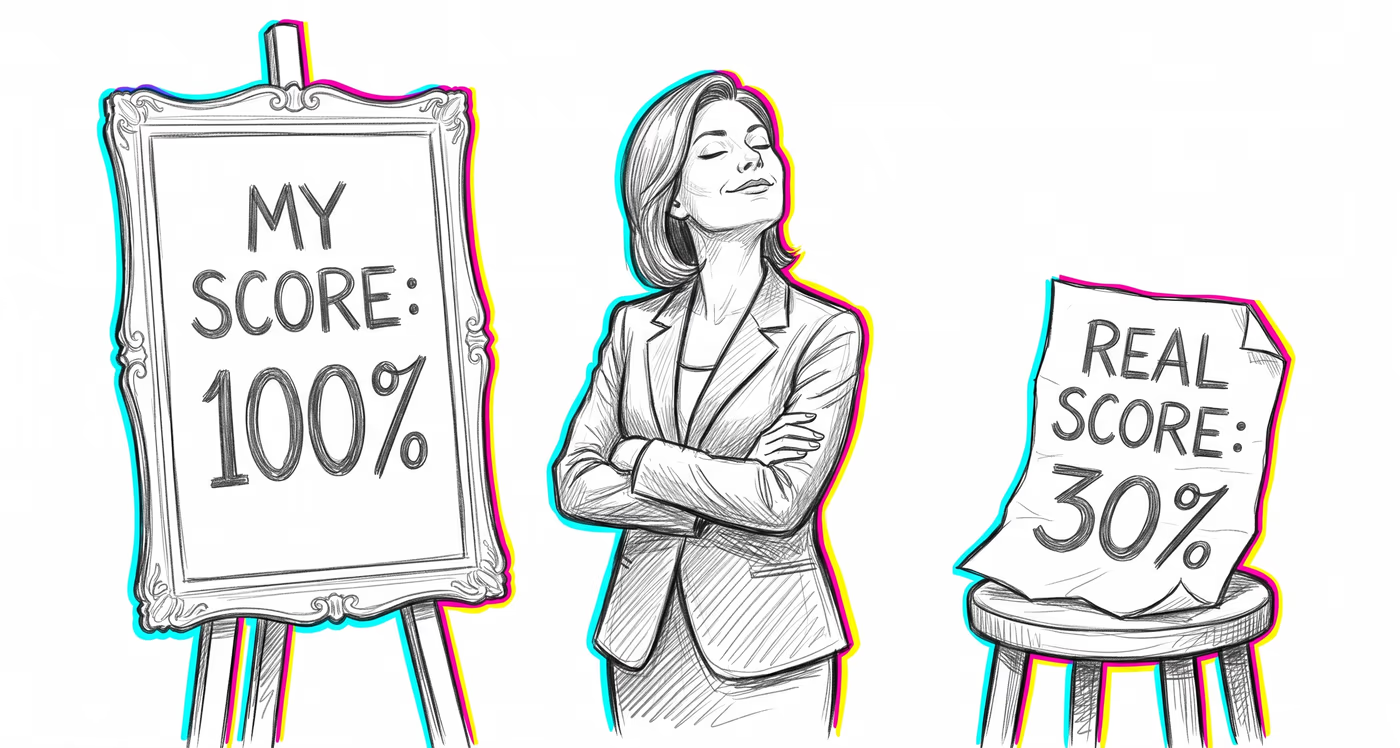
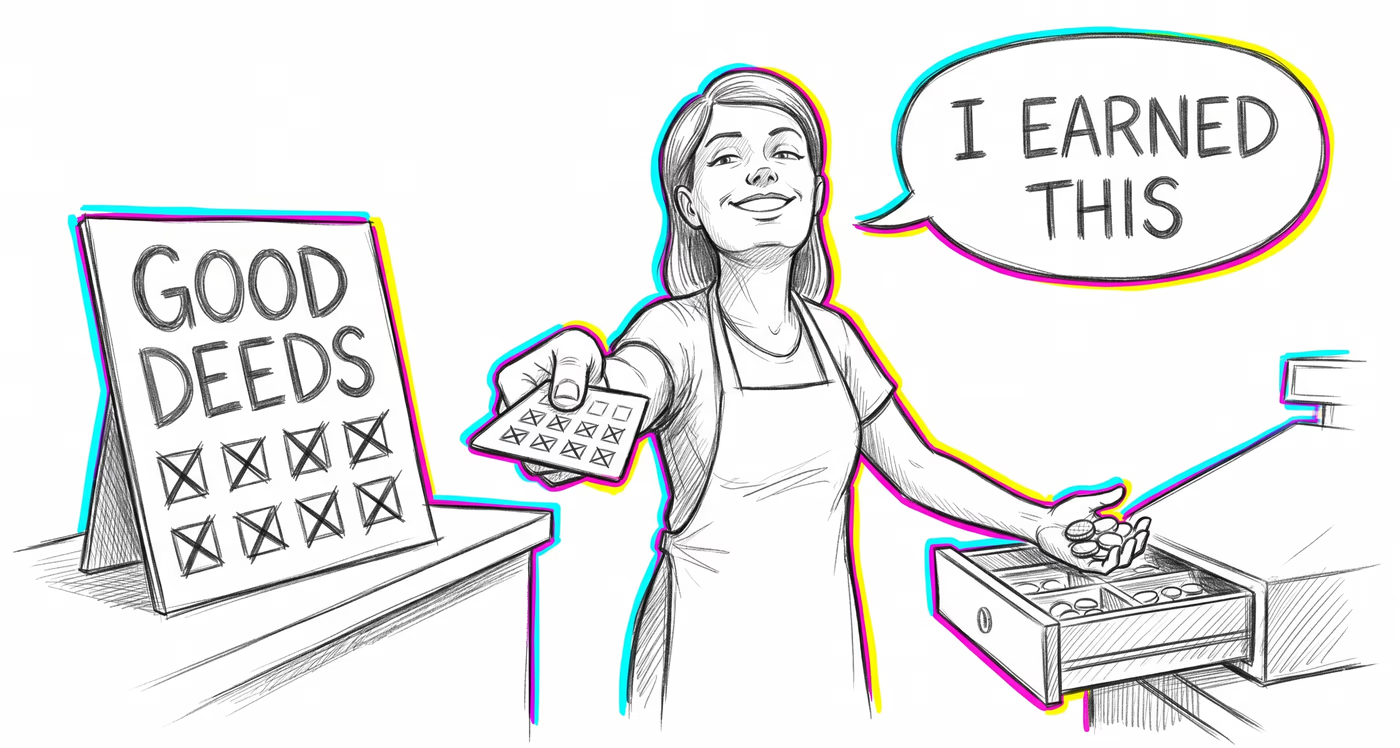
Imagine you eat a really healthy salad for lunch, so at dinner you think, 'I was so good earlier, I deserve a giant slice of cake.' Your brain keeps a little scoreboard of good things you've done, and when it fills up, it says, 'Okay, you've earned a free pass to be a little naughty now.'

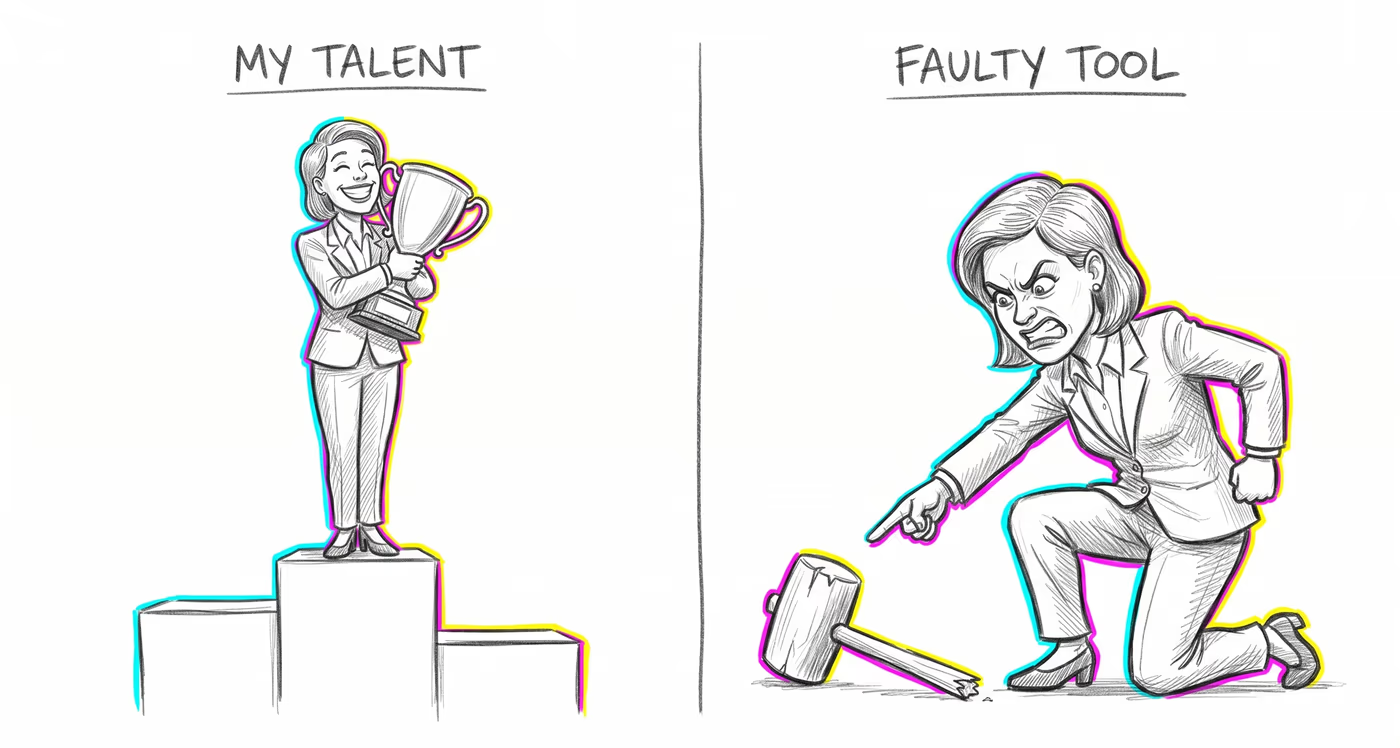
The Moral Credential Effect describes a psychological pattern in which people who have recently performed a virtuous or egalitarian act feel an unconscious 'credit' in their moral bank account, which then permits them to relax their ethical standards on subsequent decisions. This operates through a running internal moral scoreboard: when previous behavior has established a surplus, people grant themselves permission to act in self-interested, prejudiced, or indulgent ways they would otherwise avoid. Critically, this licensing effect operates even when the audience judging the person is unaware of the prior good deed, suggesting it is driven by internal self-concept maintenance rather than impression management. The effect has been demonstrated across domains including racial and gender discrimination, consumer choices, dietary behavior, and environmental decisions, though recent meta-analyses suggest the effect size may be smaller than originally reported and is moderated by cultural background.

SOUND FAMILIAR?

Where it shows up.

  1. 01 After donating to a charity, feeling fine about splurging on an expensive, unnecessary purchase that would normally trigger guilt.
  2. 02 Bringing a reusable bag to the grocery store and then loading it with junk food, thinking the good part is already 'done.'
IN DIFFERENT DOMAINS

Where it shows up at work.

The same glitch looks different depending on the terrain. Finance, medicine, a relationship, a team — same mechanism, different costume.

Finance & investing

Investors or fund managers who allocate a portion of their portfolio to ESG (environmental, social, governance) funds may subsequently feel licensed to pursue aggressive, ethically questionable trades in the rest of their portfolio, treating the responsible allocation as moral cover for risky or exploitative strategies.

Medicine & diagnosis

Healthcare professionals who have just saved a patient's life or worked a grueling shift may unconsciously lower their diligence on subsequent patients, feeling they've 'done enough' good for the day. Patients who make one healthy change (like quitting smoking) may license themselves to neglect other health behaviors (like diet or exercise).
HOW TO SPOT IT

Ask yourself…

  • Am I pointing to a past good deed to justify a current decision I'd normally feel uneasy about?
  • Would I still make this choice if my earlier virtuous action had never happened?
HOW TO DEFEND AGAINST IT

The playbook.

  • Decouple past from present: Before each significant decision, consciously reset your moral ledger — ask whether this choice stands on its own merits regardless of your history.
  • Pre-commit to rewards: Decide in advance what your good deeds 'earn' you (a specific treat, a break), so the credit doesn't silently redirect toward ethical shortcuts.
FAMOUS CASES

In history.

  • Research by Effron, Cameron, and Monin (2009) found that participants who endorsed Barack Obama in the 2008 presidential election were subsequently more likely to express preferences favoring white candidates in hypothetical hiring scenarios.
  • Studies have documented that companies with prominent corporate social responsibility programs sometimes simultaneously engage in aggressive tax avoidance or labor exploitation, treating CSR as a moral shield.
  • The phenomenon of 'family values' politicians and religious leaders being caught in personal scandals has been analyzed through the lens of moral licensing — their public moral persona may have internally licensed private transgressions.
WHERE IT COMES FROM
Academic origin

Benoît Monin and Dale T. Miller, 2001, Princeton University. Published as 'Moral Credentials and the Expression of Prejudice' in the Journal of Personality and Social Psychology, 81(1), 33–43.

Evolutionary origin

In ancestral environments, maintaining a reputation as a cooperative, trustworthy group member was essential for survival. A mental accounting system that tracked one's prosocial contributions allowed individuals to calibrate their effort — investing in cooperation when their standing was low (to avoid ostracism) and conserving energy or pursuing self-interest when their standing was secure. This moral budgeting helped optimize the balance between costly altruism and self-preservation.

IN AI SYSTEMS

How the machines inherit it.

AI systems trained on human behavioral data may encode the licensing pattern, reinforcing the idea that prior ethical compliance justifies relaxed standards later. Recommendation engines could inadvertently exploit this by presenting virtuous choices (charitable donations, eco-products) followed by indulgent or manipulative upsells. Additionally, organizations that deploy 'ethical AI' frameworks may use them as credentials to avoid scrutiny of other problematic algorithmic practices — a form of institutional moral licensing.

Read more on Wikipedia
FREE FIELD ZINE

10 glitches quietly running your life.

A free field-zine PDF — ten cognitive glitches named, illustrated, with a defense move for each. Plus the weekly Glitch Report on Fridays — one bias named, two spotted in the wild, one defense move. Unsubscribe any time.

EXPLORE MORE

Related glitches.

LAUNCH PRICE

You read about it. Now drill it.

This page taught you the name. The deck turns the name into reflex. 1,100+ swipeable scenarios, 1,100+ defenses, 650+ detection prompts — spaced-repetition Swipe Deck, unlimited Spot-the-Bias Quiz, Defense Playbook, Pre-Flight, My Blindspots, Cheat Sheets, Field Guide e-book. $39.53$59.

Unlock the full kit

Everything below — yours forever. Pay once, use across every device.

Launch price — first 100 readers, $20 off. Auto-applied at checkout.
$59 $39.53
one-time payment · lifetime access
  • All interactive digital cards — search, filter, flip, shuffle on any device
  • Five training modes — Spot-the-Bias Quiz, Swipe Deck, Pre-Flight, Diagnose, Blindspots
  • Curated Lenses + Decision Templates + Defense Playbook
  • Printable Deck PDFs + Field Guide e-book + Cheat Sheets + Anki Export
  • Every future improvement, included
Get the full kit  $39.53

30-day refund · no questions asked

Unlock the full kit

Everything below — yours forever. Pay once, use across every device.

Launch price — first 100 readers, $20 off. Auto-applied at checkout.
$59 $39.53
one-time payment · lifetime access
  • All interactive digital cards — search, filter, flip, shuffle on any device
  • Five training modes — Spot-the-Bias Quiz, Swipe Deck, Pre-Flight, Diagnose, Blindspots
  • Curated Lenses + Decision Templates + Defense Playbook
  • Printable Deck PDFs + Field Guide e-book + Cheat Sheets + Anki Export
  • Every future improvement, included
Get the full kit  $39.53

30-day refund · no questions asked